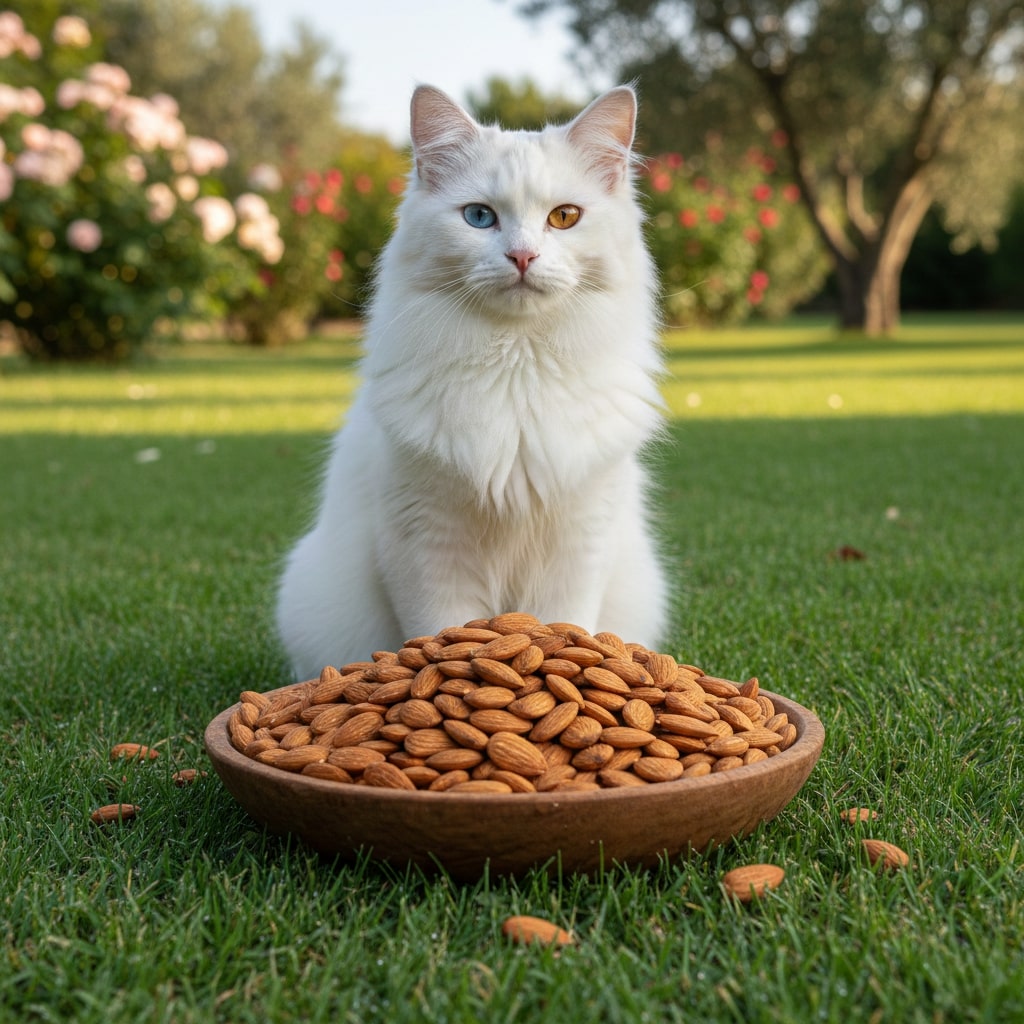
Can cats eat almonds? No, cats should not eat almonds. While sweet almonds (the type humans eat) are not strictly toxic to cats, they pose significant health risks. They are difficult for cats to digest, pose a serious choking hazard, and are too high in fat, which can lead to vomiting, diarrhea, or painful pancreatitis.
Summary Table: Are Almonds Safe for Cats
| Feature | Details |
| Toxic? | Sweet Almonds: No. Bitter Almonds: Yes (contain cyanide). |
| Main Risks | Choking, stomach upset, pancreatitis, obesity. |
| Can they drink Almond Milk? | Not recommended. It offers no nutritional value and may upset stomachs. |
| Symptoms of Distress | Vomiting, diarrhea, gas, lethargy, loss of appetite. |
| Verdict | Avoid giving almonds to cats entirely. |
Can Cats Have Almonds? Detailed Breakdown
You are snacking on a handful of almonds, and your cat looks up at you with those wide, begging eyes. It is tempting to toss one down, but you pause. Can cats eat almonds safely?
The simple answer is no. While a single plain almond likely won’t kill your cat, almonds are not a safe or healthy treat for felines. Cats are designed to eat meat, not nuts.
Why Almonds Are Bad for Cats
Even though sweet almonds are not poisonous, they cause several problems for your cat’s digestive system.
1. The Choking Hazard
This is the most immediate danger. Cats do not chew their food the same way humans do; their teeth are designed for tearing meat, not grinding hard nuts.
- Hard Texture: Almonds are very hard and can easily become lodged in a cat’s windpipe (trachea).
- Shape: The size and shape are perfect for blocking a small throat.
- Esophageal Blockage: Even if swallowed, an almond can get stuck in the esophagus, requiring emergency surgery.
2. Digestive Upset
A cat’s stomach is not equipped to break down plant proteins and heavy fats found in nuts. If a cat eats almonds, you will likely see:
- Vomiting (often with undigested almond pieces).
- Diarrhea.
- Excessive gas and bloating.
3. Pancreatitis Risks
This is a serious, painful condition caused by inflammation of the pancreas.
- High Fat Content: Almonds are incredibly high in fat.
- The Reaction: A sudden influx of high-fat food can trigger the pancreas to become inflamed.
- Consequences: Pancreatitis often requires hospitalization, fluids, and pain medication. In severe cases, it can be fatal.
4. Toxic Seasonings
Humans rarely eat plain raw almonds. We eat them roasted, salted, or flavored.
- Salt: Excessive salt is dangerous for cats (sodium ion poisoning).
- Chocolate: Chocolate-covered almonds are toxic to cats.
- Xylitol: Some sweetened almonds contain Xylitol, a sweetener that is deadly to pets.
- Garlic/Onion: Savory spiced almonds may contain garlic or onion powder, which destroy red blood cells in cats.
Sweet Almonds vs. Bitter Almonds
It is important to know the difference between the two types of almonds.
- Sweet Almonds: These are the ones sold in grocery stores for snacking. They are not toxic, but they are unhealthy.
- Bitter Almonds: These contain a chemical called cyanogenic glycoside. When eaten, this turns into cyanide. Bitter almonds are highly toxic to cats. Thankfully, these are not usually sold for direct consumption in the US, but they can be found in natural oils or extracts.
What About Almond Milk or Almond Butter?
If the nut is hard to chew, is the liquid version safe?
Can Cats Drink Almond Milk?
No, it is not recommended.
While a small lick of plain, unsweetened almond milk probably won’t hurt, it provides zero nutritional benefits.
- Calorie Dense: It adds unnecessary calories to your cat’s diet, leading to obesity.
- Additives: Many brands add sugars, vanilla, or preservatives that cats cannot process.
Can Cats Eat Almond Butter?
No.
Almond butter is extremely oily and dense. A spoonful of almond butter contains a massive amount of fat concentrated in a small serving. This dramatically increases the risk of pancreatitis and stomach aches.
What to Do If Your Cat Eats an Almond
If you drop an almond and your cat snatches it up before you can react, don’t panic. Follow these steps:
- Check the Type: Was it plain? Salted? Chocolate-covered? (If it was chocolate or contained xylitol, go to the vet immediately).
- Monitor for Choking: Watch your cat closely for the first 30 minutes. Look for coughing, gagging, or pawing at the mouth.
- Watch for Digestion Issues: Over the next 12 to 24 hours, look for vomiting, runny stool, or a refusal to eat dinner.
- Call the Vet: If your cat is vomiting repeatedly or seems lethargic, call your veterinarian.
Safe Alternatives to Almonds for Cats
If you want to treat your cat, stick to foods that match their biology. Cats need protein.
- Commercial Cat Treats: Formulated specifically for feline digestion.
- Cooked Chicken: Plain, boiled, boneless chicken is an excellent treat.
- Freeze-Dried Minnows: A crunchy treat that cleans teeth and provides protein.
- Catnip or Cat Grass: Safe, low-calorie options for enrichment.
Final Verdict
While a cat can physically eat an almond without being instantly poisoned, they should not eat them. The risks of choking and pancreatitis far outweigh any curiosity your cat might have. Keep the trail mix to yourself and give your cat a meat-based treat instead.