
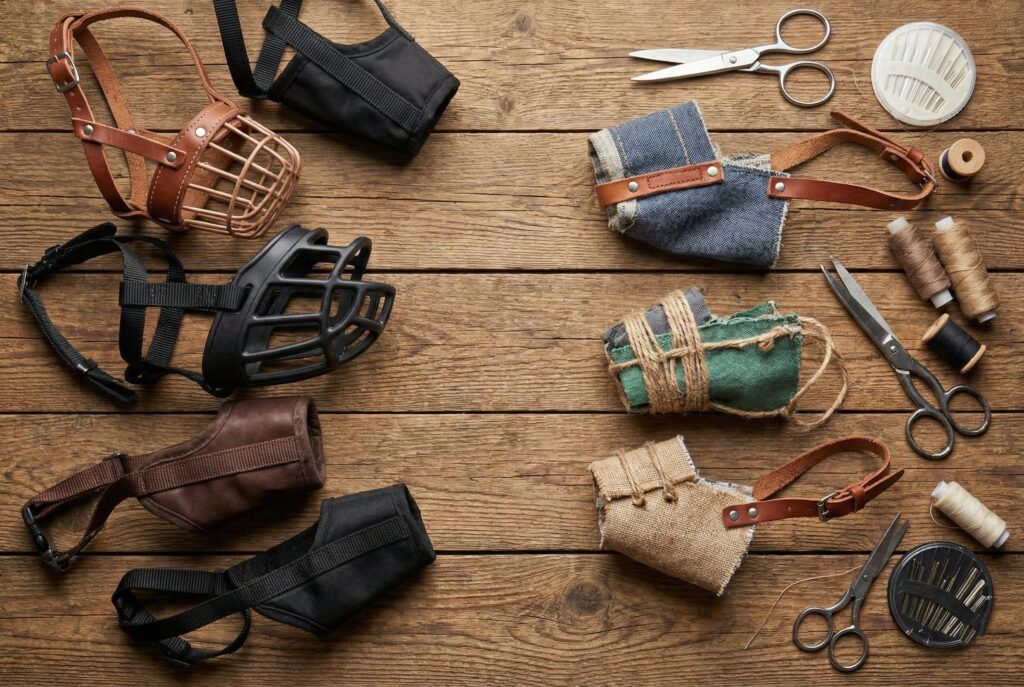
Seeing a dog wearing a muzzle often triggers an unfair negative reaction. Many people instantly assume the dog is aggressive or dangerous. However, in the world of professional dog training and canine safety, muzzles are simply management tools. They keep good dogs safe during stressful situations, prevent curious pups from eating dangerous trash off the sidewalk, and protect veterinary staff when a dog is in severe pain.
Whether you have a reactive dog, a dedicated scavenger, or an injured pet requiring immediate first aid, having the right muzzle is an essential part of responsible dog ownership.
In this comprehensive guide, we will break down the absolute best dog muzzles on the market, ranging from highly durable store-bought options to quick DIY emergency solutions. We will also cover exactly how to choose the right fit, measure your dog’s snout, and use positive reinforcement to make muzzle training a stress-free experience.
Why Your Dog Might Need a Muzzle
Before diving into the recommendations, it is crucial to understand why muzzles are heavily advocated by veterinarians and dog behaviorists. A muzzle is not a punishment. It is a proactive safety measure.
- Veterinary Visits and Grooming: Even the friendliest dogs can bite when they are in pain, injured, or terrified. A muzzle protects the professionals trying to help your pet.
- Reactivity and Bite Prevention: If your dog is nervous around strangers or other animals, a muzzle provides peace of mind while you work on counter-conditioning and desensitization training.
- Scavenging (Pica): Some dogs have a dangerous habit of eating rocks, toxic plants, or discarded food during walks. A scavenger muzzle acts as a physical barrier, preventing emergency bowel obstruction surgeries.
- Breed-Specific Legislation: In some regions, specific breeds are legally required to wear a muzzle in public spaces.
- Emergency First Aid: If your dog breaks a leg or suffers a severe laceration on a hike, an emergency DIY muzzle prevents bite reflexes caused by intense physical trauma.
How to Choose the Right Dog Muzzle
Not all muzzles serve the same purpose. A soft fabric muzzle used for a quick toenail trim is dangerous if used for a one-hour summer walk. When selecting a muzzle, you must prioritize panting room, material, and the specific use case.
Prioritize Panting Room
Dogs do not sweat through their skin; they regulate their body temperature by panting. If a muzzle physically binds your dog’s mouth shut and prevents them from opening their jaws to pant, they are at a severe risk of fatal heatstroke. For walks, training, and everyday use, you must choose a basket-style muzzle that offers deep panting room.
Understand Muzzle Materials
- Hard Plastic or Wire: Offers the highest level of bite protection and maximum airflow. Best for walks and reactive dogs.
- Biothane or Silicone: Flexible, softer on the dog’s skin, and great for mild reactivity or scavenging.
- Fabric or Nylon Mesh: These restrict panting and should only be used for a few minutes at a time under direct supervision (like during a quick vaccination).
How to Measure Your Dog’s Snout
To find the perfect fit, you need a soft measuring tape.
- Length: Measure from the tip of the nose to a half-inch below the eyes.
- Circumference: Measure around the widest part of the snout (usually just below the eyes) while the dog has a ball in their mouth to account for panting room. Add one to two inches to this measurement for optimal comfort.
Best Store-Bought Dog Muzzles
When you have the time to plan ahead, purchasing a high-quality, perfectly fitted store-bought muzzle is the safest route. Here are the top seven options highly rated by dog trainers and veterinarians.
1. Baskerville Ultra Muzzle (Best Overall)
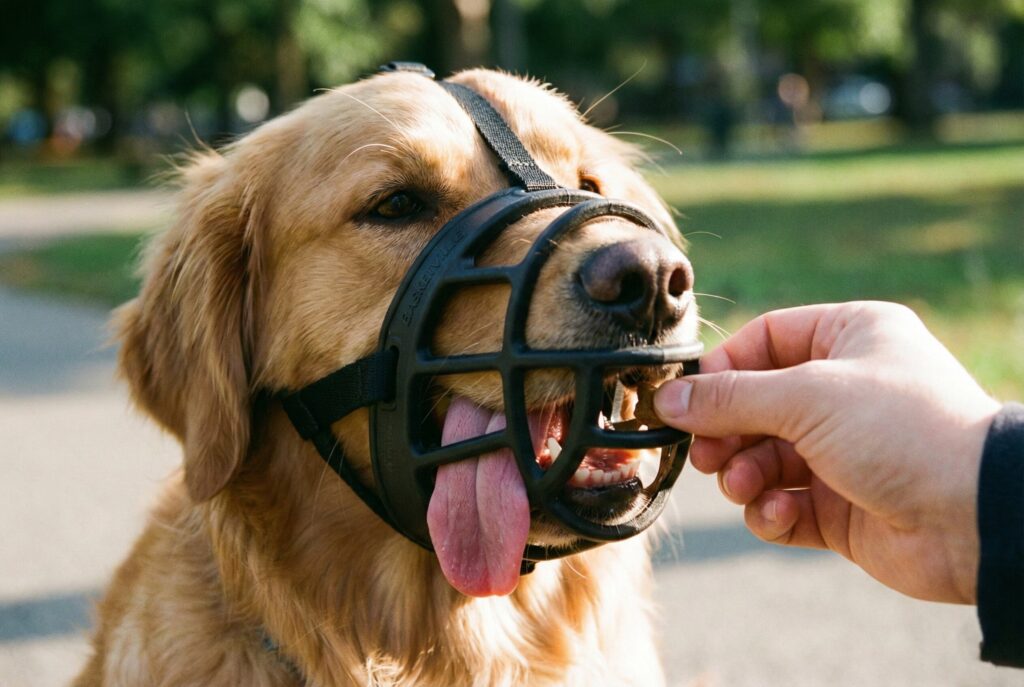
The Baskerville Ultra is widely considered the gold standard for everyday muzzle training. Made from a tough but malleable thermoplastic rubber, it balances comfort with reliable bite prevention.
- Design and Fit: The basket design is incredibly spacious, allowing your dog to pant fully, drink from a water bowl, and easily accept training treats. You can even heat the muzzle in hot water to custom-mold the plastic to your dog’s unique facial structure.
- Security: It features an overhead safety strap that connects directly to your dog’s regular collar, making it nearly impossible for canine escape artists to pull it off.
- Best For: Everyday walks, reactive dog training, and public transport.
- Pros: Heat-shapeable, excellent ventilation, allows treating and drinking.
- Cons: The rubber can cause chafing on the top of the nose for dogs with very sensitive skin.
2. The Muzzle Movement Custom Biothane Muzzle (Best for Comfort and Style)
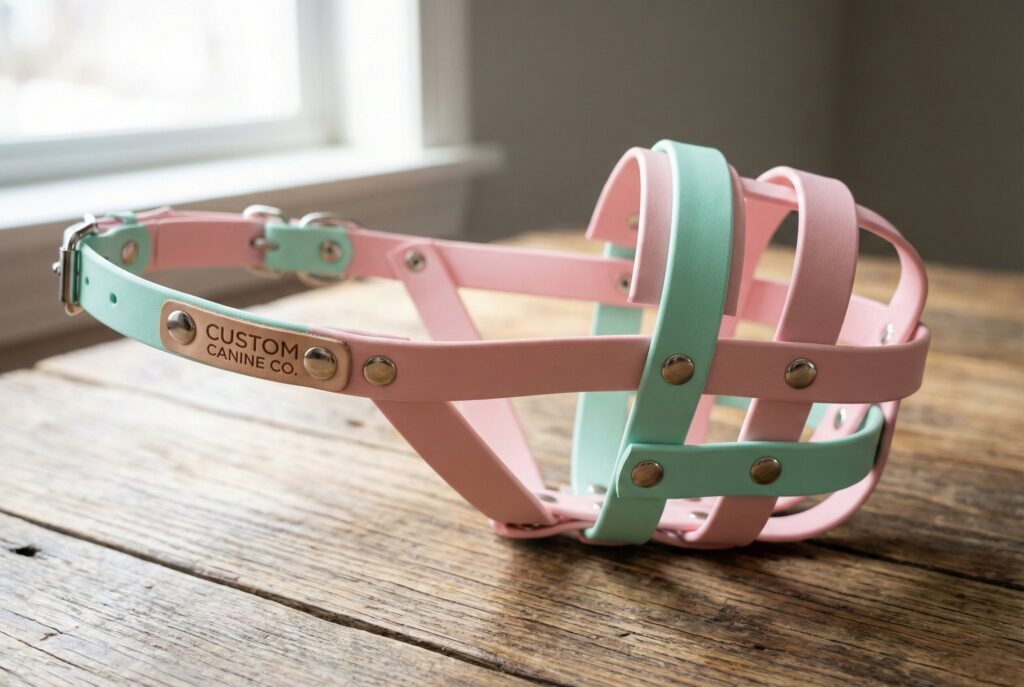
If you want a muzzle that does not look like Hannibal Lecter gear, The Muzzle Movement offers vibrant, fully customizable Biothane muzzles. Biothane is a coated webbing that is waterproof, stink-proof, and incredibly gentle on the skin.
- Design and Fit: These muzzles are made-to-order based on your dog’s exact measurements. They feature a purpose-built treat hole in the front, allowing for seamless positive reinforcement training.
- Security: Because they are custom-measured, they fit securely without bouncing around. You can add extra chin loops and head straps for maximum security.
- Best For: Dogs prone to chafing, style-conscious owners looking to make muzzles look friendly, and mild to moderate reactivity.
- Pros: Highly customizable colors, extremely comfortable, completely waterproof.
- Cons: More expensive than mass-produced muzzles and requires shipping time for custom orders.
3. Birdwell Plastic Muzzle (Best for Greyhounds and Long Snouts)
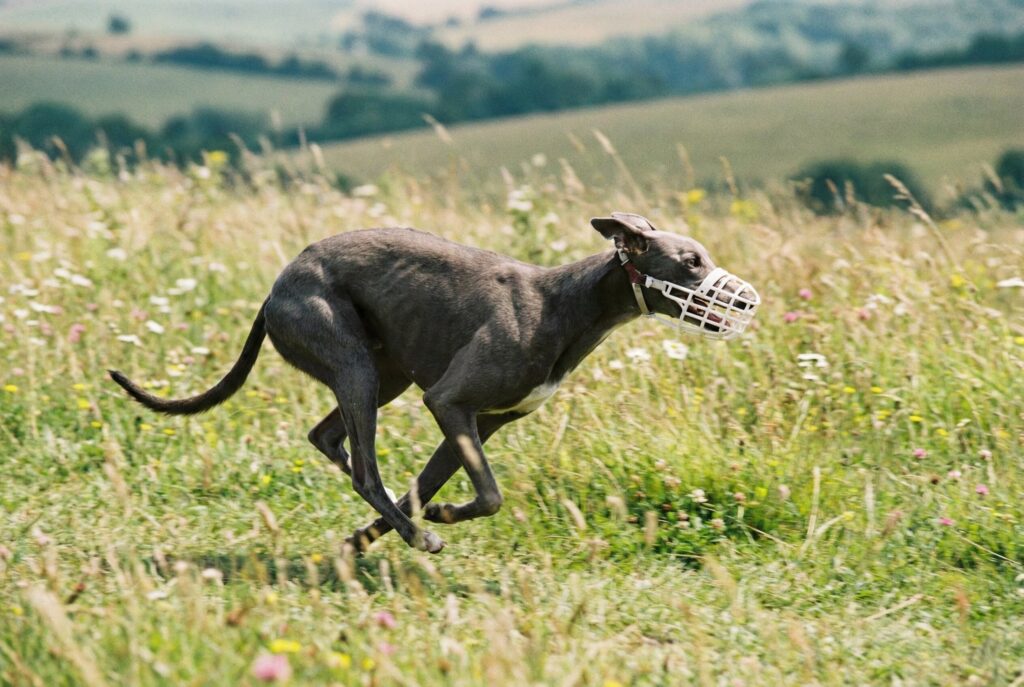
Sighthounds like Greyhounds, Whippets, and Borzois have notoriously difficult-to-fit snouts. The Birdwell Plastic Muzzle is an old-school favorite specifically designed for long, narrow faces.
- Design and Fit: Made from lightweight, rigid plastic, this basket muzzle is elongated to provide plenty of nose clearance. It is extremely popular in the racing and coursing communities.
- Security: It features a simple leather or nylon neck strap. While not completely bite-proof against a determined attack, it is excellent for preventing nipping during off-leash play.
- Best For: Sighthounds, rough play prevention, and racing.
- Pros: Very lightweight, incredibly durable, easy to wash, cheap to replace.
- Cons: Rigid plastic offers zero flexibility and does not fit broad-headed dogs like Pitbulls or Rottweilers.
4. Dean & Tyler Wire Basket Muzzle (Best for Maximum Ventilation)
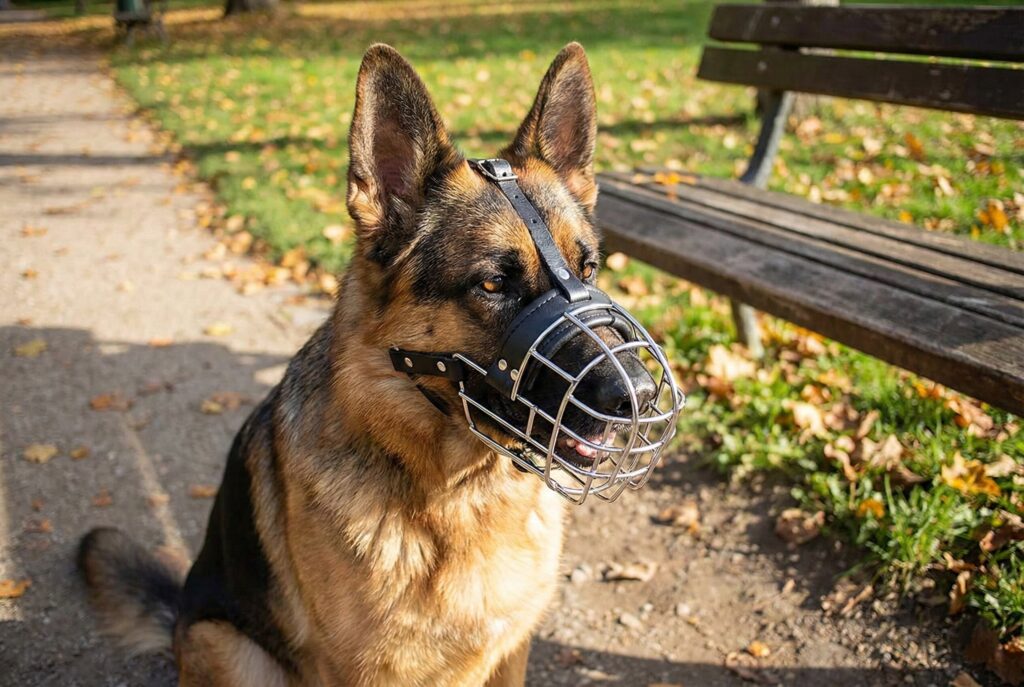
For heavy-coated working dogs in hot climates, a wire basket muzzle is unbeatable. Wire muzzles offer the absolute best airflow of any muzzle type while providing heavy-duty bite prevention.
- Design and Fit: The wire cage creates a large, spacious dome around the dog’s mouth. High-quality models feature heavy felt padding over the nose bridge to prevent the metal from rubbing raw spots.
- Security: The rigid metal grid is completely bite-proof, making it the top choice for police, military, and protection sports training.
- Best For: Aggressive dogs, hot summer walks, German Shepherds, and Malinois.
- Pros: Unrestricted airflow, maximum bite protection, extremely durable.
- Cons: The metal can hurt if the dog headbutts you, and it can rust if not dried properly after exposure to rain.
5. Moorpet Short Snout Muzzle (Best for Pugs and French Bulldogs)
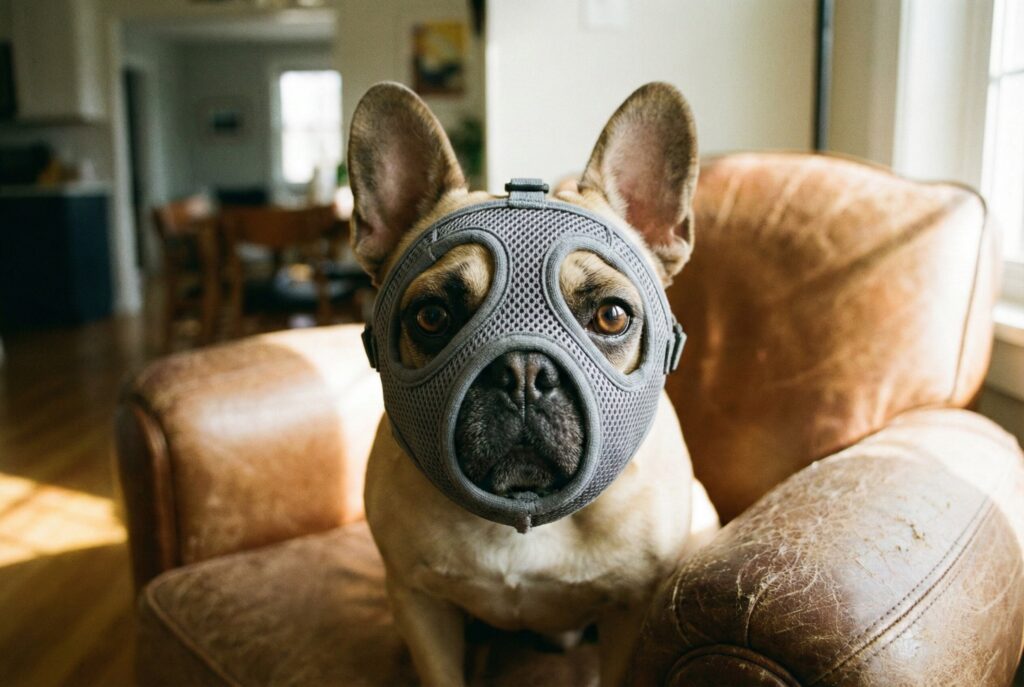
Brachycephalic (flat-faced) breeds like Pugs, French Bulldogs, and English Bulldogs cannot wear traditional basket muzzles. Because they already struggle with breathing, finding a safe muzzle requires a specialized design.
- Design and Fit: The Moorpet Short Snout Muzzle looks somewhat like a mesh mask. It covers the entire face with a highly breathable mesh, featuring an eye-hole opening to ensure visibility.
- Security: It secures securely behind the ears, accommodating the unique skull shape of flat-faced breeds.
- Best For: Vet visits and grooming for brachycephalic dogs.
- Pros: Specifically caters to flat faces, breathable mesh prevents overheating.
- Cons: Obscures the dog’s facial expressions and cannot be worn for long, strenuous walks due to baseline breathing issues in these breeds.
6. Jafco Clear Plastic Muzzle (Best for Scavengers and Pica)
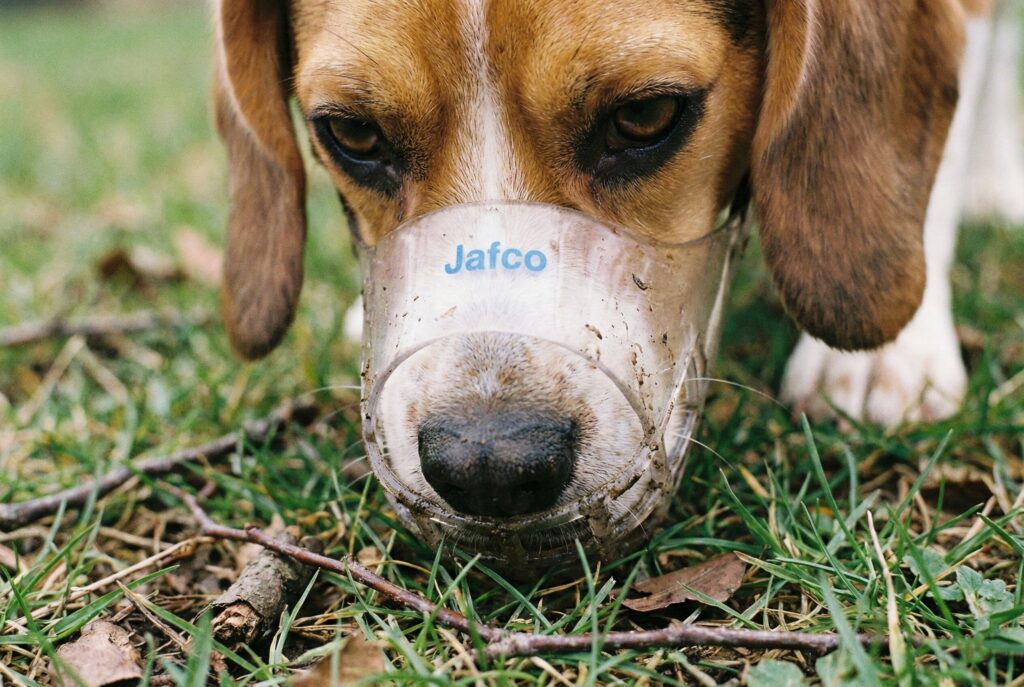
If your dog’s primary issue is eating dangerous objects off the ground, a traditional basket muzzle will not work because grass and small rocks can still slip through the gaps. The Jafco Clear Plastic muzzle solves this.
- Design and Fit: It is made from a solid sheet of clear, flexible vinyl. It features ventilation holes punched throughout the sides, but the front and bottom are completely solid.
- Security: Wraps securely around the dog’s head with sturdy straps. It also protects wounds if the dog is trying to chew stitches post-surgery.
- Best For: Severe scavengers, dogs with pica, and post-surgery wound protection (as an alternative to the “cone of shame”).
- Pros: Blocks all trash/rocks, and clear plastic looks less intimidating to the public.
- Cons: Poor ventilation compared to basket muzzles; can get very hot, and condensation builds up inside.
7. PetSafe Gentle Muzzle Guard (Best for Quick Vet Visits)
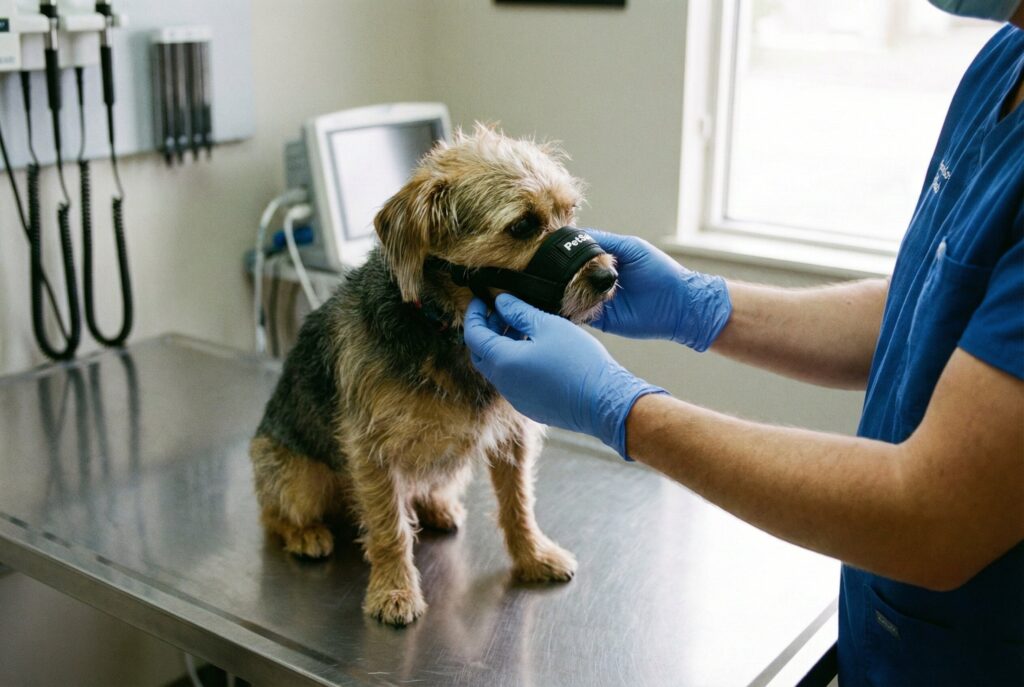
This is a traditional “grooming muzzle” made of soft nylon. It is vital to note that this is strictly a temporary muzzle.
- Design and Fit: A simple nylon sleeve that slides over the snout and buckles behind the head. It gently clamps the jaws shut.
- Security: Strong enough to prevent a quick snap during a vaccination or blood draw.
- Best For: The veterinary exam table, clipping nails, or administering medication.
- Pros: Cheap, easy to slip on in a hurry, soft, and pocket-sized.
- Cons: Highly dangerous if left on for more than a few minutes. Restricts panting, drinking, and vomiting. Never use for walks.
Best DIY Dog Muzzles for Emergencies
Sometimes, disaster strikes when you are unprepared. If your dog is hit by a car, suffers a deep cut on a hiking trail, or breaks a limb, the pain can cause them to bite the person trying to save them. In these critical moments, knowing how to craft a DIY emergency muzzle is a crucial first-aid skill.
8. The Gauze Roll Muzzle (First Aid Emergency)
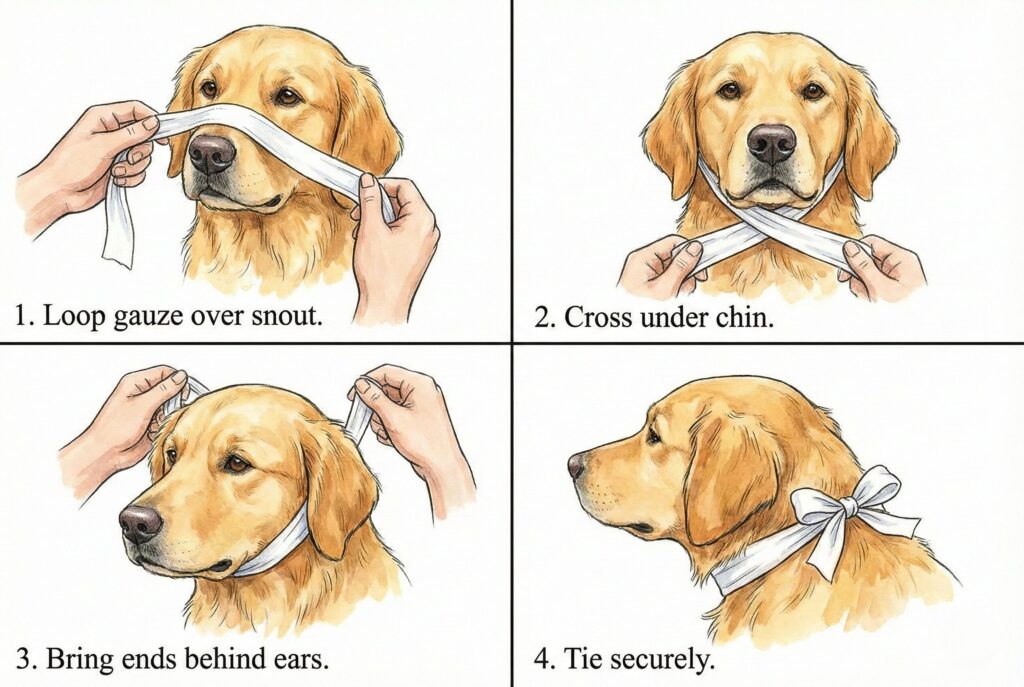
Every canine first-aid kit should contain a roll of non-stretch cotton gauze. This is the safest and most standard emergency muzzle taught in veterinary medicine.
- How to Make It: Take a long piece of gauze (about 3 to 4 feet). Tie a loose loop in the center. Approach the dog from behind or the side to avoid a frontal bite. Slip the loop gently over the dog’s snout. Pull the ends tight to secure the jaws shut, tying a simple overhand knot on top of the nose. Bring the two loose ends down under the chin, cross them, and bring them behind the dog’s ears. Tie the ends securely behind the head using a quick-release bow (like tying a shoelace).
- Safety Warning: You must use a quick-release bow. If the injured dog needs to vomit or struggles to breathe, you must be able to pull one string to immediately release the muzzle. Do not use this on flat-faced breeds.
9. The Leash Wrap Muzzle (Quick Restraint)
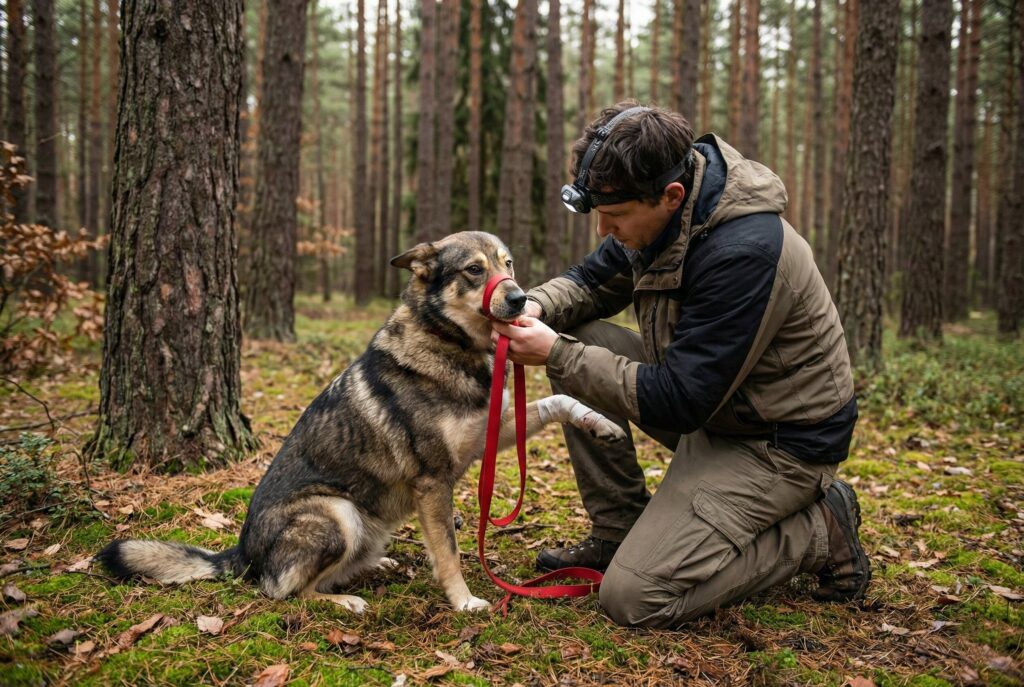
If you have absolutely no medical supplies and your dog is injured on a walk, your standard nylon or leather leash can act as an immediate makeshift muzzle. Do not use retractable thin cord leashes for this, as they will cut into the skin.
- How to Make It: Drape the leash over the top of the dog’s snout. Hold one end firmly in place. Wrap the longer end down around the bottom of the jaw and back up to the top. Cross the leash under the chin, bring the slack behind the dog’s head, and secure it firmly.
- Safety Warning: This is a purely temporary restraint meant to last only a few minutes while you assess a wound or move the dog to a car. It completely restricts panting.
10. DIY Paracord Muzzle (The Crafty Alternative)
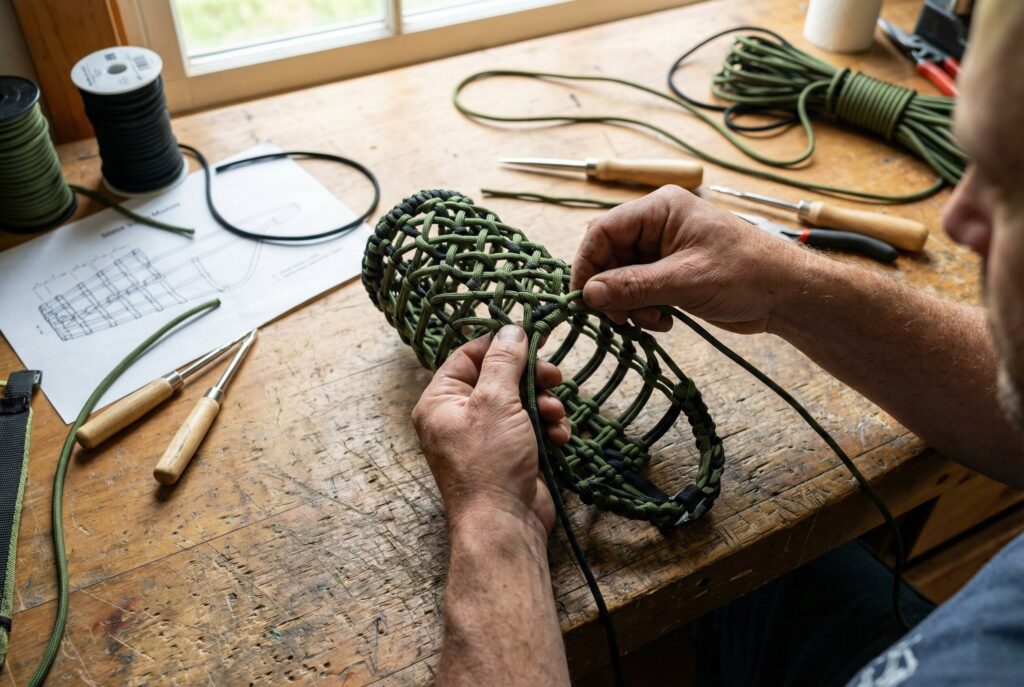
If you are skilled with knot-tying or macrame, you can create a highly functional, custom-fitted soft muzzle using 550 paracord.
- How to Make It: Measure your dog’s snout circumference and neck. Using the “cobra weave” or standard friendship bracelet knots, you can weave a soft, wide bridge that goes over the nose, connecting to a chin strap and a neck loop. For safety, you must remove the inner core strings of the paracord to make it lay flat and soft against the dog’s skin, preventing friction burns.
- Safety Warning: DIY cord muzzles must be measured meticulously to ensure they do not bind the mouth entirely shut. You should aim for a “basket” style weave rather than a tight sleeve.
11. Repurposed Plastic Soda Bottle Muzzle (Post-Surgery Hack)
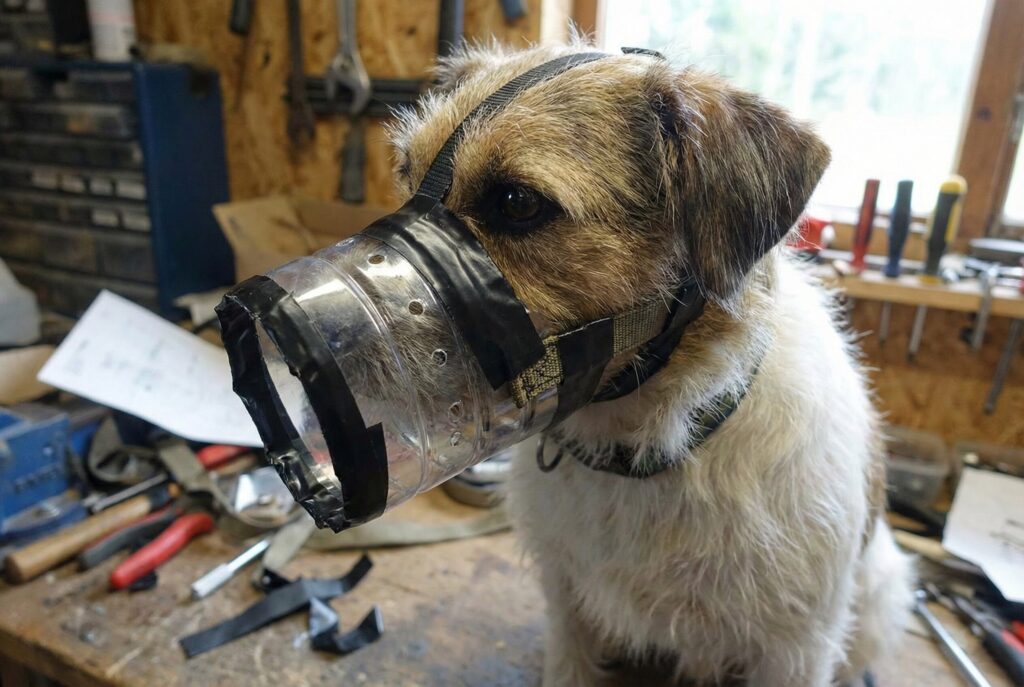
If you need a rigid barrier to prevent your dog from chewing stitches and you cannot get to a pet store, a clean, large plastic soda bottle can be modified into a temporary scavenger/medical muzzle.
- How to Make It: Take an empty 2-liter soda bottle. Cut the bottom base off entirely. Cut the narrow drinking spout off, leaving a plastic cylinder. Carefully use electrical tape or duct tape to completely cover all raw plastic edges so they do not cut the dog’s face. Punch holes near the base and thread a shoelace or gauze through to act as the head strap.
- Safety Warning: Make sure you punch plenty of extra air holes in the plastic cylinder for ventilation. This is a very rough, makeshift tool and should be replaced with a proper Jafco or basket muzzle as soon as possible.
Step-by-Step Muzzle Training Guide
Buying the best muzzle is only half the battle. If you force a muzzle onto your dog’s face, they will panic, claw at it, and develop a severe negative association. You must use positive reinforcement to teach your dog that the muzzle is a fun, highly rewarding piece of equipment.
Step 1: The Introduction
Do not put the muzzle on the dog yet. Place the muzzle on the floor surrounded by high-value treats like hot dogs or cheese. Let your dog sniff it and eat the treats. Repeat this for two days until the dog wags their tail when the muzzle comes out.
Step 2: The Treat Magnet
Hold the muzzle in one hand. Place a dab of peanut butter or squeeze cheese on the inside edge of the muzzle. Allow your dog to voluntarily push their nose into the muzzle to lick the treat. Do not buckle the straps. Let them pull their face out whenever they want. Practice this daily until they confidently plunge their face into the basket.
Step 3: Fastening the Straps
Once the dog is happy keeping their face in the muzzle for 10 to 15 seconds, gently bring the straps behind their ears and clip them. Immediately feed them premium treats through the front of the basket. Unclip it after five seconds.
Step 4: Building Duration
Gradually increase the time the dog wears the muzzle. Move from 5 seconds to 30 seconds, then a minute. Start asking for basic obedience commands (sit, down, paw) while they wear it, rewarding them heavily.
Step 5: Taking It on the Road
Put the muzzle on right before doing your dog’s favorite activity, whether that is going for a walk, getting in the car, or playing fetch. You want them to associate the muzzle with incredible life experiences.
Crucial Dog Muzzle Safety Tips
Using a muzzle safely requires common sense and continuous monitoring. Never ignore these fundamental rules:
- Never Leave a Muzzled Dog Unattended: A dog left alone with a muzzle can get the basket caught on furniture, fencing, or crate bars, leading to panic and potential strangulation.
- Watch for Heatstroke: Even in a well-ventilated basket muzzle, heavy exertion on a hot day can be dangerous. If your dog is struggling to breathe, remove the muzzle immediately in a safe space and offer water.
- Do Not Use Muzzles to Stop Barking: Muzzles are for bite prevention and safety management. If your dog is barking out of boredom, separation anxiety, or barrier frustration, forcing their mouth shut is cruel and addresses the symptom, not the root emotional cause. Seek a professional trainer for behavioral modification.
- Do Not Use Muzzles for Chewing Furniture: If your dog is destroying your couch, the solution is crate training and environmental management, not leaving a muzzle on them indoors all day.
Frequently Asked Questions (FAQs)
Can a dog drink water with a muzzle on?
Yes, absolutely. If you are using a properly fitted basket muzzle (like the Baskerville Ultra or a wire basket), the wide gaps allow your dog to dunk their snout into a water bowl and lap up water naturally. They cannot drink out of fabric or emergency DIY muzzles.
How long can a dog wear a muzzle?
For a soft fabric or DIY gauze muzzle, the limit is 10 to 15 minutes max, usually just for a vet procedure. For a well-fitted, highly ventilated basket muzzle, a dog can comfortably wear it for the duration of a long walk, a hike, or a 1-to-2-hour training session. However, it should never be worn all day.
Will a muzzle make my dog more aggressive?
No. A muzzle is an inanimate object; it does not change a dog’s brain chemistry. However, if you force the muzzle on violently without proper positive reinforcement training, the dog will become fearful of the equipment, which can escalate reactive behaviors. When properly conditioned, dogs view muzzles exactly like collars or harnesses.
How do I stop my dog from rubbing the muzzle off?
If your dog is rubbing their face on the grass or pawing at the straps, they have not been adequately conditioned. Go back to Step 2 of the training guide. Keep the sessions much shorter and increase the value of the treats. Also, check the fit, if it is rubbing against their eyes or chafing their nose bone, physical pain may be causing the scratching.
Conclusion
Finding the right muzzle for your dog is an act of love and profound responsibility. By taking the time to properly measure your dog’s snout, investing in a breathable basket muzzle for everyday use, and learning how to craft a DIY emergency muzzle for your first aid kit, you are preparing yourself for any situation. Remember, the goal is to keep everyone, including your dog, safe, comfortable, and confident.