
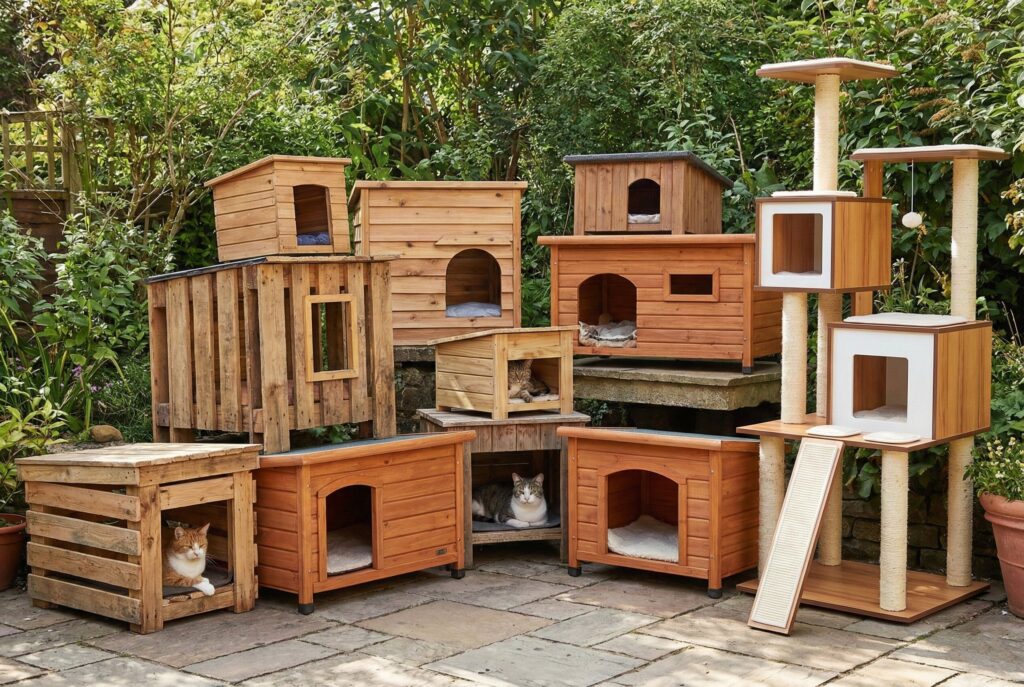
Every cat needs a safe space they can call their own. While cardboard boxes are a fun temporary fix, a dedicated wooden cat house provides a durable, comfortable, and aesthetically pleasing shelter for your feline friend.
Whether you are caring for a community feline living outdoors or looking for a stylish indoor hideaway for your house cat, wood is an excellent material choice. It offers natural insulation, robust structural integrity, and a classic look that blends well with home decor or garden landscapes.
Finding the right cat house can be overwhelming. Should you build one from scratch using DIY plans, or is it better to buy a pre-made structure? This guide explores the benefits of wooden cat shelters, essential factors to consider before choosing one, and over ten detailed ideas covering both do-it-yourself projects and store-bought options.
10+ Wooden Cat House Ideas
This list includes a mix of styles suitable for different needs. Some are great DIY projects if you are handy with a saw and drill, while others are complex designs best purchased pre-made.
1. The Basic Insulated Cedar Box (Outdoor Focus)
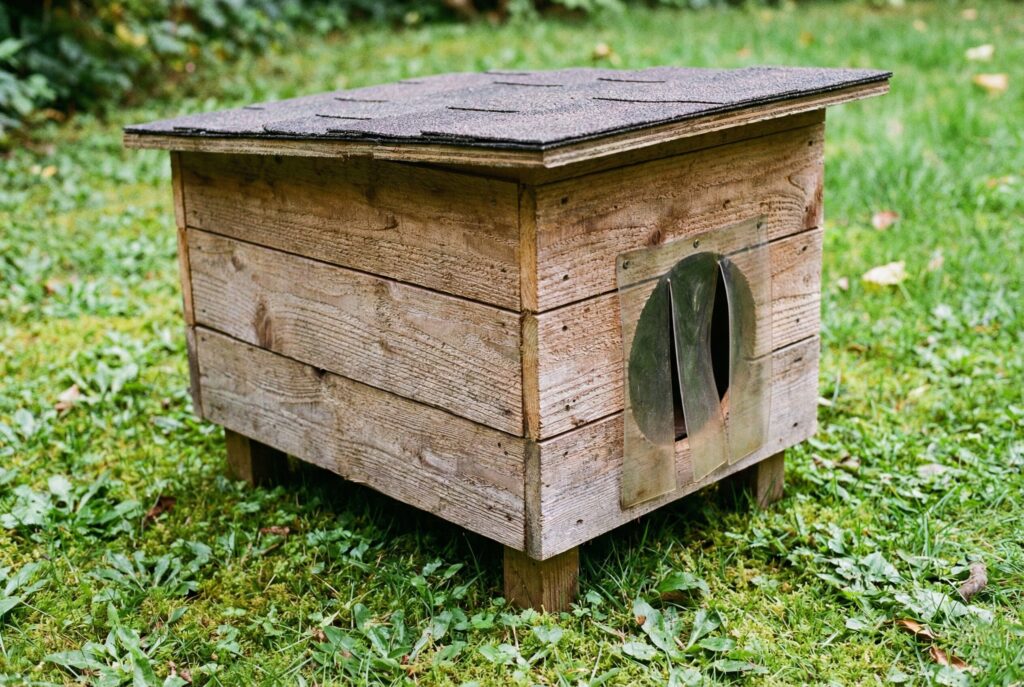
This is the gold standard for outdoor community cats. It prioritizes function and survival over looks. It is typically a rectangular box made from rot-resistant cedar.
The key feature is the “sandwich” wall construction: an outer layer of cedar, a middle layer of rigid foam insulation, and an inner layer of thin plywood. The roof should be slanted and hinged to allow easy access for cleaning. It needs sturdy legs to lift it at least four inches off the ground. The entrance hole should be just big enough for a cat (about 6-7 inches round) and covered with a heavy vinyl flap to keep wind out. This is a very popular DIY project, with many free plans available online.
2. The Classic A-Frame Chalet (DIY Focus)
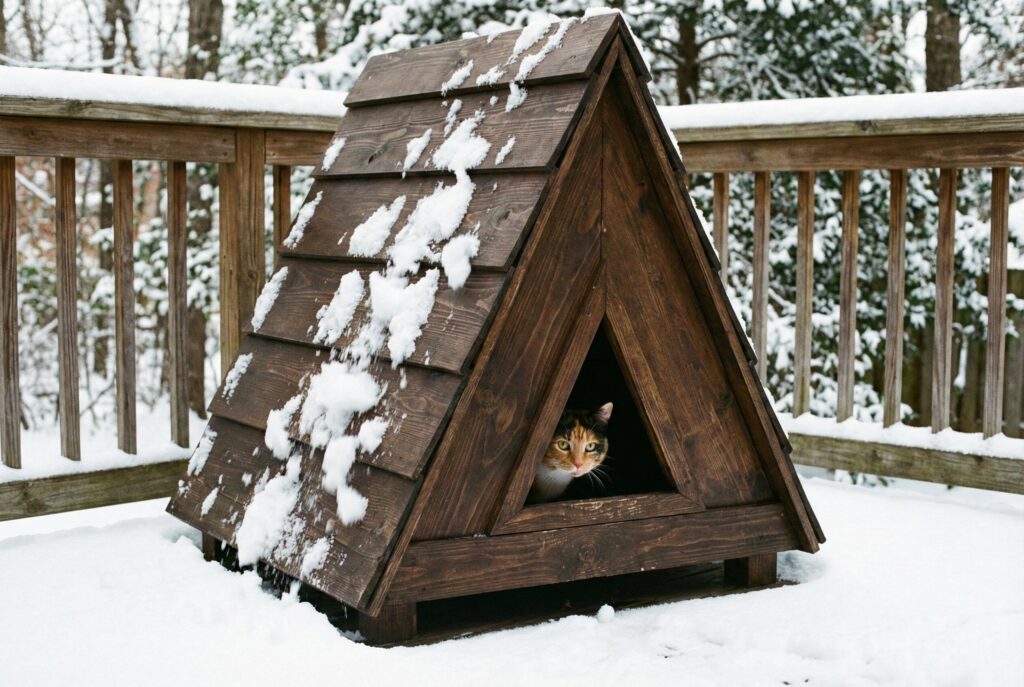
The A-frame design is not just cute; it is highly functional for snowy climates. The steep angle of the roof prevents heavy snow loads from accumulating and collapsing the structure.
This is an intermediate DIY project. The main structure is formed by two large roof panels meeting at a peak, with triangular front and back walls. It is essential to use treated lumber or cedar for the exterior. Because of the shape, interior space can be limited near the top, so ensure the base footprint is large enough for the cat to curl up comfortably. For outdoor use, you must insulate the triangular walls and under the roof panels.
3. The Modern Indoor Plywood Cube (Indoor Focus)
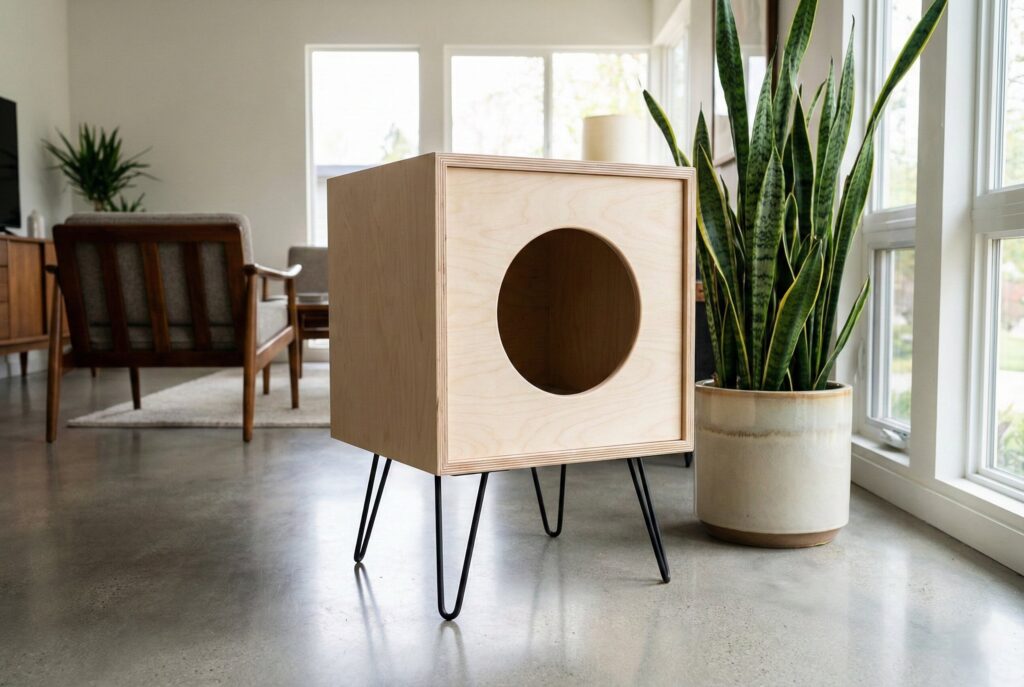
For the design-conscious cat owner, a sleek plywood cube fits perfectly into modern apartment decor. This is about providing a dedicated hiding spot that looks like high-end furniture.
This can be bought or built. If DIYing, use high-quality Baltic birch plywood, which has attractive edges when cut. The design is often just a perfect cube with a large circular entrance cut into one face. No finish is needed, just a good sanding, though a clear, non-toxic sealant helps keep it clean. Inside, place a plush woolen blanket or a perfectly fitted square pillow. These units are often stackable to create a cat condo wall.
4. The Duplex Condo with covered porch (Store-Bought Focus)
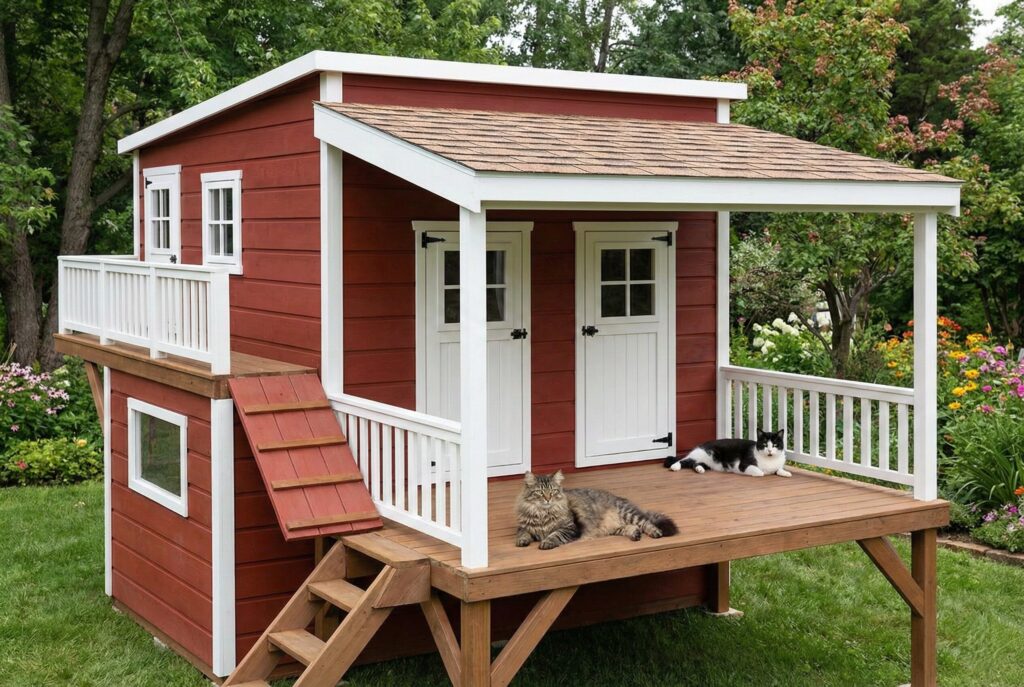
If you have two cats who tolerate each other but prefer their own sleeping quarters, a duplex is the solution. A covered porch adds a nice lounging area that is protected from rain but allows fresh air.
These are large structures usually best purchased pre-made due to their complexity. Look for designs made of fir or cedar wood. The interior is divided by a central wall, creating two separate “apartments,” each with its own door leading onto a shared front deck. The roof overhangs the entire deck structure. High-quality versions will have asphalt shingles on the roof for true weatherproofing.
5. The Repurposed Wooden Pallet House (DIY Focus)
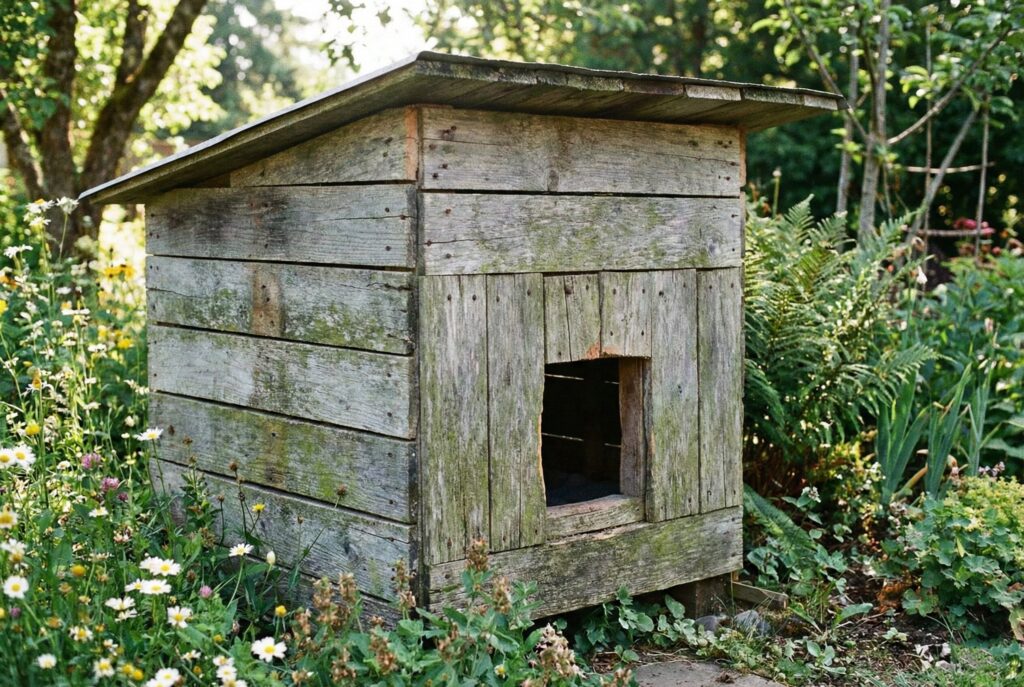
This is a budget-friendly, eco-conscious project. Shipping pallets are often available for free and provide plenty of pre-cut lumber.
This is a labor-intensive DIY project because you must first dismantle the pallets and remove nails. The wood is rough, so extensive sanding is required to prevent splinters. Pallet wood is usually pine or oak and is not treated for outdoor longevity, so a good exterior paint or sealant is mandatory. The design is usually a simple, rustic box style. It’s a great way to build a shelter with very little material cost.
6. The Elevated Cabin with Lounging Deck (Store-Bought Focus)
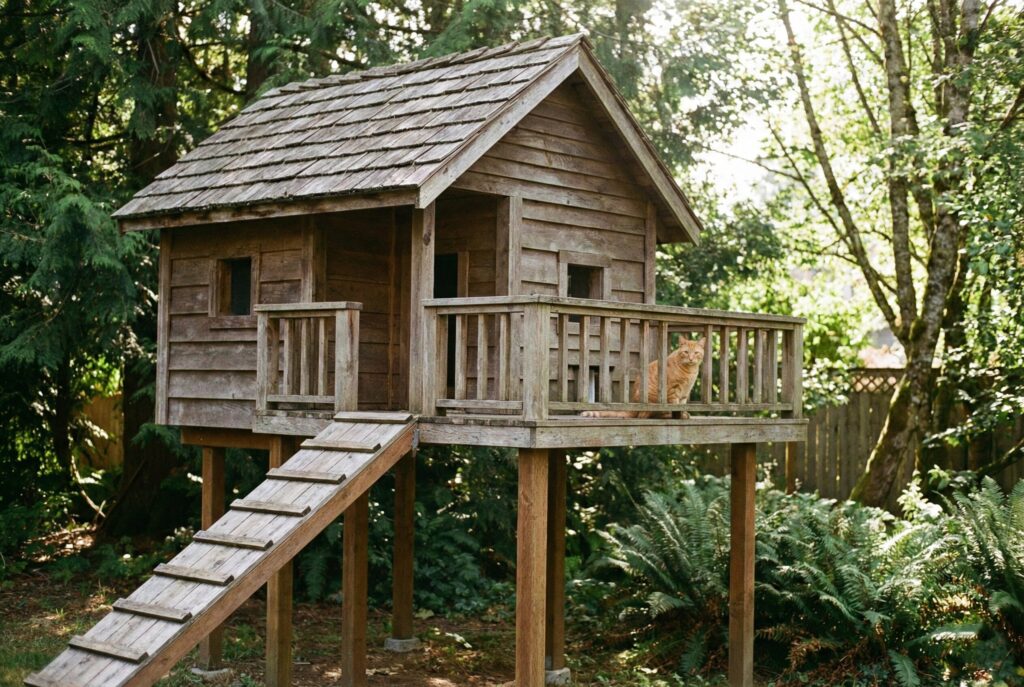
Cats love being high up. An elevated house gives them a sense of security and a vantage point to survey their territory.
These store-bought structures feature a fully enclosed sleeping cabin that sits atop tall stilts or a platform structure. Below the house, the space between the legs can be used as a shaded lounging area in summer. Stairs or a ramp usually lead up to the cabin entrance. Ensure the structure is stable and won’t tip over when a heavy cat jumps onto it.
7. The End-Table Hideaway (Indoor Focus)
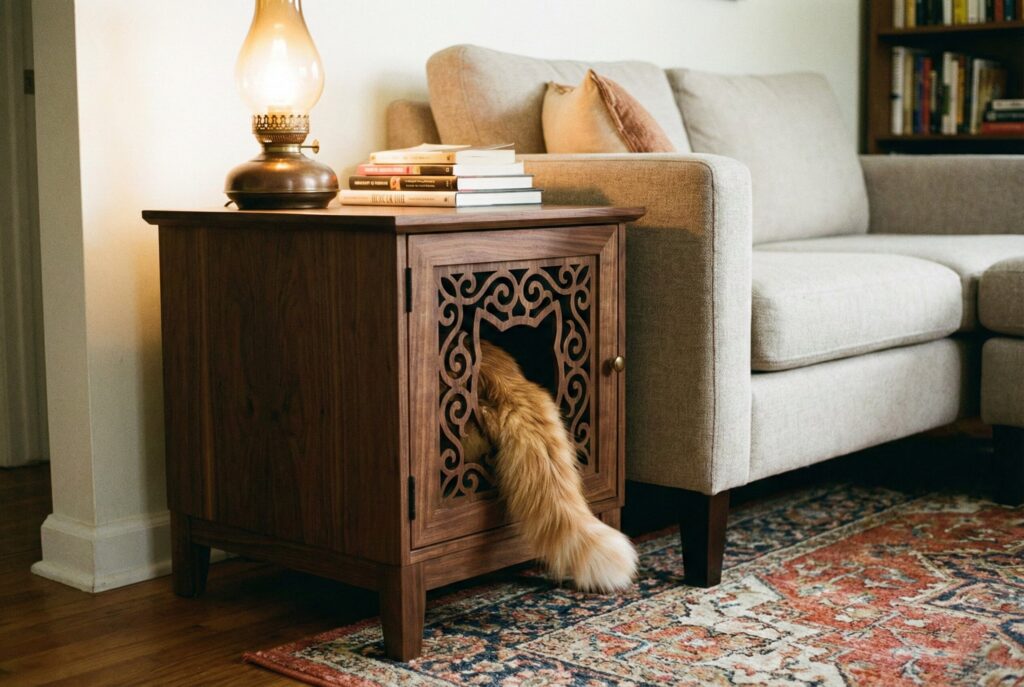
This is functional dual-purpose furniture. It serves as a side table for you and a secret hideout for your cat.
You can buy these ready-made or modify an existing wooden end table. If DIYing, find a sturdy wooden nightstand or end table with a cabinet door. Remove the door, or cut an entrance hole into the side or door of the cabinet. Sand the edges smooth. The inside becomes a cozy cave. This is a great way to hide a litter box as well, though for a sleeping area, ensure it’s just cozy bedding inside.
8. The Rustic Log Cabin (Store-Bought Focus)
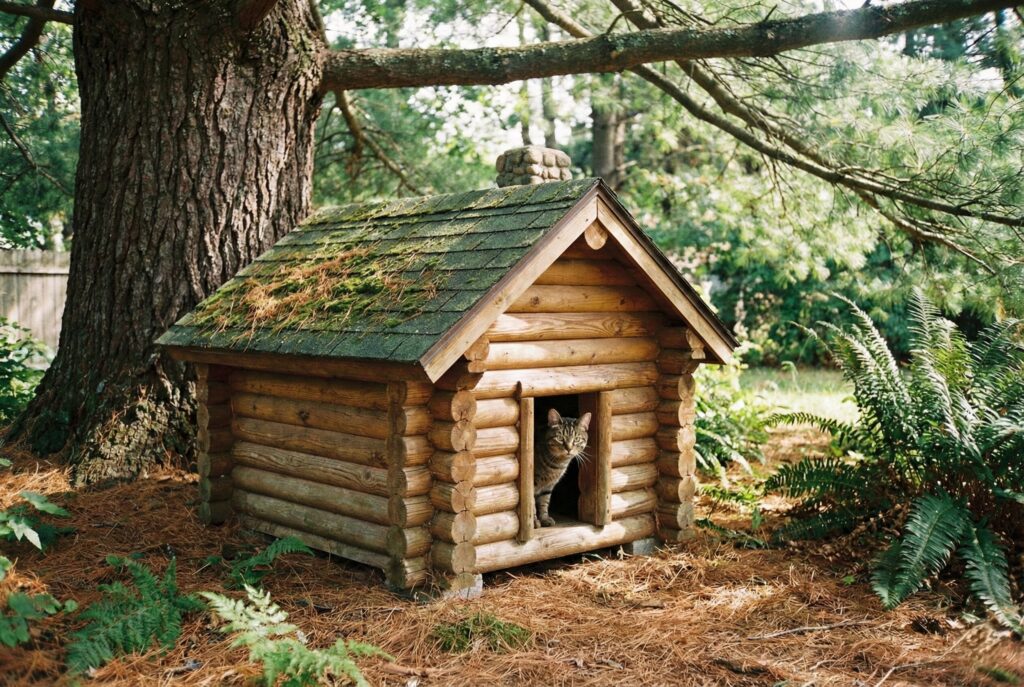
For a cabin-in-the-woods aesthetic, you can buy cat houses built with small, interlocking round logs, just like a human-sized log cabin.
These are almost always store-bought due to the specialized wood milling required. They are very sturdy and visually appealing in a rustic garden. The thick logs provide decent natural insulation. Ensure the manufacturer uses rot-resistant timber and that the chinking between logs is sealed tightly to prevent drafts.
9. The Window Perch Box (Indoor Focus)
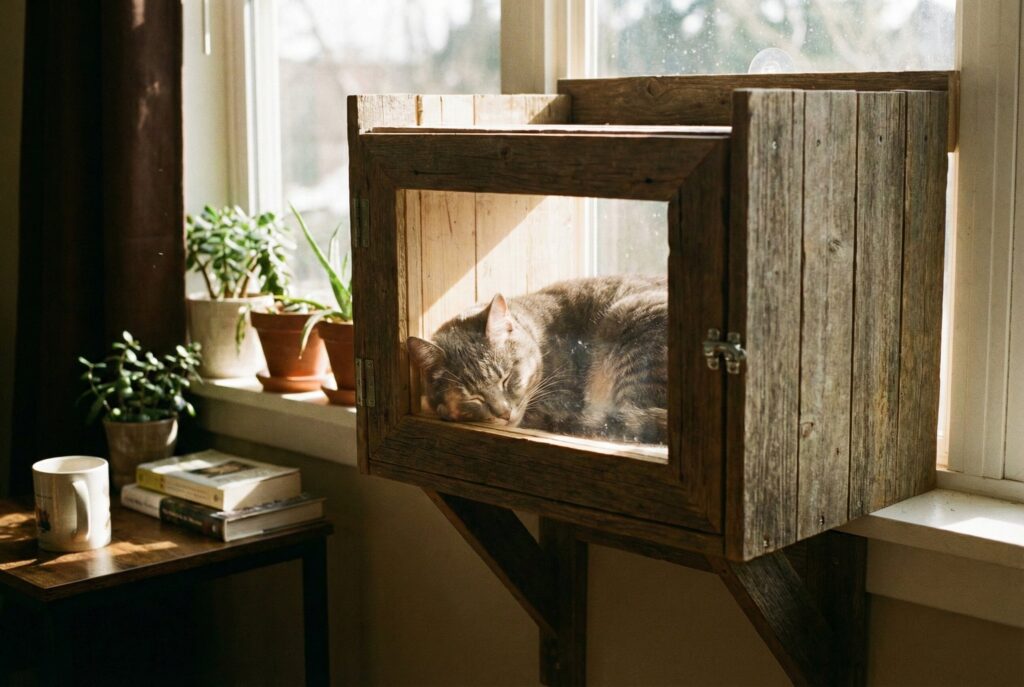
This idea combines a cat’s love for looking out windows with their desire for an enclosed space.
This is a wooden box that mounts securely to a windowsill and often requires braces that push against the wall below the window for support. The box extends outward, and the top is usually open or has a clear acrylic lid so the cat can bask in the sun while being contained. The entry is from the windowsill side. It requires careful construction to ensure it can hold the cat’s weight securely without damaging the window frame.
10. The Heated Haven (Feature Focus)
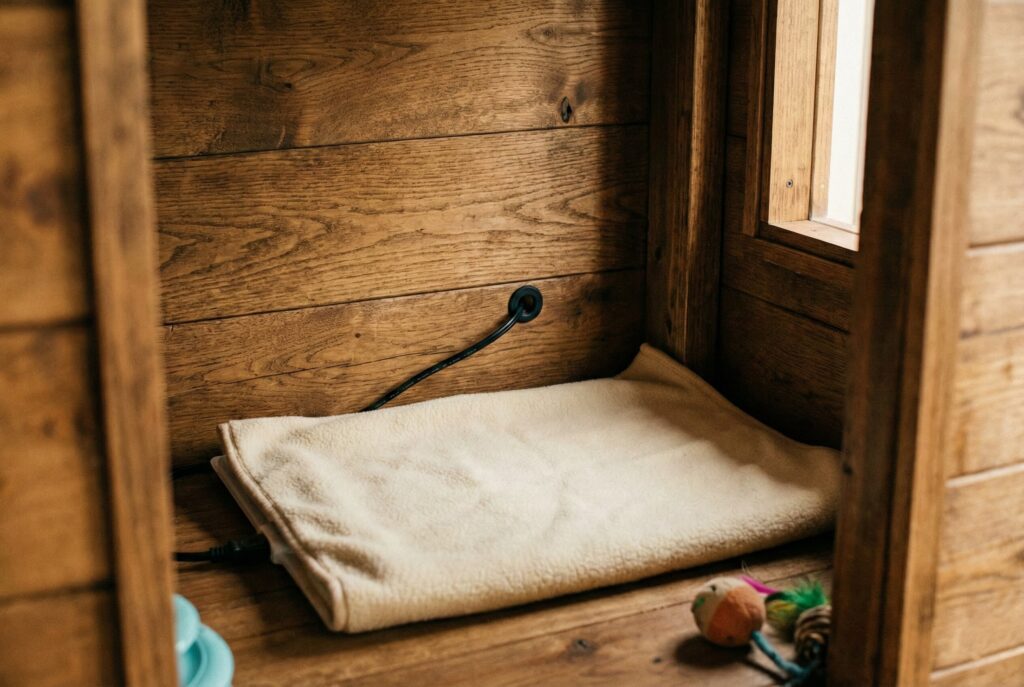
This isn’t a specific shape, but a feature set you can add to a DIY build or look for in high-end store-bought outdoor houses.
A truly heated house requires access to electricity. The best approach is to use an outdoor-rated, pressure-sensitive pet heating pad placed on the floor of the wooden house. You must drill a small hole near the floor to pass the power cord through so the cat cannot chew it. Some high-end store-bought wooden houses come with heated floors built-in. This is a lifesaver for short-haired or older cats in freezing temperatures.
11. The Multi-Level Cat Tower Complex (Store-Bought Focus)
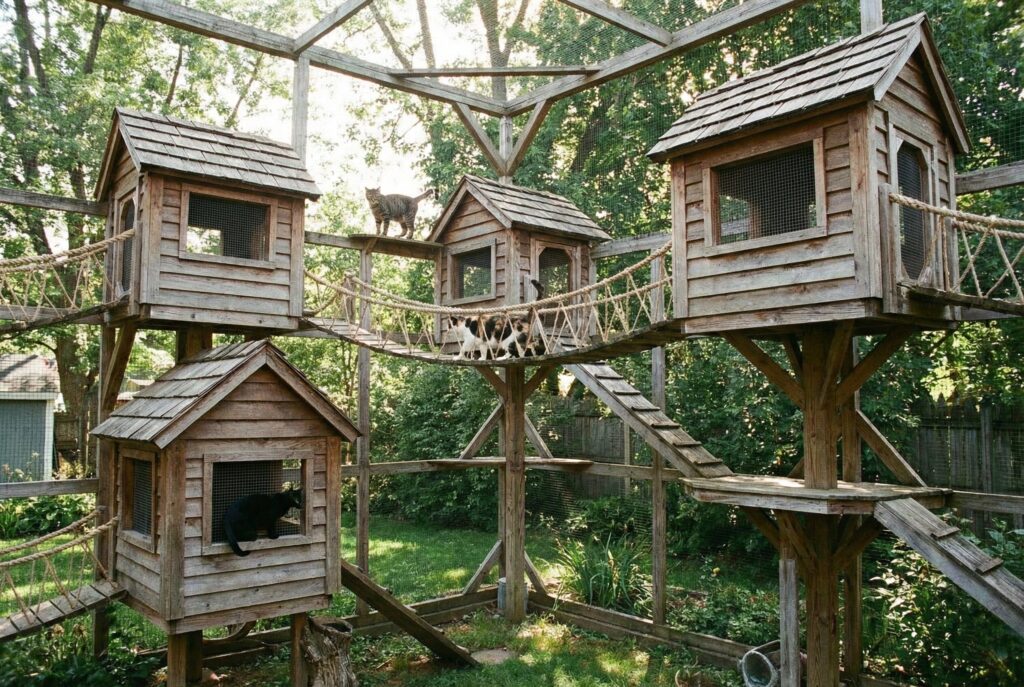
These are massive structures, often resembling play structures for kids, but for cats. They are best for households with multiple active cats and large outdoor spaces (like a “catio”).
These large wooden structures feature multiple enclosed boxes at different heights, connected by ramps, bridges, and platforms. They allow for climbing, playing, and sleeping. Due to their size and engineering needs, these are usually store-bought kits that require assembly. Look for pressure-treated wood or cedar if it will be fully exposed to the weather.
12. The Simple Lean-To Shed (Beginner DIY)
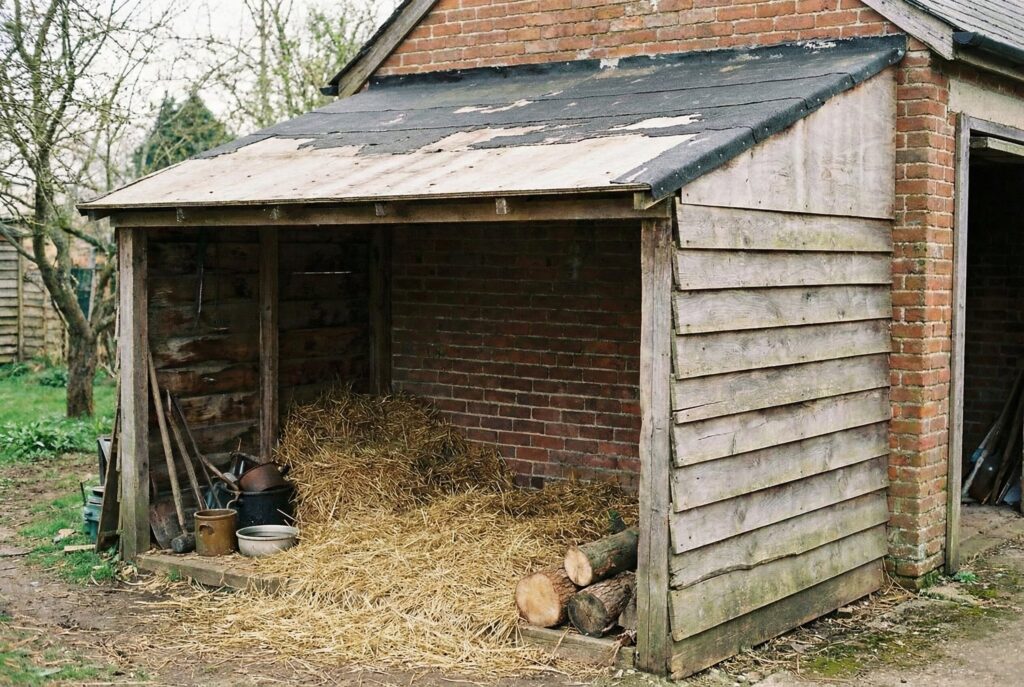
If you need a quick, easy shelter against a garage or house wall, a lean-to is the simplest structure.
It uses an existing wall of your house or shed as the back wall of the cat shelter. You build three sides and a slanted roof that leans against the existing structure. You must seal the joint where the roof meets the existing wall to prevent rain from running down behind it. It’s easier than building a free-standing four-walled box.
Why Choose Wood for Your Cat’s Shelter?
When selecting a material for a cat house, wood generally outperforms plastic or fabric alternatives, especially for outdoor use. Here is why wood is the preferred choice for quality cat shelters.
Natural Insulation
Wood has inherent insulating properties. In colder climates, thick wood walls help retain the cat’s body heat, keeping the interior warmer than the outside air. Conversely, in hot weather, wood does not heat up as quickly as plastic, keeping the interior cooler. For outdoor cat houses used in winter, wood is the best base material to pair with additional rigid foam insulation.
Durability and Weight
A well-built wooden structure is solid and heavy. This is crucial for outdoor shelters facing high winds or potential predators. A flimsy plastic house can easily blow away in a storm, leaving the cat exposed. A solid wooden house stays put. With proper maintenance, such as sealing or painting, wood can last for many years.
Aesthetic Appeal
Let’s face it: many cat products are an eyesore. Wooden cat houses, whether rustic cedar or modern plywood, look better in your home or yard. Wood can be stained to match your deck, painted to match your house siding, or left natural for a rustic look. It feels like a piece of furniture rather than a cheap pet accessory.
Customization
Wood is easy to work with. If you buy a store-bought wooden house and decide later you want to add a second exit flap, install a heating pad cord port, or add extra insulation, you can easily modify the structure with basic tools.
Key Considerations Before You Choose
Before diving into the list of ideas, you need to define your specific needs. A house designed for an indoor tabby is very different from a survival shelter for a feral neighborhood cat.
Indoor vs. Outdoor Use
- Outdoor: The primary goal is protection from the elements. The house must be weatherproof. Look for features like slanted roofs with overhangs to shed rain and snow away from the entrance. It needs to be raised off the ground to prevent moisture from seeping in and to avoid cold transfer from frozen ground. Cedar is an excellent wood choice for outdoors because it is naturally resistant to rot and insects.
- Indoor: Weatherproofing isn’t necessary. The focus shifts to aesthetics, comfort, and how it fits your living space. Indoor houses can use materials like high-grade plywood or pine that might not hold up outside.
Insulation and Heating needs
If the house is for outdoor winter use in a cold climate, plain wood walls are usually not enough. You need a design that incorporates rigid foam insulation between double wood walls. You should also consider if the house needs to accommodate an outdoor-rated pet heating pad. If so, ensure there is a small port for the electrical cord to pass through safely.
Size and Occupancy
How many cats will use the house? A house that is too large will not hold heat effectively, making the cat colder in winter. A house that is too small will be cramped. If you have multiple cats that snuggle, a duplex design or a larger single room works. If the cats don’t get along, they need separate houses.
Escape Routes
Outdoor cats, especially feral or community cats, are often wary of entering a confined space where they could be trapped by a predator. A good outdoor design should always include a secondary escape door. This is usually a back flap that allows the cat to bolt if an animal enters the front door.
Maintenance Tips for Wooden Cat Houses
To ensure your wooden cat house lasts for years and remains a healthy environment for the cat, regular maintenance is required.
Cleaning: At least twice a year, empty the house completely. Remove old bedding, which can harbor fleas or mites. Sweep out dirt and debris. Wipe down the interior walls with a pet-safe disinfectant or a weak vinegar solution. Let it dry completely before adding fresh straw (for outdoors) or blankets (for indoors).
Exterior Protection: If the house is outdoors, reapply a non-toxic exterior sealant or stain every one to two years. This prevents water from soaking into the wood, which leads to rot and warping. Pay special attention to the legs or base where it contacts the ground. Check the roof for any damage to shingles or felt and repair leaks immediately to keep the insulation dry.