
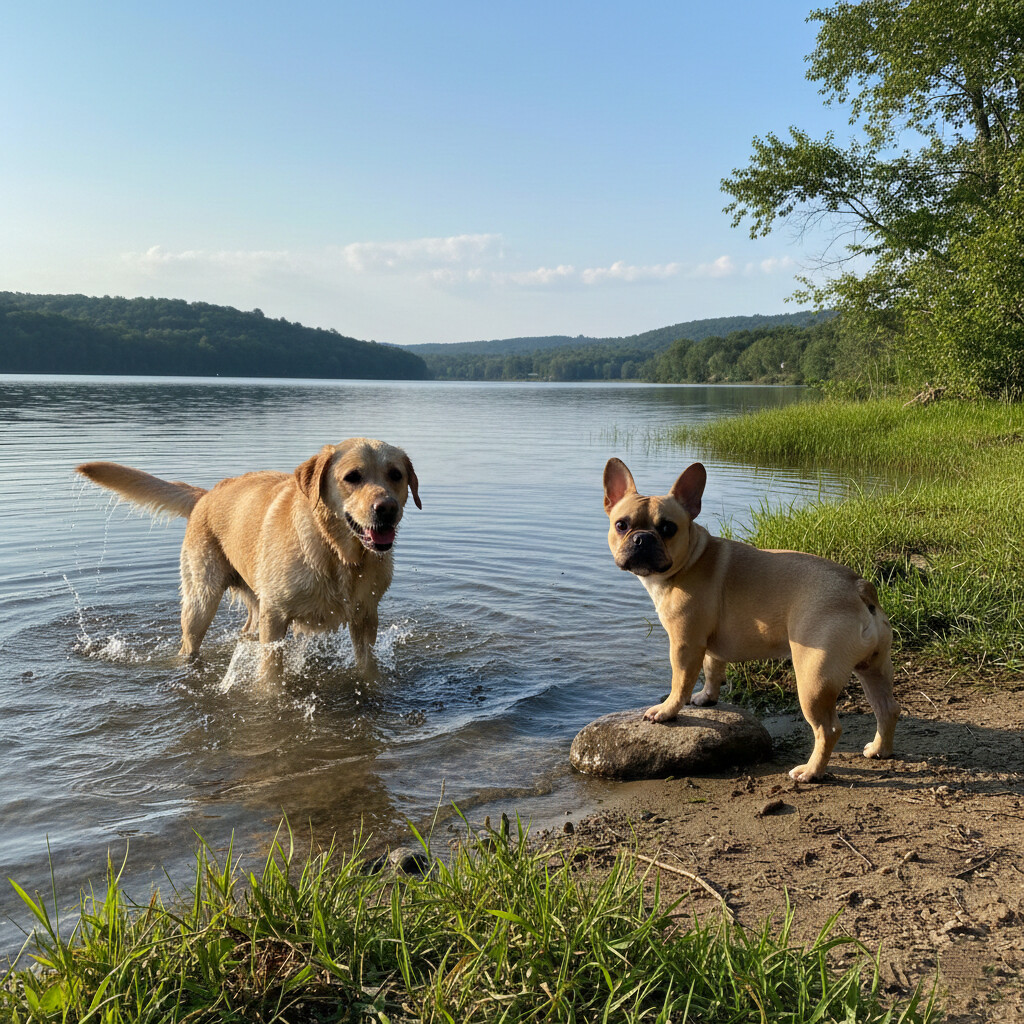
Whether a dog loves or hates water largely depends on genetics, anatomy, and past experiences. Breeds like Retrievers and Spaniels were historically bred for water work and possess physical traits like webbed feet and water-resistant coats that make swimming easy. Conversely, breeds with short legs, heavy chests, or flat faces (brachycephalic breeds) often struggle to stay afloat, leading to a natural fear. Additionally, a dog’s individual personality and early exposure to water play a massive role; a puppy introduced to water gently is far more likely to enjoy it than one who had a scary experience.
Summary Table: Water Lovers Dogs vs. Land Lovers Dogs
| Feature | Water Lovers | Land Lovers |
| Typical Breeds | Golden Retrievers, Labradors, Newfoundlands, Poodles | Bulldogs, Pugs, Dachshunds, Greyhounds |
| Anatomy | Webbed paws, long legs, thick tail (rudder), oily topcoat | Short legs, heavy chest, flat face, thin skin/coat |
| Historical Job | Retrieving waterfowl, hauling nets, water rescue | Lap companionship, burrowing, racing on land |
| Swimming Ability | High natural buoyancy, strong paddling | Low buoyancy, struggles to keep head up |
| Temperament | Adventurous, high energy, eager to please | Cautious, comfort-seeking, independent |
Why Some Dogs Love Water and Others Don’t?
Have you ever wondered why your Golden Retriever dives into every mud puddle while your neighbor’s Bulldog acts like the sprinkler is a monster? It is a common curiosity for dog owners. While individual personality plays a part, the answer is usually rooted in biology and history.
Understanding these factors can help you manage your expectations and keep your dog safe and happy, whether they are a natural-born swimmer or a confirmed landlubber.
Read Also: How to Choose the Right Dog for Your Lifestyle?
1. It’s in the Genes: History and Breeding
For centuries, humans have bred dogs for specific jobs. These original purposes still influence how dogs behave today, even if they never work a day in their lives.
- Water Workers: Many breeds were specifically created to work in and around water. For example, the Portuguese Water Dog was bred to herd fish into nets and retrieve lost tackle. Labrador Retrievers were gun dogs designed to fetch ducks from cold lakes. For these dogs, entering water is an instinct—it feels like “work” in the best possible way.
- Land Specialists: On the other hand, breeds like the Dachshund were bred to dig into badger dens underground. Their job required being low to the earth, not paddling on the surface. Similarly, Greyhounds were built for sprinting on dry tracks. For them, water serves no historical purpose, so they often see no reason to go in it.
2. Anatomy: Built to Swim (or Sink)
A dog’s physical build is the single biggest factor in their swimming ability. If a dog feels like they are sinking, they will naturally be afraid.
Traits of Good Swimmers:
- Webbed Feet: Breeds like the Newfoundland and Weimaraner have skin between their toes that acts like paddles, helping them move efficiently through water.
- Double Coats: Many water breeds have a dense, oily undercoat that repels water and keeps them warm. This prevents them from getting waterlogged and cold.
- Rudder Tails: Thick, strong tails (like the “otter tail” of a Lab) help dogs steer in the water.
Traits of Non-Swimmers:
- Top-Heavy Build: Dogs with large chests and small hindquarters, like Bulldogs and Boxers, tend to tip forward in the water. They have to work extremely hard just to keep their heads above the surface.
- Short Legs: Breeds like Corgis and Basset Hounds have legs that are too short to provide enough thrust to keep their heavy bodies afloat easily.
- Flat Faces (Brachycephalic): Pugs, Frenchies, and Shih Tzus have short airways. It is difficult for them to breathe while exercising, and if water splashes into their nose, they are at a high risk of aspirating (inhaling) it.
3. Personality and Early Experiences
Nature provides the hardware, but nurture writes the software. A dog’s individual history can override their breed traits.
- The Fear Period: Puppies go through a critical socialization window (usually between 8 and 16 weeks). If a puppy is thrown into a pool or startled by a hose during this time, they may develop a lifelong phobia.
- Trauma: An accidental fall into a pool can be terrifying for a dog who doesn’t know how to swim. This “single-event learning” can make them avoid water forever.
- Exposure: A dog that is slowly introduced to shallow water, treats, and fun toys will likely associate water with positivity. A dog that only sees water during a stressful bath time will learn to hate it.
Read Also: Working Dogs vs Companion Dogs: What’s the Difference?
Breeds That Typically Love Water
If you are looking for a swimming buddy, these breeds are your best bet. They generally require little encouragement to get wet.
- Labrador Retriever: America’s favorite dog is also a top-tier swimmer. They have a water-resistant coat and a powerful tail.
- Golden Retriever: They love retrieving almost as much as they love splashing. They are strong swimmers with high endurance.
- Newfoundland: These gentle giants were used for water rescue. Their massive lung capacity and webbed feet make them incredible swimmers.
- Standard Poodle: Despite their fancy haircuts, Poodles were originally water retrievers. Their name even comes from the German word pudeln, meaning “to splash.”
- Portuguese Water Dog: Energetic and intelligent, these dogs were the fishermen’s best friend.
- American Water Spaniel: A rare breed developed in Wisconsin specifically to hunt from skiffs and canoes.
Breeds That Usually Prefer Dry Land
These dogs are happier on the couch or the grass. If you own one of these breeds, always use extra caution around deep water.
- Bulldog (English and French): Their density and structure make swimming nearly impossible and dangerous without a life vest.
- Pug: Their flat faces make breathing difficult, and they tire very quickly.
- Dachshund: Their long bodies and short legs make swimming exhausting.
- Greyhound: They have very low body fat, meaning they get cold easily in water. They are built for speed, not buoyancy.
- Maltese/Shih Tzu: While they can swim, many small dogs feel overwhelmed by the vastness of a pool or lake and can easily get cold.
Read Also: When Do Puppies Stop Teething?
How to Help a Fearful Dog
Just because your dog is afraid doesn’t mean they can’t learn to tolerate or even enjoy the water. However, you should never throw a scared dog into the water. This can cause panic and drowning.
Steps for a Positive Introduction:
- Start Small: Use a kiddie pool with only an inch of water. Let them walk in and out freely.
- Use High-Value Treats: Reward them heavily for sniffing the water or getting their paws wet.
- Get a Life Jacket: This is essential for poor swimmers. A life jacket with a handle gives your dog confidence because they realize they won’t sink.
- Go at Their Pace: If they panic, stop. Go back a step. It might take weeks for them to feel comfortable.
- Lead by Example: Sometimes, seeing you or another friendly dog playing happily in the water is the best encouragement.
Conclusion
Whether your dog is a furry fish or a land-lover is a mix of their ancestors’ jobs, their body shape, and their puppyhood memories. While you can train a dog to be safer around water, you cannot always change their nature. Respect their preferences if your Pug wants to watch from the dry deck while your Lab does cannonballs, that is perfectly okay. The most important thing is that your dog is safe, loved, and having fun, wet or dry.