
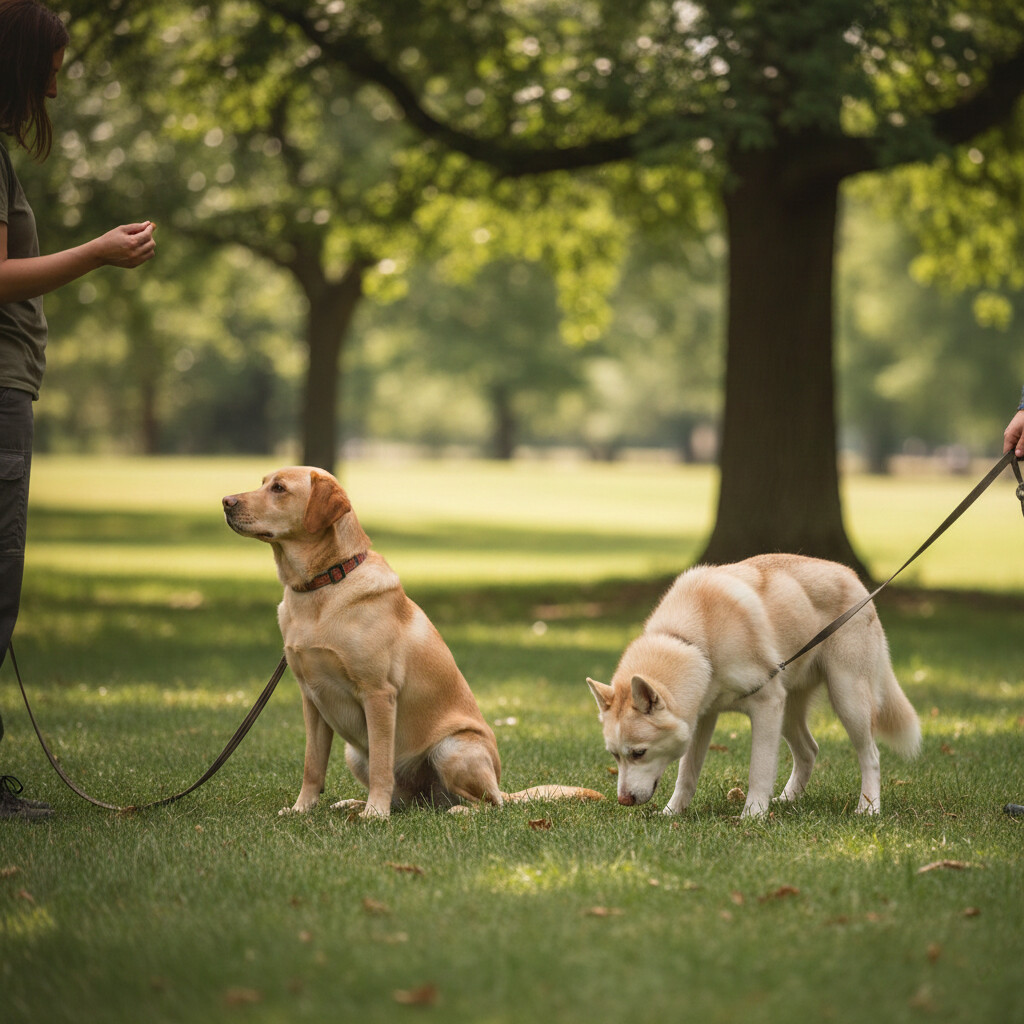
Some dogs are harder to train than others due to a combination of genetics, independent nature, motivation levels, and past experiences. Breeds bred to work independently (like Hounds or Terriers) often prioritize their own instincts over handler commands, unlike “biddable” breeds (like Retrievers) that are bred to work closely with humans. Additionally, lack of early socialization, underlying health issues, or a mismatch in rewards can make training significantly more challenging.
Summary Table
| Factor | Description | Impact on Training |
| Genetics / Breed | Bred instincts (herding, guarding, hunting). | High. Independent breeds require more motivation. |
| Age | Puppyhood, adolescence, or senior years. | Medium to High. Attention spans vary by age. |
| History | Trauma, lack of socialization, or bad habits. | High. Fear can block learning. |
| Health | Pain, hearing loss, or cognitive decline. | High. Physical discomfort prevents focus. |
| Motivation | What the dog wants (food, toys, freedom). | Critical. Using the wrong reward leads to failure. |
| Handler Consistency | How clear and consistent the human is. | Critical. Confusing signals slow down progress. |
Why Some Dogs Are Harder to Train Than Others
It is a common frustration for dog owners: You see a neighbor’s dog sitting perfectly still while yours is dragging you toward a squirrel. You might wonder if your dog is stubborn, not smart, or if you are just doing it wrong.
The truth is rarely about intelligence. In fact, some of the “hardest” dogs to train are actually the smartest. Trainability is often confused with intelligence, but they are different traits.
Trainability refers to biddability, or how willing a dog is to follow your instructions.
Intelligence often refers to problem-solving ability. A dog can be smart enough to open your fridge but “stubborn” enough to ignore your call to come.
This guide explores the biological, psychological, and environmental reasons why training varies so wildly between individual dogs.
Read Also: How to Stop Excessive Barking?
1. The Role of Genetics and Breed Traits
Genetics is the blueprint of your dog’s behavior. For centuries, humans have selectively bred dogs to perform specific jobs. These jobs dictate how attentive a dog is to their handler.
The “Biddable” Breeds
Breeds like Labrador Retrievers, Border Collies, and German Shepherds were bred to work directly with people. A Shepherd needs to listen to the farmer to move sheep; a Retriever waits for the hunter’s signal. Evolution has wired their brains to find value in human cooperation.
The “Independent” Breeds
Other breeds were designed to work alone or at a distance.
- Hounds (Beagles, Bassets, Afghan Hounds): These dogs were bred to track scents over long distances, often miles away from the hunter. If they stopped to look for permission every time they smelled a rabbit, they would fail at their job. They are genetically programmed to follow their nose, not your voice.
- Terriers (Jack Russells, Scotties): Bred to hunt vermin in barns and underground. They need tenacity and the ability to make their own decisions while fighting a badger or rat. They are not stubborn; they are persistent.
- Northern Breeds (Huskies, Malamutes): These dogs pulled sleds over vast, dangerous terrains. They had to be smart enough to refuse a command if the musher tried to drive them over thin ice. Blind obedience could mean death, so they question authority naturally.
2. Motivation Mismatches
Training is an exchange. You ask for a behavior, and you pay with a reward. A major reason dogs seem hard to train is that the “payment” you are offering isn’t valuable to them.
Many owners assume every dog works for kibble or a pat on the head.
- The Food-Driven Dog: Will do backflips for a piece of cheese. (Example: Pug, Lab).
- The Toy-Driven Dog: Ignores food but will work perfectly for a tennis ball throw. (Example: Malinois, Spaniel).
- The Environmental Dog: Finds sniffing a bush more rewarding than a steak.
If you are trying to train a Beagle to “Heel” using dry kibble while he smells a deer trail, you will fail. The smell of the deer is a $100 bill, and your kibble is a penny.
To train this dog, you need higher-value rewards (like hot dogs or freeze-dried liver) or “life rewards” (releasing them to go sniff as a reward for sitting).
Read Also: Why Regular Exercise Is Crucial for Dogs?
3. The “Teenage” Phase (Adolescence)
Age plays a massive role in focus. A puppy has a “blank slate” brain but a tiny attention span. However, the most difficult age for training is usually adolescence (roughly 6 months to 18 months).
During this time, a dog’s brain is literally remodeling. Hormones are surging (even in fixed dogs, though to a lesser degree), and the part of the brain responsible for impulse control is under construction.
Owners often report that their dog “forgot everything” during this phase. A dog that sat perfectly at 4 months old might look at you blankly at 8 months.
They are not being spiteful; their brain chemistry is prioritizing exploration and independence over obedience.
This is the age when most dogs are surrendered to shelters, but it is a temporary phase that requires patience, not punishment.
4. Past History and Socialization
A dog’s history can build walls that make learning difficult. This is especially true for rescue dogs, but it applies to all dogs.
The Fear Factor
If a dog is anxious or afraid, their brain enters “survival mode.” In this state, the learning centers of the brain shut down. You cannot teach a dog to “sit” if they are terrified of the garbage truck outside.
- Undersocialization: A dog that wasn’t exposed to the world as a puppy may find everything distracting or scary.
- Trauma: A dog with a history of punishment may be afraid to offer behaviors. If they were hit for doing the wrong thing in the past, they might freeze up rather than try to guess what you want.
Learned Helplessness vs. Learned Irrelevance
- Learned Helplessness: The dog gives up because they feel they have no control over the outcome.
- Learned Irrelevance: This happens when an owner repeats a command constantly without following through (“Sit. Sit. Sit. Sit!”). The dog learns that the word “Sit” is just background noise and doesn’t require action.
5. Medical and Physical Hidden Issues
Before labeling a dog “untrainable,” you must rule out physical barriers. A dog cannot comply if it hurts to do so.
- Pain: A dog with hip dysplasia may refuse to “Sit” because the motion causes sharp pain. A dog with dental disease may spit out treats or refuse to grab a dumbbell.
- Sensory Loss: “Stubbornness” in older dogs is often just hearing loss. They aren’t ignoring you; they literally didn’t hear the command.
- Thyroid Issues: Hypothyroidism can cause mental dullness and lethargy, making a dog seem lazy or unmotivated.
- Canine Cognitive Dysfunction (CCD): Similar to dementia in humans, this affects senior dogs, causing confusion and the loss of previously learned behaviors.
6. Handler Error (The Human Element)
Often, the dog is ready to learn, but the teacher is confusing. Dogs do not speak English; they learn through patterns and associations. Human inconsistency is a leading cause of training failure.
Inconsistent Cues
If you say “Down” when you want the dog to get off the couch, but your partner says “Off,” and you also use “Down” to mean “lie on the floor,” the dog will be confused.
Timing
Dog training relies on split-second timing. If you tell a dog to “Sit,” and you give them the treat 3 seconds later when they are starting to stand up, you have just rewarded them for standing up, not sitting.
Poisoning the Cue
This happens when a command becomes associated with something negative. If you scream “COME!” and then give the dog a bath (which they hate), they will learn that coming to you leads to bad things.
They will stop coming when called, not because they are dumb, but because they are smart enough to avoid the negative outcome.
Read Also: How to Spot Pain in Dogs That Don’t Cry?
7. Intelligence vs. Biddability
It is vital to reiterate the difference between a smart dog and a trainable dog.
- The Border Collie: High Intelligence + High Biddability. They learn complex tasks and want to do them for you.
- The Basenji: High Intelligence + Low Biddability. They can figure out how to escape a locked crate, but they see no reason to “Shake hands” just because you asked.
Smart, independent dogs get bored easily. If you make a Border Collie repeat a task 20 times, they might do it faster each time.
If you make a smart Terrier do it 20 times, by the third time they may wander off to find something more interesting. They learned it the first time; they just don’t see the point in drilling it.
How to Train a “Hard” Dog
If you have a dog that fits these difficult criteria, you are not out of luck. You just need to change your strategy.
1. Find Their Currency
Stop using dry biscuits. Experiment with cheese, boiled chicken, hot dogs, tug toys, or squeaky balls. For hunting breeds, use scents as rewards. For example, ask for a “Sit,” and the reward is being allowed to go sniff a tree.
2. Keep Sessions Short
Independent dogs bore easily. Do not train for 30 minutes. Train for 3 minutes, three times a day. Quit while the dog is still having fun.
3. Control the Environment
If your dog is easily distracted, start training in a boring room with no windows (like a bathroom). Do not try to teach new tricks at the dog park. You must build the habit in a quiet place before competing with the rest of the world.
4. Capture Behavior
Instead of commanding the dog, wait for them to do the behavior naturally. When your stubborn dog lies down on their own, immediately say “Yes!” and drop a treat. They will start to think, “Hey, lying down makes candy appear.”
5. Ditch the Bowl
If your dog is food motivated but distracted, stop feeding them out of a bowl. Use their daily meal allowance for training. If they want to eat, they have to work for it. This increases the value of your interaction.
Summary
There is no such thing as an untrainable dog, but there are definitely mismatched pairs. Understanding why your dog is struggling is the first step to fixing it.
If you have a Hound, stop expecting them to act like a Retriever. If you have a rescue with a history of fear, prioritize confidence over obedience. If you have an adolescent, invest in patience.
Training a “hard” dog is often more rewarding than training an easy one. When a naturally independent dog chooses to listen to you, not because they are programmed to, but because you have built a relationship of trust and value, that is a true victory.