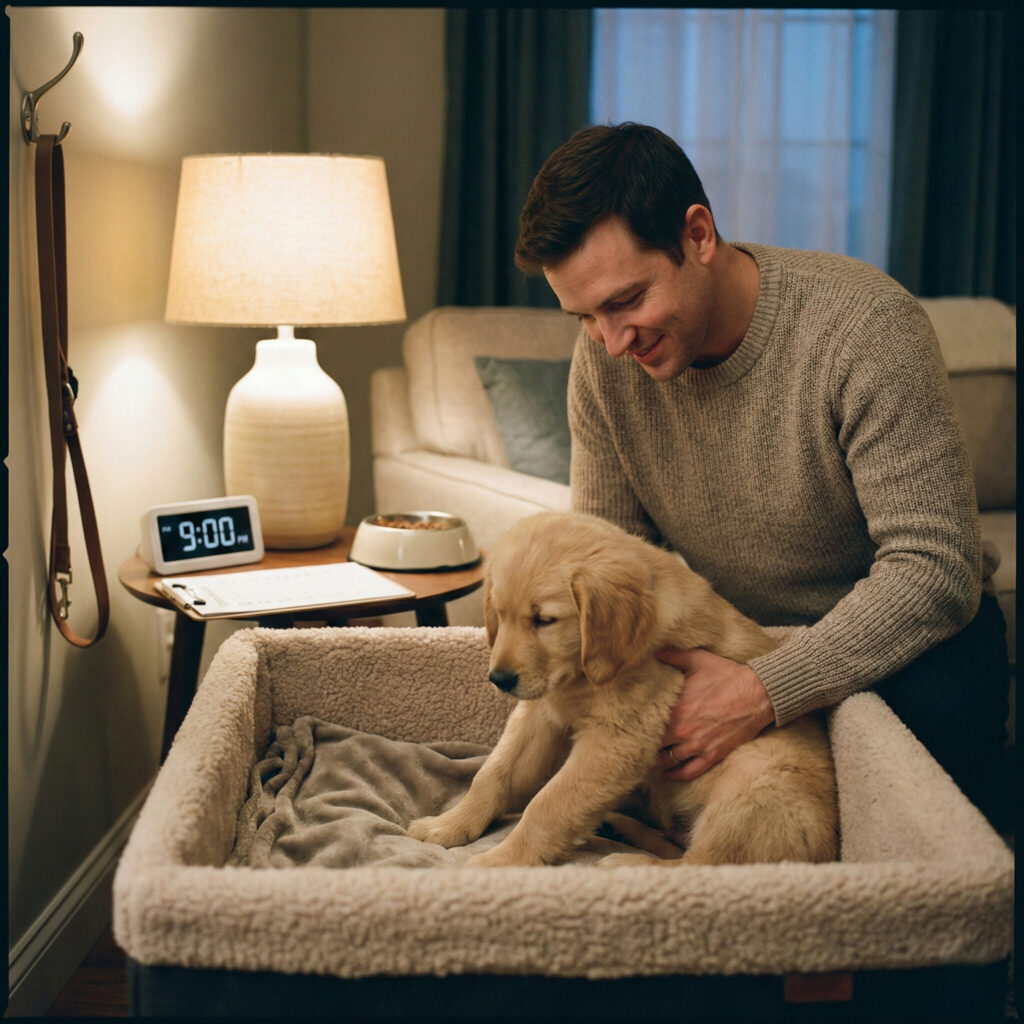
Routine provides puppies with a sense of security and predictability, which drastically reduces anxiety and behavioral issues like biting or excessive barking. A consistent schedule regulates their digestion for faster potty training, ensures they get the necessary 18-20 hours of sleep for proper development, and helps build a strong bond of trust between the dog and the owner.
Summary Table
| Benefit Category | Key Impact | Actionable Tip |
| Potty Training | Faster housebreaking; fewer accidents inside. | Take the puppy out immediately after waking, eating, or playing. |
| Behavior | Reduces biting, whining, and destruction due to stress. | Stick to set times for play and rest to prevent overstimulation. |
| Sleep Health | Ensures proper brain development and immune health. | Enforce “nap times” in a crate or quiet area every few hours. |
| Digestion | Regular bowel movements make cleanup predictable. | Feed at the exact same times every day (e.g., 7 AM, 12 PM, 5 PM). |
| Confidence | Builds a confident dog who isn’t afraid of being alone. | Practice short periods of separation at scheduled times. |
Why Routine Is Important for Puppies?
Bringing a new puppy home is one of the most exciting moments in life, but it is often followed by a period of chaos. New owners frequently find themselves exhausted, cleaning up accidents, and dealing with a biting “land shark” at 2 AM. The difference between a chaotic puppyhood and a smooth transition lies in one specific tool: a consistent routine.
Many owners mistake routine for being strict or boring. In reality, dogs are creatures of habit. They do not understand human language, so they look for patterns to understand their world. When a puppy knows what to expect next, whether it is food, play, or sleep, their stress levels drop, and their ability to learn skyrockets.
This guide details exactly why routine is biologically and psychologically necessary for your new dog and how it saves your sanity.
Read Also: How to Prevent Resource Guarding in Puppies
1. The Biological Clock and Security
Puppies arrive in your home with no concept of “house rules.” In the wild, animals rely on the sun and their internal body clocks (circadian rhythms) to tell them when to hunt, sleep, and wake. When you impose a domestic routine, you are syncing their internal clock with your lifestyle.
Predictability Reduces Cortisol
When a puppy does not know when they will eat next or when they can go to the bathroom, they experience low-level chronic stress. This releases cortisol, a stress hormone. High cortisol levels make puppies jumpy, reactive, and difficult to train. A predictable day tells the puppy they are safe. When they feel safe, they are calm.
Building Trust
A routine teaches your puppy that you are a reliable provider. If they learn that sitting by the door at 7:00 AM results in a walk, they trust you to meet their needs. This forms the foundation of the human-dog bond.
2. Accelerating Potty Training
The number one reason new owners return dogs to shelters is difficulty with housebreaking. A routine is the “cheat code” for potty training.
The Gastrocolic Reflex
Puppies have a biological response called the gastrocolic reflex. When food fills the stomach, the colon is stimulated to empty. This happens very quickly in puppies, usually 10 to 30 minutes after eating. If you feed your puppy at random times, you will have random poop times. If you feed on a schedule, you can predict exactly when they need to go out.
Bladder Control Development
Young puppies do not have full control over their bladder muscles. They cannot “hold it” like an adult dog.
- The Rule of Thumb: Generally, a puppy can hold their bladder for one hour for every month of age (e.g., a 2-month-old puppy = 2 hours).
- The Reality: During active play, they may need to go every 20 minutes.
By scheduling water intake, feeding times, and potty breaks, you minimize the window of opportunity for accidents to happen inside. You are setting the dog up to succeed rather than waiting for them to fail.
3. Sleep: The Antidote to Biting
One of the biggest misconceptions about puppies is that if they are running around and biting, they have “too much energy” and need to play more. Usually, the opposite is true. They are overtired.
Puppy Sleep Requirements
Growing puppies need a massive amount of sleep, between 18 and 20 hours per day. This is crucial for brain development, immune system growth, and muscle repair.
The Overtired Tantrum
Think of a puppy like a human toddler. When a toddler misses a nap, they don’t just fall asleep; they scream, cry, and throw things. When a puppy misses a nap, they bite, bark, and get the “zoomies” (frantic running around).
If you do not have a routine that enforces nap time (usually in a crate or playpen), the puppy will force themselves to stay awake to be near you. An enforced nap schedule (e.g., one hour awake, two hours asleep) stops the biting behavior before it starts.
4. Regulating Digestion and Health
Feeding routine does more than just help with potty training; it regulates the puppy’s entire metabolism.
Identifying Health Issues Early
When a dog eats at the same time every day, you know what their “normal” appetite looks like. If your puppy usually devours breakfast at 7:00 AM but refuses to eat one morning, you know immediately that something is wrong. Without a routine, you might just assume they aren’t hungry yet, delaying necessary veterinary care.
Preventing Obesity
Free-feeding (leaving a bowl of food out all day) is a major contributor to pet obesity. It also lowers the value of food. When food is available 24/7, the puppy has no motivation to work for treats during training. Scheduled meals keep the dog lean and keep their food drive high for training sessions.
5. Preventing Separation Anxiety
Separation anxiety is a panic response when a dog is left alone. It is much easier to prevent than to fix. A routine teaches the puppy that being alone is a normal, temporary part of the day, not an abandonment.
The “Departure” Routine
If you only leave the puppy alone when you leave for work, that event becomes scary. A good routine includes “alone time” even when you are home. For example, placing the puppy in their pen with a chew toy while you shower or cook dinner teaches them self-soothing.
Certainty of Return
If the routine dictates that 9:00 AM to 11:00 AM is “crate time” and 11:00 AM is “play time,” the puppy learns that confinement always ends. They don’t need to panic and bark because they know you are coming back. Unpredictability breeds anxiety; routine breeds confidence.
Read Also: Common Puppy Health Concerns
6. Maximizing Training Success
Training is not something you do once a week at a class; it is a lifestyle. However, puppies have very short attention spans.
The Learning State
A puppy cannot learn effectively when it is bursting with energy or desperate to pee. A routine ensures that training happens at the optimal time: usually right after a potty break and before a meal (so they are hungry and motivated).
Consistency is Key
Dogs learn through repetition. If you practice “sit” and “stay” for 5 minutes every morning before breakfast, your puppy will master it in weeks. If you practice for an hour once on Saturday, they will forget it by Sunday. Embedding training into your daily time blocks ensures you actually do it.
7. Socialization and Exposure
Socialization is the process of exposing your puppy to new sounds, surfaces, people, and dogs. There is a “critical socialization window” that closes around 14-16 weeks of age.
Planned Exposure
If you rely on random chances to socialize your dog, you might miss important triggers. A routine allows you to schedule specific outings.
- Tuesday: Walk past the noisy construction site.
- Wednesday: Visit the vet parking lot to get treats.
- Thursday: Meet a friend with a calm, adult dog.
By planning these into your week, you ensure your puppy meets a wide variety of stimuli in a controlled way, rather than being overwhelmed by everything at once.
8. Preserving Owner Sanity
We often focus on the dog, but the routine is equally important for the human. “Puppy Blues” is a real condition where new owners feel depressed or overwhelmed by the responsibility.
Reclaiming Your Life
A routine gives you your life back. If you know the puppy is safely sleeping in their crate from 7:00 PM to 9:00 PM, you can go to the gym, watch a movie, or eat dinner in peace without guilt. You stop being a “puppy hostage” and start enjoying pet ownership.
Sharing the Load
If you live with a partner or family, a written schedule prevents arguments. There is no confusion about “Did you feed the dog?” or “When did he last go out?” The schedule dictates the care, making it easy to split responsibilities fairly.
How to Create the Perfect Puppy Schedule
Every household is different, but a puppy schedule should generally follow the “Eat, Play, Sleep, Repeat” cycle. Here is a template you can adapt to your work hours.
Morning Phase
7:00 AM: Wake Up & Potty Immediately
Carry the puppy out if necessary. Do not speak or play until they have done their business. Praise them heavily when they go.
7:15 AM: Breakfast & Water
Feed the puppy. While they eat, you can make your coffee.
7:30 AM: Potty Break
Remember the gastrocolic reflex. Take them out again shortly after eating.
7:45 AM: Active Play & Training
This is the time to burn energy. Play fetch, tug, or do a 5-minute training session.
8:30 AM: Settle Down & Nap
The puppy has been up for 90 minutes. They are likely tired. Put them in the crate or pen for a nap.
Mid-Day Phase
12:00 PM: Wake Up & Potty
If you work away from home, this is when a dog walker or neighbor would drop in.
12:15 PM: Lunch
Puppies under 6 months usually need three meals a day.
12:30 PM: Potty & Socialization
A short walk or some time in the backyard.
1:00 PM: Nap Time
Back in the crate. This teaches them to settle during the workday.
Evening Phase
5:00 PM: Wake Up & Potty
Immediate relief after the afternoon nap.
5:30 PM: Dinner
The final meal of the day.
6:00 PM: Potty & Evening Activity
This is often the “witching hour” when puppies get crazy. Engage their brains with puzzle toys or a structured walk to tire them out mentally.
8:00 PM: Calm Time
Remove water about 2 hours before bed to prevent overnight accidents. minimal play. Cuddle on the couch.
10:00 PM: Final Potty & Bedtime
Lights out. Everyone sleeps.
Read Also: How Puppies Learn From Adult Dogs
Adjusting the Routine as They Grow
A routine is not static. As your puppy ages, their biological needs change.
- 8-12 Weeks: Needs constant supervision, hourly potty breaks, and 3 meals a day.
- 4-6 Months: Bladder control improves. You can extend nap times and spacing between potty breaks.
- 6-12 Months: Transition to 2 meals a day. Higher energy levels require longer walks or more intense play sessions during “active blocks.”
You must be flexible. If your routine says “walk at 5 PM” but it is raining heavily, and your puppy hates rain, swap it for indoor training. The goal is structure, not rigidity.
Common Mistakes to Avoid
1. Inconsistency on Weekends
It is tempting to sleep in on Saturday, but your puppy’s bladder wakes up at 7:00 AM regardless of the day. Drastically changing the routine on weekends can cause “Monday Morning Regression,” where the puppy acts out because the rules changed. Try to keep wake-up times within an hour of the weekday schedule.
2. Giving Attention for Breaking Routine
If your routine is to wake up at 7:00 AM, but the puppy whines at 6:30 AM, and you let them out, you have just taught them that whining resets the clock. Unless it is a potty emergency, wait for a break in the whining before opening the crate.
3. Ignoring Mental Stimulation
A routine consisting only of physical exercise is not enough. A bored puppy is a destructive puppy. Ensure your “play” blocks include brain games, sniffing, or learning new tricks.
Conclusion
Routine is the silent language you speak to your puppy. It tells them when to eat, where to sleep, and how to live in their human world. While it requires effort to establish in the first few weeks, the payoff is a lifetime of good behavior.
A structured routine solves the most frustrating puppy problems: housebreaking, biting, anxiety, and sleeplessness, before they even begin. By investing time in a schedule now, you are building a confident, calm, and happy dog who is a joy to live with. Start today, stick to it, and watch your chaotic puppy transform into a well-behaved companion.