
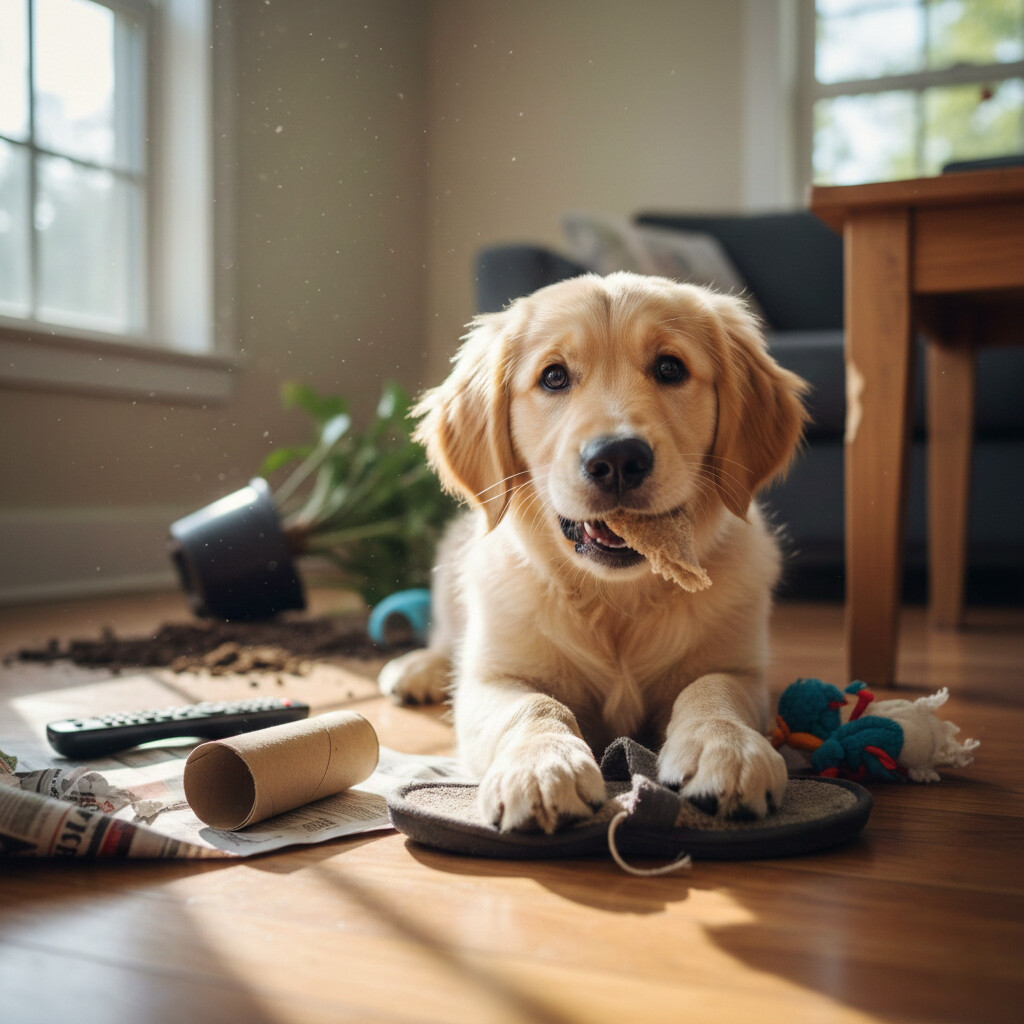
Puppies chew everything primarily to relieve the pain of teething, explore their new world, and combat boredom or anxiety. Just like human babies, puppies use their mouths to investigate textures and tastes. While destructive chewing is normal, it can be managed by providing appropriate chew toys, puppy-proofing your home, and using positive reinforcement training to redirect their behavior.
Summary Table
| Cause | Age Range | Solution |
| Teething | 3 weeks to 6 months | Freeze toys, offer soft rubber chews. |
| Exploration | 2 to 12 months | Supervise, redirect to toys, puppy-proof. |
| Boredom | All ages | Consult a vet, ensure a balanced diet. |
| Separation Anxiety | All ages | Crate training, calming aids, vet consult. |
| Nutritional Deficit | All ages | Consult a vet, ensure balanced diet. |
Why Puppies Chew Everything
Raising a puppy is one of the most rewarding experiences you can have, but it comes with challenges. One of the most common complaints new owners have is destruction. You turn your back for one minute, and your favorite shoes, the remote control, or the leg of your dining table has been gnawed on.
It can be frustrating, but it is important to understand that your puppy isn’t doing this to make you mad. Chewing is a completely natural, instinctive, and necessary behavior for dogs.
This guide will explain exactly why puppies chew, how long it lasts, and how you can stop them from destroying your home without crushing their spirit.
Read Also: Puppy Growth Spurts Explained
1. The Biological Reason: Teething Pain
The most common reason a young puppy chews is physical discomfort. Just like human infants, puppies go through a teething process that can be quite painful.
The Timeline of Puppy Teeth
- 3 to 4 Weeks: Baby teeth (deciduous teeth) start to erupt.
- 3 to 4 Months: Baby teeth begin to fall out to make room for adult teeth.
- 6 to 7 Months: All 42 adult teeth should be in place.
During that window between 3 and 7 months, your puppy’s gums are sore and itchy. Chewing provides counter-pressure that soothes this irritation. If they don’t have a designated toy to gnaw on, they will find the nearest object that feels good on their gums, often wooden furniture or leather shoes.
2. The Psychological Reason: Exploration
Puppies do not have hands to grab things and examine them. They rely on their mouths. This is how they map out their world.
When a puppy encounters something new, their instinct is to sniff it and then put it in their mouth. They are determining:
- Is this food?
- Is this a toy?
- Is this dangerous?
- What is the texture?
This curiosity is a sign of a healthy, intelligent dog. However, it means anything left on the floor is fair game in their eyes.
3. Emotional Triggers: Boredom and Anxiety
Once a dog is past the teething stage, chewing often becomes a behavioral issue rather than a physical one.
Boredom
High-energy breeds like Border Collies, Huskies, and Labs need significant mental and physical stimulation. If a puppy is left alone for long periods with nothing to do, they will make their own fun. Unfortunately, “fun” to a bored puppy often means shredding a couch cushion.
Separation Anxiety
Chewing that happens only when you leave the house is a classic sign of separation anxiety. This is a panic response. The act of chewing releases endorphins in a dog’s brain, which helps calm them down. They aren’t trying to ruin your things; they are trying to self-soothe because they are terrified of being alone.
Read Also: How to Help a Puppy Adjust to a New Home?
4. Medical Causes: Pica and Diet
In rare cases, chewing is related to a condition called Pica. This is when animals crave and eat non-food items like rocks, dirt, drywall, or plastic.
Pica can be caused by:
- Nutritional Deficiencies: Their diet may lack specific minerals.
- Parasites: Worms might be stealing their nutrients.
- Gastrointestinal Issues: They may chew to induce vomiting or soothe a stomachache.
If your puppy is actually swallowing non-food items rather than just shredding them, you need to see a veterinarian immediately. This can lead to life-threatening intestinal blockages.
How to Stop Destructive Chewing
Understanding why they do it is the first step. Now, let’s look at how to stop it. You cannot train a dog to never chew; it is an instinct. Instead, you must teach them what to chew.
1. Puppy-Proof Your Home
Management is better than punishment. If your puppy cannot reach your shoes, they cannot chew them.
- Use Bitter Sprays: Apply a bitter apple spray to furniture legs and baseboards. The bad taste deters most dogs.
- Hide Valuables: Keep shoes in closets and cords managed or covered.
- Use Baby Gates: Restrict your puppy to a “safe zone” (like the kitchen) where there is less to destroy.
2. The “Trade-Up” Game
If you catch your puppy chewing something they shouldn’t, do not just yell “No.” That only stops the behavior for a second. You must show them the right behavior.
- Calmly interrupt them (a gentle “Ah-ah” noise).
- Take the forbidden item away.
- Immediately give them an appropriate chew toy.
- When they start chewing the toy, give them praise (“Good boy!” or “Good girl!”).
This teaches them that chewing shoes equals “stop,” but chewing toys equals “praise.”
3. Rotate Their Toys
If a puppy has the same three toys on the floor every day for a month, they will get bored with them.
- Buy 10 to 15 different toys.
- Only leave 3 or 4 out at a time.
- Swap them every few days.
- This makes “old” toys feel new and exciting again.
4. Mental Stimulation
A tired puppy is a good puppy. Physical walks are great, but mental work is often more tiring for a dog.
- Puzzle Feeders: Never feed a puppy out of a bowl. Use a Kong or a puzzle ball so they have to work for their food.
- Training Sessions: 15 minutes of learning commands like “Sit,” “Stay,” and “Leave It” can exhaust a puppy more than a 1-hour walk.
Read Also: When Puppies Develop Fear Periods
Best Chew Toys for Different Stages
Not all toys are safe for all dogs. You must match the toy to the puppy’s age and chew style.
For Teething Puppies (3-6 months)
The gums are sore, so the material should be softer.
- Rubber toys that can be frozen: The cold soothes the inflammation.
- Soft rubber rings: Gentle on baby teeth.
- Bully sticks: Fully digestible and softer than bone.
For Power Chewers (6+ months)
Once adult teeth are in, you need durability.
- Hard Rubber Toys (e.g., Black Kong): Very difficult to destroy.
- Nylon Chews: Long-lasting, but throw them away if they get too sharp.
- Yak Cheese Chews: Hard, natural, and long-lasting.
Avoid: Cooked bones (they splinter), cheap squeaky toys (choking hazard), and old socks (teach them to chew your clothes).
When to Worry: Red Flags
While most chewing is normal, there are signs that indicate a bigger problem.
- Blood on toys: A little blood during teething is normal. Heavy bleeding is not.
- Broken teeth: If a toy is too hard (you can’t indent it with your fingernail), it can fracture a tooth.
- Obsessive licking/chewing: If a dog chews their own paws or tail raw, this is usually an allergy or severe anxiety.
- Vomiting/Diarrhea: This could indicate they swallowed a piece of a toy or object.
Frequently Asked Questions
How long does the chewing stage last?
Most intense chewing slows down around 6 to 8 months of age once all adult teeth are in. However, some dogs remain active chewers for life and will always need durable toys.
Should I punish my puppy for chewing?
No. Punishing a puppy for chewing after the fact is ineffective because they cannot connect the punishment to the action. If you find a destroyed item, it is a human error to leave it out. Only correct them if you catch them in the act, and focus on redirection.
Why does my puppy chew wood?
Wood has a satisfying texture for teething puppies. It allows their teeth to sink in. However, wood splinters can be dangerous. Use bitter spray on furniture and offer wood-alternative synthetic chews.
Can ice cubes help teething?
Yes. Ice cubes are a cheap, easy way to soothe sore gums. You can also freeze low-sodium chicken broth in an ice tray for a high-value treat, but feed these outside to avoid a mess.
Conclusion
Puppy chewing is a phase that requires patience. It is not an act of rebellion; it is a developmental need. By understanding that your puppy is teething, exploring, or bored, you can address the root cause.
Remember the golden rule: Supervise, Redirect, and Praise.
If you provide the right outlets for their energy and the right toys for their teeth, you will survive the puppy stage with your furniture and your relationship with your dog intact.