
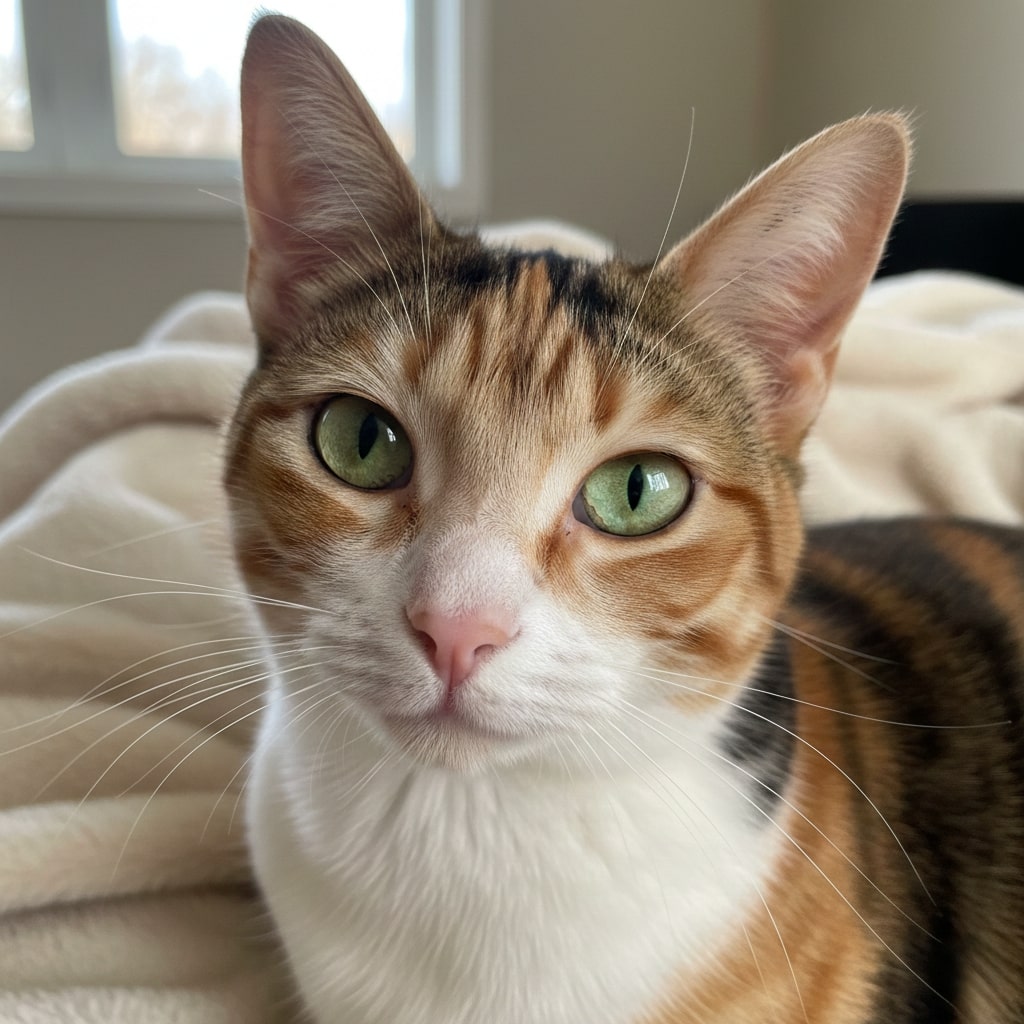
Noticing hair loss on your cat’s face can be alarming. You might worry about pests, infections, or stress. The good news is that in many cases, this is completely normal. However, there are times when it signals a medical issue that needs attention.
Here is a breakdown of why this happens, how to tell the difference between normal thinning and illness, and what you can do about it.
1. It Might Be Normal (Facial Alopecia)
Before you panic, check if the hair loss is actually “thinning.”
Many cats develop a condition called Preauricular Alopecia. This is just a fancy term for thinning hair on the strip of skin between the eyes and the ears. It is very common in adult cats and is usually not a problem.
Signs it is normal:
- The skin looks normal (no redness, bumps, or scabs).
- The cat is not scratching or rubbing the area.
- It is happening symmetrically (on both sides of the face).
- It is common in short-haired breeds and black cats.
If your cat seems happy and the skin looks healthy, this is likely just normal aging or genetics.
2. Common Medical Causes
If the skin looks irritated or the hair loss is patchy, there is likely an underlying cause.
A. Ringworm (Fungal Infection)
Despite the name, ringworm is not a worm. It is a fungus that feeds on hair, skin, and nails. It is highly contagious to other pets and humans.
- What it looks like: Round, bald patches that may look red or scaly. The skin often looks like a ring.
- Action: See a vet immediately. You will need antifungal medication and a deep clean of your home.
B. Allergies
Just like humans, cats can be allergic to food, pollen, or materials in your home. When a cat has an allergic reaction, their skin becomes itchy.
- Food Allergies: Often caused by proteins like chicken, beef, or fish.
- Environmental Allergies: Dust, pollen, or mold.
- Contact Allergies: Plastic food bowls are a common culprit. They can harbor bacteria that irritate the chin and mouth area, causing the cat to rub their face and lose hair.
- Action: Switch to stainless steel or ceramic bowls. If the issue persists, your vet may recommend an elimination diet or allergy medication.
C. Parasites (Fleas and Mites)
Even indoor cats can get parasites.
- Fleas: Many cats are allergic to flea saliva. Even one bite can cause intense itching, leading the cat to scratch the hair off around their eyes and neck.
- Mites (Mange): Notoedric mange (feline scabies) is a parasite that burrows into the skin. It usually starts around the ears and face. It causes thick, crusty skin and intense itching.
- Action: Check for “flea dirt” (tiny black specks) in the fur. Consult a vet for prescription flea/tick prevention or mite treatment.
3. Behavioral Causes
Sometimes the problem isn’t physical, but mental.
Stress and Anxiety
Cats are creatures of habit. Changes in their environment—like moving houses, a new baby, or a new pet—can cause stress.
Some cats cope with anxiety by over-grooming. While they usually over-groom their belly or legs, they may also rub their face excessively against furniture or carpets, wearing the fur away.
Common Stressors:
- Dirty litter boxes.
- Loud noises.
- Conflict with other cats.
- Lack of hiding spots.
4. When to See a Vet
If you aren’t sure if the hair loss is normal, look for these “red flags.” If you see any of these, make an appointment.
- Itching: The cat is constantly scratching or rubbing their face.
- Lesions: You see scabs, bumps, pimples, or open sores.
- Redness: The skin looks inflamed or hot to the touch.
- Behavioral Changes: The cat is hiding, eating less, or acting aggressive.
- Spreading: The hair loss is moving to other parts of the body.
What to Do Now
- Inspect the skin: Is it smooth and clean (normal) or red and scabby (medical)?
- Check the bowls: If you use plastic bowls, switch to ceramic or stainless steel immediately.
- Look for fleas: Use a flea comb to check for black specks.
- Monitor scratching: Watch your cat for a day. Are they rubbing their face on things?
- Call the Vet: If there are scabs or the cat seems uncomfortable, get professional help.