
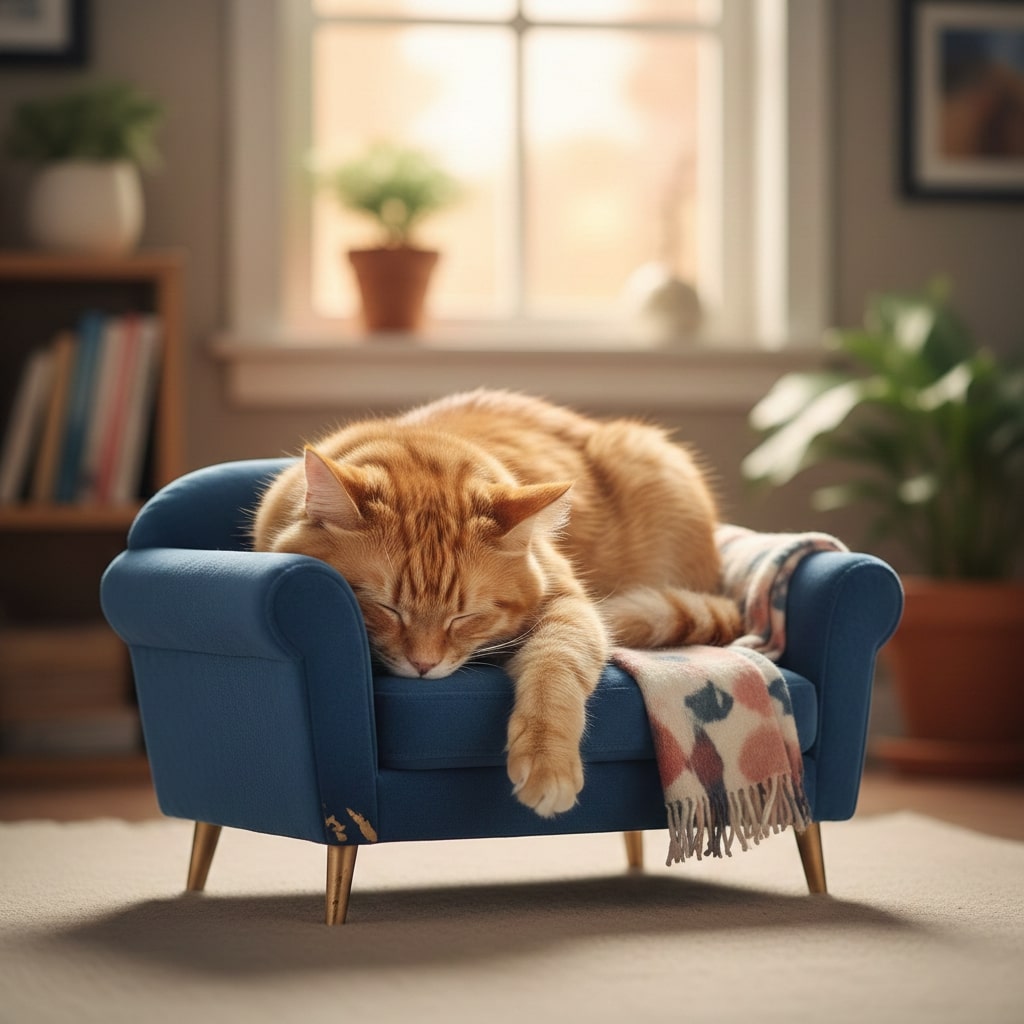
If you are a cat owner, you have probably walked into a room to find your cat sleeping in a strange position: face pressed firmly into a pillow, a blanket, or even the floor. This behavior, often called a “faceplant,” looks uncomfortable to us humans. You might wonder if they can breathe or if something is wrong.
The good news is that this is usually completely normal. Here is a detailed look at why your cat sleeps face down, and when you actually need to worry.
1. They Are Keeping Their Nose Warm
The most common reason for face-down sleeping is temperature control. Cats have a higher natural body temperature than humans (typically between 100°F and 102.5°F). They love heat, but their extremities—like their ears, paws, and especially their wet noses—lose heat quickly.
By burying their face in their paws or a blanket, they trap their breath and keep their nose warm. It is the same reason they often curl into a tight ball (the “loaf” position) to conserve body heat.
2. They Are Blocking Out Light
Cats are crepuscular, meaning they are most active during dawn and dusk. Because of this, they spend a lot of time sleeping during the bright daylight hours.
While cats are great at napping anywhere, they often prefer darkness for a deep sleep. Since they cannot put on an eye mask like a human, burying their face is the next best thing. Putting their face down blocks out sunlight or room lights, helping them stay asleep longer.
3. It Is Just Comfortable (For Them)
Cats are extremely flexible. What looks painful to you, like twisting their spine or smashing their nose into the carpet, might actually feel great to them.
When a cat sleeps face down, it often relieves tension in their neck muscles. If they are sleeping on a soft surface, the pressure against their face can be comforting and grounding, similar to how a weighted blanket feels for humans.
4. The “Do Not Disturb” Sign
Body language tells you a lot about a cat’s mood. When a cat buries its face, it is often a signal that they want to be left alone.
- Closed off: By hiding their face, they are cutting off social interaction.
- Deep sleep: This position usually indicates they are in a deep sleep cycle and do not want to be petted or played with.
5. Pure Exhaustion
Sometimes, a cat plays so hard that they literally “crash.” If your cat was just running around the house with the “zoomies” and suddenly flopped down face-first, they are simply tired. They ran out of energy and fell asleep exactly where they landed.
When to Worry: Sleeping vs. Head Pressing
While sleeping face down is harmless, there is a medical condition called Head Pressing that looks similar but is very dangerous. You need to know the difference.
Sleeping Face Down (Normal)
- The cat is asleep or relaxing.
- They are pressing their face into a soft surface (pillow, bed, paw).
- They wake up acting normal.
Head Pressing (Emergency)
- The cat is awake and anxious.
- They press the top of their head firmly against a hard surface (like a wall, a door, or a corner).
- They may slide their head along the wall or stare blankly.
Why is Head Pressing bad?
Head pressing is a sign of damage to the nervous system. It can be caused by:
- Liver disease (Hepatic Encephalopathy)
- Tumors
- Head trauma
- Infection in the nervous system
- Toxic poisoning
Action Item: If you see your cat pressing their head against a wall while awake, take them to a veterinarian immediately.
Summary
Most of the time, a cat sleeping face down is just a quirky, cute behavior. They are likely trying to keep their nose warm, block out the bright sun, or they are just completely relaxed. As long as they are sleeping on a soft surface and acting normal when they wake up, enjoy the cuteness and let them snooze.