
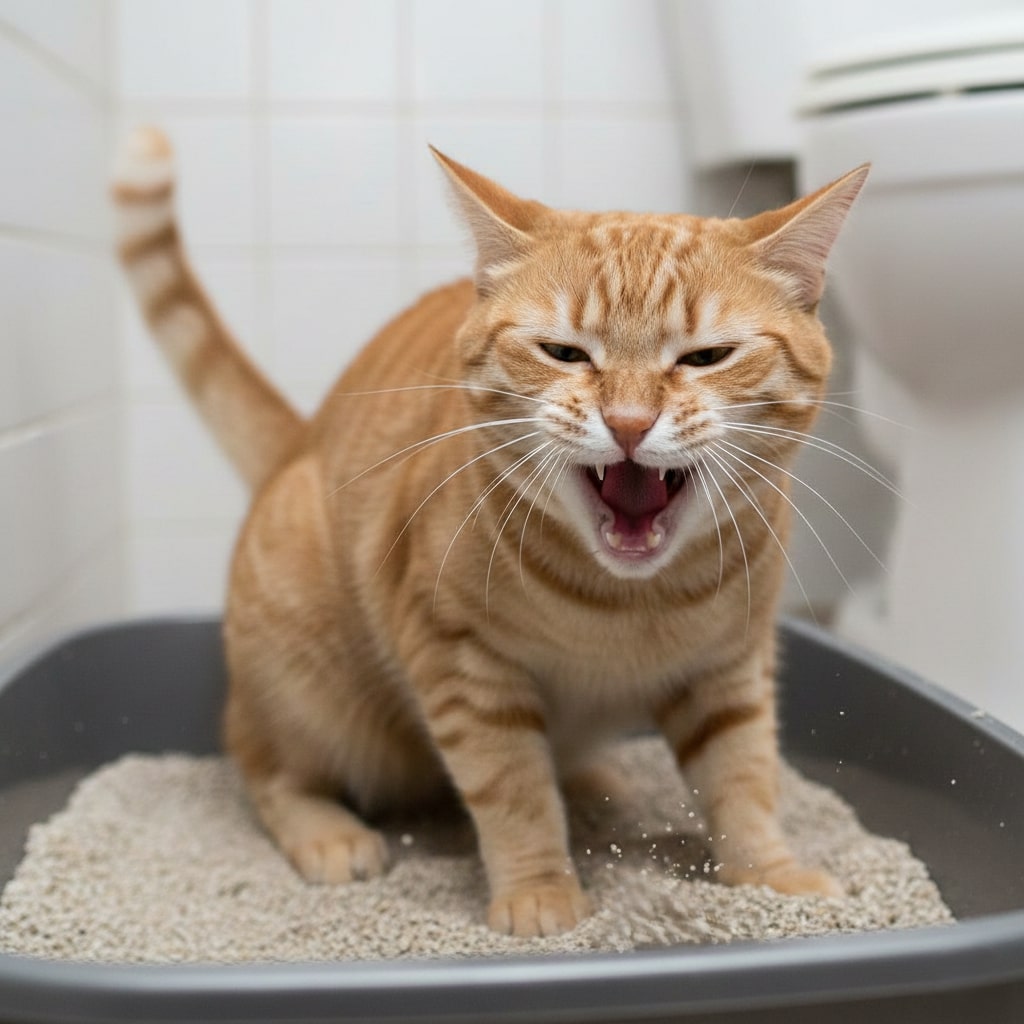
If you are a cat owner, you know cats do strange things. One of the weirdest behaviors is when a cat meows, yowls, or cries while using the litter box.
Sometimes it is just a quirky habit. Other times, it is a cry for help.
This guide breaks down exactly why your cat might be making noise while pooping and how to tell if you need to visit the vet.
1. It Could Be Medical Pain
The most common reason a cat cries while in the litter box is physical pain. If it hurts to go, they will vocalize to let you know. Here are the most common medical causes:
Constipation
Just like humans, cats get constipated. If their stool is hard and dry, passing it is painful.
- Signs: Straining, small rock-like poop, or going in and out of the box without doing anything.
- Cause: Dehydration, lack of fiber, or hairballs blocking the digestive tract.
Urinary Tract Infections (UTI) or Blockages
Important: Sometimes owners think a cat is straining to poop, but they are actually trying to pee.
- The Danger: If a male cat is straining and nothing is coming out, this is a life-threatening emergency. A urinary blockage can be fatal within hours.
- Signs: Licking the genitals excessively, blood in the litter box, or peeing in random places.
Arthritis
In older cats, the joints in their hips and knees can get stiff and sore.
- Why it hurts: The squatting position required to use the litter box puts pressure on these joints.
- Signs: Difficulty jumping up, walking stiffly, or avoiding the litter box because the sides are too high to step over.
Anal Gland Issues
Cats have two small sacs inside their rectum. If these get infected, impacted (full), or abscessed, pushing out stool becomes extremely painful.
2. It Could Be Behavioral
If your vet says your cat is healthy, the meowing might be in their head.
Vulnerability and Anxiety
In the wild, pooping is dangerous. An animal is vulnerable when they are squatting.
- The Reason: Your cat might feel exposed and unsafe. They meow to alert you (their protector) to “watch their back” while they do their business.
- The Fix: Ensure the litter box is in a quiet, low-traffic area where they feel safe.
Cognitive Dysfunction (Dementia)
As cats get older (usually 10+ years), they can develop feline dementia.
- The Reason: They may get confused about where they are or what they are doing. This confusion often leads to loud, mournful yowling, especially at night or while in the litter box.
3. It Could Be “The Zoomies” or Habit
Sometimes, there is nothing wrong at all.
- The “Victory Cry”: Some cats simply feel relieved after pooping. The stimulation of the vagus nerve during a bowel movement can give them a “euphoric” feeling, leading to the “zoomies” (running around wildly) and loud meowing.
- Announcement: Some vocal breeds, like Siamese cats, just like to narrate their day. They are simply announcing, “I am going to the bathroom now!”
Checklist: When to See a Vet
How do you know if it is a quirky habit or a medical emergency? Go to the vet immediately if you see any of these signs:
- Straining without results: If they push for more than a minute and nothing comes out.
- Blood: Any red streaks in the poop or urine.
- Crying out in pain: A low growl or a sharp shriek is different from a casual meow.
- Vomiting: If they vomit after trying to use the box.
- Hiding: If your cat hides immediately after leaving the box.
- Change in consistency: Diarrhea or rock-hard pellets.
Summary
- Check the poop: Is it normal? If yes, it might just be behavioral.
- Check the cat: Are they eating, playing, and acting normal otherwise?
- Watch the pee: Ensure they are urinating freely. If not, rush to the ER.
If this is a new behavior for your cat, the safest rule is to treat it as a medical issue until a vet tells you otherwise.