
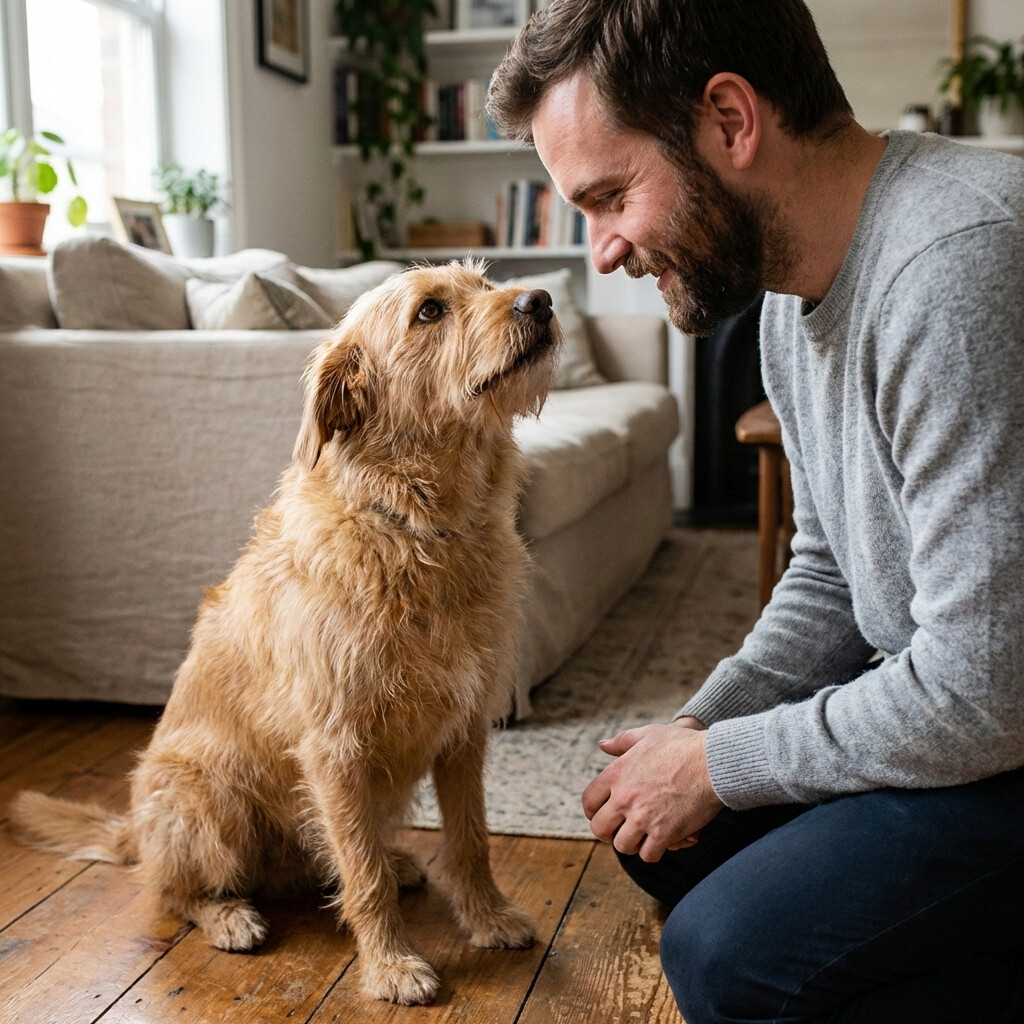
Dogs stare at their owners primarily to communicate needs or emotions. The most common reason is affection; staring releases oxytocin (the “love hormone”) in both the dog and the human, strengthening their bond. However, dogs also stare to ask for something (like food or a walk), to seek guidance in confusing situations, or, in rare cases, to signal aggression or health issues like canine cognitive dysfunction. Context and body language are key to understanding the specific reason behind the gaze.
Summary Table
| Reason | Key Body Language | What It Means | Action Required |
| Affection | Soft eyes, relaxed ears, wagging tail, blinking. | “I love you” / “I feel safe.” | Pet them, smile, or stare back gently. |
| Desire / Want | Focused eyes, perked ears, shifting paws, moving toward an object. | “I want that treat/toy” or “Let’s go out.” | Ignore if begging, or fulfill the need if valid (e.g., water). |
| Guidance | Head tilted, alert posture, looking between you and an object. | “What should I do now?” | Give a command or reassurance. |
| Aggression | Hard/unblinking eyes, stiff body, stillness, lips curled. | “Back off” / “This is mine.” | Do not stare back. Slowly look away and back off. |
| Cognitive Issue | Blank/glassy look, staring at walls, getting stuck in corners. | “I am confused/lost.” | Consult a veterinarian immediately. |
Why Do Dogs Stare at Their Owners?
If you are a dog owner, you know the feeling. You are sitting on the couch, reading a book or watching TV, and you feel eyes on you. You turn around, and there is your dog, locked in an intense stare. It can be heartwarming, funny, or sometimes a little unnerving.
Humans rely heavily on spoken language, but dogs are masters of non-verbal communication. Since they cannot speak to us, they use their bodies, their tails, and especially their eyes to talk. While it might seem like simple staring, your dog is actually engaging in a complex biological and psychological process.
This guide covers exactly why your dog stares at you, how to interpret their different “looks,” and when you should be concerned.
Read Also: Common Puppy Behavior Problems (And Solutions)
1. The Look of Love: Oxytocin and Bonding
The most common and sweetest reason your dog stares at you is pure affection. Just as humans gaze into the eyes of someone they love, dogs use eye contact to bond with their owners.
Science backs this up. A study conducted in Japan found that when dogs and their owners stare into each other’s eyes, levels of oxytocin rise significantly in both the human and the dog.
Oxytocin is often called the “love hormone” or the “cuddle chemical.” It is the same hormone released when a mother nurses her newborn baby, creating an unbreakable emotional attachment.
How to Identify the “Love Stare”:
- Soft Eyes: The eyes look relaxed, not bulging or hard.
- Blinking: The dog blinks naturally; it is not an unblinking contest.
- Relaxed Body: Their muscles are loose, and their ears are likely in a neutral or “happy” position.
- Context: This usually happens when you are relaxing together, cuddling, or greeting each other after a long day.
What to Do:
Enjoy it! This is your dog’s way of giving you a hug without using their paws. If you gaze back gently and speak in a soft voice, you reinforce that bond and boost your own oxytocin levels.
2. The “I Want Something” Stare
Dogs are incredibly observant creatures. Over thousands of years of domestication, they have learned that humans are the providers of all good things: food, walks, belly rubs, and toys.
Often, a stare is simply a request. This is a learned behavior. If your dog stared at you once while you were eating pizza, and you gave them a piece of crust, you trained them that staring = Food.
Common Triggers for the “Want” Stare:
- Food: You are eating, or it is near their dinner time.
- Potty Breaks: They need to go outside.
- Play: They bring a toy and stare at you until you throw it.
- Attention: You are on your phone, and they want you to pet them.
How to Identify It:
This stare is usually accompanied by other signals. The dog might shift their gaze back and forth between you and the object they want (like the door or the cookie jar). They might also whine, paw at your leg, or pace.
What to Do:
If the request is legitimate (like needing a bathroom break), attend to it. However, if your dog is staring at you to beg for table scraps, it is best to ignore the behavior. If you give in, even once, the staring will continue because the reward system has been reinforced.
3. Seeking Guidance and Direction
Unlike wolves, who solve problems independently, dogs look to humans for help. This is a phenomenon known as social referencing.
In experiments where dogs and wolves were presented with a puzzle box containing food that couldn’t be opened, the wolves tried to smash the box or chew through it. The dogs, however, tried for a few seconds and then looked back at their human owners. They were effectively asking, “How do we solve this?” or “Can you help me?”
Your dog sees you as the leader of their pack or family unit. When they encounter something new, scary, or confusing, they stare at you to see how you react.
When This Happens:
- During Training: They are waiting for the next command.
- New Environments: If you walk into a strange house or meet a new person, the dog looks at you to gauge if the situation is safe.
- Before Acts: Some dogs stare at their owners before grabbing a toy or chasing a squirrel to ask for permission.
What to Do:
This is a sign of a well-trained and connected dog. Return the gaze and give clear instructions or reassurance. If they are looking at you because they are scared of a loud noise, remaining calm shows them there is nothing to fear.
4. The Aggressive or “Hard” Stare
Not all eye contact is friendly. In the animal kingdom, a direct, unblinking stare is often a threat. It signals dominance, a challenge, or a warning to back off.
It is crucial for dog owners, especially those with new dogs or rescue dogs, to recognize the difference between a loving gaze and a “hard stare.”
Signs of a “Hard Stare”:
- Unblinking Eyes: The gaze is fixed and intense.
- Stiff Body: The dog goes completely still or rigid.
- Whale Eye: You can see the whites of their eyes (sclera) because they are looking at you sideways without moving their head.
- Closed Mouth: The mouth is clamped shut, or the lips are slightly curled.
- Raised Hackles: The hair on their back may be standing up.
Common Causes:
- Resource Guarding: You are approaching their food bowl, a high-value bone, or their favorite sleeping spot.
- Fear: The dog feels trapped or threatened.
What to Do:
Never stare back. In dog language, staring back at a hard stare is an acceptance of the challenge and can trigger an attack. Slowly avert your eyes, keep your movements slow and calm, and back away to give the dog space. If this happens frequently, consult a professional dog trainer or behaviorist immediately.
5. Canine Cognitive Dysfunction (Dementia)
As dogs age, they can suffer from cognitive decline, similar to Alzheimer’s disease in humans. This is known as Canine Cognitive Dysfunction (CCD).
One of the symptoms of CCD is disorientation and staring into space. Sometimes, the dog may stare at their owner with a blank, confused expression, as if they recognize the face but cannot quite place who it is or what they are supposed to do.
Signs of Cognitive Issues:
- The “Blank” Stare: Staring at walls, corners, or into thin air.
- Getting Stuck: Getting “trapped” behind furniture or in corners and not knowing how to reverse out.
- Pacing: Aimless walking, especially at night (sundowning).
- Change in Sleep: Sleeping all day and staying awake/pacing at night.
What to Do:
If you notice your senior dog staring blankly or acting disoriented, schedule a vet visit. While CCD cannot be cured, there are medications, diets, and supplements that can slow the progression and improve their quality of life.
Read Also: How Dogs Bond With Humans
6. They Are Reading Your Cues
Dogs are masters of reading human body language. They can detect microscopic changes in our facial expressions, posture, and even our scent.
Sometimes, your dog is staring at you simply because they are waiting for you to do something. They are watching to see if you put on your shoes (which means a walk), pick up your keys (which means you are leaving), or open the pantry (which means snacks).
They are effectively “reading the room.” This high level of attention is what makes dogs such excellent service animals and companions. They are constantly gathering data on their humans to predict what happens next.
Is It Rude to Stare Back?
This depends entirely on your relationship with the dog.
- With Your Own Dog: If you have a healthy, loving relationship, staring back gently is fine. It reinforces your bond. Slow blinks are especially effective; they are a “calming signal” that tells the dog you are not a threat.
- With a Strange Dog: Avoid direct eye contact. If you meet a dog you do not know, staring them in the eyes can be interpreted as a threat. It is polite in dog language to avert your gaze slightly to show you mean no harm.
How to Manage Excessive Staring
If your dog’s staring is becoming annoying or intrusive (like begging while you eat), you can manage it through training.
- Remove the Reward: If they stare at you for food and you give it to them, the staring will never stop. You must be consistent in not rewarding the begging stare.
- Teach “Go to Place”: Train your dog to go to their bed or a specific mat while you are eating or working. Give them a long-lasting chew or a puzzle toy to occupy them so they aren’t focused on you.
- Increase Enrichment: Sometimes, a dog stares because they are bored. Ensure they are getting enough physical exercise and mental stimulation throughout the day. A tired dog is a sleeping dog, not a staring dog.
Conclusion
When your dog stares at you, it is rarely without reason. Whether they are drowning you in oxytocin-fueled affection, begging for that last bite of steak, or looking to you for reassurance in a scary world, their gaze is a testament to the powerful bond between humans and canines.
Take the time to read the context. Look at their tail, their ears, and the softness of their eyes. By understanding why your dog stares, you can communicate better, train more effectively, and deepen the friendship you share with your loyal companion.
So, the next time you catch those eyes locked on yours, smile. It likely means you are the most important thing in their world.