
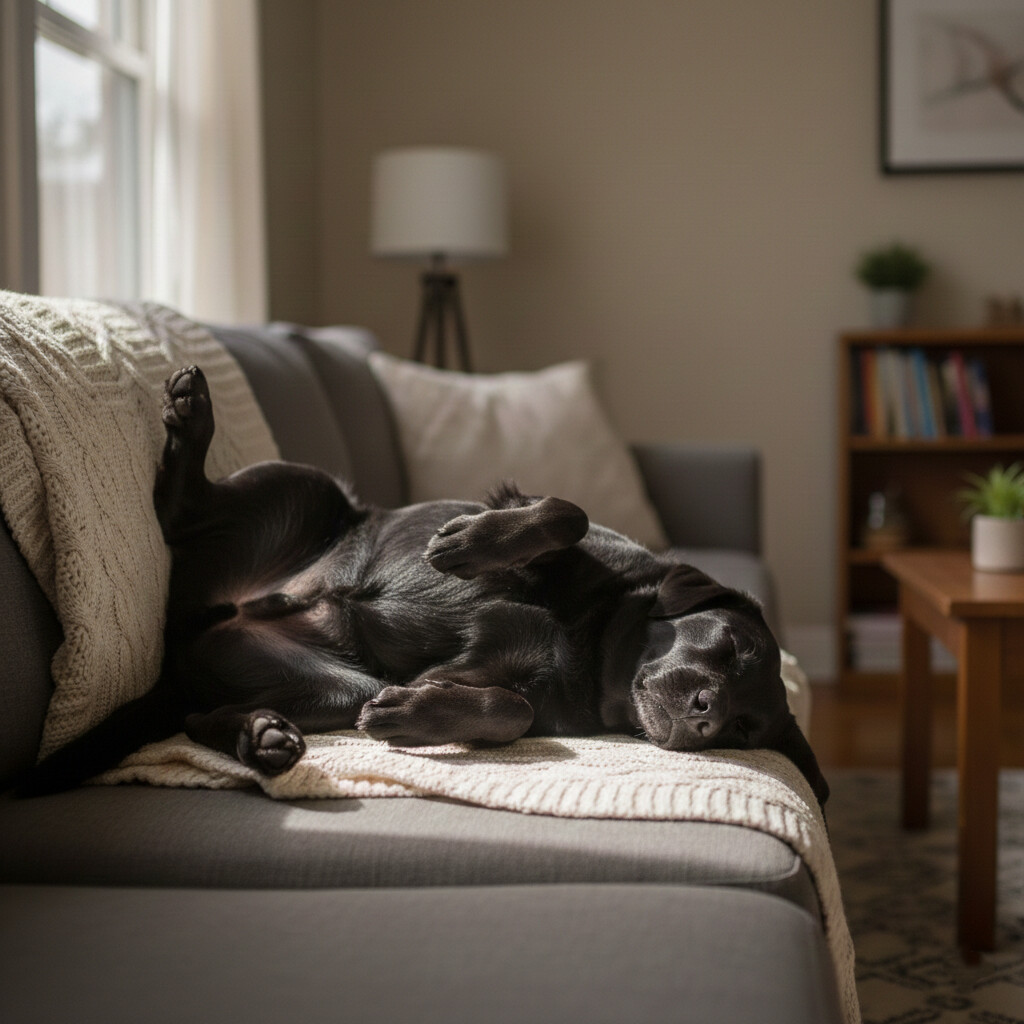
Dogs sleep on their backs primarily to regulate body temperature and cool down, as their bellies have thinner fur and sweat glands are located in their paws. This position also indicates a high level of trust and security, as it exposes their vital organs, signaling they feel safe in their environment. Additionally, it allows for deep muscle relaxation and can relieve pressure on joints for older dogs.
Summary Table
| Reason | Explanation | Key Indicator |
| Cooling Down | Exposes thin belly fur and paw pads to air. | Common in summer or after exercise. |
| Trust & Safety | Exposes vital organs, impossible in the wild. | Sleeping deeply in a busy home. |
| Comfort | Relieves tension in muscles and joints. | Dog looks completely relaxed, “dead weight.” |
| Submission | An appeasement signal to show no threat. | Usually occurs when awake, not asleep. |
| Deep Sleep | Indicates REM cycle and dreaming. | Twitching paws or soft barking. |
Why Do Dogs Sleep on Their Backs? Science Behind the Belly-Up Position
You walk into the living room and find your dog sprawled out, legs in the air, looking like a furry cockroach. It is one of the most amusing and endearing sights for any dog owner. But while it looks funny to us, this sleeping position serves several practical, physiological, and psychological functions for your pet.
1. Temperature Regulation: The Cooling Theory
The most common biological reason for this behavior is thermoregulation. Unlike humans, dogs cannot sweat through their skin to cool down. They rely on panting and releasing heat through specific areas of their body.
- Sweat Glands in Paws: Dogs have sweat glands located in their paw pads. By keeping their legs in the air, they expose these glands to the air circulation in the room.
- Thinner Belly Fur: The fur on a dog’s abdomen is significantly thinner than the coat on their back. Exposing this area allows blood vessels near the skin to cool down faster, lowering their overall temperature.
If you notice your dog flipping onto their back after a long walk or during a hot summer afternoon, it is simply using the most efficient way to cool off.
Read Also: What It Means When a Dog Sighs?
2. The Ultimate Sign of Trust and Security
In the wild, a wolf or feral dog would rarely sleep on its back. This position leaves the throat, heart, and digestive organs completely vulnerable to predators. It also takes longer to roll over and stand up from this position than from a curled-up posture.
When your domesticated dog sleeps on their back, it is paying you the highest compliment. It signifies:
- Zero Threat Perception: They do not fear attack from you or other pets.
- Environmental Safety: They feel the home environment is secure.
- Pack Bonding: They consider you their protector and do not feel the need to be “on guard.”
Deep Relaxation and Comfort
Sometimes, the explanation is simple: it feels good. Just as humans have preferred sleeping positions, dogs do too. The “dead bug” pose allows for complete muscle relaxation.
When a dog is curled in a ball, their muscles are slightly tensed to maintain that shape. On their back, gravity does the work.
This position allows them to let go of all tension in their legs and spine. It is often observed during the REM (Rapid Eye Movement) stage of sleep, which is the deepest and most restorative part of the sleep cycle.
This is why you might see their paws twitching or hear them whimpering as they dream while in this posture.
3. Evolutionary Roots: Wolf vs. Dog Sleeping Habits
To understand why this behavior is special, we must look at your dog’s ancestors. Wolves in the wild almost exclusively sleep curled up in a ball (the “donut” position).
Why Wolves Don’t Sleep Belly-Up:
- Heat Conservation: Curling up preserves body heat in cold wilderness conditions.
- Organ Protection: It protects the vital organs from rivals or predators.
- Readiness: It allows them to spring to their feet instantly if threatened.
The fact that your dog overrides these deep-seated evolutionary instincts is a testament to the safety provided by domestication. It is a luxury behavior that only exists because humans provide a safe, climate-controlled habitat.
Common Breeds That Sleep on Their Backs
While any dog can adopt this position, certain breeds and body types are more prone to it.
- Terriers: High-energy breeds like Jack Russells often crash hard and sleep in varied positions, including on their backs.
- Greyhounds and Whippets: These dogs have long limbs and deep chests. Sleeping on their side or back can sometimes be more comfortable for their bony structures than curling up on hard surfaces.
- Bulldogs and Pugs: Brachycephalic (flat-faced) breeds often sleep on their backs to open up their airways. The curled position can sometimes restrict their breathing, while lying on their back helps keep the windpipe aligned.
- Retrievers and Labs: These easy-going, confident breeds are famous for the “sprawled eagle” look, reflecting their generally relaxed temperament.
Read Also: Why Do Dogs Stare at Their Owners?
When Should You Worry? Health Implications
For the vast majority of dogs, sleeping on their backs is a positive sign. However, there are context-specific situations where you should pay attention to their body language.
Arthritis and Joint Pain
Ironically, while back-sleeping can relieve pressure, an older dog who suddenly stops sleeping on their back might be in pain. Rolling onto the back requires flexibility and core strength.
If your senior dog used to sleep belly-up but now only sleeps curled tight, they might be experiencing arthritis or spinal pain that makes the transition difficult.
Breathing Issues
If you have a flat-faced breed (like a French Bulldog) and they only sleep on their back and struggle to breathe or snore excessively loudly while doing so, monitor them.
While the position helps open airways, excessive gasping could indicate obstructive airway syndrome that requires veterinary attention.
Vulnerability and Anxiety
If your dog is in a new environment (like a boarding kennel or a new house) and refuses to sleep on their back, do not force it. They likely do not feel safe enough yet. This is normal behavior.
Other Common Sleeping Positions Explained
Understanding the belly-up position helps to understand the alternatives.
The Donut (Curled Up)
- Meaning: Preserving body heat or feeling protective.
- Context: Common in winter, outdoors, or for nervous dogs.
The Superman (Splay)
- Meaning: Lying on the stomach with legs stretched front and back.
- Context: Common in puppies. It allows them to pop up and play immediately. It also cools the belly against cold tile floors.
The Side Sleeper
- Meaning: Relaxed but ready.
- Context: The most common sleeping position. It offers a balance of comfort and readiness.
How to Support Your Dog’s Sleep
If your dog loves the belly-up lifestyle, you can make them even more comfortable.
- Supportive Bedding: Ensure their bed has enough cushion. Since their spine is against the floor, a memory foam bed prevents pressure points on their vertebrae.
- Cooling Mats: If they do this in summer, consider a cooling gel mat. This supports their desire to cool down without having to lie on a hard kitchen floor.
- Quiet Environment: Since they are in a deep sleep state when on their backs, try not to startle them. Waking a dog suddenly from deep sleep can lead to a “sleep startle” reaction, where they might snap unintentionally.
Conclusion
Seeing your dog sleeping on their back is a heartwarming visual confirmation that you have provided a happy, safe home. It is a behavior rooted in comfort, temperature management, and profound trust.
Whether they are cooling off their sweat glands or simply dreaming of chasing squirrels, the “dead bug” pose is a sign of a contented canine. So, the next time you see those paws in the air, take it as a compliment that you are doing a great job as a pet parent.