
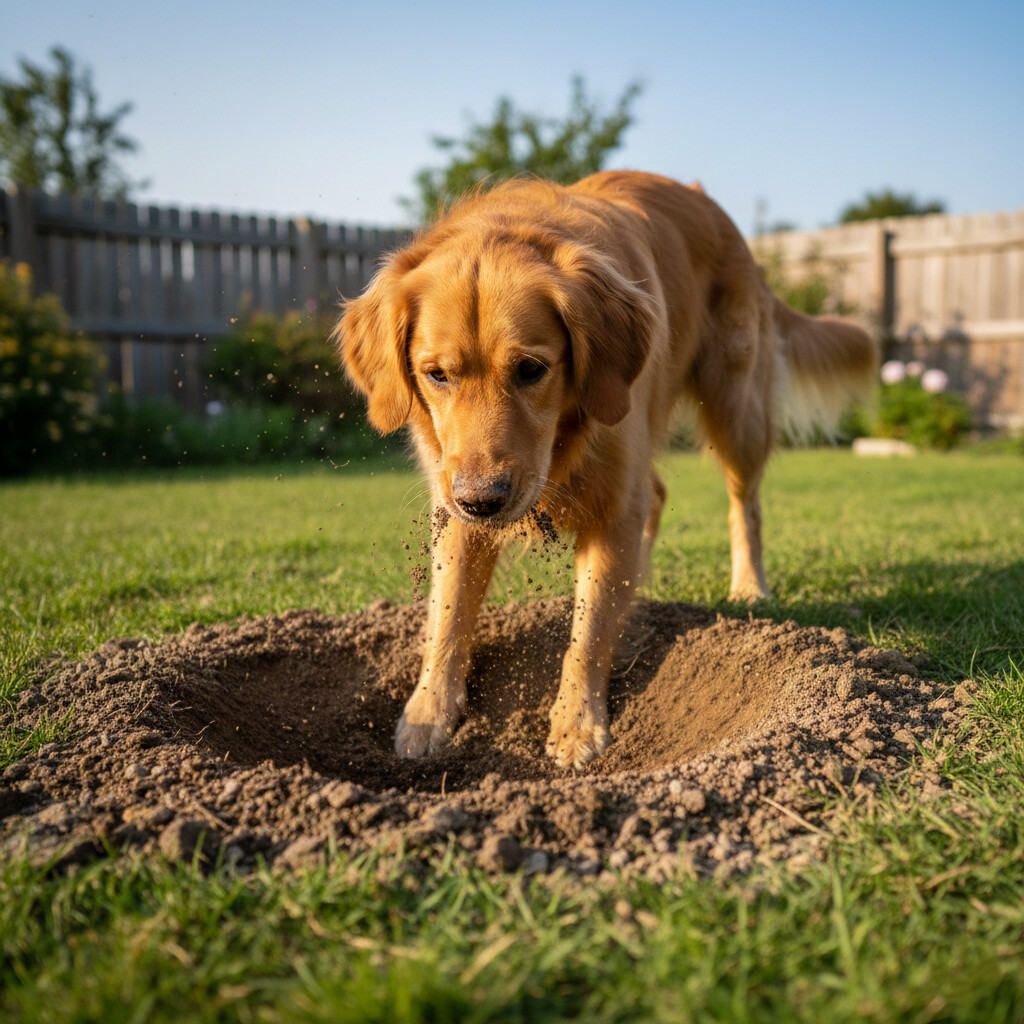
Dogs dig holes primarily due to instinct, boredom, or physical comfort. They may dig to cool off in fresh dirt, hunt burrowing animals, bury “valuables” like bones, or relieve separation anxiety. Certain breeds, like Terriers, are genetically predisposed to dig. Resolving the behavior requires identifying the specific motivation and providing appropriate outlets, such as a sandbox or more exercise.
Quick Summary: Why Your Dog Is Digging
| Primary Cause | Typical Signs | Quick Solution |
| Temperature Regulation | Digging randomly, playful behavior; digging when left alone. | Provide cooling mats, shade, or an insulated dog house. |
| Boredom & Energy | Digging at boundaries (fences, doors), pacing; whining. | Increase physical exercise; use puzzle toys; training. |
| Hunting/Prey Drive | Digging near roots/shrubs; focused sniffing at one spot. | Humanely remove rodents; redirect attention; supervise yard time. |
| Anxiety | Digging at boundaries (fences, doors), pacing, and whining. | Treat the underlying anxiety; crate training; consult a vet/behaviorist. |
| Instinct/Hoarding | Burying bones, toys, or treats. | Don’t give bones outside; provide a designated “digging pit.” |
| Escape | Digging specifically under fence lines. | Reinforce fencing (chicken wire); neuter/spay; increase supervision. |
The Frustration of the Backyard Crater
Every dog owner knows the feeling. You let your furry friend out into the backyard for some fresh air, only to discover a new crater in the middle of your pristine lawn or, worse, your vegetable garden. It is frustrating, messy, and can ruin your landscaping.
However, before you get angry, it is crucial to understand that digging is a completely natural behavior for dogs. They are not doing it out of spite or to destroy your hard work. To them, digging serves a specific purpose. To stop the digging, you must first understand the why.
This guide breaks down the psychology behind the behavior, the specific reasons your dog turns into a landscaper, and exactly how to handle it without conflict.
Read Also: How Dogs Adapt to New Homes?
The Ancestral Root: It’s in Their Genes
Long before dogs were sleeping on our couches, their ancestors (wolves) lived in the wild. Survival often depended on their ability to manipulate their environment.
- Denning: Wolves dig dens to raise pups and protect them from predators and harsh weather.
- Caching: When food was scarce, wild canines would bury surplus meat to hide it from scavengers and preserve it for later.
Even though your domesticated dog is well-fed and safe, these genetic instincts remain hardwired in their brain. When they feel the urge to dig, they are essentially answering a call from their ancestors.
Reason 1: Seeking Comfort and Temperature Control
One of the most common reasons dogs dig is simple biology: they are trying to regulate their body temperature. This is often referred to as “denning.”
Beating the Heat
Dogs do not sweat like humans do. They only sweat through their paw pads and pant to release heat. In the middle of summer, the surface of the ground can be scorching hot. However, just a few inches beneath the surface, the soil is significantly cooler.
If your dog digs a shallow, body-sized hole in a shady spot and then immediately lies down in it, they are creating a natural cooling bed.
Escaping the Cold
Conversely, in very cold or windy weather, a dog might dig a hole to curl up inside. The earth provides insulation, and the hole acts as a windbreak, helping them retain body heat.
How to Identify It:
- The holes are usually shallow and shaped like the dog’s body.
- The dog lies in the hole rather than continuing to dig.
- It happens during extreme weather (hot summers or cold winters).
Reason 2: Boredom and Excess Energy
A tired dog is a good dog. A bored dog, however, is a destructive dog. If your dog is left alone in the yard for long periods without mental stimulation or physical exercise, they will create their own fun.
For many active dogs, digging is physically satisfying. It burns energy and provides tactile feedback. The act of tearing up roots and sending dirt flying is entertaining for a dog that has nothing better to do.
How to Identify It:
- Holes are random and scattered throughout the yard.
- The dog looks playful or frantic while digging.
- Digging occurs mostly when the dog is left unsupervised for long durations.
Reason 3: The Hunter’s Instinct (Prey Drive)
Does your dog stare intensely at the ground before digging? Do they focus on the roots of trees or shrubs? They might be hunting.
Your yard is likely an ecosystem for small burrowing animals like moles, voles, gophers, and chipmunks. Even if you cannot see them, your dog can hear them moving underground and smell their scent.
For breeds with high prey drive, the sound of a gopher scratching underground is irresistible. They will dig relentlessly to catch the critter.
How to Identify It:
- Digging is focused on a specific area (usually near plant roots).
- The dog acts excited, sticking their nose deep into the hole.
- You may see tunnels or mounds of dirt from the rodents themselves.
Reason 4: Separation Anxiety
Separation anxiety is a serious behavioral issue. Dogs are pack animals, and being separated from their human family can cause panic. Digging can be a displacement behavior—a way to relieve stress.
In this scenario, the digging is frantic. It is not about fun or comfort; it is about desperation. The dog is trying to expend nervous energy or physically dig their way back to you.
How to Identify It:
- Digging is accompanied by whining, barking, or pacing.
- Holes are often located near the back door or the gate where you left.
- The dog shows other signs of anxiety, such as destroying furniture or house soiling.
Read Also: Best Dog Breeds for Apartment Living
Reason 5: The Escape Artist
Some dogs dig with a clear goal: freedom. If your dog is digging primarily along the fence line, they are trying to get out.
Why do they want to escape?
- Mating Urge: An unneutered male dog can smell a female in heat from miles away. He will do anything, including tunneling under a fence, to get to her.
- Roaming: Some breeds just love to explore the neighborhood.
- Visual Triggers: If they see a squirrel, another dog, or a person on the other side of the fence, they may dig to get to them.
Reason 6: Hoarding and Burying Valuables
As mentioned earlier, the instinct to “cache” food is strong. If you give your dog a bone, a chew toy, or a large treat, and they immediately run to the corner of the yard to bury it, they are saving it for a rainy day.
This is often seen in multi-dog households where a dog wants to protect their prize from the other dogs.
How to Identify It:
- The holes are small and deep.
- You see the dog carrying an item in their mouth before digging.
- They use their nose to push dirt back over the item.
Breed-Specific Tendencies
While any dog can dig, some were literally built for it. It helps to know if your dog’s breed plays a role in their landscaping habits.
- Terriers: The name “Terrier” comes from the Latin word terra, meaning earth. Breeds like Jack Russell Terriers, Cairn Terriers, and West Highland White Terriers were bred to hunt badgers and foxes underground. Digging is their job.
- Dachshunds: Their long bodies and paddle-like paws are designed for tunneling after badgers.
- Huskies and Malamutes: These northern breeds are notorious for digging huge pits to stay cool in the summer and warm in the winter.
- Beagles and Hounds: Their nose leads the way. If they smell a rabbit underground, they will dig.
How to Stop Your Dog From Digging (The Solutions)
Punishment is rarely effective for digging. If you yell at your dog after finding a hole, they will not understand why you are angry. Even if you catch them in the act, punishment usually just teaches them not to dig while you are watching.
Instead, use these proven strategies based on the cause.
1. Create a “Digging Pit” (Controlled Outlet)
If your dog loves to dig for fun or because of breed instinct (like Terriers), you cannot stop the urge, but you can manage it.
- Build a Sandbox: designate a specific corner of the yard as the “Dig Zone.”
- Fill it with soft sand or loose soil.
- Bury treasures: Hide toys and treats in the sand to encourage them to dig only there.
- Praise them: When they dig in the box, give them high praise. If they dig elsewhere, gently interrupt them and lead them to the box.
2. Increase Physical and Mental Exercise
For the bored dog, the cure is exhaustion.
- Walks are not enough: Try fetch, frisbee, or agility training to burn explosive energy.
- Brain Games: Use puzzle feeders, snuffle mats, and Kong toys to tire out their brains. A mentally tired dog is less likely to destroy the yard.
3. Manage the Environment (Rodents)
If your dog is hunting, you must address the prey.
- Humane Removal: Use safe, non-toxic methods to deter moles and gophers from your yard. Avoid poisons, as these can harm your dog if they eat the rodent.
- Barriers: Use garden fencing to keep the dog away from active rodent tunnels.
4. Temperature Control
If your dog is digging cooling pits:
- Provide Shade: Ensure there are trees or tarps available.
- Water: Keep plenty of fresh water outside.
- Cooling Mats: Buy a durable cooling mat or elevate their bed for airflow.
- Bring them inside: If it is too hot for you, it is too hot for them.
5. Fortify the Perimeter (Escape Artists)
- Chicken Wire L-Footer: Bury chicken wire at the base of your fence, bending it into an “L” shape pointing inward. When the dog digs down, they hit the wire and stops.
- Visual Blocks: If they are digging to get to things they see, cover the fence with reed fencing or privacy slats.
- Spay/Neuter: This significantly reduces the roaming urge in dogs driven by hormones.
6. Treat the Anxiety
If the digging is anxiety-driven, the yard is not the problem; the emotion is.
- Don’t leave them alone outside: If they panic when you leave, keep them indoors in a safe crate or dog-proofed room.
- Counter-conditioning: Work on training to make them comfortable with being alone.
- Consult a Pro: You may need a veterinary behaviorist to help with severe separation anxiety.
Read Also: The Importance of Early Socialization for Puppies
What NOT To Do
Many myths about stopping digging are ineffective or cruel. Avoid these methods:
- Filling the hole with water: This often just makes a muddy play pit that the dog enjoys even more.
- Burying the dog’s poop in the hole: While some claim this works, many dogs will simply dig a new hole two feet away. It also creates a sanitation issue.
- Rubbing their nose in it: This is abusive and teaches the dog nothing except to fear you.
- Tying them up: Tethering a dog often increases anxiety and frustration, leading to more barking and digging.
Conclusion
Digging is a language. Your dog is communicating a need, whether it is “I’m hot,” “I’m bored,” “I hear a gopher,” or “I miss you.” By observing the type of hole, the location, and your dog’s body language, you can decipher the message.
Don’t fight nature. Instead of punishing the behavior, redirect it. Give your Terrier a sandbox, give your bored Collie a frisbee, and give your hot Husky a cooling mat. Once you meet the underlying need, the craters in your yard will disappear, and you can go back to enjoying a peaceful, landscape-friendly life with your best friend.