
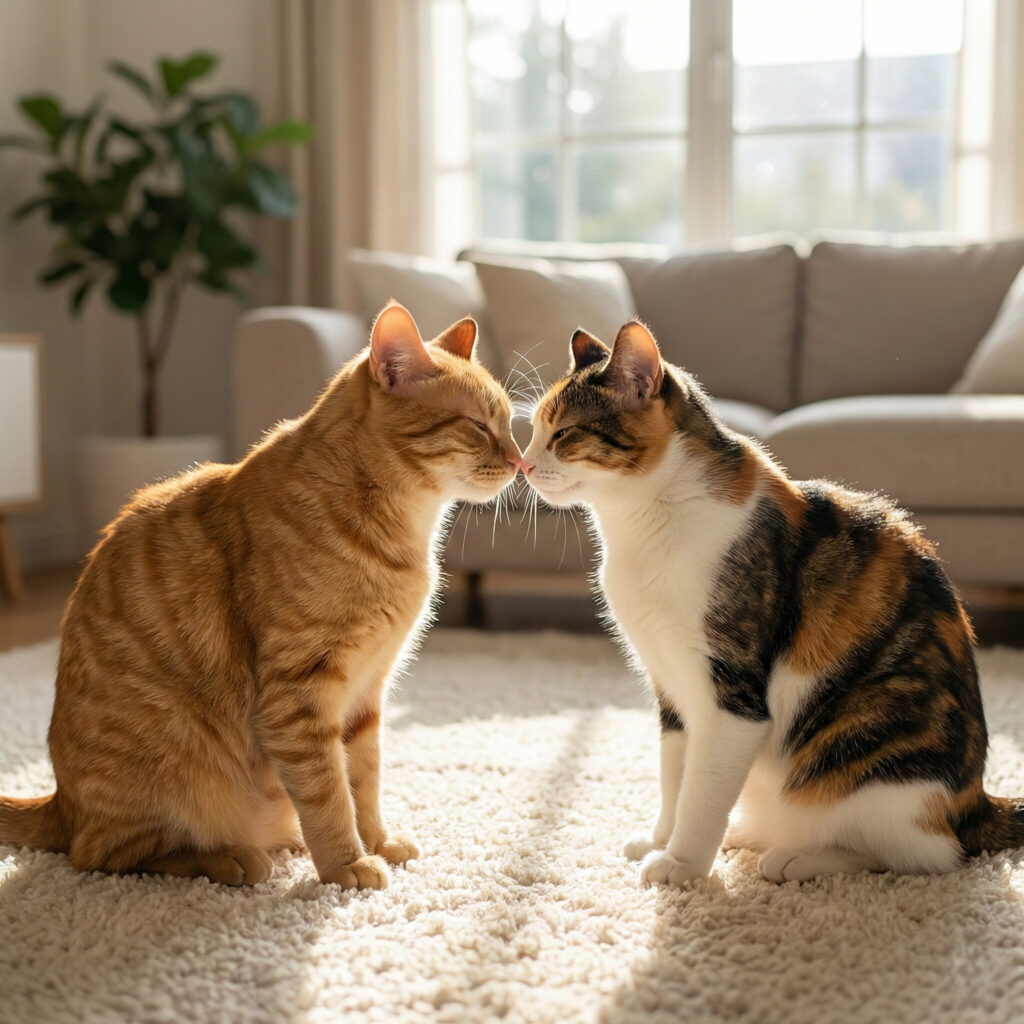
When cats touch noses, it is a friendly feline greeting, similar to a human handshake or hug. This behavior, often called a “nose boop,” allows them to get up close and personal to exchange vital scent information. By sniffing each other’s nose area, they can identify one another, determine if they are part of the same social group, gather clues about health and mood, and reinforce social bonds. It is a gesture of trust and acceptance, typically reserved for familiar and friendly individuals, including their human companions.
| Feature | Details |
| What It Is | A friendly, non-threatening greeting between cats. |
| Primary Purpose | To exchange scent information and identify one another. |
| Information Swapped | Identity, group affiliation, health status, mood. |
| Who They Do It With | Trusted friends, family members, and accepted humans. Not enemies. |
| Key Meaning | A sign of trust, acceptance, and social bonding. |
| Related Behaviors | Head-butting (bunting), cheek rubbing. |
Why Do Cats Touch Noses When Greeting?
Have you ever witnessed two cats slowly approach each other, stretch out their necks, and gently touch their noses together? It’s an incredibly endearing moment that leaves many cat owners wondering what’s going on in their furry little heads. This behavior is far more than just a cute quirk; it’s a complex and important part of feline communication.
While humans rely heavily on speech and sight to interact, cats live in a world dominated by smell. Their sense of smell is vastly superior to ours, with millions more scent receptors in their noses. For a cat, scent is like a detailed biography, telling them everything they need to know about another creature.
This reliance on smell is why the nose-touch greeting is so significant. It’s a primary method for cats to gather information and establish social connections in their world.
Read Also: Why Do Cats Use Different Meows for Humans?
The Anatomy of a Greeting
To understand why cats touch noses, we need to look at their unique biology. Besides their powerful nose, cats have a special scent-detecting organ located on the roof of their mouth called the Jacobson’s organ (or vomeronasal organ).
This amazing tool allows them to detect and analyze pheromones, chemical signals released by other animals that convey social and sexual information.
When two cats meet and touch noses, they are essentially opening a direct line of chemical communication. They are not just sniffing the air; they are actively gathering and processing scent particles that tell a story.
This greeting is typically a calm and deliberate act. You will often see:
- Slow approach: Cats will walk towards each other slowly, with bodies relaxed.
- Extended necks: They lean in, stretching their necks to bridge the final gap.
- Gentle contact: The noses touch briefly and softly. It’s not a push or a shove.
- Sniffing: Following the touch, there might be a moment of sniffing around the head and face area.
This entire process is a polite and non-threatening way to say “hello” and check in with each other.
What Information is Exchanged?
The nose-touch greeting is like an instant data download. In that brief moment of contact, a wealth of information is swapped between the two felines.
Here is what they learn about each other:
- Identity: Just like a fingerprint, every cat has a unique scent signature. The nose touch confirms exactly who the other cat is.
- Group Affiliation: Cats that live together often share a “group scent.” This greeting helps them recognize members of their own colony or household, reinforcing social bonds.
- Health Status: Subtle changes in scent can indicate if a cat is sick or not feeling well.
- Mood and Stress Levels: Pheromones can reveal if a cat is anxious, fearful, or contented.
- Sexual Status: Scent is crucial for determining if a female is in heat or if a male is searching for a mate.
A Gesture of Trust and Acceptance
One of the most important aspects of the nose touch is that it puts a cat in a vulnerable position. To touch noses, a cat must get very close to another animal’s face, placing its own face, eyes, and throat within easy reach of teeth and claws.
Because of this vulnerability, cats will rarely touch noses with a strange or hostile cat. You won’t see two rivals in a territorial dispute greeting each other this way. Instead, the nose touch is reserved for:
- Littermates and mothers
- Friendly housemates
- Cats belonging to the same social group
Therefore, when two cats engage in this behavior, it is a clear sign of mutual trust and acceptance. It signifies that they feel safe and comfortable in each other’s presence and pose no threat to one another.
Read Also: Why Do Cats Sleep With Their Eyes Half Open?
Why Does My Cat Touch My Nose?
If your feline friend ever leans in and gives your nose a gentle boop with theirs, take it as a huge compliment! It means your cat views you as a trusted member of their family group. They are greeting you in the same respectful and affectionate way they would greet another friendly cat.
By touching your nose, they are:
- Checking your scent: Seeing where you’ve been and what you’ve been up to.
- Confirming your identity: Making sure it’s really you, their favorite human.
- Expressing affection and trust: Showing they feel completely safe and secure with you.
It’s a heartwarming gesture that bridges the species gap, allowing your cat to communicate their affection in their own natural language.
Other Scent-Based Affections
The nose touch is just one way cats use scent to connect. You might also notice other related behaviors that serve a similar purpose:
- Head-Butting (Bunting): When a cat rubs its head against you or an object, it is depositing pheromones from glands on its forehead and cheeks. This marks you as “theirs” and is a sign of affection and ownership.
- Cheek Rubbing: Similar to bunting, rubbing their cheeks on you leaves a comforting scent mark, reinforcing their bond with you and making their environment feel safe and familiar.
- Allogrooming (Mutual Grooming): When cats groom each other, it not only helps keep them clean but also mixes their scents together, creating a communal group odor that strengthens their social bond.
All of these behaviors work together to create a world rich in scent information, allowing cats to navigate their social lives with confidence and security.
Conclusion
The simple act of two cats touching noses is a fascinating glimpse into their complex world of communication. It’s a friendly greeting, a high-tech information exchange, and a profound gesture of trust all rolled into one.
So, the next time you see your cats sharing a nose boop, or if you’re lucky enough to receive one yourself, remember that it’s a sign of a strong and loving bond, spoken in a language older than words. It is a beautiful reminder of the deep social connections our feline companions are capable of forming.