
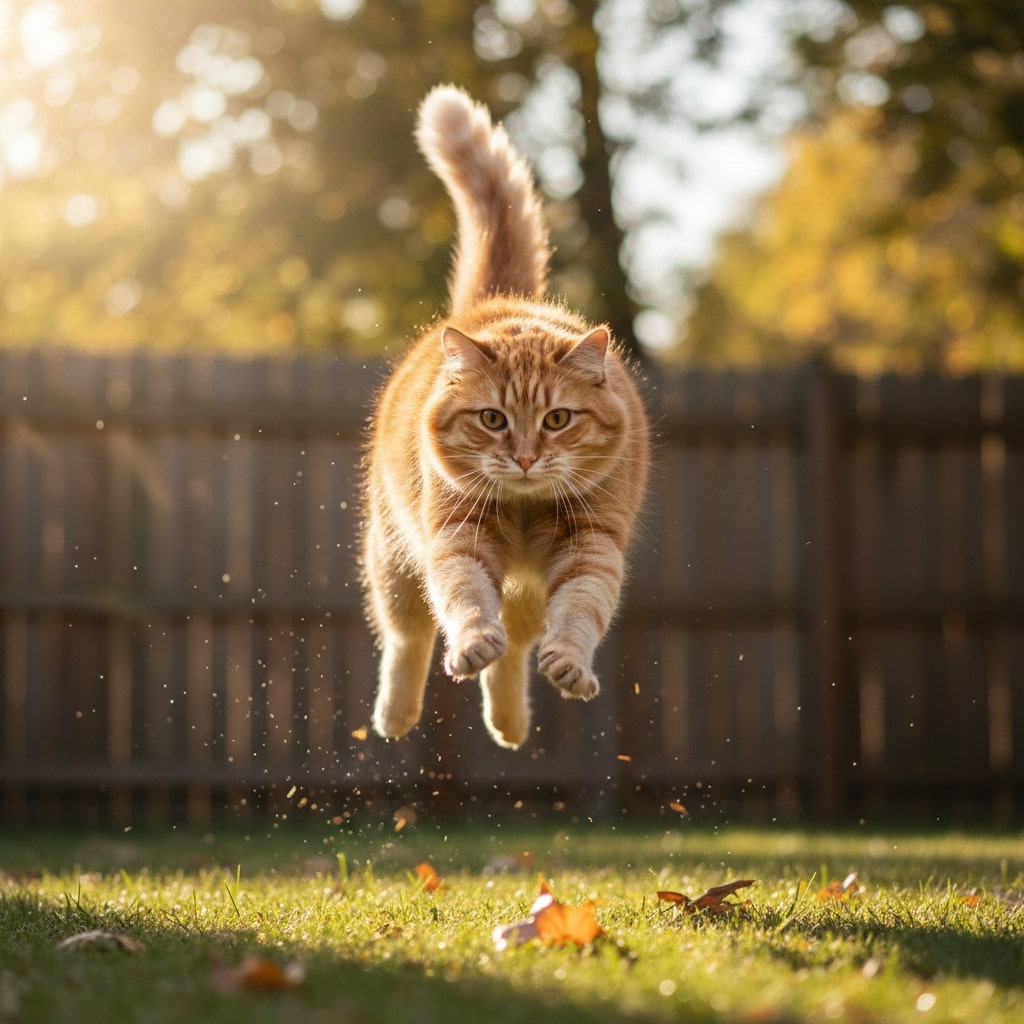
Cats get the “zoomies,” scientifically known as Frenetic Random Activity Periods (FRAPs), primarily to release pent-up energy. Because cats are ambush predators who sleep for large portions of the day, they accumulate significant energy reserves that must be expelled in short, explosive bursts. Other common triggers include the relief of using the litter box (post-defecation euphoria), instinctual hunting practice, or underlying medical issues like fleas or hyperthyroidism.
Summary Table: Understanding Cat Zoomies
| Cause | Why It Happens | What You Can Do |
| Pent-up Energy | Cats sleep 12-16 hours a day and need to burn off stored fuel. | Schedule interactive playtime twice a day. |
| Hunting Instinct | Your cat is practicing ambush and predatory movements. | Use wand toys to mimic prey behavior. |
| Bathroom Habits | Stimulation of the vagus nerve after pooping creates a “high.” | Keep the litter box clean and accessible. |
| Fleas or Itching | Sudden running can be an attempt to escape a biting sensation. | Check for pests and consult a vet. |
| Old Age (Senility) | Cognitive decline can cause confusion and erratic running. | Keep a nightlight on and maintain a routine. |
4 Reasons Cats Suddenly Get the Zoomies: The Science of FRAPs
If you are a cat owner, you know the scene well. One minute your cat is dozing on the sofa, and the next, they are tearing through the hallway, drifting around corners, and bouncing off the furniture. This behavior is incredibly common and usually completely normal.
The scientific term for this phenomenon is Frenetic Random Activity Periods, or FRAPs. While it might look like your cat has lost their mind, they are actually engaging in a natural biological function. FRAPs are a way for animals to relieve stress and burn off excess energy quickly. It isn’t just house cats that do this; wild cats, dogs, and even bunnies experience FRAPs.
When a cat enters a FRAP state, their pupils often dilate, their ears might pin back, and their tail may puff up. They are in a state of high arousal. For a domestic cat living a relatively sedentary indoor life, these moments are crucial for physical health and mental stimulation.
Read Also: Why Do Cats Follow You Everywhere?
Reason 1: The Accumulation of Energy
The most common reason for the zoomies is simply a full battery. To understand this, you have to look at the evolutionary biology of the domestic cat (Felis catus).
The Sleep-Hunt Cycle
Cats are champion sleepers. An average adult cat sleeps between 12 and 16 hours a day, while kittens and seniors may sleep up to 20 hours. In the wild, this energy conservation is vital. Predators need to save every ounce of strength for the hunt, which requires explosive speed and agility.
However, your indoor cat doesn’t need to hunt for survival. They have a bowl full of kibble waiting for them. This creates an energy imbalance. They still have the biological drive to sleep all day to “charge up,” but they have no natural outlet (like hunting mice) to deplete that charge.
Consequently, the energy builds up like pressure in a shook soda can. Eventually, the pressure gets too high, and the “tab is popped.” The result is a sudden, frantic sprint around the house to return their energy levels to a baseline state.
Crepuscular Instincts
You might notice that zoomies happen most often at dawn and dusk. This is because cats are crepuscular animals. They are biologically hardwired to be most active during twilight hours when their natural prey (rodents and birds) are out and about.
If your cat wakes you up at 4:00 AM running across your bed, they aren’t trying to be annoying. Their internal clock is simply telling them, ” The sun is coming up; it is time to hunt.”
Reason 2: The “Post-Poop” Zoomies
Many cat owners observe a very specific ritual: the cat uses the litter box and immediately sprints away as if they are being chased. This is a very real phenomenon with biological roots.
Vagus Nerve Stimulation
The most accepted scientific theory for this behavior involves the vagus nerve. This is a major nerve that runs from the brainstem down to the colon. When a cat defecates, particularly if it is a large movement, the distension of the rectum stimulates the vagus nerve.
This stimulation can trigger a pleasurable sensation, sometimes referred to as “poo-phoria.” It creates a sudden drop in heart rate and blood pressure, followed by a rush of exhilaration. The cat feels lighter and relieved, leading to a burst of happy energy.
Survival Instincts
There is also an evolutionary theory regarding bathroom zoomies. In the wild, the smell of waste attracts larger predators. Therefore, it makes sense for a wild cat to bury their waste quickly and then distance themselves from the location as fast as possible to avoid being tracked. Your indoor cat may still retain this instinct to “flee the scene of the crime.”
Reason 3: Predatory Practice
Even though your cat eats canned food, they are a predator at heart. Zoomies often mimic the movements of hunting.
Mock Fighting
If you watch closely, you will see your cat isn’t just running; they are maneuvering. They might:
- Pounce on invisible objects.
- Tackle a throw rug.
- Bunny-kick a stuffed toy.
- Hide behind a doorframe and ambush you as you walk by.
This is mock hunting. It allows the cat to practice the skills they would need to catch prey: stalking, chasing, pouncing, and biting. For kittens, this is an essential part of development. It helps them improve their coordination and muscle tone.
Reason 4: Medical Causes for Zoomies
While zoomies are usually harmless fun, they can sometimes indicate a medical problem. It is important to distinguish between “happy running” and “distressed running.”
Fleas and Skin Irritation
If your cat suddenly bolts from a resting position and then stops to frantically bite or lick their lower back or tail, they might have fleas. The bite of a flea is sharp and sudden. The cat runs to escape the sensation.
Similarly, dry skin or allergies can cause sudden itchiness that frustrates the cat, leading to erratic behavior.
Feline Hyperesthesia Syndrome (FHS)
This is a rarer and more serious condition, sometimes called “rippling skin syndrome.” Symptoms include:
- Skin rolling or rippling along the spine.
- Dilated pupils and a glazed look.
- Excessive grooming of the lumbar area (lower back).
- Violent tail swishing or attacking their own tail.
- Loud vocalization (howling or yowling).
Cats with FHS are not having fun; they are in distress. If you notice your cat attacking their tail or acting as if they are hallucinating during their zoomies, you should consult a veterinarian.
Hyperthyroidism
This condition is common in older cats. It occurs when the thyroid glands overproduce hormones, speeding up the cat’s metabolism. A cat with hyperthyroidism may have boundless, nervous energy. They may pace, vocalize at night, and have zoomies despite being a senior. Other signs include weight loss despite a voracious appetite.
Read Also: Why Do Cats Meow More at Night?
Zoomies by Age Group
The frequency and intensity of FRAPs change as a cat ages.
Kittens and Adolescents
For kittens, zoomies are a daily (or hourly) occurrence. They are growing rapidly and learning how their bodies work. Everything is a toy, and every shadow is prey. This is the peak time for FRAPs.
Adult Cats
As cats mature, the zoomies tend to become more predictable. You might know that your adult cat always gets the zoomies at 7:00 PM or right after breakfast. They settle into a routine where they expend energy at specific times.
Senior Cats
Senior cats generally slow down, but they can still get the zoomies. However, a sudden increase in activity in a geriatric cat can be a red flag. As mentioned, hyperthyroidism is a suspect.
Additionally, cats with cognitive dysfunction (dementia) may experience zoomies due to confusion or anxiety. They may wake up, forget where they are, and run due to panic. If your senior cat starts zooming and yowling at night, a vet visit is in order.
How to Manage and Direct the Energy
If your cat’s zoomies are keeping you up at night or destroying your home decor, you don’t need to stop them—you need to manage them. The goal is to drain the energy tank before the explosion happens.
1. Establish a Routine
Cats thrive on routine. If you feed them and play with them at the same time every day, their body clock will adjust. Try to schedule their biggest activity sessions for times when you are awake, rather than letting them nap all evening and party all night.
2. The Hunt-Catch-Kill-Eat-Groom-Sleep Cycle
This is the golden rule of cat behavior modification. You want to mimic a natural hunting cycle to induce deep sleep.
- Hunt/Catch: 15 minutes of vigorous play with a wand toy. Make them run, jump, and pant.
- Kill: Let them “catch” the toy at the end.
- Eat: Immediately feed them their dinner or a substantial treat.
- Groom/Sleep: Naturally, after a big meal following a hunt, a cat will groom themselves and go to sleep.Do this right before your own bedtime to ensure a quiet night.
3. Environmental Enrichment
A bored cat is a cat waiting to explode. Enrich their environment so they can burn energy even when you aren’t home.
- Vertical Space: Cat trees and wall shelves encourage climbing, which burns more calories than walking.
- Puzzle Feeders: Make them work for their food. This engages their brain and slows down eating.
- Solo Toys: Ball tracks, tunnels, and kicker toys allow them to play alone.
4. Rotate Toys
Cats get bored with the same old mouse toy. Put half their toys away in a closet and rotate them every week. When you bring the “old” toys back out, they will seem new and exciting again.
Read Also: How Many Kittens Can a Cat Have?
When Should You Worry?
Most of the time, zoomies are a sign of a happy, healthy, and energetic cat. However, there are a few signs that warrant a trip to the vet.
Watch for these red flags:
- Clumsiness: If your cat is bumping into walls or falling off furniture during zoomies, they may have vision loss or a neurological issue.
- Vocalization: Hissing or growling while running suggests pain or fear, not play.
- Excessive Grooming: Biting fur out or licking until the skin is raw is a sign of FHS or parasites.
- Sudden Changes: If a calm senior cat suddenly acts like a kitten, check their thyroid levels.
Conclusion
Sudden bursts of frantic activity are a quintessential part of being a cat. Whether triggered by the biological need to burn calories, the instinct to hunt, or just the joy of an empty bowel, zoomies are rarely a cause for concern. They are your cat’s way of staying fit and relieving stress.
By understanding the “why” behind the behavior, you can better manage it. Instead of being frustrated by the 3:00 AM sprints, try to channel that energy into structured play in the evening. Embrace the chaos; it is a sign that your feline friend is feeling good.