
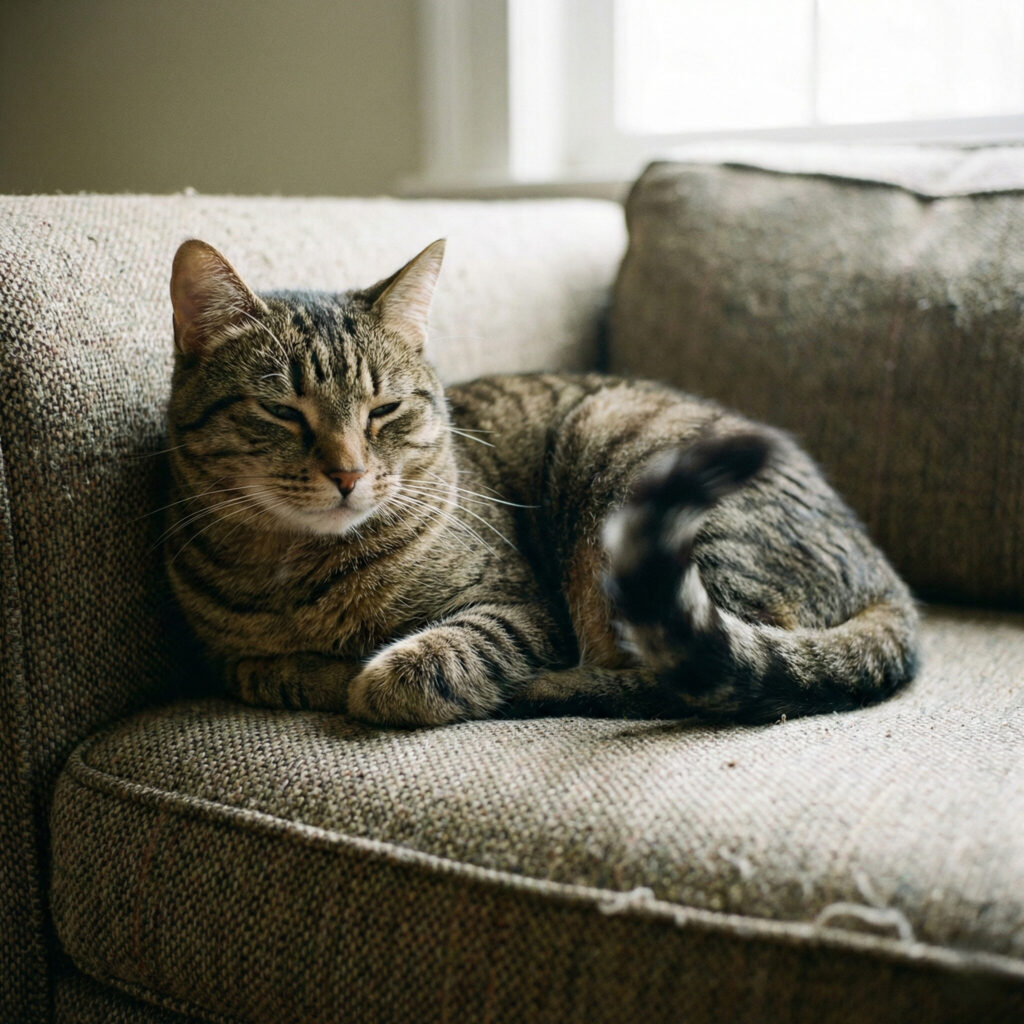
Cats flick their tails while lying down primarily to communicate their emotional state. A flicking or twitching tail often signals mild annoyance, overstimulation, or alertness, even if the cat appears relaxed. It can also indicate that the cat is dreaming or reacting to a nearby sound or movement. Understanding the context and accompanying body language helps determine whether the cat is content, irritated, or simply focused.
Summary Table
| Tail Movement | Likely Meaning | What to Do |
| Slow, rhythmic thump | Mild annoyance or frustration | Stop petting; give the cat space. |
| Quick, sharp twitch | Alertness, hunting instinct, or pain | Observe context; check for injuries if persistent. |
| Gentle tip twitch | Contentment or dreaming | Enjoy the moment; let them sleep. |
| Violent thrashing | Extreme anger or agitation | Back away immediately to avoid scratches/bites. |
| Quivering | Excitement or spraying (marking) | Usually positive, but watch for spraying behavior. |
Why Do Cats Flick Their Tails While Lying Down?
Cats are masters of non-verbal communication. While they use vocalizations like meows, purrs, and hisses, their tails are often the most honest indicators of their mood. You might have noticed your cat lying down, seemingly fast asleep or relaxing, yet their tail is flicking, thumping, or twitching.
This behavior can be confusing. Is the cat happy? Is it angry? Is it dreaming? To understand why cats flick their tails while lying down, you need to look at the specific type of movement and the context of the situation.
Read Also: Why Consistency Is Key in Dog Training?
The Tail as a Communication Tool
A cat’s tail is an extension of its spine and is rich in nerves and muscles. It is a highly sensitive tool used for balance and communication. Unlike dogs, who often wag their tails to show happiness, a moving cat tail is usually a sign of mental activity or emotional arousal.
When a cat is lying down, their body is at rest, but their tail can act like a barometer for their internal state. It tells you what is happening in their mind before their body reacts.
1. Annoyance and Overstimulation
The most common reason a cat flicks its tail while lying down is irritation. This frequently happens during petting sessions. You might be stroking your cat, and they seem to be enjoying it, but suddenly their tail starts to tap against the floor or furniture.
- The Warning Sign: A rhythmic thumping or twitching is often a polite warning. It means, “I was enjoying this, but now it is too much.”
- Petting Aggression: If you ignore this signal, the cat may escalate to biting or scratching. This is known as overstimulation or petting-induced aggression.
- The Fix: If you see the tail start to flick, stop petting immediately. Let the cat relax.
2. Alertness and Focus (Hunting Mode)
Even when lying down, a cat is rarely fully “off.” They are predators by nature. A flicking tail can indicate that the cat is intensely focused on something, even if they haven’t moved their body yet.
- Sensory Input: They might hear a mouse in the wall, see a bird through the window, or watch a bug crawl across the floor.
- Preparing to Pounce: The tail flick in this context is nervous energy. Their muscles are tensing, preparing to launch an attack if necessary.
- Visual Cue: Look at their ears and eyes. If the ears are swiveled forward and the eyes are wide and locked onto a target, the tail flick is a sign of hunting focus.
3. Dreaming (REM Sleep)
If your cat is asleep and their tail is flicking, they are likely in the REM (Rapid Eye Movement) stage of sleep. This is the deep sleep cycle where dreaming occurs.
- Involuntary Movements: Just like humans might twitch a finger or move their eyes while dreaming, cats often twitch their tails, whiskers, and paws.
- Hunting Dreams: Since cats are hunters, they likely dream about stalking prey. The tail twitch is a physical manifestation of the chase happening in their dream.
- Safety: This is perfectly normal and healthy. It is best not to wake a sleeping cat, as they can be startled and react defensively.
Read Also: Common Signs Your Dog Needs to See a Vet
4. Pain or Discomfort
Sometimes, a flicking tail is a sign of physical distress. If a cat is in pain, they may not cry out. Instead, their body language changes.
- Restlessness: If the cat cannot get comfortable and their tail is flicking constantly, they might be in pain.
- Flea Allergies: A sharp, erratic twitching of the tail accompanied by skin rippling on the back (rolling skin syndrome) can indicate flea allergy dermatitis or Feline Hyperesthesia Syndrome.
- Action Step: If the tail flicking seems obsessive, involuntary, or accompanies other signs like hiding or loss of appetite, consult a veterinarian.
5. Conflict and Indecision
Cats often feel conflicted. For example, a cat might be lying by the door wanting to go out, but it’s raining. Or they want to approach you for food but are scared of a loud noise in the kitchen.
- Mental Toggle: The tail flick represents this mental conflict. It is the physical sign of the cat weighing two different options.
- Resolution: Once the cat makes a decision, the tail usually stops flicking and they move.
Decoding Different Types of Tail Flicks
Not all tail flicks are the same. The speed, intensity, and part of the tail that is moving change the meaning.
The Tip Twitch
- Description: Only the very tip of the tail moves gently.
- Meaning: This is usually a good sign. It often happens when you talk to your cat while they are resting. It is their way of saying, “I hear you, and I am acknowledging you, but I am too lazy to get up.” It indicates contentment and low-level alertness.
The Full Thump
- Description: The entire tail lifts and smacks down against the surface.
- Meaning: This is a sign of significant irritation. The harder the thump, the angrier the cat. This is a clear “back off” signal.
The Swish
- Description: The tail moves slowly from side to side in a sweeping motion.
- Meaning: This usually indicates intense focus. They are locked onto a toy or prey. It can also happen right before they pounce on another pet in play.
Read Also: Why Do Dogs Lick Their Owners?
The Shiver/Quiver
- Description: The tail stands straight or lies flat and vibrates rapidly.
- Meaning: If the cat is standing, a quivering vertical tail means pure joy or excitement to see you. If lying down, a quiver can sometimes mean they are marking territory (spraying), though this is less common in a prone position.
How to React to Your Cat’s Tail Language
Understanding why your cat is flicking their tail allows you to build a better relationship with them. It helps you respect their boundaries and avoid unnecessary scratches.
Observe the Context
Always look at the whole picture.
- Is there a bird outside? The flick is likely excitement/hunting.
- Are you petting them? The flick is likely an annoyance.
- Are they asleep? The flick is likely dreaming.
Respect the “Stop” Signal
If you are interacting with your cat and the tail starts going, take a break.
- Stop petting.
- Do not restrain them.
- Let them move away if they want to.
By respecting this early warning system, you build trust. Your cat learns that they don’t have to bite to get you to stop; they just have to flick their tail.
Read Also: Why Do Dogs Bark at Nothing?
Check for Health Issues
If your cat is lying down and flicking their tail constantly without any obvious trigger (no birds, no petting, no sleep), do a health check. Look for fleas or sensitive spots on their back. If the behavior persists, a vet visit is needed to rule out neurological issues or chronic pain.
Frequently Asked Questions
Why does my cat flick its tail when I talk to her?
This is often a sign of affection or acknowledgment. He is resting but wants you to know he hears his name and is paying attention to you.
Can a wagging tail mean a cat is happy?
Generally, no. Unlike dogs, a “wagging” or thrashing tail in cats usually means anger or irritation. However, a tail held high with a quivering tip is a sign of happiness.
Should I worry if my cat’s tail never stops moving?
If the tail motion is constant, jerky, and the cat seems unable to relax or is biting at its own tail, this could be a medical condition like Feline Hyperesthesia. You should see a vet.
Conclusion
A cat flicking its tail while lying down is rarely random. It is a sophisticated method of communication. Whether they are dreaming of a great hunt, getting annoyed by too much attention, or keeping a watchful eye on their territory, their tail tells the story. By paying attention to these subtle cues, you can better understand your feline friend’s emotional world and ensure they feel safe and understood.