
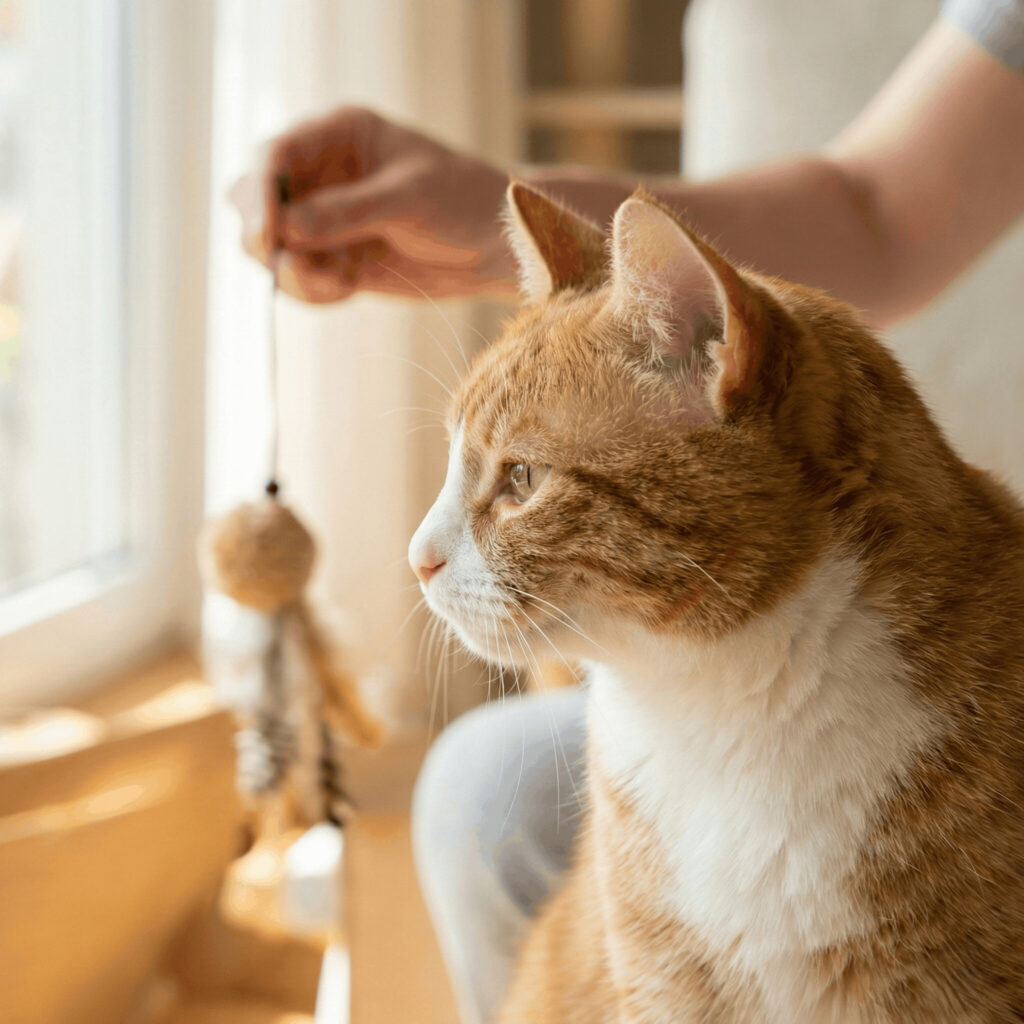
Cats often avoid eye contact to signal that they are not a threat. In the feline world, prolonged staring is viewed as an act of aggression or a challenge. By looking away, a cat is showing submission, diffusing a tense situation, or simply expressing that they are comfortable enough to lower their guard. Conversely, a cat that trusts you deeply might offer a “slow blink” rather than a direct stare.
Summary Table: Understanding Cat Eye Contact
| Behavior | Likely Meaning | Human Response |
| Looking Away | Submission or lack of threat | Respect their space |
| Unblinking Stare | Aggression or dominance | Look away slowly |
| Slow Blink | Affection and trust | Blink back slowly |
| Dilated Pupils | Fear or excitement | observe body language |
| Constricted Pupils | Agitation or anger | Back away |
Why Do Cats Avoid Eye Contact?
Cats communicate differently than humans do. While humans view eye contact as a sign of listening or respect, cats operate on a primal set of rules inherited from their wild ancestors. Understanding why a cat looks away requires diving into their evolutionary history, their social structures, and their unique body language.
This guide explores the biological and psychological reasons behind this behavior. It will help you interpret what your cat is saying without words.
Read Also: Why Do Cats Touch Noses When Greeting?
1. The Evolutionary Background
Cats are both predators and prey in nature. This dual role dictates how they interact with the world.
The Predator Instinct
As predators, cats rely on stealth. When a cat hunts, it stares intensely at its target. This laser focus allows them to track movement and calculate the perfect moment to pounce.
Because of this, a direct stare in the animal kingdom often precedes an attack. If your cat looks at you and then looks away, they are effectively telling you that you are not being hunted. It is a polite way of disengaging from “predator mode.”
The Prey Instinct
Small wildcats are also prey to larger animals like coyotes or owls. Direct eye contact with a larger predator can invite an attack. It draws attention to the cat.
By averting their gaze, a cat tries to remain low profile. This instinct remains in domestic house cats. If a loud noise scares them or a stranger enters the home, they may refuse to make eye contact to avoid being seen as a challenge or a target.
2. Social Hierarchy and Dominance
Feline social structures are complex. They do not have a rigid pack hierarchy like dogs, but they do have social rules that prevent unnecessary fighting. Eye contact plays a massive role in maintaining peace.
Staring as Aggression
In a multi-cat household, you might notice two cats facing off. The more dominant cat will often stare unblinkingly at the other. This is an act of intimidation. It is a silent challenge. If the other cat holds the gaze, a physical fight usually breaks out.
Looking Away as Submission
To avoid the fight, the submissive cat will break eye contact. This is not an act of fear in the way humans understand it. It is a de-escalation tactic. The cat is signaling that they accept the other cat’s space and do not want conflict.
When your cat avoids your eyes, especially after being scolded, they are acknowledging your dominance in that moment. They are saying they do not want to challenge your authority.
Read Also: Why Do Cats Sleep With Their Eyes Half Open?
3. Trust and Comfort
Paradoxically, ignoring you can be the ultimate sign of love.
The Vulnerability Factor
Maintaining a stare requires alertness. A cat that is constantly watching you is a cat that is on guard. They are monitoring your movements to ensure they are safe.
When a cat sits near you but looks at the wall, the floor, or out the window, they are displaying total relaxation. They trust you enough to take their eyes off you. They know you will not attack them, so they do not need to monitor your every move.
The “Slow Blink” Connection
Sometimes a cat will make eye contact but then slowly close and open their eyes. They might then look away. This is distinct from avoiding eye contact out of fear. This “slow blink” is widely considered a cat kiss. It signals deep affection.
If you look at your cat and they blink slowly before turning their head, they are communicating safety. You can reciprocate this by looking at them and slowly closing your eyes. It strengthens the bond between you.
4. Stress and Anxiety Factors
While looking away is often normal, it can sometimes signal distress. You must look at the context of the behavior to understand the difference.
New Environments
When you bring a cat into a new home, they are often overwhelmed. Their senses are bombarded with new smells and sounds. In this state, a cat might avoid eye contact because they are in sensory overload. They are trying to process the environment without inviting interaction. Forcing engagement at this stage can cause fear.
Fear of Punishment
If a cat has been yelled at or punished in the past, they may develop a fear response associated with eye contact. They learn that attention from a human leads to negative outcomes.
These cats will consistently look away or hang their heads. This is a sign that the trust needs to be rebuilt. You should use positive reinforcement like treats and play to teach them that looking at you results in good things.
Read Also: How to Introduce a New Cat to Your Home
5. Medical Reasons for Avoiding Eye Contact
Sometimes the cause is physical rather than psychological. If a cat suddenly stops making eye contact or seems unable to focus, it could be a health issue.
Vision Loss
Cats can suffer from vision degradation just like humans. Conditions like cataracts, glaucoma, or retinal detachment can cause blindness. A cat that cannot see you clearly may appear to be looking past you or away from you. You might notice them bumping into furniture or being reluctant to jump on high surfaces.
Feline Hyperesthesia
This is a condition that causes extreme skin sensitivity. Cats with this syndrome often have dilated pupils and may act hallucinated. They might stare blankly at nothing or avoid looking at anything directly because they are distracted by the sensation on their skin.
Lethargy and Illness
When a cat feels sick, their natural instinct is to hide. They withdraw to conserve energy and protect themselves while they are weak. During this time, they will avoid social interaction, including eye contact. If your cat is lethargic, not eating, and refusing to look at you, a vet visit is necessary.
How Humans Should Use Eye Contact
Humans often make mistakes when trying to bond with cats. We want to look deep into their eyes to show connection, but this usually backfires.
The Polite Greeting
When you meet a new cat, do not stare at them. Look at them briefly, then look away. This mimics their own polite behavior. It tells the cat that you are not a threat. Let them approach you. Offer a hand for them to sniff while looking at their ear or shoulder instead of their eyes.
The Soft Gaze
If you are looking at your cat, keep your facial muscles relaxed. Squint your eyes slightly. A wide-eyed stare is frightening to a cat. By softening your gaze, you communicate friendliness.
Using Peripheral Vision
Cats are masters of peripheral vision. They can see you even when they do not appear to be looking at you. You can do the same. Sit near your cat and read a book or watch TV. Watch them out of the corner of your eye. They will appreciate the companionship without the pressure of direct interaction.
Read Also: How Spaying or Neutering Affects Cat Behavior
Common Misconceptions About Cat Gaze
There are many myths about why cats behave the way they do. Clearing these up helps improve the human-cat relationship.
Myth: A cat looking away is guilty.
People often think that if a cat refuses to look at them after knocking something over, the cat feels guilt. This is false. Cats do not feel guilt in the human sense. They are reacting to your angry body language and tone of voice. They look away to calm you down, not to admit fault.
Myth: Cats who stare are friendly.
A cat that walks up to you while staring intently is usually not coming for a cuddle. This is often an assertive or aggressive approach. They might be guarding territory or demanding food. It is best to let this cat make the first move before you try to pet them.
Myth: You should stare down a cat to show dominance.
This is dangerous advice. Staring down a cat can trigger an attack. It does not teach them respect. It teaches them that you are a scary competitor. It damages the bond of trust.
Interpreting Other Body Language Clues
Eye contact is just one piece of the puzzle. To truly understand why your cat is looking away, you must look at the rest of their body.
Ear Position
Forward Ears: If the ears are forward but the cat looks away, they are likely relaxed or listening to something else.
Pinned Ears: If the ears are flat against the head and the cat avoids eye contact, they are fearful or angry. Do not approach.
Sideways Ears: This is often a sign of uncertainty or anxiety. The cat is unsure how to react to the situation.
Tail Movement
Slow Wag: A gently swishing tail combined with looking away usually means the cat is annoyed but trying to ignore you.
Puffed Tail: If the tail is large and bristled, the cat is terrified. They are avoiding your gaze to avoid a fight, but they are ready to defend themselves.
Upright Tail: A tail that is straight up with a hooked tip signals happiness. If they look away in this state, they are just confident and comfortable.
Posture
Crouched: A cat that is low to the ground and looking away is afraid. They are trying to make themselves small.
Belly Up: If a cat rolls over and looks away, they are showing extreme trust. They are exposing their most vulnerable area.
Conclusion
Cats avoid eye contact for reasons that make perfect sense in the wild. It is a tool they use to stay safe, avoid conflict, and communicate peaceful intentions. While humans often crave face-to-face connection, a cat showing you their profile is often paying you a high compliment. They are saying they feel safe enough to lower their defenses.
By respecting this boundary and learning to speak their language of slow blinks and soft gazes, you can build a deeper and more respectful relationship with your feline companion. When your cat looks away, do not take it personally. Take it as a sign that you are part of their family structure where constant vigilance is not required.