
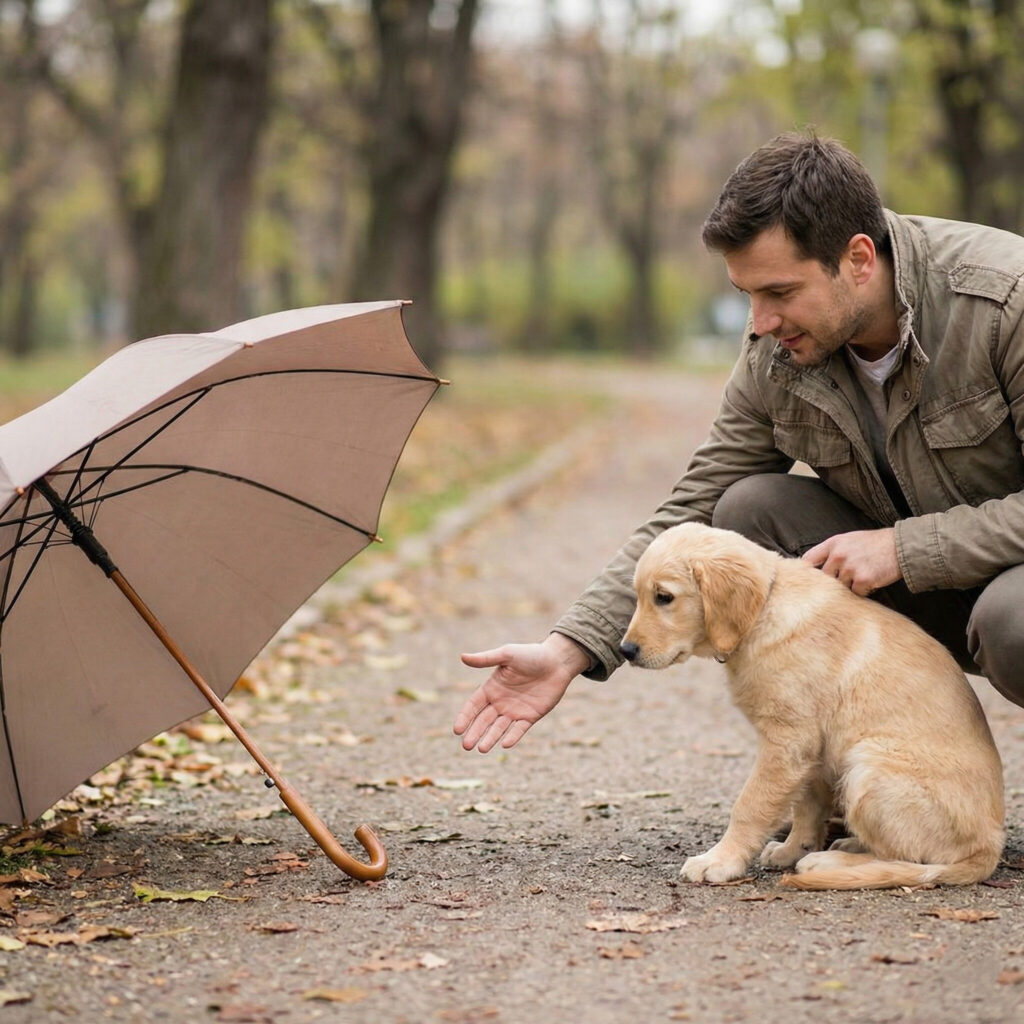
Puppies typically experience two distinct fear periods during their development. The first fear period occurs between 8 to 11 weeks of age, often coinciding with the time they leave their litter and join a new family. The second fear period happens during adolescence, usually between 6 to 14 months of age, depending on the breed and individual maturity. During these phases, a puppy may suddenly become afraid of familiar people, objects, or situations. Handling these periods with patience and positive reinforcement is critical to prevent lifelong phobias.
Summary Table
| Feature | First Fear Period | Second Fear Period |
| Age Range | 8 to 11 weeks | 6 to 14 months |
| Developmental Stage | Early Socialization / Imprinting | Adolescence / Sexual Maturity |
| Typical Triggers | Loud noises, new environments, strangers, large objects | Familiar objects that now look “scary,” sudden movement, men with hats, shadows |
| Primary Goal | Learning what is safe vs. dangerous | refining survival instincts, independence |
| Action Plan | comfort, treat-retreat, avoid force | Don’t lure, keep distance, ignore the fear, reward recovery |
When Puppies Develop Fear Periods
Raising a puppy is full of joy, but it can also be confusing when your confident, happy puppy suddenly refuses to walk past a garbage can or barks at a friendly neighbor. This behavior often catches owners off guard. You might worry that your dog is developing aggression or that you have failed at socialization.
The good news is that this is likely just a normal developmental stage known as a “fear period.” Just like human children go through phases of stranger danger or fear of the dark, puppies go through specific windows where their brain changes how it processes threats.
Understanding when these periods happen and how to navigate them is the most important part of raising a stable, confident adult dog.
This guide covers the timeline, the signs, and the exact steps you need to take to help your puppy survive these scary phases without lasting trauma.
Read Also: How Puppies Learn Social Boundaries
What Is a Fear Period?
A fear period is a temporary stage in a dog’s neurological development. During these times, a puppy’s brain becomes hyper-sensitive to the environment. Events that happen during a fear period can leave a lasting impression. This is often called “single-event learning.”
If a puppy has a terrified reaction to a big dog or a loud vacuum cleaner during a fear period, that specific fear can become permanent if not handled correctly. Conversely, positive experiences during this time can build lifelong confidence.
These periods are evolutionary. In the wild, a young puppy needs to stay close to the den. As they grow and become more independent, they need to be wary of predators and new dangers to survive. These instincts still exist in our domestic dogs today.
The First Fear Period: 8 to 11 Weeks
The first fear period is also known as the “fear imprint period.” This is arguably the most sensitive time in a dog’s life. Unfortunately, it usually coincides exactly with the time most puppies are sent to their new homes.
Why It Happens
During this window, the puppy’s brain is rapidly mapping out the world. They are learning what is “normal” and what is “dangerous.” Because they are physically small and vulnerable, their instinct to run from loud noises or large looming figures is high.
Common Triggers
- Vacuum cleaners, blenders, or hair dryers.
- Thunderstorms or fireworks.
- Vet visits (thermometers, shots, cold tables).
- Being picked up by strangers.
- Large, boisterous dogs.
How to Handle It
The goal during the 8-11 week mark is protection and positive association. You should not stop socializing your puppy, but you must change how you socialize them.
- Avoid Overwhelming Situations: Do not take an 8-week-old puppy to a crowded fireworks show or a chaotic dog park.
- Be the Safe Zone: If your puppy is scared, let them retreat to you. Old advice said “don’t comfort a scared dog,” but modern behavioral science tells us that comforting a puppy does not reinforce fear; it provides safety.
- Happy Visits: Take your puppy to the vet just to get treats and hugs, not just for shots.
- No Force: Never drag a scared puppy toward the thing they are afraid of. This confirms to them that the object is indeed bad and that you cannot be trusted to protect them.
Read Also: Why Do Puppies Cry at Night?
The Second Fear Period: 6 to 14 Months
Just when you think you are in the clear, the second fear period hits. This phase is often called “adolescent fear.” It is much harder to predict than the first one because the timing varies wildly based on the dog’s size. Small breeds might hit this at 6 months, while giant breeds like Great Danes might not experience it until they are over a year old.
Why It Happens
This period aligns with sexual maturity and the teenage phase. The dog is looking more like an adult, but their brain is rewiring. In the wild, this is the age when a dog would start hunting or traveling further from the pack. They need to reassess what is safe.
The “Sudden” Factor
The hallmark of the second fear period is the sudden change in perception. A fire hydrant your dog has walked past 100 times is suddenly a monster. A statue in the park is now a threat.
Common Signs
- Barking or lunging at people wearing hats, sunglasses, or carrying bags.
- Refusing to walk through doorways or over different floor textures.
- freezing on walks and refusing to move.
- Sudden reactivity toward other dogs.
How to Handle It
This period requires patience because your dog looks fully grown, so people expect it to act like it.
- Don’t Lure: If your dog is scared of a trash can, do not hold a treat on the trash can to get them to come closer. This creates an emotional conflict (fear vs. hunger) and can result in a bite or a snap when they get close and realize they are still scared.
- Treat and Retreat: Toss a treat behind the dog, away from the scary object. This rewards them for looking at the object but allows them to move away to eat, which lowers their stress.
- Jolly Routine: If your dog gets spooked, keep your voice light and happy. “Oh, silly trash can! Let’s go this way!”
- Keep Distance: Find the distance where your dog notices the scary thing but isn’t barking. Feed them treats at that distance until they relax.
Recognizing the Signs of Fear
It is crucial to recognize fear before it turns into a panic attack. Dogs speak through body language. If you can spot the early whispers of fear, you can prevent the scream of a bite.
Subtle Signs
- Lip Licking: Rapidly licking the nose when no food is present.
- Whale Eye: Showing the whites of the eyes.
- Yawning: Yawning when they are not tired is a stress signal.
- Panting: Sudden panting when it isn’t hot.
- Paw Lift: Lifting one front paw while looking at something.
Obvious Signs
- Tail Tuck: The tail goes between the legs.
- Cowering: Lowering the body to the ground.
- Hackles Raised: The hair along the spine stands up (piloerection).
- Urination: Submissive peeing when approached.
- Freezing: Becoming a statue.
Read Also: What to Expect During a Puppy’s First 90 Days
The Science: Why Evolution Created Fear Periods
To understand why this happens, we have to look at biology. In nature, animals that are too curious usually get eaten. Animals that are too fearful starve because they never leave the den.
Fear periods are nature’s way of calibrating a survival mechanism.
- The First Period: Calibrates social safety. “Who is my family? What species am I?”
- The Second Period: Calibrates environmental safety. “Is that moving bush a rabbit or a wolf?”
When we bring dogs into our human world, this biological programming malfunctions slightly. A vacuum cleaner sounds like a growling predator. A mail carrier looks like an intruder. We have to manually override their instincts and teach them that these modern oddities are safe.
Do’s and Don’ts During Fear Periods
Navigating these weeks requires a strict adherence to positive training methods. Mistakes made here can take months to undo.
The Do’s
- DO keep training sessions short and fun.
- DO use high-value treats (chicken, cheese, hot dogs) to create strong positive associations.
- DO allow your puppy to observe the world from a distance. Sitting on a park bench and watching the world go by is better than walking through the middle of the crowd.
- DO advocate for your dog. Tell strangers, “Please don’t pet him right now, he is in a training phase.”
- DO remain calm. Your dog reads your heart rate and breathing. If you tense up, they will confirm there is a threat.
The Don’ts
- DON’T force your dog to “face their fears.” Flooding them (forcing them to stay in a scary situation) usually makes fear worse.
- DON’T punish a growl. A growl is a warning. If you punish the warning, the dog learns to bite without warning next time.
- DON’T coddle with high-pitched anxiety. Comfort calmly; don’t act frantic.
- DON’T assume they are being stubborn. If a dog won’t sit or walk, it is usually because their brain is locked in fear mode, not because they are being disobedient.
Read Also: Puppy Care & Development
Practical Training Scenario: The Scary Object
Let’s look at a real-world example. You are walking your 8-month-old puppy, and suddenly they freeze and bark at a plastic bag flapping in the wind.
Step 1: Stop Moving. Do not pull the leash tight. A tight leash adds tension and makes the dog feel trapped.
Step 2: Assess Distance. Is your dog taking treats? If no, you are too close. Move further away until your dog can eat.
Step 3: Engage/Disengage Game.
- Wait for the dog to look at the bag.
- Mark it with a word like “Yes!” or use a clicker.
- Feed the treat to the dog.
- Repeat this. The dog learns: “Seeing the scary bag makes chicken appear.”
Step 4: Curved Approach. If you need to pass the bag, walk in a wide arc. Do not walk straight at it. Walking in a curve is a polite, non-threatening signal in dog language.
Step 5: Move On. Once you pass it, run a little bit or play with a toy to shake off the stress.
When Is It More Than Just a Phase?
Most puppies grow out of these fear periods with consistent, gentle training. However, sometimes fear can turn into a clinical issue. It is important to know when to call a professional.
If the fear period behavior persists for more than a few weeks without improvement, or if the reaction is escalating to intense aggression, you may need help.
Signs you need a professional dog trainer or veterinary behaviorist:
- The puppy takes hours to recover from a scary event.
- The puppy stops eating for long periods due to stress.
- The puppy is biting and breaking skin.
- The puppy is afraid of everything, not just specific triggers (generalized anxiety).
Genetics plays a role here. Some dogs are genetically predisposed to be more anxious. If you have a sensitive breed (like a Border Collie or Sheltie), you may need to be extra diligent during fear periods.
Conclusion
Fear periods are a frustrating but normal part of puppy development. They are not a sign that you have a “bad dog” or that you are a bad owner. They are simply biological windows where your dog’s brain is asking questions about safety.
Your job is to answer those questions with confidence and kindness. By protecting your puppy from trauma during the 8-11 week window and guiding them patiently through the adolescent phase, you are building a foundation of trust.
Remember, the dog isn’t giving you a hard time; they are having a hard time. Take a deep breath, grab a handful of treats, and help them learn that the world isn’t so scary after all.