
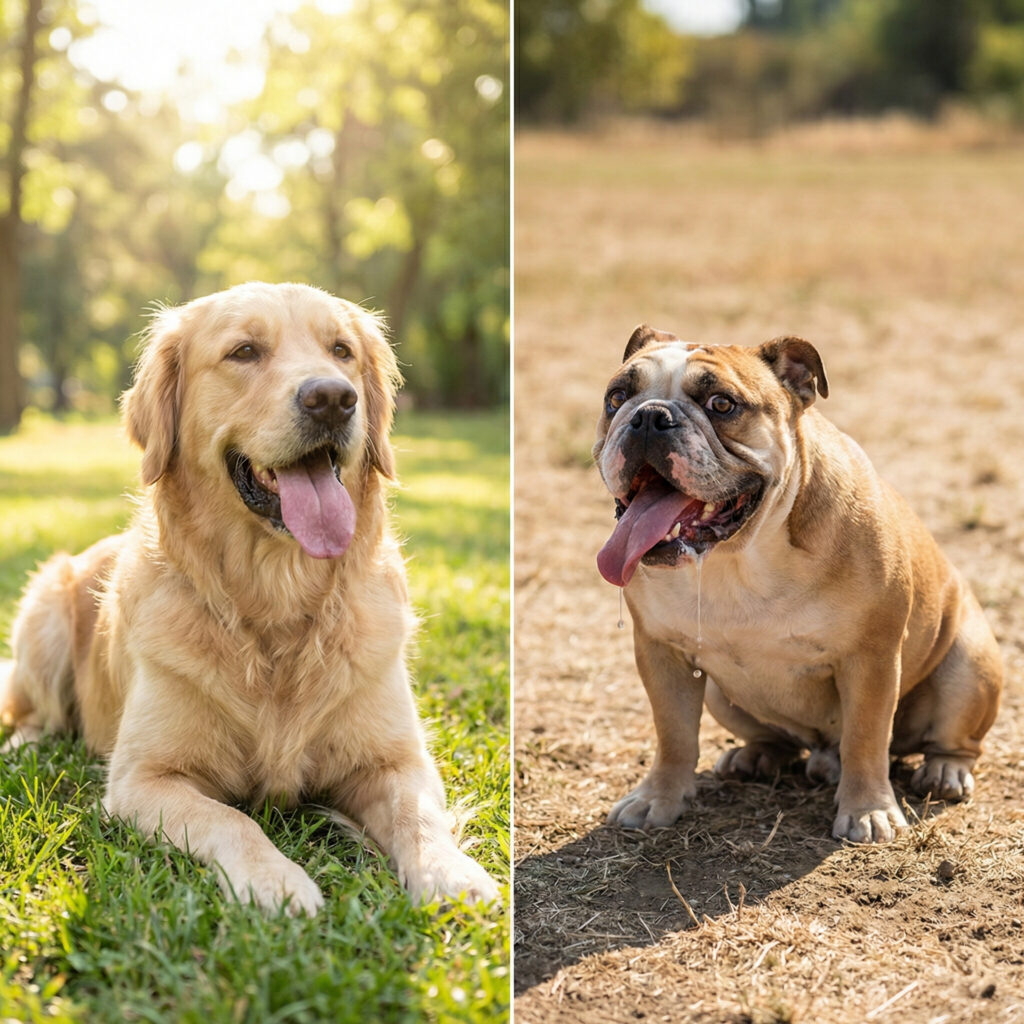
Normal panting is a dog’s primary way to cool down or express excitement. It should resolve quickly once the dog rests or cools off, and the dog should appear bright and alert. Dangerous panting is excessive, loud, or accompanied by other symptoms. If the panting sounds harsh (rasping or wheezing), the gums are blue, white, or brick red, or if the dog seems lethargic, confused, or in pain, it requires immediate veterinary attention. Watch for “air hunger,” where the dog stretches its neck out to breathe.
Summary Table
| Symptom | Normal Panting | Dangerous Panting |
| Duration | Stops after rest or cooling down | Constant, heavy breathing that won’t stop |
| Sound | Quiet, rhythmic breath sounds | Harsh, rasping, wheezing, or high-pitched |
| Tongue/Gums | Pink and moist | Blue, purple, white, or brick red; dry or sticky |
| Behavior | Alert, happy, responsive | Restless, pacing, lethargic, or unresponsive |
| Body Posture | Relaxed, mouth open | Neck stretched out, elbows wide, trying to expand chest |
| Context | After play, exercise, or excitement | At rest, during cool weather, or at night |
Why Dogs Pant
Panting is a natural biological function for dogs. Unlike humans, dogs do not sweat through their skin to cool down. They only have a few sweat glands located in their paw pads, which are not enough to regulate their body temperature. Instead, they rely on evaporative cooling.
When a dog pants, they inhale air through their nose and mouth. This air passes over the moist tissues of the tongue and lungs. The moisture evaporates, taking heat away from the body. This process is essential for thermoregulation.
However, because panting is also tied to the nervous system and pain receptors, it can be a confusing signal for pet owners. Knowing the baseline for your specific dog is key to spotting trouble.
Read Also: How to Safely Lift and Carry a Dog
1. Normal Panting Scenarios
Before diving into the dangers, it is helpful to recognize when heavy breathing is perfectly safe.
Post-Exercise Recovery
After a game of fetch, a run, or a vigorous walk, your dog will pant heavily. This is the equivalent of a human sweating and breathing hard after a workout. The panting should correlate with the intensity of the exercise. A sprint requires more recovery breathing than a slow walk.
Excitement and Happiness
“Happy panting” is a real phenomenon. When a dog anticipates a treat, sees a loved one, or is playing, their heart rate increases. This slight rise in body temperature and adrenaline triggers panting. You can usually identify this by looking at the rest of the body. A loose, wiggly body and a tail wag usually mean the panting is behavioral and safe.
Warm Weather Adaptation
On a hot summer day, a dog will pant even if it is not exercising. This is maintenance cooling. As long as the dog has access to shade and water, and the panting is not frantic, this is a normal physiological response to the environment.
The Red Flags: Signs of Dangerous Panting
You need to act when the panting does not match the situation. If your dog has been lying on the couch in a cool room for an hour and suddenly starts panting heavily, that is a warning sign. Look for these specific changes in appearance and behavior.
Color of the Tongue and Gums
The mouth tells the story of your dog’s oxygen levels and blood flow.
- Pink: Normal.
- Brick Red: This can indicate heatstroke or early shock. The blood vessels are dilated in an attempt to dump heat.
- White or Pale: This suggests anemia (low red blood cells) or internal bleeding. The dog is panting because it is not getting enough oxygen.
- Blue or Purple (Cyanosis): This is a critical emergency. It means the dog is not getting oxygen into the bloodstream. This often happens with heart failure or severe respiratory blockage.
The Sound of the Breath
Normal panting is relatively quiet. It sounds like a rhythmic “huh-huh-huh.” Dangerous panting often changes pitch or volume.
- Stridor: A high-pitched, wheezing noise usually caused by a blockage in the larynx or windpipe.
- Roaring: A loud, harsh sound that suggests the airway is not opening fully (common in older Labradors with Laryngeal Paralysis).
- Crackling: If you hear a bubbling or crackling sound, there may be fluid in the lungs, which is a symptom of heart failure or pneumonia.
Body Language and Behavior
A dog in distress will not look comfortable.
- The Orthopneic Stance: This is a medical term for a specific posture. The dog stands with its elbows sticking out wide and its neck stretched forward and low. They do this to straighten their windpipe and expand their chest as much as possible.
- Restlessness: If a dog cannot get comfortable, pants while pacing, or keeps getting up and lying down, they may be in pain or suffering from bloat.
- Focus: A panting dog that cannot be distracted by a treat or their name is likely in medical distress.
Medical Emergencies Associated with Panting
There are several acute conditions where panting is a primary symptom. These require an immediate drive to the emergency vet.
Heatstroke
Heatstroke is one of the most common causes of dangerous panting. It happens when a dog’s body temperature rises above 104°F (40°C). At this point, the panting mechanism fails to cool the dog down fast enough.
Signs of Heatstroke:
- Excessive, frantic panting.
- Thick, ropy saliva.
- Vomiting or diarrhea.
- Collapse or stumble.
If you suspect heatstroke, you must begin cooling the dog immediately before you even get to the vet. Wet their paws and ears with cool (not ice-cold) water and blast the air conditioning in the car.
Read Also: What Causes Bad Breath in Dogs?
Gastric Dilatation-Volvulus (Bloat)
Bloat is a life-threatening condition where the stomach fills with gas and twists on itself. It cuts off blood flow and is fatal without surgery. Deep, heavy panting is often one of the very first signs, caused by the intense pain and panic.
Signs of Bloat:
- Panting accompanied by pacing.
- Trying to vomit but bringing nothing up (unproductive retching).
- A distended, hard belly.
- Pale gums.
Heart Failure
As a dog’s heart weakens, it struggles to pump blood efficiently. This leads to a lack of oxygen in the tissues. To compensate, the dog will breathe faster and pant to increase oxygen intake.
This is often seen in older dogs with mitral valve disease or Dilated Cardiomyopathy (DCM). This type of panting often happens at night when the dog is lying down.
Poisoning and Toxicity
Many toxins affect the heart rate or the respiratory system. For example, chocolate (theobromine toxicity) causes a rapid heart rate and panting.
Antifreeze or rodenticide ingestion can also cause rapid breathing as the body goes into shock. If you find a chewed up container or missing food items along with sudden panting, treat it as an emergency.
Chronic Health Issues Causing Panting
Not all dangerous panting is an immediate emergency; some indicate a long-term health issue that needs management.
Cushing’s Disease (Hyperadrenocorticism)
This condition occurs when the body produces too much cortisol, a stress hormone. One of the hallmark symptoms of Cushing’s is excessive panting, even in cool environments. These dogs often have other symptoms like increased thirst, increased urination, and a “pot-bellied” appearance due to muscle weakness.
Laryngeal Paralysis
This is a nerve disorder that affects the muscles opening the airway (the larynx). As the dog breathes in, the airway flaps should open wide. In this condition, they remain floppy and partially closed. This creates a narrow opening for air, leading to loud, harsh panting. It is most common in older large breeds like Labradors and Golden Retrievers.
Breed-Specific Risks: Brachycephalic Airway Syndrome
If you own a “smushed-face” breed, the rules for panting are stricter. Breeds like Pugs, French Bulldogs, English Bulldogs, and Boston Terriers suffer from Brachycephalic Obstructive Airway Syndrome (BOAS).
Because of their anatomy, these dogs have narrowed nostrils (stenotic nares) and an elongated soft palate that blocks their windpipe. They have to work much harder than other dogs just to move air.
The Danger Zone for Flat-Faced Dogs
- Low Tolerance: These dogs can overheat in temperatures as mild as 70°F (21°C).
- Swelling: Heavy panting can cause the tissues in the throat to swell, further blocking the airway. This creates a vicious cycle where panting makes it harder to breathe, which causes more panting.
- Noise: Snoring and snorting are common, but if the noise becomes a high-pitched squeak during panting, they are struggling for air.
Read Also: How Obesity Impacts a Dog’s Lifespan
Differentiating Anxiety vs. Medical Panting
Anxiety is a huge driver of panting. Thunderstorms, fireworks, separation anxiety, or car rides can trigger a panic response. It is crucial to distinguish this from a medical issue.
Clues it is Anxiety
- Trembling: The dog is shaking or shivering while panting.
- Hiding: The dog tries to squeeze under furniture or into a closet.
- Lip Licking/Yawning: These are “displacement behaviors” that indicate stress.
- Context: The panting starts exactly when a trigger (loud noise, suitcase coming out) appears.
While anxiety panting isn’t physically “dangerous” in the same way bloat is, chronic stress is bad for a dog’s health. You should consult a vet or behaviorist if your dog is frequently panic-panting.
What to Do: A Step-by-Step Guide
If you notice your dog panting abnormally, follow this checklist to assess the situation.
1. Check the Environment
Is it hot? Is the humidity high? If yes, move the dog to a cool, air-conditioned room immediately. Offer cool water, but do not force them to drink.
2. Check the Gums
Lift the dog’s lip. The gums should be slippery and pink. If they are dry/tacky, it indicates dehydration. If they are pale or blue, go to the vet.
3. Check Capillary Refill Time (CRT)
Press your finger firmly against the dog’s pink gum to turn it white, then release. The pink color should return in under 2 seconds. If it takes longer, the dog may be in shock or have poor circulation.
4. Check for Pain
Gently run your hands over the dog’s body. Do they flinch or turn to look at you when you touch their belly or hips? Localized pain often causes panting.
5. Take a Rectal Temperature
If you have a pet thermometer, this is the most accurate diagnostic tool.
- 101°F – 102.5°F: Normal.
- 103°F: Elevated (monitor closely).
- Above 104°F: Heatstroke (Emergency).
- Below 99°F: Hypothermia or Shock (Emergency).
When to Visit the Vet
You should make an appointment or head to the emergency clinic if:
- The panting starts suddenly with no obvious reason.
- You suspect the dog has eaten something toxic.
- The dog is an older large breed, and the breathing sounds loud/raspy.
- The dog has a known heart condition.
- Your gut tells you something is wrong. You know your dog best.
Conclusion
Panting is a vital tool for your dog’s survival, acting as their primary cooling system and a way to communicate excitement. However, it is also a subtle alarm bell for pain, illness, and injury. By observing the context, weather, activity level, and accompanying behavior, you can learn to decode your dog’s breathing.
Always err on the side of caution. If your dog is struggling to settle, their gums look wrong, or the panting sounds harsh, seeking professional veterinary advice is the safest choice. Catching conditions like bloat, heatstroke, or heart failure early is the only way to ensure a positive outcome.