
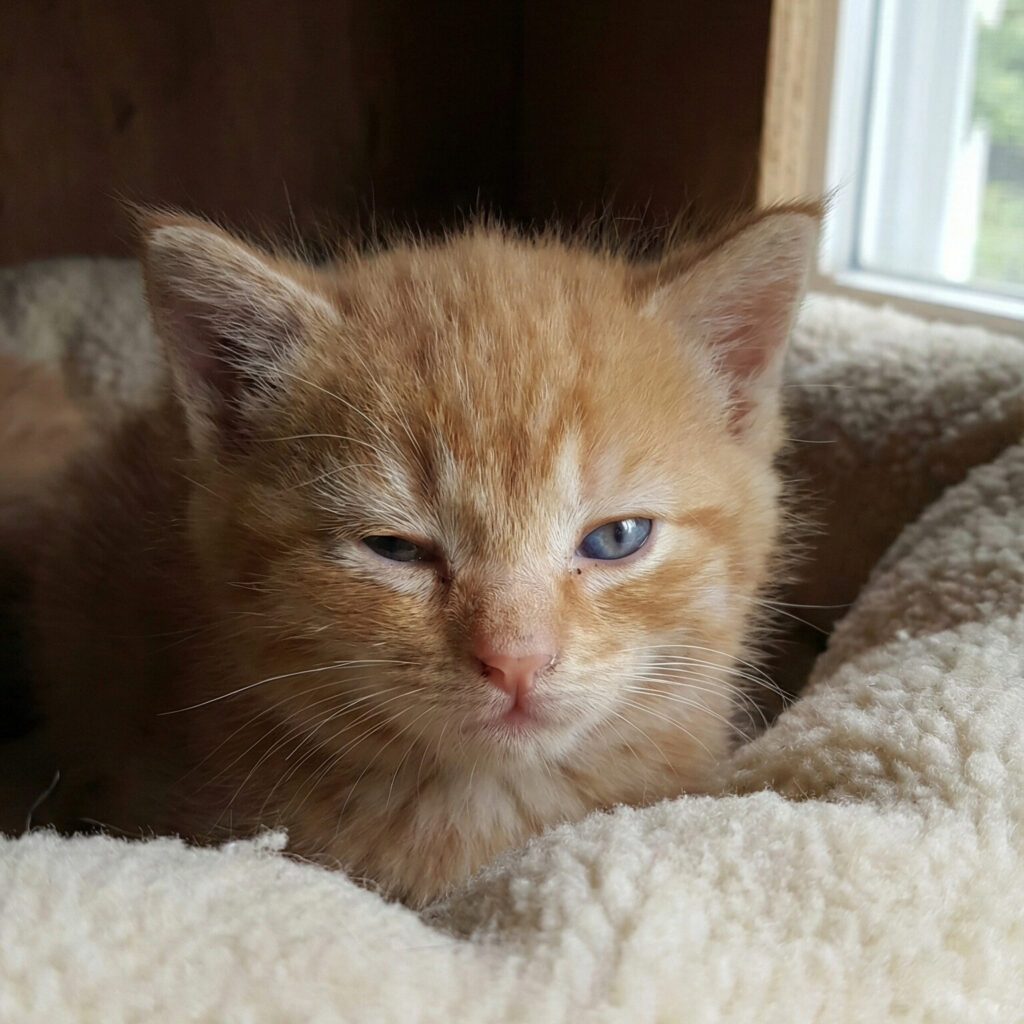
Most kittens begin to open their eyes between 7 and 10 days after birth. The process is gradual and usually takes about two to three days to complete fully. By two weeks of age, both eyes should be fully open. If a kitten has not opened their eyes by day 14, consult a veterinarian.
Summary Table: Kitten Eye Development
| Kitten Age | Developmental Milestone |
| Newborn to 7 Days | Eyes are sealed shut. Kittens rely on smell and touch. |
| 8 to 12 Days | Eyes begin to crack open slightly. They may look squinty. |
| 14 Days (2 Weeks) | Eyes should be fully open. Vision is blurry. Eyes are blue. |
| 3 to 4 Weeks | Vision improves significantly. Kittens start tracking movement. |
| 6 to 7 Weeks | Eye color begins to change from baby blue to adult color. |
| 3 to 6 Months | Permanent eye color settles in completely. |
When Do Kittens Open Their Eyes?
Bringing a litter of newborn kittens into the world is an exciting experience. Whether you are fostering a rescue litter or caring for your own cat’s babies, watching them grow is fascinating. The most anticipated milestone for many pet owners is the moment those tiny eyes finally open.
Newborn kittens are born completely dependent on their mother. They are deaf, blind, and unable to regulate their own body temperature. Their eyes are sealed shut to protect their delicate optical systems while they continue to develop.
This guide covers everything you need to know about the timeline of kitten eye development. We will discuss when it happens, why it happens, and what you need to do to keep them safe.
Read Also: How to Stop Door Dashing Behavior in Cats
The Typical Timeline for Opening Eyes
Kittens do not open their eyes immediately after birth. Nature has a very specific schedule for feline development.
Week 1: Total Darkness
For the first seven days of life, a kitten’s eyes are sealed tight. During this time, the kitten is busy sleeping and nursing. They rely entirely on their sense of smell and touch to find their mother and their littermates. Their eyes are highly sensitive to light, so the closed eyelids act as a protective shield.
Week 2: The Awakening
This is the magic window. Most kittens will start to open their eyes between day-7 and day-10. You will likely notice a small slit appearing in the corner of the eye first. It is rarely a sudden event where the eyes pop open wide. Instead, it looks like a slow unzipping process.
Week 3: Wide Open
By the time the kittens reach two weeks of age, their eyes should be fully open. At this stage, their vision is still quite poor. They can see light and shadow, but they cannot focus on specific objects yet.
You might notice they still bump into things or wobble when they walk.
Why Are Kittens Born With Closed Eyes?
You might wonder why human babies are born with open eyes while kittens are not. The reason comes down to biology and survival.
Cats are what scientists call an altricial species. This means their young are born in an undeveloped state and require extensive care and feeding by parents.
Because pregnancy in cats is relatively short (about 63 to 65 days), the kittens are not fully “cooked” when they come out.
Their eyes are extremely fragile at birth. If they were open, dirt, dust, or bacteria in the nesting box could easily damage the developing cornea.
By keeping the eyelids fused shut, nature ensures the eye continues to develop safely behind a protective barrier until it is ready to process light.
Factors That Influence the Timing
While 7 to 10 days is the average, not every kitten follows the same schedule. Several factors can speed up or slow down this process.
Breed Genetics
The breed of the cat plays a significant role.
- Short-haired breeds: Cats like the Siamese, Sphynx, or Oriental Shorthair tend to open their eyes earlier. Some Siamese kittens may start opening their eyes as early as day 5.
- Long-haired breeds: Cats like Persians or Himalayans often take longer. It is normal for them to wait until closer to the two-week mark.
Litter Size
Interestingly, the size of the litter can affect development. Kittens from smaller litters often open their eyes sooner than kittens from very large litters. This may be due to the nutritional resources available to the mother during pregnancy.
Mother’s Age and Health
A healthy, well-fed mother cat produces healthier milk. Kittens that receive high-quality nutrition from their mother tend to hit their developmental milestones faster.
If the mother was malnourished during pregnancy, the kittens might be slightly delayed in opening their eyes.
The Individual Kitten
Just like humans, every cat is unique. Even within the same litter, one kitten might open their eyes on day 7 while their sibling waits until day 12. As long as the eyes look clean and not swollen, this variation is usually nothing to worry about.
What Happens During the Process?
The process of opening eyes is gradual. It can be tempting to try and help, but you must let nature take its course.
The “Peeking” Stage
At first, you will see a tiny gap. The kitten might look like they are squinting. This stage can last for two or three days. One eye might open faster than the other. You might end up with a kitten that has one eye wide open and one eye still shut. This can look funny, but it is perfectly normal.
Cloudy Blue Appearance
When the eyes finally open, they will not be clear. They will look cloudy, glossy, and blue. This is because the fluid in the eye is still settling, and the pigmentation of the iris has not developed yet. All kittens are born with blue eyes.
Blurry Vision
Even after the eyes open, the kitten is functionally blind for a while longer. Their pupils do not constrict (shrink) in response to bright light immediately. This is why it is vital to keep newborn kittens in a dimly lit room. Bright lights can damage their retinas during this sensitive phase.
Safety Rules for Owners
As a pet owner or foster parent, your job is to observe. You should intervene as little as possible. Here are the golden rules of kitten eye care.
1. Never Pry the Eyes Open
This is the most important rule. Never try to force a kitten’s eyes open with your fingers. The eyelids are fused with tissue. Forcing them apart can tear the eyelids and cause permanent blindness or severe infection. Patience is key.
2. Keep the Environment Clean
Because their eyes are so new, they are susceptible to infection. Ensure the bedding in the nesting box is clean. Replace soiled blankets regularly to prevent bacteria from growing near the kittens’ faces.
3. Dim the Lights
Since their pupils cannot regulate light intake yet, keep the kittens in a room with soft, low lighting. Avoid using camera flashes when taking pictures of them during the first few weeks.
Read Also: Why Do Cats Prefer High Places?
Warning Signs: When to Worry
While nature usually handles things perfectly, complications can happen. Being able to spot an eye infection early can save a kitten’s sight.
You should perform a daily health check on the kittens. Pick them up gently and look at their faces. Here is what you need to look out for:
Crust or Discharge
If you see yellow or green pus oozing from the eye area, this is a sign of infection. A little bit of clear, watery discharge can be normal, but colored discharge is bad.
Matting
Sometimes the eyes try to open, but dried discharge glues them shut again. If the eyelids are matted together with crust, the kitten needs help.
Bulging
If the area under the eyelid looks swollen or bulging, it means there is an infection building up behind the closed lid. This is a medical emergency. The pressure can damage the eyeball permanently.
Redness
Once the eyes are open, the white part of the eye (the sclera) should look white or light pink. If it looks angry red, the kitten may have conjunctivitis.
How to Clean a Kitten’s Eyes
If you notice a kitten’s eyes are stuck shut with a little bit of crust, you can help them gently. Do not pull the lids apart. Instead, use moisture to soften the crust.
Supplies Needed:
- Clean cotton balls or soft gauze pads.
- Warm water (not hot).
The Method:
- Wash your hands thoroughly with soap and water.
- Dip the cotton ball into the warm water. Squeeze it out so it is damp, not dripping.
- Gently wipe the kitten’s eye from the inner corner (near the nose) to the outer corner.
- Use a fresh cotton ball for each eye. Never use the same wipe for both eyes, as this can spread bacteria from one eye to the other.
- If the crust is stubborn, hold the damp cotton ball against the eye for a few seconds to soften the gunk.
- If the eye does not open after gentle cleaning, do not force it. Contact your vet.
Kitten Eye Color Changes
One of the most exciting parts of raising kittens is guessing what color their eyes will eventually be.
The “Kitten Blue” Phase
For the first 6 weeks or so, every kitten has blue eyes. This is not their true color. It is simply a lack of melanin (pigment). It is similar to how the sky looks blue due to light scattering.
The Transition
Around 6 to 7 weeks of age, the true color starts to emerge. You might see flecks of green, yellow, or copper starting to appear in the blue.
The Final Color
The permanent eye color is usually settled by the time the kitten is 3 to 6 months old. The color can range from brilliant copper and emerald green to golden yellow. Some cats, like the Siamese, will keep their blue eyes forever due to their specific genetics.
Understanding Kitten Vision Development
It is helpful to understand what the world looks like to a kitten as they grow.
Weeks 2 to 3
The world is a blur. They can distinguish the contrast between the dark nesting box and the bright entrance. They use this ability to stay close to the safety of the nest. Depth perception is non-existent.
Weeks 4 to 5
Vision sharpens. They can now see their siblings clearly. This is when play fighting begins because they can finally target their littermates. They will start to track moving objects, like a toy or your hand.
Week 6 and beyond
Their vision is now comparable to that of an adult cat. They can judge distances, which allows them to jump off furniture (and land on their feet). Their pupils are now fully responsive to light changes.
Frequently Asked Questions
My kitten is 15 days old and its eyes are still closed. What should I do?
If a kitten hits the two-week mark with closed eyes, it is time to call the vet. It could be a developmental delay, or it could be a condition called Ankyloblepharon, where the eyelids fail to separate naturally. A vet can gently open them using surgical precision if necessary.
One eye is open and the other is closed. Is this okay?
Yes, this is very common. Give the second eye another day or two to catch up. If it starts to look swollen or oozes pus, then you have a problem. Otherwise, just wait it out.
The mother cat is licking the kitten’s eyes. Is that safe?
Yes. The mother cat cleans her babies to stimulate them and keep them hygienic. Her licking helps remove dirt and stimulates the eyelids. Unless she is being aggressive and hurting them, let her do her job.
Can I use human eye drops on a kitten?
No. Never use human medication on a cat unless explicitly told to by a veterinarian. Many human eye drops contain ingredients that are toxic to felines.
Do all kittens in a litter open their eyes at the same time?
Rarely. You will usually see a “popcorn effect” where one kitten opens their eyes, then another follows a day later, and so on.
Conclusion
Watching a kitten open their eyes for the first time is a beautiful moment. It marks the transition from a helpless newborn to a curious, playful explorer.
Remember that the timeline of 7 to 10 days is just a guideline. Some kittens are early risers, and some are late bloomers. The most important thing is to ensure their eyes look healthy, clean, and free from discharge.
Be patient with your kittens. Let them open their eyes at their own pace. Keep the lights low, keep their bedding clean, and enjoy these fleeting moments of kittenhood. Before you know it, those bright eyes will be spotting birds through the window and watching your every move.