
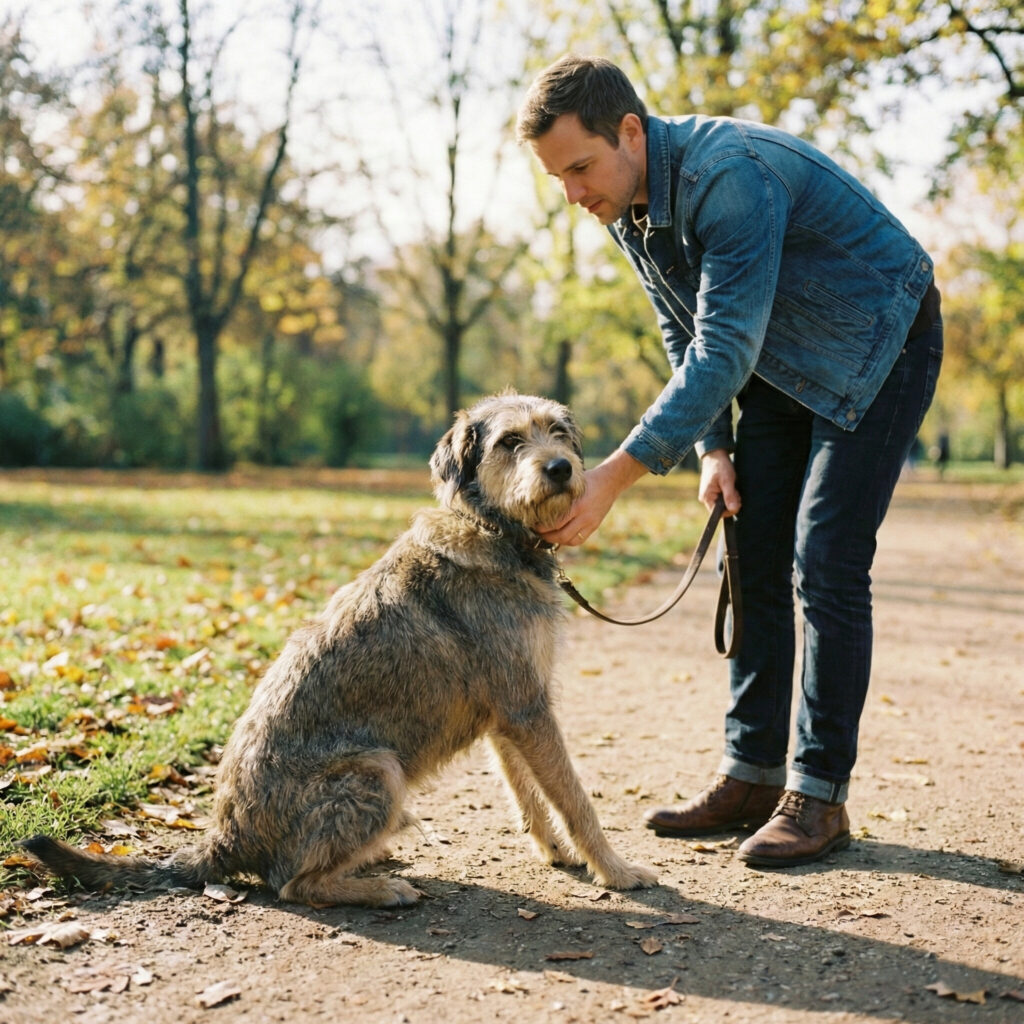
If your dog is acting stubborn, they aren’t trying to annoy you; they are likely confused, unmotivated, or fearful. To fix this, stop repeating commands, which teaches them to ignore you. Instead, identify the root cause (like pain, fear, or low motivation), increase the value of your treats, keep training sessions short and fun, and ensure you are communicating clearly. Consistency and positive reinforcement are key to turning a “stubborn” dog into a willing partner.
Summary Table
| Strategy | Why It Works |
| Rule Out Health Issues | Pain or illness often looks like refusal to move. |
| Upgrade Rewards | Dry kibble might not be worth the effort; try cheese or chicken. |
| Shorten Sessions | Dogs get bored easily; 5 minutes is better than 20. |
| Control the Environment | Too many distractions make listening impossible. |
| Stop Repeating Commands | Saying “Sit, sit, sit” teaches the dog they don’t have to listen the first time. |
| Be Consistent | Everyone in the house must use the same rules and cues. |
How to Handle a Stubborn Dog
We have all been there. You ask your dog to sit, and they stare at you blankly. You call them to come inside, and they sniff the grass as if you don’t exist. You pull on the leash, and they plant their feet like a mule.
It is easy to label this behavior as “stubborn.” It feels like your dog is defying you on purpose. However, dogs do not have the complex human desire to be spiteful or rebellious. When a dog refuses to do what you ask, there is almost always a logical reason.
This guide will help you understand why your dog is ignoring you and give you actionable steps to get them listening again.
Read Also: How to Train a Dog With High Energy
Is Your Dog Actually Stubborn?
Before you try to fix the behavior, you need to change your perspective. Professional dog trainers rarely use the word “stubborn.” They look for the gap in communication or motivation.
A dog that seems stubborn is usually experiencing one of these four things:
- They don’t understand: They haven’t actually learned the command in that specific situation.
- They aren’t motivated: The reward you are offering isn’t worth the effort.
- They are distracted: The environment is too exciting or overwhelming.
- They are in pain or afraid: Physical discomfort or fear is stopping them.
Step 1: Rule Out Medical Issues
This is the most critical first step. If your dog suddenly stops sitting, refuses to jump into the car, or won’t walk very far, they might be in pain.
Hip dysplasia, arthritis, and soft tissue injuries can make simple movements hurt. A dog with an ear infection might not want to wear a collar. A dog with a toothache might not want to hold a toy.
Signs it might be medical
- The “stubbornness” started suddenly.
- The dog hesitates before lying down or standing up.
- They whine or pant when not exercising.
- They are lethargic or losing their appetite.
If you suspect pain, skip the training and go straight to the vet.
Step 2: Check Your Rewards (Are You Paying Enough?)
Imagine your boss asked you to work overtime on a weekend for free. You would probably refuse. Now imagine they offered you double your hourly rate. You would likely say yes immediately.
Dogs work the same way. They do what works for them. If sitting gets them a dry piece of kibble, but chasing a squirrel gets them an adrenaline rush, they will choose the squirrel.
How to upgrade your rewards
- Ditch the kibble: For difficult tasks or distracting environments, use high-value treats. Think boiled chicken, string cheese, hot dogs, or freeze-dried liver.
- Find their currency: Not all dogs love food. Some dogs will do anything for a tennis ball or a game of tug.
- Mix it up: Keep your dog guessing. Sometimes they get a small treat, sometimes they get a “jackpot” (a handful of treats). This is like a slot machine effect that keeps them hooked.
Step 3: Stop Poisoning Your Cues
One of the biggest mistakes dog owners make is repeating a command over and over.
- Owner: “Sit. Sit. Sit! Fido, SIT.”
- Dog’s Brain: “Oh, the command isn’t ‘Sit.’ The command is ‘Sit-Sit-Sit-SIT.’ I can ignore the first three.”
This is called “poisoning the cue.” You are teaching your dog that your words are just background noise until you raise your voice.
The Fix
Say the command once. If they don’t do it:
- Pause.
- Reset their attention (take a step back or make a kissy sound).
- Ask again or lure them into the position with a treat.
- Reward immediately.
If they still don’t do it, they don’t understand what you want, or the environment is too distracting. Go back to basics.
Read Also: Why Some Dogs Ignore Commands Outside
Step 4: Manage the Environment (The 3 Ds)
Dog training relies on three variables: Duration, Distance, and Distraction. If you increase one, you must decrease the others.
If your dog listens perfectly in the kitchen but ignores you at the dog park, they aren’t stubborn. They are overwhelmed. The dog park is like a rock concert; the kitchen is like a library. It is hard to hear your friend whisper at a rock concert.
How to build up to distractions?
- Start boring: Train in a quiet room with no distractions.
- Add mild distractions: Train in the backyard.
- Increase slowly: Train on a quiet street, then a busy street, then the edge of a park.
If your dog ignores you, you have moved too fast. Go back to a quieter environment.
Step 5: Keep Training Sessions Short and Fun
Dogs have the intelligence of a human toddler. You wouldn’t force a toddler to do math for an hour.
Long training sessions lead to boredom and burnout for both you and the dog. If you drill the same trick 20 times, your dog will eventually check out.
The Golden Rules of Sessions
- Time limit: 3 to 5 minutes maximum.
- End on a high note: Always stop when the dog is doing well and wants more. Never end on a failure.
- Play breaks: Intersperse training with play. Ask for a “sit,” reward, then throw the ball.
Step 6: Be Clear and Consistent
Dogs thrive on routine and clear rules. If you let them on the couch on Monday but yell at them for it on Tuesday because you are wearing nice pants, they will be confused.
Confusion looks like stubbornness because the dog freezes up, afraid to make a mistake.
Checklist for consistency
- Hand signals: Dogs read body language better than they hear words. Are you using clear hand signals?
- Family rules: Does your spouse let the dog jump up while you forbid it? This mixed messaging makes the dog ignore you.
- Tone of voice: Keep your tone happy and inviting. If you sound angry, your dog may avoid coming to you (recall) because they think they are in trouble.
Read Also: How Long Should a Dog Training Session Last?
Why Force-Based Methods Don’t Work on “Stubborn” Dogs
Decades ago, trainers might have told you to “show them who’s boss” or use a choke chain. Modern behavioral science proves this is counterproductive.
If a dog is “stubborn” because they are fearful or confused, yelling or jerking the leash will only make them more afraid. It might suppress the behavior for a moment, but it damages your relationship. A dog that fears you will not be eager to work with you. They will do the bare minimum to avoid punishment.
Specific Scenarios and Solutions
Here are three common “stubborn” moments and how to fix them specifically.
1. The Dog Who Won’t Walk (The “Statue”)
Your dog stops mid-walk and refuses to move.
- Why: Fear, exhaustion, or something smells really good.
- The Fix: Do not drag them. Walk back toward them, touch their collar, offer a high-value treat, and encourage them to move with a happy voice. If it is fear, let them watch the scary thing from a distance and reward them for staying calm.
2. The Dog Who Won’t Come Inside
You open the back door, call them, and they stare at you.
- Why: Coming inside ends the fun.
- The Fix: Go outside with a treat. Make coming to you a game. Sometimes, call them, give them a treat, and let them go back to playing. This teaches them that “Come” doesn’t always mean “Fun is over.”
3. The Dog Who Won’t Get Off the Bed
They growl or go “dead weight” when you try to move them.
- Why: Resource guarding or comfort.
- The Fix: Do not physically push them; this can lead to biting. Toss a treat on the floor. When they jump down to get it, praise them and say “Off.”
When to Hire a Professional
If you have tried upgrading treats, shortening sessions, and ruling out medical issues, but your dog is still not listening, it is time for a pro.
Look for a Certified Professional Dog Trainer (CPDT) who uses positive reinforcement. They can spot subtle body language cues you might be missing.
Conclusion
Your dog is not trying to make your life difficult. They are simply animals trying to navigate a human world with human rules.
The next time your dog acts stubborn, take a deep breath. Ask yourself: Is he hurt? Is he confused? Is the reward good enough? By changing your approach from “commanding” to “communicating,” you will find your dog isn’t stubborn after all; they just needed you to speak their language.