
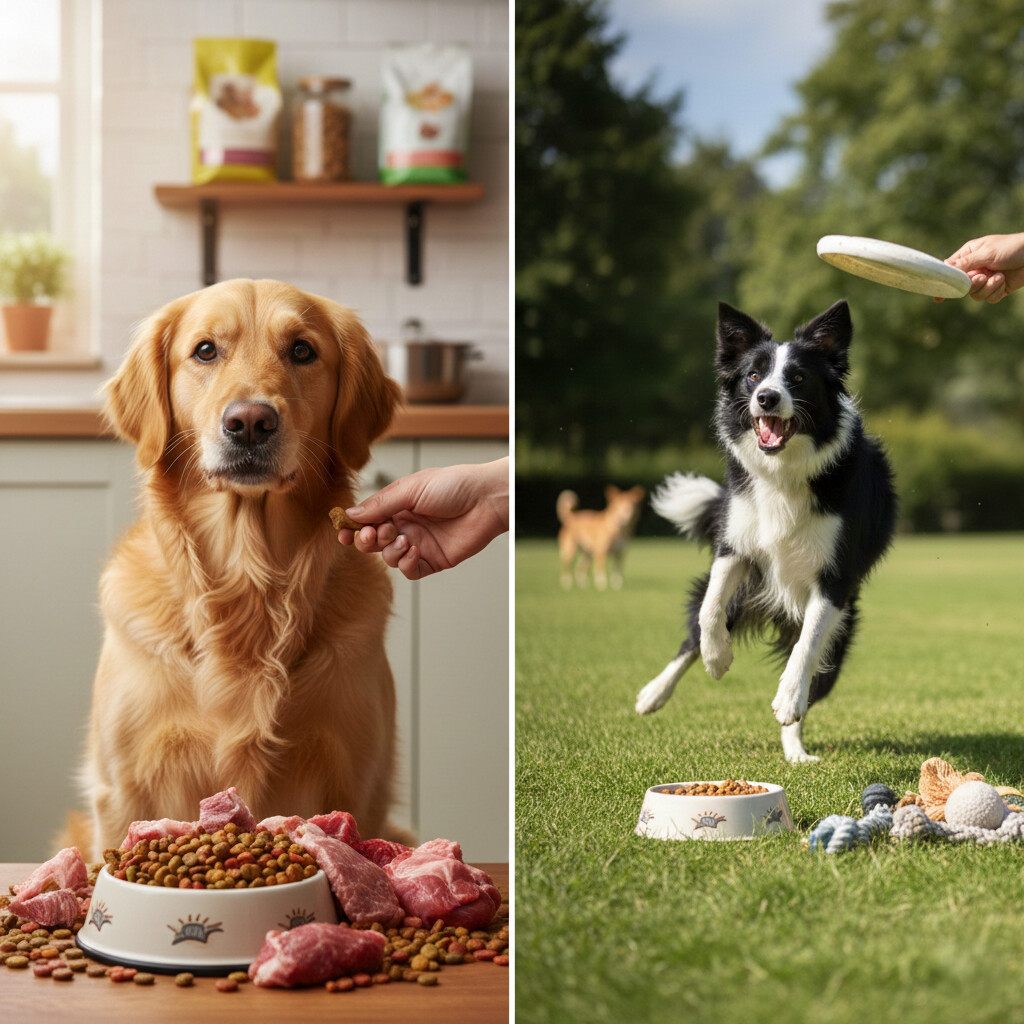
A dog is food-motivated if they respond best to edible rewards like treats, kibble, or cooked meats. These dogs are driven by scent and taste, often making training easier for beginners. A toy-motivated dog finds their highest reward in play, chasing, tugging, or retrieving objects like balls and frisbees. This drive is often rooted in predatory instincts and breed genetics (e.g., herding or retrieving breeds). Understanding which motivation your dog prefers allows you to choose the most effective training method, build a stronger bond, and prevent behavioral issues.
Summary Table
| Feature | Food-Motivated Dogs | Toy-Motivated Dogs |
| Primary Driver | Taste, smell, hunger | Prey drive, movement, interaction |
| Best For | Precision training, obedience basics | Agility, police work, high-energy tasks |
| Common Breeds | Labradors, Beagles, Pugs | Malinois, Border Collies, Terriers |
| Training Style | Luring, shaping with treats | Tug-of-war, fetch as a reward |
| Key Challenge | Obesity, weight gain | Over-arousal, obsession |
What Makes a Dog Food-Motivated vs. Toy-Motivated?
Every dog owner wants to know the secret to getting their dog to listen. The answer almost always lies in motivation. Just like humans work for money, praise, or passion, dogs work for what they value most. For the vast majority of canines, this value currency falls into two main buckets: food or toys.
Understanding what drives your specific dog is the “cheat code” to successful training. It isn’t just about personality; it is a mix of biology, genetics, and early learning.
This guide will break down exactly what creates these differences and how you can use them to your advantage.
Read Also: How Mental Stimulation Reduces Bad Behavior
The Science of Food Motivation
Food motivation is the most common drive in animals because it is tied to survival. In the wild, if a wolf didn’t care about food, it didn’t survive. However, in domestic dogs, this drive varies massively.
1. The Biological “Hunger Circuit.”
Some dogs have a brain that lights up like a Christmas tree when they smell food. Scientists have found that certain breeds, particularly Labrador Retrievers, have a genetic variation (specifically in the POMC gene) that prevents them from feeling full.
For these dogs, food is not just a treat; it is a constant, urgent need. This makes them incredibly easy to train because they will do almost anything for a single piece of kibble.
2. Scent Sensitivity
Dogs interpret the world through their noses. A dog with a highly sensitive nose (like a Beagle or Basset Hound) is often more food-motivated because the smell of the treat is overwhelming and irresistible. They can smell a piece of dried liver in your pocket from across the room.
3. Scarcity and History
A dog’s past affects their present. Rescue dogs who have experienced starvation or had to fight for scraps are often extremely food-motivated. They view food as a high-value resource that must be secured immediately.
The Science of Toy Motivation
Toy motivation is slightly more complex. It is rarely about the object itself; a dog doesn’t care about a piece of rubber. They care about what they can do with it. Toy motivation is usually a modified version of the “prey drive.”
1. The Predatory Sequence
In nature, a predator goes through a specific sequence:
- Eye: Spotting the prey.
- Stalk: Creeping up on it.
- Chase: Running after it.
- Grab/Bite: Catching it.
- Kill/Eat: Consuming it.
Toy-motivated dogs usually love the Chase and Grab parts of this sequence. A ball represents a fleeing rabbit (chase), and a tug rope represents a struggling prey animal (grab/bite).
2. Breed Genetics
Generations of breeding have shaped what dogs find rewarding.
- Herding Breeds (Border Collies, Shepherds): They are bred to control movement. They love toys that move fast, like frisbees or balls.
- Terriers: They were bred to hunt vermin. They often love “squeaky” toys because the sound mimics a small animal, triggering their instinct to pounce and shake.
- Working Dogs (Malinois, German Shepherds): Police and military dogs are often selected specifically for high toy drive because a dog that will work for a tug toy can work for hours without getting full (unlike a food-motivated dog).
3. The Joy of Interaction
For some dogs, the toy is a bridge to you. They aren’t motivated by the ball sitting on the floor; they are motivated by the fact that you throw it. It becomes a social game.
Read Also: How to Train an Older Dog
How to Tell What Your Dog Is
You might think you know, but dogs can be surprising. Here is a simple test you can do at home to determine your dog’s primary motivation.
The “Choice Test”
- Preparation: Get a high-value treat (like a piece of cheese or hot dog) and a high-value toy (a ball or squeaky toy).
- The Setup: Stand in a quiet room with your dog. Hold the food in one closed hand and the toy in the other (hide it behind your back).
- The Reveal: Show both hands simultaneously. Wiggle the toy to make it interesting, and open your hand to show the food.
- Observation: Which one does the dog go for first?
- Repetition: Do this 5 times. If they pick the food 4 out of 5 times, they are food-motivated.
Important Note: Many dogs are both. They might like food for calm learning and toys for active play. However, usually, one drive is stronger when the dog is under stress or distraction.
Training a Food-Motivated Dog
If your dog loves food, count yourself lucky. This is the easiest type of motivation for the average pet owner to work with.
Best Practices
- Use Your Daily Ration: Don’t just feed your dog out of a bowl. Use their breakfast and dinner kibble for training sessions. This prevents weight gain.
- Vary the Value: Use low-value treats (kibble) for easy tricks they already know. Use high-value treats (chicken, cheese) for new, difficult behaviors or scary situations.
- Luring: You can use food to guide the dog’s nose into positions (like sit or down).
Common Mistakes
- The Bribe: Do not show the food before you ask for the command every time, or the dog will only listen when they see the treat. Keep the food hidden, ask for the command, then reward.
- Overfeeding: A chubby dog is an unhealthy dog. If you do a lot of training, reduce their meal size accordingly.
Training a Toy-Motivated Dog
Training with toys is high-energy and fun, but it requires more skill. It is often used for agility, flyball, and advanced obedience.
Best Practices
- The Reward Event: When the dog does the right thing, the reward isn’t just handing them the toy, it is playing with the toy. Tug with them for 10 seconds or throw the ball immediately.
- Control the Toy: You must own the toy. The game starts and ends when you say so. This teaches impulse control.
- Build Drive: If the dog seems bored, make the toy move like prey. Drag it along the ground or hide it. Make it “alive.”
Common Mistakes
- Over-Arousal: Sometimes a dog gets so excited by the toy that their brain turns off. They might nip your hands or bark uncontrollably. You need to teach a “drop it” or “all done” command to calm them down.
- Possessiveness: Some dogs want the toy but don’t want to share. If your dog guards the toy and growls, consult a professional trainer.
Read Also: Why Do Dogs Regress in Training?
Can You Change a Dog’s Motivation?
Yes and no. You cannot change a dog’s genetics, but you can build drive where it is lacking.
Building Food Drive
If your dog is picky, stop leaving food out all day (free-feeding). Put the bowl down for 15 minutes. If they don’t eat, take it away until the next meal. A healthy dog will not starve themselves, and they will learn that food is a valuable, limited resource.
Building Toy Drive
If your dog ignores toys, try “prey imitation.” Put a soft toy on a string (like a cat wand) and drag it erratically. Do not shove the toy in the dog’s face; pull it away from them. Instinct usually takes over, and they will want to chase it.
When Motivation Goes Wrong
Too much of a good thing can be a problem.
- Food Obsession: Dogs that counter-surf, steal from the trash, or guard their bowls aggressively are too food-motivated. Management (keeping counters clear) and impulse control training are essential.
- Toy Obsession: Border Collies that stare at shadows or rocks, or dogs that play fetch until their paws bleed, are suffering from compulsive behavior. You must set strict boundaries on playtimes to protect their mental and physical health.
Conclusion
There is no “better” motivation. A food-motivated Pug can be an obedience champion, and a toy-motivated Malinois can be a loving family pet. The key is identifying what your dog loves and using it to build a common language.
Don’t try to force a square peg into a round hole. If your dog loves cheese, buy cheese. If your dog loves tennis balls, buy tennis balls. When you reward your dog with what they actually want, you stop fighting against their nature and start working with it.