
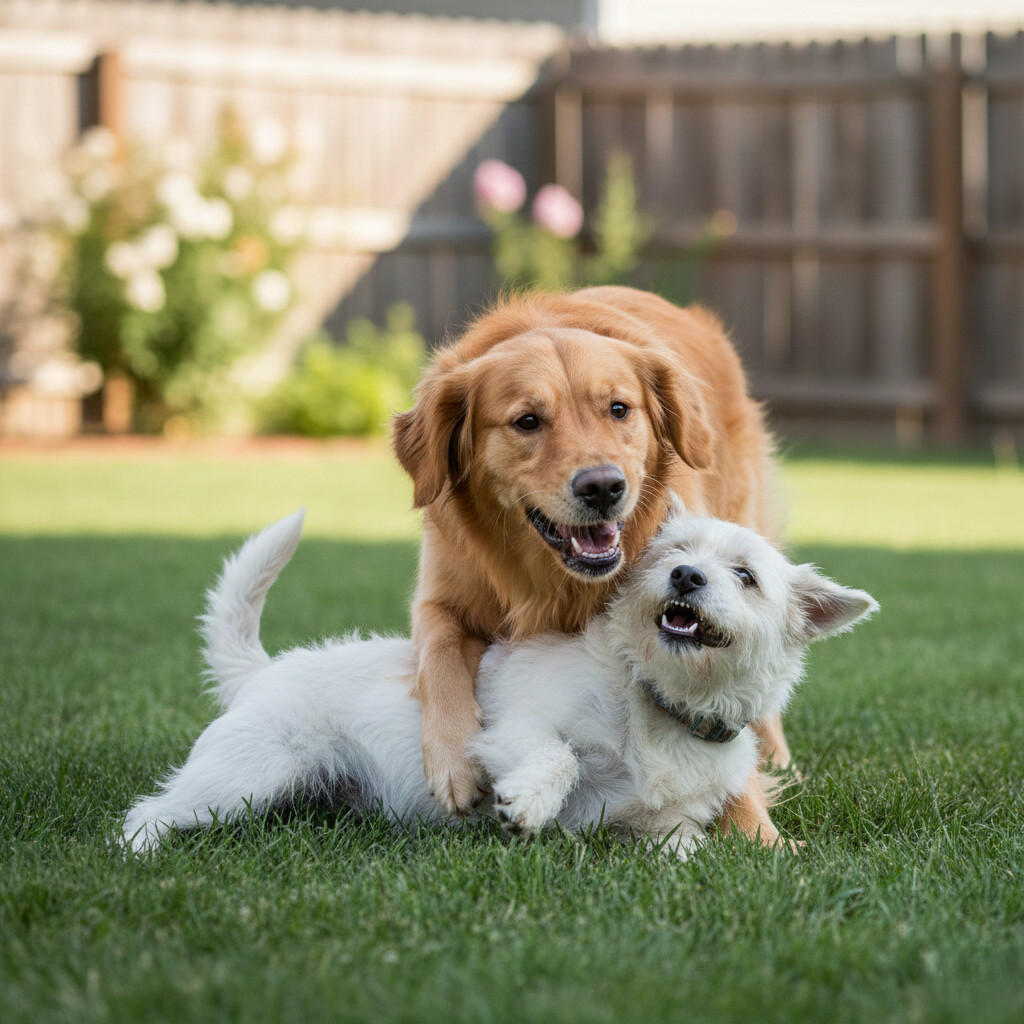
When a dog growls while playing, it is usually a sign of excitement and enjoyment, not aggression. This vocalization is a normal part of canine play behavior, often heard during games like tug-of-war or wrestling. To distinguish play growling from aggression, look for loose body language, a “play bow” posture, and relaxed facial expressions. If the body becomes stiff or the growl becomes deep and low, the dog may be signaling discomfort.
Summary Table: Dog Growls While Playing
| Feature | Play Growling | Aggressive Growling |
| Pitch & Tone | Higher pitched, shorter bursts, “bouncy” sound. | Deep, low, guttural, continuous, and prolonged. |
| Body Posture | Loose, wiggly, exaggerated movements, “play bows.” | Stiff, rigid, frozen, hair raised on back (hackles). |
| Mouth/Teeth | Mouth open and relaxed, tongue lolling out. | Lips curled back tight, showing teeth (snarl), closed mouth. |
| Eyes | Soft gaze, blinking, looking away occasionally. | Hard stare, unblinking, wide eyes (whale eye). |
| Context | Occurs during high-energy games (tug, chase). | Occurs over resources (food/toys) or when threatened. |
| Biting | Gentle mouthing, inhibited bites (no pressure). | Hard snaps, intent to harm, no inhibition. |
What It Means When a Dog Growls While Playing
It can be startling when you are having a fun wrestling match with your dog, and they suddenly let out a loud growl. For many dog owners, the sound of a growl instantly triggers worry. We are taught that growling means “danger” or “back off.” However, in the world of dog communication, things are a bit more nuanced.
Dogs are vocal animals. They bark, whine, howl, and yes, growl. While a growl can be a warning, it is also a common way for dogs to express enthusiasm.
Understanding the difference is crucial for building a strong bond with your pet and ensuring play remains safe and fun.
This guide will break down exactly why dogs growl during play, how to read their body language, and when you should actually be concerned.
Read Also: Why Do Dogs Get Zoomies?
The Science of Dog Vocalization
Before we look specifically at play, it helps to understand why dogs growl at all. Growling is simply a form of communication. It is a tool dogs use to convey their emotional state.
Think of it like a human shouting. Humans shout when they are angry, but they also shout when they are cheering for a sports team or riding a roller coaster. The context changes the meaning entirely.
For dogs, growling can mean:
- Fear: “I am scared, please go away.”
- Pain: “That hurts, stop touching me.”
- Possession: “This is my bone, do not take it.”
- Play: “This game is so much fun!”
When a dog growls during play, they are essentially “cheering.” It is an involuntary release of energy and excitement.
Decoding the “Play Growl”
The play growl is distinct if you know what to listen for. It typically sounds different than a warning growl.
The Sound
A play growl is often higher in pitch. It might sound broken or stuttered rather than a long, continuous rumble. You might hear it mixed with distinct breaths or “huffing” sounds. It is the sound of a dog who is deeply engaged in the activity.
The Game
You will most often hear this sound during specific types of roughhousing:
- Tug-of-War: This is the most common scenario. As the dog pulls back on the rope, the physical effort and the excitement of the competition often result in loud, throaty noises.
- Wrestling: When dogs wrestle with other dogs or human hands, they often vocalize to show they are “tough” without actually being aggressive.
- Chase: A dog chasing a ball or a frisbee might let out a growl as they pounce on the object.
Reading Body Language
Since dogs cannot speak English, they use their bodies to clarify their intentions. This is often called “metacommunication.” This means they are communicating about their communication.
They are using body signals to tell you, “Ignore that scary noise I just made; I am just kidding.”
If you hear a growl, look at the rest of the dog.
The Play Bow
This is the universal signal for “game on.” The dog lowers their front elbows to the ground while keeping their rear end up in the air.
If a dog growls while in a play bow, or immediately before or after one, it is 100% playful. They are explicitly telling you that their actions are friendly.
Loose and Wiggly
A playing dog is fluid. Their movements are bouncy and exaggerated. They might flop over, roll on their back, or bounce sideways. Their tail usually wags broadly. Even if the tail isn’t wagging, the base of the tail should be relaxed, not held high and stiff.
The “Play Face”
During play, a dog’s face is relaxed. Their mouth is usually open (the “doggy smile”), and their tongue might be hanging out.
If they show their teeth, it is usually incidental because their mouth is open, not because they are curling their lips back to snarl.
Read Also: Why Do Dogs Lean on People?
When Play Turns to Aggression
Even friendly dogs can get overstimulated. Sometimes, what starts as a game can escalate into frustration or true aggression. It is important to spot the shift immediately so you can calm things down.
Watch for these changes:
The Freeze
This is the most critical warning sign. If a dog suddenly goes completely still and rigid while growling, the game is over. The “bounciness” disappears. This pause is the dog assessing a threat.
The Pitch Drop
If the high-pitched, bouncy growl suddenly drops to a low, deep rumble that you can feel vibrating in their chest, they are warning you.
Whale Eye
If the dog turns their head slightly but keeps their eyes fixed on you, showing the whites of their eyes (the sclera), they are uncomfortable. This is known as “whale eye” and is a precursor to a bite.
Lip Curling
A playful mouth is open and loose. An aggressive mouth is often closed or slightly open with the lips curled up, specifically to expose the front teeth and canines. This looks very different from a panting smile.
Puppy Play Growling
Puppies are new to the world and are still learning how to use their voices. Puppies growl a lot during play. This is part of their socialization process.
When puppies play with littermates, they growl, snap, and bite. If one puppy bites too hard, the other yelps and stops playing. This teaches the biter “bite inhibition”, knowing how to use their mouth gently.
If your puppy growls at you while playing tug, it is generally harmless. However, it is a good time to teach them rules. If the puppy’s teeth touch your skin, the game stops immediately. This teaches them that growling is fine, but biting skin is not.
Context: Tug-of-War Myths
For years, old-school dog training advice said you should never let a dog win tug-of-war and never let them growl during it, or they would become “dominant.” Modern behavioral science has debunked this.
Allowing a dog to growl during tug and letting them “win” the toy occasionally builds confidence. It does not make them the alpha. It makes them enjoy the game more because it feels like a fair competition.
The growling during the tug is essentially the dog’s way of putting effort into the pulling motion.
Read Also: Why Do Dogs Shake After Play or Baths?
What Should You Do?
If you are playing with your dog and the growling starts, here is a simple checklist of how to react.
1. Assess the Energy
Is the dog still bouncy? Are they coming back for more? If you drop the toy, do they pick it up and shove it into your hand? If yes, keep playing.
2. Take Breaks
If the growling gets very loud or the play gets too rough, stop the game for a moment. Ask your dog for a “sit.”
- If they sit instantly and look at you expectantly, they are just excited. You can resume play.
- If they continue to lunge or cannot focus, they are overstimulated. End the session and let them calm down.
3. Do Not Punish the Growl
Never scold or hit a dog for growling. Growling is a warning system. If you teach a dog that growling is bad, they might stop growling and go straight to biting next time they are upset. You want a dog that growls because it gives you a chance to back off.
4. Know Your Dog’s Triggers
Some dogs have “resource guarding” issues. They might play happily with a ball, but if you try to take a bone away, they growl aggressively. This is not a play. If your dog growls when you approach their food or a high-value treat, this requires professional training and is not a game.
Conclusion
A dog growling while playing is rarely a cause for alarm. It is usually a sign of a happy, engaged, and energetic dog having the time of their life.
By looking at the whole picture, the loose body, the play bows, and the context, you can easily distinguish between a fun romp and a serious warning.
Trust your instincts. If the growl feels scary or the dog’s body goes stiff, stop interaction immediately. But if the tail is wagging and the dog is bouncing, enjoy the game!