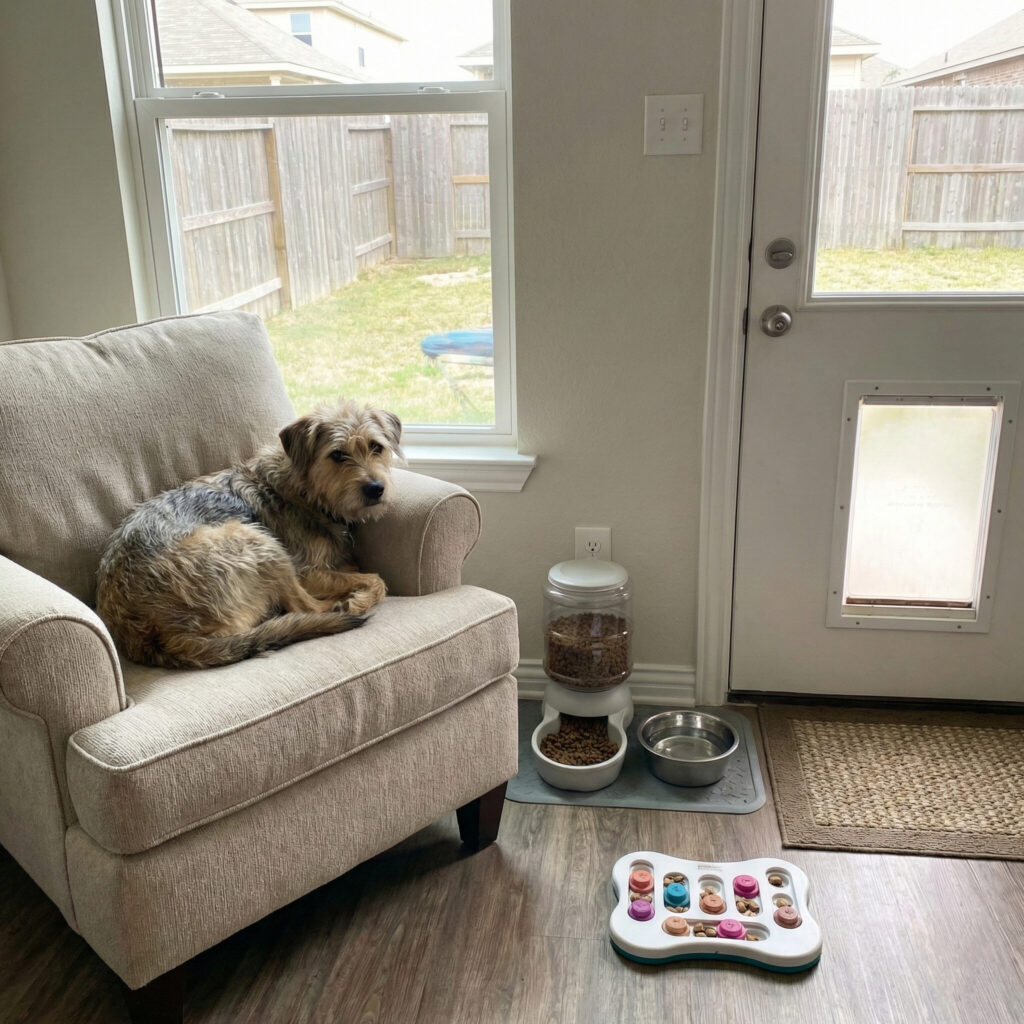
When left alone for a full workday, dogs require more than just food and water. Their primary needs include consistent access to fresh water, a comfortable and secure resting area, and opportunities to relieve themselves. Crucially, dogs need mental stimulation to prevent boredom and destructive behaviors, alongside adequate physical exercise before you leave and after you return. Depending on the dog’s age, energy level, and temperament, solutions like interactive puzzle toys, a mid-day dog walker, or doggy daycare are often necessary to ensure their well-being.
Summary Table
| Essential Need | Why It Matters | Practical Solutions |
| Potty Breaks | Holding urine too long can cause urinary tract infections and discomfort. | Dog walkers, friendly neighbors, doggy door (if fenced), indoor potty pads (for small dogs). |
| Mental Stimulation | Prevents boredom, anxiety, and destructive behaviors like chewing or barking. | Puzzle feeders, frozen Kongs, snuffle mats, treat-dispensing toys. |
| Physical Exercise | Burn energy to help them rest calmly while you are gone. | Mid-day visits from a walker, doggy daycare enrollment, and pet cameras with two-way audio. |
| Fresh Water | Hydration is vital for health, regardless of temperature. | Long morning walks, vigorous play before leaving, and an evening exercise routine. |
| Comfort & Security | Dogs need a safe, defined space where they can relax without stress. | Spill-proof bowls, gravity water dispensers, and multiple water stations. |
| Social Interaction | Comfortable, supportive bedding, crate training (if appropriate), calm environment. | Mid-day visits from a walker, doggy daycare enrollment, pet cameras with two-way audio. |
What Dogs Need When You’re Away All Day
Leaving your dog home alone while you head to work is a major source of guilt for many pet owners. We all want our canine companions to be happy and content, not staring at the door waiting for our return. The good news is that working full-time and owning a happy, well-adjusted dog is entirely possible. It just requires understanding their fundamental needs and doing a bit of planning.
Dogs are social, intelligent animals. When left alone for eight to ten hours without anything to do, they don’t just sleep. They can become bored, anxious, and frustrated. This often leads to problem behaviors like excessive barking, chewing furniture, or house-soiling accidents.
To ensure your dog thrives while you are away, you must address their physical necessities, their need for mental engagement, and their emotional comfort.
Read Also: How Travel Affects Dogs
Physiological Needs
Before worrying about entertainment, you must cover the basics of survival and comfort. If these aren’t met, no amount of toys will keep your dog happy.
Hydration is Non-Negotiable
Your dog must have access to clean, fresh water at all times. Never limit water intake in an attempt to prevent urination accidents. Dehydration is a serious health risk.
If your dog is a messy drinker or tends to knock over bowls, invest in a heavy-duty, spill-proof bowl. For longer days, a gravity-fed water dispenser can ensure they never run dry.
It is also helpful to have water bowls in a couple of different locations in the house in case a door accidentally gets closed, blocking access to one bowl.
The Potty Break Challenge
The biggest logistical hurdle for working dog owners is the bathroom break. How long a dog can “hold it” varies significantly by age, size, and health.
- Adult Dogs: Most healthy adult dogs can manage about six to eight hours. Pushing it past eight or ten hours is uncomfortable for the dog and increases the risk of urinary tract infections or kidney issues.
- Puppies: Puppies absolutely cannot go a full workday without a break. A general rule of thumb is that a puppy can hold their bladder for one hour for every month of age, plus one. A three-month-old puppy might manage four hours maximum.
- Senior Dogs: Older dogs often have weaker bladders and need more frequent breaks than adult dogs.
If you work a standard eight-hour day, plus commute time, your dog likely needs a mid-day break. This is essential for their physical comfort.
Comfort and Security
Dogs sleep a lot during the day, sometimes up to 14 hours. However, the quality of that rest depends on their environment. They need a space where they feel secure.
A Designated “Safe Zone”
Don’t just give your dog free rein of the entire house if it makes them anxious or leads to trouble. Many dogs feel safer in a smaller, defined area. This could be a gated-off kitchen, a spare bedroom, or a large exercise pen.
This area must be dog-proofed. Remove trash cans, electrical cords, plants, or anything else they might chew on.
Within this zone, provide comfortable bedding. If your dog is older, an orthopedic bed is vital for their joints. The area should be temperature-controlled, not too hot near a heater, and not too drafty near a window.
To Crate or Not to Crate?
Crate training can be a wonderful tool if done correctly. For many dogs, their crate is their den—a place of ultimate security where they can relax completely.
If you use a crate during the workday:
- The crate must be large enough for the dog to stand up, turn around, and stretch out fully.
- They must have water access in the crate (a clip-on bowl works well).
- It must be associated with positive things (treats, rest), never punishment.
Important Note: Leaving a dog crated for 10 hours straight without a break is generally not recommended. If they must be crated for safety, a mid-day break to stretch their legs is vital.
Read Also: How to Create a Calm Environment for Anxious Dogs
Mental Stimulation
A bored dog is a destructive dog. Physical exercise wears out a dog’s body, but mental exercise wears out their brain. Mental stimulation is often more tiring for a dog than a walk around the block.
Providing “jobs” for your dog while you are gone is crucial to prevent separation anxiety and boredom.
Ditch the Food Bowl
The easiest way to provide mental stimulation is to change how you feed your dog. Instead of dumping their breakfast into a bowl that they inhale in 30 seconds, make them work for their food.
- Puzzle Feeders: These are toys that require the dog to slide panels, flip lids, or roll an object to release kibble.
- Snuffle Mats: These act like shaggy rugs where you can hide dry food. The dog has to sniff and forage to find their meal, engaging their natural scavenging instincts.
Long-Lasting Engagement Toys
Leaving your dog with something safe to chew or lick can occupy them for significant amounts of time and provide soothing endorphins.
- Frozen Stuffable Toys: The classic example is a rubber Kong toy. Stuff it with a mixture of kibble, wet dog food, a little peanut butter, or plain yogurt, and freeze it overnight. Your dog will spend an hour or more working to get the frozen filling out.
- Safe Chews: Depending on your dog’s chewing style, certain chews might be safe to leave unattended. Always monitor your dog with a new type of chew first to ensure they don’t try to swallow large chunks.
Physical Exercise Requirements
You cannot expect a dog full of energy to sit calmly in your house for nine hours. The “exercise requirements” for a home-alone dog happen mostly when you are home.
The Morning Routine
If you work all day, your mornings must start earlier. A quick pee in the yard is not enough. Your dog needs a substantial walk or vigorous play session (like fetch in the yard) before you leave for work.
The goal is to tire them out so their natural inclination is to sleep for the first several hours you are gone. A tired dog is a good dog.
The Evening Connection
When you get home, your dog will be bursting with energy and excitement. They have been waiting for you all day.
Despite being tired from work, you need to dedicate time immediately upon return to engage with them. This means another walk, training playtime, or a game of tug. This reconnects you with your pet and burns off their stored energy.
Read Also: Indoor Enrichment Ideas for Dogs
Human Connection and Mid-Day Options
Dogs are pack animals. Being profoundly isolated for long stretches every single day is contrary to their nature. While some low-energy dogs handle it fine, many others develop behavioral issues. Breaking up the day is often the best solution.
Hiring a Dog Walker
A professional dog walker is a game-changer for working pet owners. A walker usually comes around lunchtime for a 30-to-60-minute visit.
This provides:
- A necessary bathroom break.
- Physical exercise to break up the day.
- Crucial social interaction and a human connection.
- A chance to sniff new smells, which is mentally stimulating.
Doggy Daycare
For high-energy, highly social dogs, doggy daycare can be paradise. Instead of sleeping all day, they get to play with other dogs in a supervised environment.
Daycare isn’t for every dog. Shy, anxious, or reactive dogs may find the environment overwhelming rather than fun. But for the right dog, they come home exhausted and happy. Even doing daycare two or three days a week can make a huge difference in their overall behavior.
Pet Cameras and Technology
While not a replacement for human interaction, pet cameras are very popular. They allow you to check in on your dog via an app on your phone. Many have two-way audio so you can say hello, and some even toss treats.
This is mostly for your peace of mind, seeing that they are sleeping safely. However, if you see your dog pacing or barking constantly, it is a clear sign that their current setup isn’t working and changes need to be made.
Conclusion
Leaving your dog alone while you work requires a commitment to understanding their specific needs. It is not enough to just ensure they survive the day with food and water; you need to ensure they thrive.
By providing adequate exercise before you leave, creating a safe and comfortable environment, utilizing mental stimulation tools like puzzle toys, and arranging for a mid-day break if necessary, you can alleviate guilt and ensure your dog remains happy and healthy.
The effort you put into planning their day will be rewarded with a calmer, more content companion when you return home.