
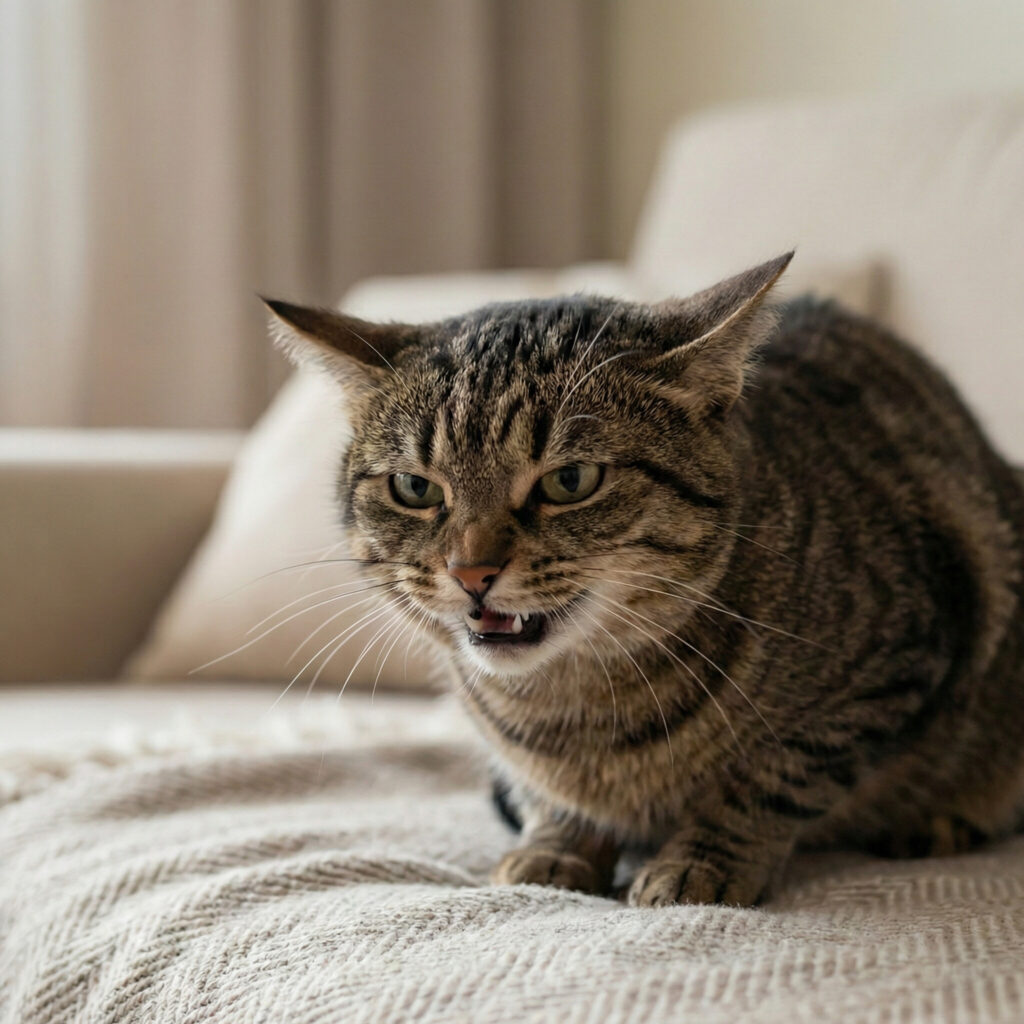
A cat growl is a low-pitched, rumbling vocalization that serves as a clear warning signal. It indicates that the cat is feeling frightened, stressed, threatened, territorial, or is in physical pain. Growling means the cat wants immediate space and that the current interaction should stop to prevent potential escalation to biting or scratching.
Summary Table: Common Causes for Cat Growling
| Reason for Growling | Description of the Situation | Recommended Action |
| Fear or Anxiety | Caused by strangers, loud noises, new environments, or unfamiliar animals. | Back away slowly. Provide the cat with an escape route or a safe hiding spot. |
| Pain or Illness | Often sudden and unprovoked, especially when touched in a specific area or when moving. | Stop touching the cat. Schedule an immediate appointment with a veterinarian. |
| Territorial Behavior | Occurs when a new animal or person enters what the cat considers their personal domain. | Separate the cat from the perceived intruder. Introduce changes very slowly. |
| Overstimulation | Happens during petting sessions when the physical sensation becomes too intense. | Stop petting immediately. Let the cat move away on their own terms. |
| Resource Guarding | Growling near food bowls, favorite toys, or preferred sleeping spots. | Do not try to take the item away. Manage the environment to reduce competition. |
| Maternal Instinct | A mother cat protecting her kittens from perceived threats. | Give the mother and her kittens plenty of privacy and space. |
What Does It Mean When a Cat Growls?
Cats are known for a wide variety of vocalizations. We love their purrs and chirps, and we tolerate their demands for food in the morning. However, hearing your cat growl can be startling and even scary. It is a guttural, deep sound that instantly changes the mood in a room.
Many people mistake a growling cat for a “mean” cat. This is rarely the case. Growling is a form of communication. It is a vital tool in feline language. When a cat growls, they are trying to tell you something very important about their current emotional or physical state.
Think of a growl as a yellow traffic light. It is a warning to stop what you are doing before the situation turns into a red light, which, in cat terms, usually means a hiss, a swat, or a bite. A growl is a cat’s way of saying, “I am uncomfortable, I feel unsafe, and I need you to back off right now.”
Understanding why cats use this specific vocalization is the key to maintaining a happy household and ensuring your pet feels secure. By recognizing the triggers, you can prevent accidents and improve your relationship with your feline friend.
Read Also: Why Do Cats Meow at Certain People More Than Others?
6 Primary Reasons Why Cats Growl
To address growling behavior, you first need to identify the root cause. Cats do not growl without a reason. It is almost always a reactive behavior to something happening inside their body or something happening in their environment.
Here are the most common reasons why a cat will resort to growling.
1. Fear, Anxiety, and Stress
The single most common reason a cat growls is fear. While a growling cat might look aggressive, that aggression is usually defensive. They are scared and are trying to make themselves look and sound intimidating to ward off whatever is frightening them.
Cats are creatures of habit and routine. Anything that disrupts their safe environment can trigger an anxiety response strong enough to cause growling.
Common triggers for fear-based growling include:
- Strangers: New people entering the home, especially loud children or tall adults, can be terrifying to a timid cat.
- Unfamiliar Animals: The sight or smell of a new dog, another cat outdoors, or even wildlife through a window can trigger a fear response.
- Vet Visits: The carrier, the car ride, and the smells of the veterinary clinic are major stressors for most cats.
- Loud Noises: Thunderstorms, fireworks, construction sounds, or even a vacuum cleaner can cause panic.
- New Environments: Moving to a new house or re-arranging furniture significantly disrupts their sense of security.
2. Pain or Illness
This is the most critical reason for cat owners to be aware of. Cats are masters at hiding pain. It is an instinctual survival trait to avoid appearing weak to predators.
Often, an unwell cat will not cry out or limp until the condition is severe. Instead, their tolerance for interaction drops dramatically.
If you touch a sore spot, try to pick them up when their joints ache, or approach them when they feel nauseous, they may growl to protect themselves.
Pain-related growling is often sudden. If your normally affectionate cat suddenly growls when you pet their back or try to lift them, you should suspect a medical issue.
Common medical causes include:
- Dental disease or tooth abscesses.
- Arthritis or joint pain in older cats.
- Urinary tract infections or blockages.
- Internal injuries or abscesses from fights.
- Gastrointestinal distress.
Read Also: How Do Cats Communicate With Humans?
3. Territorial Behavior
Cats are naturally territorial animals. In the wild, controlling territory means access to food and safety. Domestic cats still retain these instincts.
A cat sees your home, and perhaps your yard, as their core territory. If they feel that territory is being invaded, they will growl to assert their dominance and warn the intruder to leave.
This often happens when a new pet is brought into the home too quickly. It can also happen if your cat sees a neighborhood cat walking through “their” yard outside.
Some cats are even territorial over specific furniture or their owners, growling if another pet or person approaches their favorite human.
4. Overstimulation (Petting-Induced Aggression)
This scenario is very confusing for cat owners. You are petting your cat, and they seem to be enjoying it. They might even be purring. Suddenly, the purr shifts to a low rumble, and they might try to bite your hand.
This is called overstimulation or “petting aggression.” Cats have highly sensitive skin. Repetitive stroking in the same spot can go from feeling pleasant to feeling irritating or even painful very quickly.
The growl is the cat’s way of saying, “That was nice, but now it’s too much. Stop.” If you miss this warning, they will often swat or nip to make the stroking stop.
5. Resource Guarding
Similar to territorial behavior, some cats feel the need to guard specific resources they deem valuable. They are worried that the item will be taken away from them.
Cats may growl if you or another animal approaches them while they are:
- Eating from their food bowl.
- Playing with a high-value toy (like a catnip mouse or feather wand).
- Sleeping in a favorite, secure spot.
- Using the litter box.
Read Also: How Cats Recognize Their Owners
6. Maternal Instincts
If you have a female cat who has recently given birth, her maternal instincts will be in overdrive. Her primary goal is to protect her vulnerable kittens.
A mother cat (queen) may growl at anyone including her beloved owners or other household pets who approaches her nesting area. This is a natural protective measure and usually subsides as kittens get older and more independent.
Reading the Warning Signs (Body Language)
A growl rarely happens in isolation. It is almost always accompanied by specific body language that reinforces the warning message. Learning to read these physical cues will help you understand how serious the situation is.
When a cat is growling, look for these accompanying signs of distress or aggression:
- Ears: Flattened backward against the head (airplane ears) or rotated sideways.
- Tail: Lashing back and forth quickly, twitching violently at the tip, or puffed up like a bottle brush (piloerection).
- Eyes: Pupils are usually fully dilated (large black circles), making the cat look terrified. In some cases of offensive aggression, pupils might be narrowed into slits.
- Posture: A fearful cat will crouch low to the ground trying to look small, or arch their back to look bigger. Their muscles will be visibly tense.
- Fur: The fur along the spine and on the tail may stand straight up. This is an involuntary reaction designed to make the cat appear larger to a threat.
- Other Sounds: The growl may escalate into hissing, spitting, or a high-pitched yowl.
What To Do When Your Cat Growls
Hearing your cat growl can be upsetting, but how you react in that moment is crucial. Your goal is to de-escalate the situation and make the cat feel safe again.
Here are the steps to take when your cat growls at you or something else:
1. Stop Immediately
Whatever you are doing, stop. If you are petting the cat, freeze your hand and then slowly withdraw it. If you are walking toward the cat, stop moving. The growl is a request for the interaction to cease. Honor that request immediately.
2. Give Them Space
Do not crowd the cat. Do not try to comfort them physically. Your touch will likely be misinterpreted as a threat right now. Back away slowly to give the cat a clear escape route. Allow them to decide if they want to run and hide.
Read Also: How Much Sleep Do Cats Really Need?
3. Lower Your Threat Level
Avoid direct eye contact, which cats view as an act of aggression. Turn your body slightly sideways to appear smaller and less threatening. If the cat is looking at you, try a “slow blink.” Slowly close your eyes and open them again. In cat language, this is a sign of non-hostility and trust.
4. Identify and Remove the Trigger
Try to determine what caused the growl. Was there a loud noise? Did a stranger walk into the room? Did another cat get too close? If you can safely remove the trigger (like asking a loud guest to quiet down or separating two feuding cats), do so quietly.
5. Let the Cat Come to You
Do not force interaction after a growling incident. It may take minutes or even hours for the cat’s adrenaline levels to return to normal. Let them hide if they wish. Wait for them to approach you when they feel calm and secure again.
Read Also: What Are The Signs Of A Stressed Cat?
What NOT To Do
Reacting incorrectly to a growl can make fear worse or trigger a full-blown attack.
- NEVER punish a growling cat. Do not yell, spray them with water, or hit them. Growling is a warning. If you punish the warning, the cat may learn to skip the growl next time and go straight to biting. You want your cat to warn you.
- Do not stare them down. This is aggressive.
- Do not try to soothe them with petting. A frightened or angry cat does not want to be touched.
- Do not corner them. If a cat feels trapped with no way out, their only option is to fight.
When to See the Veterinarian
While growling can be behavioral, it is frequently medical. You should schedule a vet appointment if:
- The growling is a new behavior in a normally docile cat.
- Your cat growls when eating, which could indicate severe dental pain.
- Your cat growls when using the litter box, which could indicate a urinary blockage (this is a medical emergency).
- Your cat seems lethargic, is hiding more than usual, or has changes in appetite along with the growling.
- You cannot identify an environmental trigger for the aggression.
If your vet rules out medical issues, they may recommend a certified animal behaviorist to help manage fear or territorial aggression.
Conclusion
A growling cat is not a bad cat. They are a communicating cat. They are using their voice to tell you that their world feels unsafe or uncomfortable at that moment.
By respecting the growl as the warning signal it is, giving your cat space, and investigating the underlying cause, whether it be fear, territory, or pain, you can foster a safer environment and a deeper bond of trust with your feline companion.