
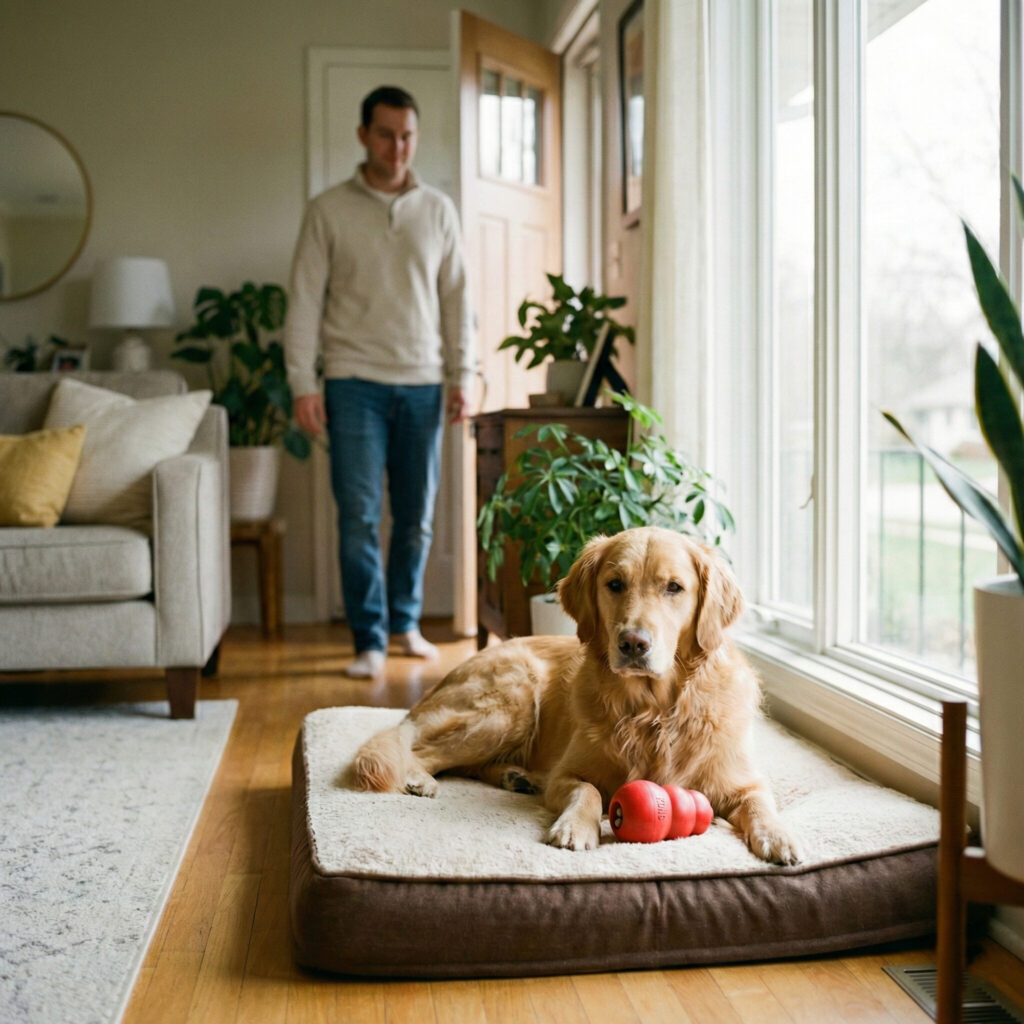
To train a dog to be alone, start by creating a safe, comfortable space like a crate or a specific room. Begin with very short separations of just a few seconds while you are still in the house, rewarding silence and calmness. Gradually increase the time you are away, desensitize them to departure cues like picking up keys, and ensure they are physically tired and mentally stimulated before you leave. Consistency and slow progression are the keys to preventing separation anxiety.
Summary Table
| Component | Guideline | Purpose |
| Preparation | 30 minutes of exercise before leaving | Burns off excess energy that leads to anxiety. |
| Safe Space | Crate, pen, or puppy-proofed room | Prevents destructive behavior and creates security. |
| Duration | Start with 10 seconds, build to 4 hours+ | Builds confidence slowly without panic. |
| Tools | Kongs, puzzle toys, white noise | Keeps the brain busy and masks scary outside sounds. |
| Departure | No eye contact, no “goodbye” talk | Keeps the energy neutral so leaving isn’t a “big event.” |
Training a Dog to Be Alone at Home
Leaving your dog home alone is one of the most stressful parts of pet ownership. You worry about them being lonely, and you worry about your furniture being destroyed. However, teaching your dog to be independent is a critical life skill. A dog that is comfortable being alone is a happier, more confident dog.
This guide covers the complete process of conditioning your dog to relax when you walk out the door. We will move from basic preparation to advanced duration training, ensuring you have a solid plan for success.
Read Also: How to Stop Jumping on Guests
Why This Training Matters
Many owners assume a dog will naturally “get used to” being alone. Unfortunately, dogs are pack animals. Their instinct is to be with their group. When left alone without guidance, they often panic. This panic manifests as barking, chewing, digging, or accidents in the house.
By training them, you are actually teaching them a coping mechanism. You are changing their emotional response from “I am abandoned” to “My human is gone, so now is my time to nap and eat treats.”
Phase 1: Setting the Scene for Success
Before you even attempt to leave the house, you must control the environment. If a dog has too much energy or feels unsafe, no amount of training commands will work.
The Power of Exercise
A tired dog is a good dog. If your dog is full of energy, that energy needs an outlet. If you don’t provide the outlet, your couch will become the outlet.
- Physical Exercise: A long walk, a game of fetch, or a jog 30 minutes before you plan to practice leaving.
- Mental Exercise: Sniffing is incredibly tiring for dogs. A “sniffari” walk (where you let them sniff everything) can be more tiring than a fast run.
- The Settle Down: Allow 15 minutes after exercise for the dog to calm down before you start training. You want them in a resting state, not a hyper state.
Creating a “Zen Zone”
You need a specific area where the dog stays when alone. This should not be the whole house, as too much freedom can be overwhelming.
- Crate Training: If your dog likes their crate, this is the safest option. It is a cozy den.
- ** Confinement Area:** If you don’t use a crate, use a baby gate to block off a laundry room or spare bedroom.
- Comfort Items: Include a bed, a piece of clothing that smells like you, and access to water.
- Background Noise: Silence can be scary. Leave a radio on low volume or use a white noise machine to mask the sound of cars or neighbors.
Phase 2: Desensitizing Departure Cues
Dogs are observant. They know you are leaving before you even open the door. They watch for specific “triggers” or cues that signal your departure. These might include:
- Putting on shoes
- Picking up keys
- Putting on a coat
- Grabbing a bag
If your dog gets anxious the moment you touch your keys, you need to break that association.
How to Desensitize Triggers
You want to make these cues meaningless.
- Pick up your keys. Walk to the couch and sit down. Do not leave.
- Put on your shoes. Walk into the kitchen, make a coffee, then take the shoes off.
- Put on your coat. Watch TV for five minutes, then turn it off.
- Open the door. Step out, immediately step back in, and close it.
Repeat these actions 10 to 20 times a day without actually leaving the house. Eventually, your dog will stop reacting to the sound of keys because it no longer predicts your disappearance.
Read Also: What to Do If Your Dog Is Stubborn
Phase 3: The Gradual Departure Method
This is the core of the training. You will increase the time you are away in tiny increments. Do not rush this. If your dog panics, you have moved too fast.
Step 1: The “Invisible” Owner (Inside the House)
Start this training while you are still home.
- Ask your dog to go to their bed or crate.
- Give them a high-value treat (like a stuffed Kong).
- Walk out of the room and immediately walk back in.
- If they stayed calm, praise them calmly.
- Repeat this, but stay out of the room for 5 seconds, then 10 seconds, then 30 seconds.
Step 2: Door Training
Now you involve the exit door.
- Walk to the front door.
- Open it and step outside.
- Close the door.
- Wait 5 seconds.
- Walk back inside.
Crucial Rule: When you return, ignore your dog for the first minute. Do not make a fuss. If you make a huge party when you return, you validate their anxiety that your absence was a “bad thing” and your return is the “savior moment.” Keep it boring.
Step 3: Extending the Time
Once your dog is fine with 5 seconds, you begin to stretch the time.
- Set 1: 30 seconds
- Set 2: 1 minute
- Set 3: 3 minutes
- Set 4: 5 minutes
- Set 5: 10 minutes
If the dog barks or whines, wait for a gap of silence before returning. If you enter while they are barking, you are teaching them that barking makes you come back.
Phase 4: Making Alone Time Fun
The goal is to trick the dog into thinking, “I love it when they leave because that is when I get the good snacks.”
The Magic of High-Value Treats
Do not give these treats at any other time. They are exclusive to alone time.
- Frozen Kongs: Fill a rubber toy with peanut butter, yogurt, or wet dog food and freeze it. This takes 20-30 minutes to lick clean, which soothes the dog and distracts them during the most anxious part of your departure (the first 15 minutes).
- Puzzle Toys: Toys that require the dog to slide levers or roll balls to get food.
- Long-Lasting Chews: Bully sticks or yak cheese chews (ensure these are safe for your specific dog to have unsupervised).
The Departure Routine
Create a predictable routine so the dog knows what to expect.
- Exercise the dog.
- Take them out for a final potty break.
- Put them in their safe zone.
- Turn on the white noise or radio.
- Give them the special treat.
- Walk out calmly. Say a specific phrase like “Be right back” or “Guard the house.”
- Leave.
Read Also: How to Train a Dog With High Energy
Troubleshooting Common Issues
Even with the best planning, you will hit roadblocks. Here is how to handle them.
Barking and Whining
If your dog barks for a few minutes and then settles, that is normal protest behavior. If they bark continuously for 20 minutes, they are distressed.
- Solution: You progressed too fast. Go back to shorter time intervals. If you were at 10 minutes, go back to 2 minutes.
Destructive Chewing
This usually happens because of boredom or excess energy, not spite.
- Solution: Increase the intensity of exercise before you leave. Double-check that you have puppy-proofed the area. If they chew furniture, they should be crated or penned until they are more mature.
Potty Accidents
Anxiety affects the bladder. A dog that is fully house-trained may urinate when panicked.
- Solution: Ensure they potty immediately before you leave. If accidents persist only when you are gone, this is a symptom of Separation Anxiety (a panic disorder), and you may need to consult a vet or behaviorist.
Special Considerations for Puppies vs. Adult Dogs
Puppies (Under 1 Year)
- Bladder Control: Puppies cannot hold their bladder for long. The rule of thumb is one hour for every month of age. A 3-month-old puppy cannot be left for 8 hours.
- Chewing: Puppies are teething. You must use a crate or pen to protect them from swallowing dangerous items.
- Schedule: You may need a dog walker to come mid-day to let them out.
Adult Rescue Dogs
- Baggage: A rescue dog may have a history of abandonment. They bond very hard and very fast.
- Patience: It may take longer to build trust. Start with seconds, not minutes.
- Routine: They rely heavily on routine to feel safe. Keep your departure and return times consistent if possible.
Read Also: Why Some Dogs Ignore Commands Outside
Technology Can Help
In the modern age, you don’t have to guess what your dog is doing.
- Pet Cameras: Devices like Furbo or Ring allow you to watch your dog. Some allow you to toss treats.
- Tip: Do not use the “talk” feature to say hello to your dog. Hearing your voice but not seeing you often confuses dogs and increases anxiety. Use the camera only to observe.
- Automatic Feeders: These can be timed to drop a small amount of food 2 hours after you leave, providing a distraction mid-day.
Signs of True Separation Anxiety
There is a difference between a dog that hasn’t been trained yet and a dog with a clinical disorder. True Separation Anxiety includes:
- Breaking teeth or nails trying to escape the crate.
- Pacing in the same pattern for hours.
- Drooling excessively (puddles of saliva).
- Urination/defecation despite being house-trained.
If you see these severe signs, standard training might not be enough. You should consult a Certified Separation Anxiety Trainer (CSAT) or a veterinarian. Medication might be needed to lower their anxiety threshold enough for training to take effect.
Frequently Asked Questions
Can I get a second dog to keep my dog company?
Generally, no. Anxiety is often attached to the human, not loneliness in general. If you get a second dog, you often end up with two dogs with separation anxiety.
Should I use a crate?
For most dogs, yes. A crate mimics a den. However, for dogs with confinement anxiety (claustrophobia), a baby-gated room is better.
How long can I legally leave a dog alone?
While laws vary, ethically, an adult dog should not be left regularly for more than 6 to 8 hours without a bathroom break. If you work 10 hours, hire a dog walker.
Conclusion
Training a dog to be alone is not an overnight process. It requires weeks of small steps. Remember, you are rewiring your dog’s brain to understand that “Alone” equals “Safe.”
Be patient. If you have a bad day where they bark, simply step back and make the task easier the next day. By investing time in this training now, you ensure years of freedom for yourself and peace of mind for your dog.