
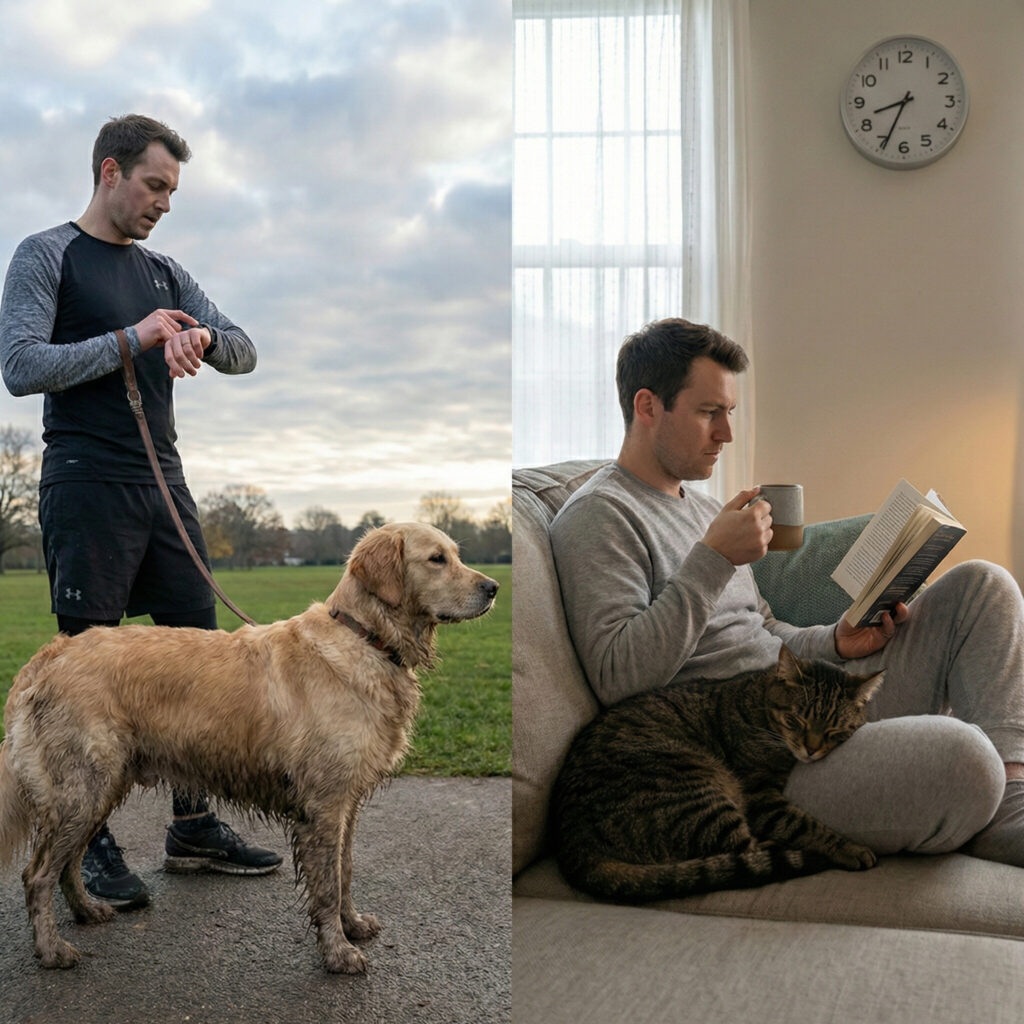
Dogs generally require a significantly higher time commitment than cats, averaging 2 to 4 hours of active care daily. This includes walking, training, active play, and social interaction. Cats are more independent, typically requiring 20 to 30 minutes of active care daily for feeding, litter box maintenance, and short play sessions. However, puppies and kittens both require intense supervision, and high-energy dog breeds or long-haired cats will increase these time estimates considerably.
Summary Table
| Activity | Dog (Adult) | Cat (Adult) |
| Exercise/Walking | 30–90 minutes daily | 0 minutes (indoor play only) |
| Feeding | 10 minutes | 10 minutes |
| Potty Needs | 15–30 minutes (outdoors) | 5 minutes (scooping litter) |
| Grooming | 10–20 minutes (varies by coat) | 5–10 minutes (varies by coat) |
| Training/Socializing | 15–30 minutes | 0–5 minutes |
| Playtime/Affection | 30–60 minutes | 15–20 minutes |
| Total Daily Active Time | approx. 2–4 hours | approx. 30–60 minutes |
Time Commitment: Owning a Dog vs a Cat
Choosing between a dog and a cat is rarely just about which animal you think is cuter. It is a decision about your lifestyle and, most importantly, your time. Many new pet owners underestimate the sheer number of hours required to keep an animal happy and healthy.
The “dog vs. cat” debate usually comes down to independence. Dogs are pack animals that crave constant companionship and structured activity.
Cats are crepuscular predators that sleep for large portions of the day and often entertain themselves. This guide breaks down exactly where your minutes and hours will go for each pet so you can make the right choice for your schedule.
Read Also: Cats vs Dogs: Which Is Better for Apartments?
The Dog: A High-Time Commitment
Owning a dog is often compared to having a toddler that never grows up. They rely on you for everything: food, bathroom breaks, entertainment, and emotional regulation. If you work long hours away from home or value spontaneous weekend trips, a dog requires significant logistical planning.
The Morning Routine
Your day starts when your dog wakes up. Unlike cats, who might just wait by their bowl, dogs need to go outside immediately.
- Potty Break: 10–15 minutes. This happens rain, snow, or shine. You cannot hit snooze when a dog needs to go out.
- Morning Walk: 20–45 minutes. Most dogs need to burn off sleeping energy before you leave for work. A tired dog is a good dog; an energetic dog left alone leads to destroyed furniture.
- Feeding and Water: 5 minutes.
- Pre-Departure Attention: 5–10 minutes. Dogs often suffer from separation anxiety. Spending a few moments settling them before you leave is crucial.
The Mid-Day Check-In
If you work a standard 9-to-5 job, you cannot simply leave a dog alone for 9 or 10 hours straight. Their bladder capacity and social needs usually max out around 6 to 8 hours.
- The Lunch Break Commute: If you work close to home, you must drive back, walk the dog (20 minutes), and drive back to work.
- The Dog Walker: If you cannot come home, you must spend time managing a dog walker (scheduling, communicating, and payment).
Evening Responsibilities
When you return home, your dog has been waiting for you all day. They are at peak energy levels.
- The Long Walk: 30–60 minutes. This is non-negotiable for medium to high-energy breeds like Retrievers, Shepherds, or Terriers.
- Dinner: 5 minutes.
- Play and Training: 20–30 minutes. Mental stimulation is just as important as physical exercise. You need to practice commands or play fetch to keep their brain working.
- Cuddle Time: Dogs need to sit with you. While this counts as “leisure,” it means you are tethered to one spot.
Weekend Commitments
Weekends are not just for relaxing. They are for “adventures” because your dog likely got the bare minimum of attention during the work week.
- Grooming: 30–60 minutes (bathing, brushing, nail clipping).
- Socialization: 1–2 hours. Taking the dog to a park or a dog-friendly patio to ensure they remain friendly with others.
- Supply Runs: Buying heavy bags of food and treats.
Read Also: Dog vs Cat Curiosity Compared
The Cat: Flexible and Independent
Cats are the masters of efficiency. They sleep for 12 to 16 hours a day. While they form deep bonds with their owners, they do not require you to facilitate every aspect of their existence. You operate on their schedule, but their schedule is mostly sleeping.
The Daily Routine
A cat’s routine is much less rigid than a dog’s.
- Feeding: 5 minutes. Many owners leave dry food out (free-feeding), though scheduled wet food feedings are healthier.
- Litter Box Maintenance: 5 minutes. This is the one daily “chore” that cannot be skipped. Scooping the box keeps the house smelling clean and the cat happy.
- Playtime: 15–20 minutes. Cats are sprinters, not marathon runners. They prefer short bursts of intense play with a laser pointer or feather wand.
- Affection: Variable. A cat will often come to you while you are working or watching TV. This is a “passive” time commitment. You can type an email while a cat sleeps on your lap; you cannot type an email while throwing a ball for a dog.
The “Zoomies”
Cats often get a burst of energy in the evening or early morning. You might spend 10 minutes watching them run around, but you rarely have to participate unless you want to.
General Maintenance
- Grooming: 10 minutes weekly for short-haired cats; 10 minutes daily for long-haired breeds (like Persians or Maine Coons).
- Nail Trimming: 10 minutes every two weeks.
- Litter Changing: 20 minutes once a week to dump the whole tray and scrub it.
The “Puppy vs. Kitten” Factor
The age of the animal changes the time equation drastically. Do not assume a puppy is just a smaller dog.
The Puppy Phase (8 weeks to 1 year)
A puppy is a full-time job.
- Potty Training: You must take a puppy outside every 2 hours, even at night. This disrupts your sleep schedule for weeks.
- Supervision: 100% of the time. You cannot take your eyes off a puppy, or they will chew an electrical cord or eat a sock.
- Training Classes: 1 hour weekly plus daily homework.
- Socialization Outings: You must expose them to new sights and sounds daily to prevent fear aggression later.
Time Estimate: 6–8 hours of active engagement daily.
The Kitten Phase (8 weeks to 1 year)
Kittens are high-energy, but they come pre-programmed with some skills.
- Litter Training: Most kittens know how to use a litter box instinctively. You just show them where it is.
- Supervision: Moderate. They will climb curtains and scratch furniture, so you need to “kitten-proof” your home.
- Play: They need more play than adults to burn off energy, or they might attack your toes at 3 AM.
Time Estimate: 1–2 hours of active engagement daily.
Read Also: Adaptability: Cats vs Dogs in New Environments
Breed and Personality Variables
The breed you choose significantly impacts time requirements.
High-Maintenance Dogs
- Working Breeds (Border Collies, Huskies, German Shepherds): These dogs need jobs. If you don’t give them 2+ hours of exercise, they become destructive.
- Brachycephalic Breeds (Pugs, Bulldogs): They need less exercise but often require more time on health care, specifically cleaning skin folds and managing breathing issues.
- Long-Haired Breeds (Poodles, Shih Tzus): require daily brushing to prevent painful mats.
High-Maintenance Cats
- Sphynx Cats: Require regular baths because they have no fur to absorb oils.
- Bengals/Savannahs: These are hybrid cats with wild DNA. They require dog-like levels of exercise and mental stimulation.
- Persians: Their flat faces need daily wiping, and their coats need constant brushing.
Lifestyle Impacts: Work, Travel, and Housing
Your personal schedule is the filter through which you must view pet ownership.
Working from Home vs. Office
- Dogs: Working from home makes dog ownership easier, but it can be distracting. The dog may bark during Zoom calls or demand attention when you are on a deadline. If you work in an office, you lose 1-2 hours of your “free time” every evening to dog care.
- Cats: Cats are ideal for office workers. They sleep while you are gone. For remote workers, cats are generally quiet “coworkers,” though they may walk across your keyboard.
Travel and Spontaneity
- The Weekend Trip:
- Dog: You cannot leave a dog alone overnight. You must find a pet-friendly hotel, pay for a boarding kennel, or hire a sitter. This requires time to research and book.
- Cat: With an automatic feeder and extra water, a cat can safely be left alone for 24 hours (though 48 is pushing it).
- Vacations:
- Dog: Boarding kennels are expensive and require drop-off/pick-up coordination.
- Cat: You can usually hire a neighbor to stop in for 15 minutes once a day to scoop litter and fill bowls.
Housing Constraints
- Apartment Living:
- Dog: Increases time commitment. You must get dressed, put on shoes, and go down the elevator every time the dog needs to pee.
- Cat: Zero difference. They live entirely indoors.
- House with Fenced Yard:
- Dog: Reduces time commitment slightly. You can open the back door for potty breaks, but you still need to walk them for mental stimulation.
- Cat: Zero difference (unless you build a “catio”).
Read Also: Dogs vs Cats: Who Understands Human Emotions Better
The Hidden Time Costs: Medical and Cleaning
It is not just about feeding and walking. You must account for the chores created by the pet.
Cleaning
- Dogs: Muddy paws, shedding fur, and the occasional accident. You will vacuum twice as often. If you have a yard, you must spend time every week picking up waste (“poop patrol”).
- Cats: Litter tracking is the main issue. You will need to sweep around the box daily. Hairballs on the rug also require spot cleaning.
Vet Visits
- Dogs: Tend to get into more trouble (eating garbage, physical injuries from running). This leads to more emergency vet visits, which consume hours of your day.
- Cats: Are masters of hiding illness. You might spend less time at the vet, but you must be more observant at home to catch symptoms early.
Frequently Asked Questions
Can I own a dog if I work 8 hours a day?
Yes, but it requires planning. You will likely need to hire a dog walker for a mid-day break or utilize doggy daycare. You must also dedicate your mornings and evenings entirely to the dog’s exercise needs.
Are two cats more work than one?
Surprisingly, no. Two cats often entertain each other, reducing the pressure on you to play with them. The only increased time commitment is scooping more litter and filling more bowls.
What is the lowest maintenance dog breed?
Greyhounds, Basset Hounds, and Cavalier King Charles Spaniels are known for being lower energy. However, “low maintenance” for a dog is still higher maintenance than almost any cat.
Do cats get lonely?
Yes. While they are lower maintenance, they are not furniture. If you are gone for 12 hours a day and then ignore them when you are home, a cat will become depressed or destructive. They still require daily interaction.
Summary
If you have 3 to 4 free hours every day and you want a hobby that gets you outside and moving, get a dog. A dog is a lifestyle. It changes how you wake up, how you spend your evenings, and where you go on weekends. The return on investment is immense loyalty and companionship.
If you have a busy career, enjoy lazy evenings, or travel frequently for short trips, get a cat. A cat adds warmth and personality to a home without demanding that you reorganize your entire life schedule. They are roommates that love you, rather than children that need you.
Ultimately, the “right” amount of time is the amount you are happy to give. If you resent the 6 AM walk, a dog isn’t for you. If you want a running partner, a cat won’t suffice. Be honest with your hours, and you will find the perfect companion.