
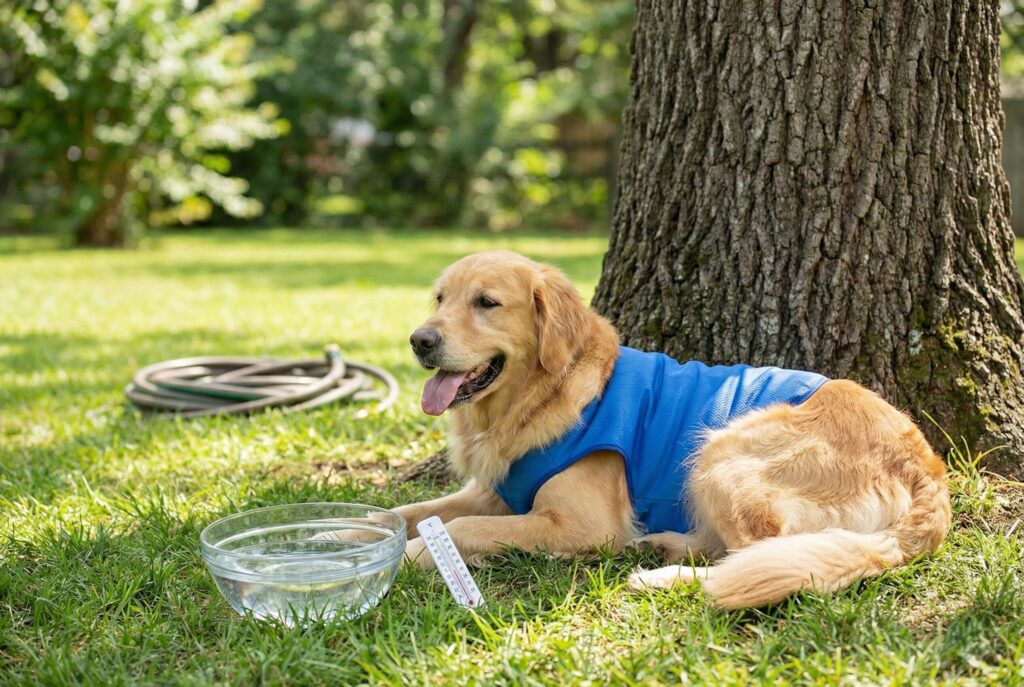
To keep your dog safe in summer, walk them early in the morning or late evening to avoid heatstroke and burnt paws. Always provide fresh water and shade. Use the “7-Second Rule” to test pavement heat. Never leave a dog in a parked car. Prevent parasites with vet-approved medication and avoid toxic summer foods like grapes, onions, and cooked bones.
Summer Table
| Category | Key Safety Tips |
| Heat Protection | Walk during cooler hours (before 10 AM, after 4 PM). |
| Pavement Safety | Use the “7-Second Rule” (hand on ground). Use paw wax/booties. |
| Hydration | Carry water bottles. Watch for sunken eyes or dry gums. |
| Water Safety | Use life jackets. Rinse off chlorine/salt. Avoid blue-green algae. |
| Parasites | Check for ticks daily. Maintain heartworm & flea prevention. |
| Nutrition | Avoid: Grapes, onions, alcohol, corn cobs. Safe: Frozen broth, watermelon (no seeds). |
| Grooming | Do Not Shave double coats. Apply pet-safe sunscreen to nose/ears. |
Heatstroke in Dogs
Summer brings fun, but high temperatures pose serious risks. Dogs do not sweat like humans; they rely on panting and releasing heat through their paw pads. When these mechanisms fail, heatstroke occurs rapidly.
Warning Signs of Heatstroke
Watch for these red flags during hot weather:
- Excessive Panting: Heavier and faster than normal.
- Discolored Gums: Brick red, blue, or pale gums.
- Drooling: Thick, ropey saliva.
- Lethargy: Unwillingness to move or confusion.
- Vomiting or Diarrhea: Sometimes with blood.
- Collapse: Inability to stand.
Immediate Action Required: If you suspect heatstroke, move your dog to a cool area immediately. Wet their paws and ears with cool (not ice-cold) water and use a fan. Head to the vet instantly—heatstroke is a medical emergency.
High-Risk Dogs
Some dogs are more vulnerable to heat:
- Brachycephalic Breeds: Pugs, Bulldogs, and Boxers have short airways that make panting less efficient.
- Senior Dogs: Older pets regulate body temperature poorly.
- Overweight Dogs: Excess fat traps heat.
- Double-Coated Breeds: Huskies and Malamutes retain heat if not groomed properly.
Pavement and Paw Safety
Asphalt and concrete absorb heat all day and can remain hot long after sunset. Burned paw pads are painful and prone to infection.
The 7-Second Rule
Before every walk, place the back of your hand on the pavement. If you cannot hold it there comfortably for seven full seconds, it is too hot for your dog’s paws.
Paw Protection Tips
- Walk on Grass: Stick to soil or grassy park areas.
- Time Your Walks: Early morning (before 8 AM) or late evening (after 8 PM) are safest.
- Paw Wax: Apply a protective wax barrier (like Musher’s Secret) before heading out.
- Dog Booties: specialized summer shoes can insulate paws from heat.
- Daily Checks: Inspect pads for blisters, redness, or peeling skin after walks.
Water Safety: Pools, Lakes, and Beaches
Swimming is excellent exercise, but it comes with hidden dangers. Not all dogs are natural swimmers, and open water holds invisible threats.
Pool Safety
- Fencing: Install a fence around the pool to prevent accidental falls.
- Ramps: Ensure your dog knows where the stairs or ramps are to exit easily.
- Chlorine: Do not let your dog drink pool water. Chlorine irritates the stomach.
- Supervision: Never leave a dog unsupervised near water.
Lake and Beach Hazards
- Blue-Green Algae: This bacteria looks like pea soup or green paint on the water’s surface. It is deadly toxic. If you see it, keep your dog away.
- Currents: Even strong swimmers can be swept away by riptides or river currents.
- Life Jackets: Always use a canine life vest, especially for boating or deep water.
- Saltwater Toxicity: Drinking ocean water causes rapid dehydration and “beach diarrhea.” Carry fresh water for them to drink.
Summer Nutrition: Foods to Avoid
Backyard BBQs are a summer staple, but many festive foods are toxic to canines.
Dangerous Foods
- Grapes and Raisins: Cause rapid kidney failure.
- Onions and Garlic: Damage red blood cells (anemia).
- Chocolate: Contains theobromine, which is toxic to the heart and nervous system.
- Xylitol: An artificial sweetener found in gum and some peanut butters; causes liver failure.
- Alcohol: Even small amounts cause intoxication and respiratory failure.
- Cooked Bones: Rib or chicken bones splinter easily, puncturing the stomach.
- Corn on the Cob: The cob causes life-threatening intestinal blockages.
Safe Summer Treats
- Watermelon: Seedless and rind-free.
- Frozen Broth Cubes: Beef or chicken broth (low sodium) frozen in ice trays.
- Plain Yogurt: Frozen in a Kong toy.
- Carrot Sticks: Crunchy and cooling.
Parasite Prevention
Warmer weather wakes up fleas, ticks, and mosquitoes. These pests carry diseases like Lyme disease, Ehrlichiosis, and Heartworm.
Tick Prevention
- Daily Checks: Run your hands over your dog after every walk. Check hidden spots:
- Under the collar
- Inside ears
- Between toes
- Under the tail
- Landscaping: Keep your lawn mowed short to reduce tick habitats.
Flea and Heartworm Control
- Year-Round Meds: Consult your vet for the best oral or topical preventatives.
- Heartworm: Transmitted by mosquitoes, this disease is fatal if untreated. Prevention is much cheaper and safer than the cure.
Grooming Do’s and Don’ts
Proper coat care helps regulate body temperature.
The Shaving Myth
Do NOT shave double-coated dogs (like Golden Retrievers, German Shepherds, or Huskies). Their undercoat sheds to allow airflow, while the topcoat protects their skin from the sun. Shaving removes this insulation, increasing the risk of heatstroke and sunburn.
Sunscreen for Dogs
Dogs with thin fur, white coats, or pink skin are prone to sunburn.
- Where to Apply: Bridge of the nose, ear tips, and belly.
- What to Use: Only use pet-safe sunscreen. Human sunscreen often contains Zinc Oxide or PABA, which are toxic if licked.
Hydration and Dehydration
Dehydration happens faster than you think. A dog needs roughly 1 ounce of water per pound of body weight daily, and more on hot days.
Signs of Dehydration
- Sunken Eyes: Eyes look dull or receded.
- Dry Gums: Gums feel sticky, not slick.
- Skin Tent Test: Gently lift the skin between the shoulder blades. If it stays up (tented) and doesn’t snap back instantly, the dog is dehydrated.
Tips for Hydration
- Carry Water: Bring a collapsible bowl on every walk.
- Ice Cubes: Add ice to their water bowl for entertainment and cooling.
- Multiple Bowls: Place water stations in different rooms and outside in the shade.
Safe Summer Activities
You don’t have to stay inside all summer. Adjust your activities to be dog-friendly.
Indoor Enrichment
When it’s too hot to go out (10 AM – 4 PM), tire their brain instead of their body.
- Puzzle Toys: Hide treats in snuff mats.
- Hide and Seek: Hide in the house and call your dog.
- Training: Practice new tricks in the air conditioning.
Outdoor Fun
- Sprinklers: Let your dog chase the water in the yard.
- Scent Walks: Go for a slow “sniffari” in a shaded woods area.
- Camping: Ensure your tent has ventilation and bring a portable tie-out system.