
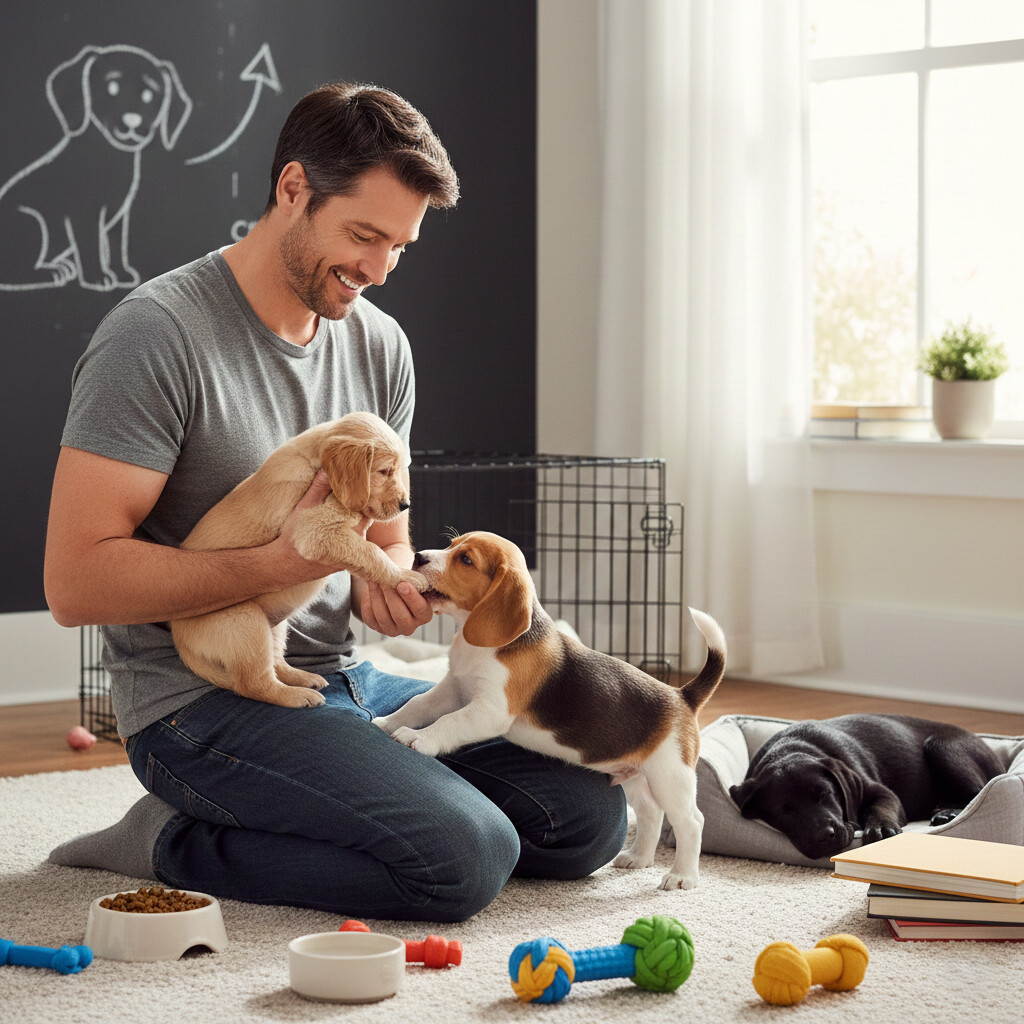
Puppy care and development involve guiding a dog from infancy through adulthood by focusing on specific growth milestones. Key aspects include providing age-appropriate nutrition, adhering to a vaccination schedule, and starting socialization early (between 3 and 12 weeks). Consistent potty training, crate training, and positive reinforcement for behavioral issues like teething are essential for raising a well-adjusted dog.
Summary Table: Puppy Care Milestones
| Age | Developmental Stage | Key Focus Areas | Diet |
| 0-2 Weeks | Neonatal | Warmth, nursing, sleep | Mother’s Milk |
| 2-4 Weeks | Transitional | Eyes open, walking begins | Milk + Soft Mush |
| 3-12 Weeks | Socialization | Exposure to sounds, people, pets | Puppy Kibble (3-4x daily) |
| 3-6 Months | Juvenile | Teething, potty training, basic commands | Puppy Kibble (3x daily) |
| 6-18 Months | Adolescence | Sexual maturity, boundary testing | Adult Food Transition (2x daily) |
Puppy Care & Development
Bringing a new puppy home is exciting, but it also comes with a lot of responsibility. The first year of your dog’s life is the most critical. It shapes their personality, health, and relationship with you.
This guide covers everything you need to know about raising a happy, healthy puppy without any complicated jargon.
Read Also: Why Dogs Listen Better to Calm Voices
Puppy Development Stages
Puppies grow incredibly fast. Understanding what is happening in their bodies and brains at each stage helps you provide the right care and training.
Neonatal Period (Birth to 2 Weeks)
At this stage, puppies are helpless. Their eyes and ears are closed. They rely entirely on their mother for food and warmth. You generally will not bring a puppy home at this age, but if you are raising a litter, the focus is purely on keeping them warm and fed.
Transitional Period (2 to 4 Weeks)
This is when the senses wake up. Their eyes open, they begin to hear, and they start trying to walk. They may start barking or wagging their tails. This is the very beginning of their social life.
Socialization Period (3 to 12 Weeks)
This is the “Golden Window” for puppy development. What happens now will stay with them forever. They learn how to interact with other dogs, humans, and their environment.
- Curiosity: They are very curious but essentially have no fear yet.
- Weaning: They move from milk to solid food.
- New Home: Most puppies go to their new owners around 8 weeks.
Juvenile Period (3 to 6 Months)
Your puppy is now like a human toddler. They are energetic and have a short attention span.
- Teething: Baby teeth fall out, and adult teeth come in. Expect a lot of chewing.
- Fear Periods: They might suddenly become scared of things they were previously okay with, like trash cans or hats.
Adolescence (6 to 18 Months)
This is the teenage phase. Your puppy looks like an adult but still acts like a puppy.
- Testing Boundaries: They may ignore commands they know perfectly well.
- Hormones: If not spayed or neutered, sexual behavior begins.
- Energy: They have peak physical energy and need lots of exercise.
Read Also: How to Correct Dog Unwanted Behaviors Without Punishment?
Essential Puppy Nutrition
Feeding your puppy correctly is the foundation of their long-term health. Puppies need more calories, protein, and fat than adult dogs to fuel their rapid growth.
Choosing the Right Food
Look for food specifically labeled for “Growth” or “All Life Stages.” Avoid adult dog food, as it lacks the necessary nutrients for bone and muscle development.
- Large Breed Formulas: If you have a Great Dane or Labrador, use large-breed specific food to prevent their bones from growing too fast, which causes joint issues.
- Ingredients: Look for a named meat (like Chicken or Beef) as the first ingredient, rather than “meat by-product.”
Feeding Schedule by Age
Puppies have small stomachs and high energy, so they need to eat often.
- 8–12 Weeks: 4 meals a day.
- 3–6 Months: 3 meals a day.
- 6–12 Months: 2 meals a day.
Important Note: Do not leave food out all day (free-feeding). Scheduled meals help with potty training because a regular eating schedule leads to a regular bathroom schedule.
Vaccinations and Health Care
Your puppy’s immune system is fragile. Routine vet visits are non-negotiable to prevent deadly diseases like Parvovirus and Distemper.
Core Vaccinations
Every puppy, regardless of where they live, needs these vaccines.
- Distemper: attacks the respiratory and nervous systems.
- Parvovirus: A highly contagious and often fatal virus affecting the intestines.
- Adenovirus: Causes hepatitis.
- Rabies: Required by law in most US states.
Non-Core Vaccinations
These depend on your lifestyle and location. Ask your vet about them.
- Bordetella: Necessary if you plan to board your dog or go to doggy daycare (prevents Kennel Cough).
- Leptospirosis: Important if you live near wildlife or standing water.
- Lyme Disease: Crucial in areas with high tick populations.
Parasite Prevention
- Deworming: Most puppies are born with intestinal worms. Your vet will deworm them multiple times.
- Heartworm: Transmitted by mosquitoes. Prevention medication usually starts at 8 weeks and is taken monthly.
- Fleas and Ticks: Topical treatments or chewable tablets prevent infestations.
Read Also: Does dog training increase confidence?
Training and Behavior Basics
Training should start the day you bring your puppy home. The goal is not to be strict, but to provide structure. Use Positive Reinforcement, which means rewarding good behavior with treats or praise, rather than punishing bad behavior.
Potty Training
Consistency is the key to potty training.
- Designate a Spot: Always take them to the exact same place outside.
- Frequency: Take them out immediately after they wake up, after they eat, and after they play.
- Command: Use a word like “Go Potty” while they are doing it.
- Reward: Throw a party! Give them a treat and praise immediately after they finish.
- Accidents: If you catch them in the act, make a noise to startle them and take them outside. If you find the mess later, do not punish them; they won’t understand why. Clean it with an enzymatic cleaner to remove the smell.
Crate Training
A crate is not a cage; it is a safe bedroom for your dog. It helps with potty training because dogs naturally do not want to soil where they sleep.
- Size: The crate should be big enough for the puppy to stand up, turn around, and lie down, but no bigger.
- Association: Feed them meals in the crate so they associate it with good things.
- Duration: Never leave a puppy in a crate for longer than they can hold their bladder (usually one hour per month of age).
Basic Commands
Teach these three commands first for safety:
- Sit: Good for impulse control.
- Stay: Prevents them from running out open doors.
- Come: The most important safety command. Always make coming to you a happy event.
Dealing with Teething and Nipping
Puppies explore the world with their mouths. This is normal but painful.
- The Exchange Method: When a puppy bites your hand, immediately offer a chew toy instead.
- Bite Inhibition: If they bite too hard, make a high-pitched “Ouch!” sound and stop playing for a moment. This teaches them that their teeth hurt.
- Frozen Treats: Freeze a wet washcloth or a carrot for them to chew on to soothe sore gums.
The Importance of Socialization
Socialization does not just mean playing with other dogs. It means exposing your puppy to the world so they don’t become fearful adults. A poorly socialized dog can become aggressive or anxious.
What to Expose Them To
- Surfaces: Grass, concrete, carpet, tile, gravel.
- Sounds: Vacuums, thunderstorms (use recordings at first), traffic, doorbells.
- People: Men with beards, people wearing hats, sunglasses, children, and seniors.
- Handling: Touching their paws, ears, and mouth (this makes vet visits easier).
How to Do It Safely
Until your puppy is fully vaccinated (usually around 16 weeks), avoid high-traffic areas like public dog parks. instead:
- Carry them in a sling or backpack during walks.
- Arrange playdates with adult dogs that you know are fully vaccinated.
- Take car rides to see the world through the window.
Read Also: What Makes a Dog Food-Motivated vs Toy-Motivated
Grooming and Hygiene
Start grooming early so your dog gets used to being handled.
- Brushing: Even short-haired dogs need brushing to remove dead skin and hair.
- Nail Trimming: Long nails can be painful. Trim just the tip to avoid hitting the “quick” (the blood vessel inside the nail).
- Ear Cleaning: Check ears weekly for redness or bad smells.
- Dental Care: Brush their teeth or use dental chews. Gum disease is very common in adult dogs.
Puppy Proofing Your Home
Before the puppy arrives, you must make your house safe. Puppies will chew anything they can reach.
- Electrical Cords: Hide them or use cord protectors.
- Toxic Foods: Keep chocolate, grapes, onions, and xylitol (found in gum) out of reach.
- Trash: Use trash cans with locking lids.
- Small Objects: Coins, socks, and hair ties can cause fatal intestinal blockages if swallowed.
Exercise Needs
Exercise burns off energy that would otherwise be used for destructive behavior like chewing furniture. However, forced running (like jogging with you) is bad for a puppy’s growing joints.
- Free Play: Fetch or chase toys in the yard.
- Mental Exercise: Puzzle toys, hide-and-seek, and training sessions tire a puppy out faster than a walk.
- The 5-Minute Rule: A general guideline is 5 minutes of exercise per month of age, twice a day. (e.g., a 3-month-old puppy needs 15 minutes twice a day).
Sleep Requirements
Puppies need a lot of sleep, often 18 to 20 hours a day!
- Overtiredness: If your puppy gets “zoomies” and becomes bitey or wild, they are likely overtired. Put them in their crate for a nap.
- Routine: Create a bedtime routine. Lights out and quiet time should happen at the same time every night.
Spaying and Neutering
Deciding when to spay or neuter is a conversation for your vet.
- Benefits: Prevents unwanted litters, reduces the risk of certain cancers, and can help with behavioral issues like roaming.
- Timing: Small breeds are often fixed around 6 months. Large breeds may need to wait until 12–18 months to allow their growth plates to close.
Conclusion
Raising a puppy is a journey filled with challenges and rewards. There will be sleepless nights and accidents on the rug, but there will also be moments of pure joy. By focusing on good nutrition, consistent training, and early socialization, you are setting your new best friend up for a long, happy life. Be patient, stay consistent, and enjoy watching your puppy grow into an amazing companion.