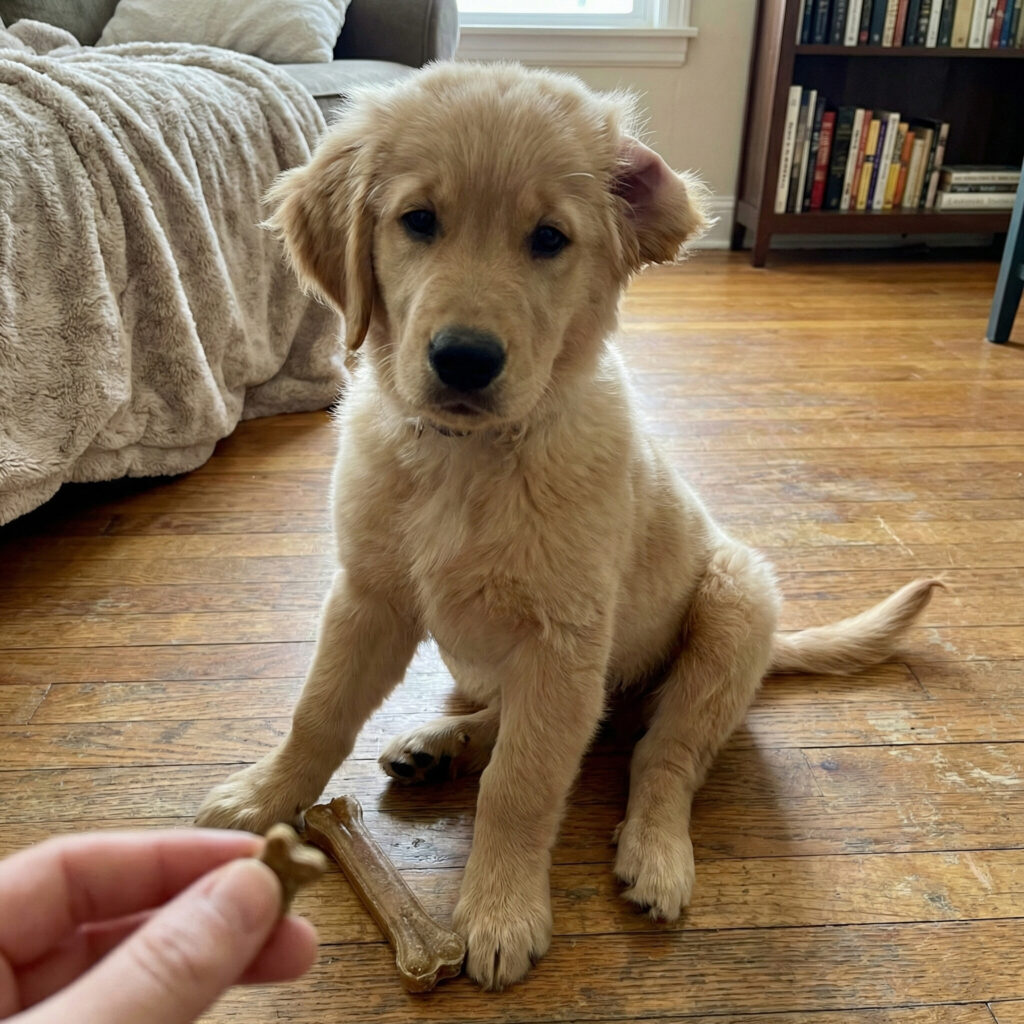
Understanding puppy body language is essential for building trust and ensuring safety. Puppies communicate almost exclusively through non-verbal cues involving their tail, ears, eyes, mouth, and posture. A wagging tail does not always mean happiness; a stiff, high wag can signal arousal or aggression, while a tucked tail indicates fear. Key warning signs to look for include “whale eye” (showing the whites of the eyes), lip licking when not eating, yawning when not tired, and freezing in place. Recognizing these signals early allows owners to intervene before a puppy becomes overwhelmed or reactive.
Summary Table: Puppy Body Language
| Body Part / Action | Specific Signal | Likely Meaning |
| Tail | Wagging loosely mid-level | Happy, relaxed, friendly. |
| Tail | Tucked between legs | Scared, submissive, anxious. |
| Tail | Held high and stiff (flagging) | Alert, dominant, potentially aggressive. |
| Eyes | Soft gaze, blinking | Relaxed, comfortable. |
| Eyes | Hard stare, unblinking | Threatening, guarding a resource. |
| Eyes | “Whale Eye” (whites showing) | Stressed, frightened, uncomfortable. |
| Ears | Pinned flat back against head | Fearful, anxious, submissive. |
| Ears | Perked forward | Alert, interested, focused. |
| Mouth | Lip licking or yawning (out of context) | Stressed, trying to calm a situation down. |
| Mouth | Lips pulled back showing teeth (snarl) | Warning of aggression, back away. |
| Posture | Play Bow (front down, rear up) | “Let’s play! Everything I do now is a game.” |
| Posture | Rolling onto back (belly up) | Submissive or feeling very safe and relaxed. |
| Hair (Hackles) | Standing up along the spine | High arousal (can be fear, excitement, or anger). |
Puppy Body Language Every Owner Should Know
Bringing a new puppy home is exciting. You buy the toys, the food, and the crate. But the most important tool you need isn’t something you buy at the pet store. It is the ability to understand what your puppy is saying to you.
Puppies do not speak human language. They communicate almost entirely through body language. They use their tails, ears, eyes, and posture to tell you how they feel.
Many new owners make mistakes because they misinterpret these signals. They might think a puppy is happy because its tail is wagging, when it is actually terrified. Misreading these cues can lead to behavioral issues, fear aggression, and even dog bites.
By learning to “speak dog,” you can build a stronger bond with your pet, help them feel safe during socialization, and prevent problems before they start.
This guide breaks down the essential parts of canine communication that every owner needs to know.
The Tail Tells a Tale (It’s Not Always Happy)
The biggest myth about dogs is that a wagging tail always means a happy dog. This is false and dangerous.
A tail wag is simply a sign of arousal or emotional engagement. It means the puppy is reacting to something. You must look at the height, speed, and stiffness of the tail to understand the emotion.
Tail Height
- Middle Position (Neutral): When the tail is resting in line with the spine or slightly lower, the puppy is usually relaxed.
- High Position: A tail held straight up like a flagpole indicates alertness, confidence, or dominance. If it is vibrating quickly while held high, it can be a sign of an imminent threat.
- Low or Tucked: A tail held low indicates insecurity. If the tail is tucked completely between the back legs against the belly, the puppy is terrified and submissive.
Tail Speed and Stiffness
- The Full-Body Wag: This is the happy wag. The tail sweeps back and forth in a wide arc, often causing the puppy’s whole rear end to wiggle. The tail is loose, not stiff.
- The Stiff Wag: If the tail is wagging but looks rigid or tense, be careful. A slow, stiff wag can be a warning.
- The “Propeller” Wag: A tail moving in a circle usually signals pure joy when seeing a loved one.
Reading the Eyes
A puppy’s eyes can reveal their internal stress levels very quickly. While humans love direct eye contact, in the canine world, it can be complicated.
Soft Eyes vs. Hard Eyes
- Soft Eyes: When a puppy is relaxed, their eyes will appear soft or almond-shaped. They might blink slowly. This indicates they are comfortable with you.
- Hard Stare: A direct, intense, unblinking stare is a threat. If a puppy freezes over a toy or food bowl and gives you a hard stare, they are guarding that resource. Do not reach for it. Back away slowly.
Whale Eye
“Whale eye” is a critical warning sign. This happens when a puppy turns its head slightly away from you but keeps its eyes fixed on you. You will see a crescent moon of the white part of the eye (the sclera).
Whale eye means the puppy is very anxious, stressed, or frightened. They feel cornered. If you see whale eye, stop what you are doing immediately and give the puppy space.
Ear Positions
Ear carriage can be tricky depending on the breed. It is easier to read a German Shepherd’s ears than a Basset Hound’s floppy ears. However, the base of the ear still moves and tells a story.
- Neutral: The ears are resting normally. The puppy is calm.
- Perked Forward: The ears move forward and up. The puppy is alert and focused on something interesting, like a squirrel or a new sound.
- Pinned Back: When ears are pressed flat against the head, it signals fear, anxiety, or submission. This is often seen when a puppy is being scolded or approaches a larger, scarier dog.
If you have a floppy-eared puppy, look at the base of the ear where it attaches to the head. If that base is pulled back tight, the puppy is stressed.
The Mouth and Muzzle
The mouth offers some of the most subtle, yet important, calming signals. Puppies use these signals to diffuse tension.
Calming Signals (Lip Licking and Yawning)
Owners often miss these because they seem normal.
- Lip Licking/Tongue Flick: If your puppy is not about to eat and has not just taken a drink, lip licking is a sign of stress. You will often see a quick flick of the tongue over the nose. They are communicating that they are uncomfortable.
- Yawning: If your puppy is not tired, a yawn is a major stress signal. It is an attempt to calm themselves down or calm down a perceived threat (like you hugging them too tightly).
Panting
Dogs pant to cool down. However, if it is not hot and the puppy has not been exercising, heavy panting is a sign of stress or pain. “Stress panting” often involves the tongue held tight inside the mouth rather than lolling out loosely.
Showing Teeth
This is rarely good, but there is one exception.
- The Snarl: Lips lifted vertically to expose the front teeth and canine teeth, usually accompanied by a growl. This is a clear warning of aggression.
- The Submissive Grin: Some puppies show their front teeth in a horizontal “smile” when greeting owners. The rest of their body will be low and wiggling submissively. This is an appeasement gesture, not aggression. If you are unsure, look at the rest of the body.
Overall Body Posture and Movement
You must always look at the whole dog, not just one part. The overall posture gives context to the other signals.
The Play Bow
This is one of the best signals in the dog world. The puppy drops its front elbows to the ground while keeping its rear end up in the air.
This is a universal “let’s play” signal. It tells other dogs (and humans) that anything that happens after this—growling, nipping, chasing—is just a game and not real aggression.
Freezing
If your puppy is moving and suddenly stops dead and becomes rigid, pay close attention. Freezing is a prelude to a reaction. They are assessing a threat. This often happens right before a snap or a bite if the threat does not move away.
Rolling Over (Belly Up)
This has two very different meanings based on context.
- Relaxation: If the puppy is sleeping on the couch and rolls onto its back with loose paws, it is completely trusting and relaxed.
- Extreme Submission: If you approach a fearful puppy and it drops to the ground and rolls onto its back, perhaps dribbling urine, it is terrified. It is saying, “I am not a threat, please don’t hurt me.” Do not lean over or pet a puppy in this state; it will only frighten them more. Step away.
Hackles (Piloerection)
This is when the hair along the puppy’s spine stands straight up, like a Mohawk.
It does not automatically mean aggression. It means arousal. The puppy is highly stimulated. It could be fear, intense excitement, or anger. It is an involuntary reaction, like goosebumps in humans. Look at other body signals to determine if it’s excitement or fear.
Conclusion
Never rely on just one signal to determine how your puppy feels. You must read the entire dog and consider the environment.
For example, if a puppy has a wagging tail, but its ears are pinned back, it is lip-licking, and its body is lowered, that is not a happy puppy. That is an anxious puppy trying to appease a threat.
If a puppy is growling during a game of tug-of-war, but its body is loose and it is play-bowing, it is having fun. If that same puppy is growling over a bone, its body is stiff, and it is giving a hard stare, it is guarding a resource.
By constantly observing your puppy during daily interactions, you will learn their specific dialect. Respect their signals. If they say they are scared, remove them from the situation. If they say they want to play, engage with them.
Learning body language is the foundation of a trusting, safe relationship with your new dog.