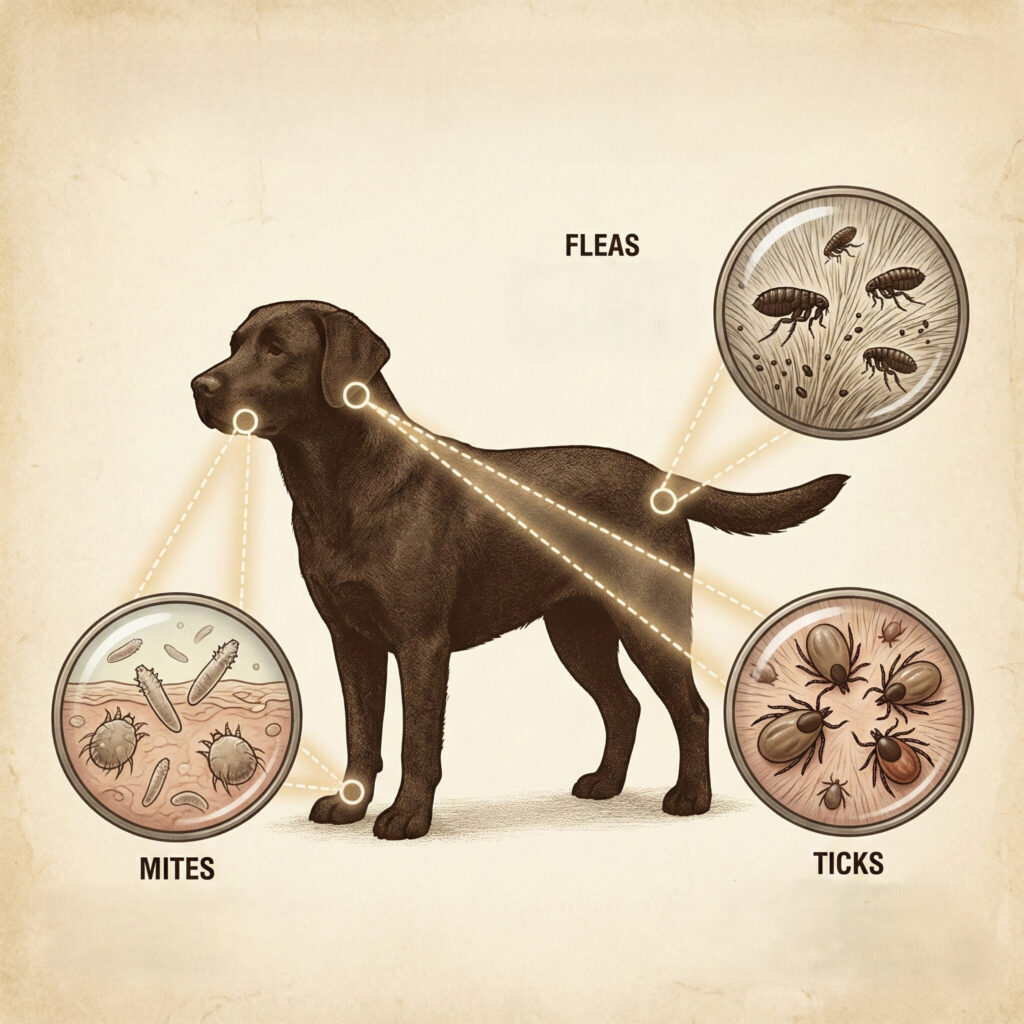
Fleas, ticks, and mites are the most common external parasites affecting dogs. Fleas are wingless insects that cause intense itching and can transmit tapeworms. Ticks are arachnids that latch onto skin to drink blood and are major carriers of diseases like Lyme disease. Mites are microscopic parasites that burrow into the skin or ears, causing mange and severe irritation. Prevention involves regular use of veterinary-approved topical creams, oral chews, or collars.
Summary Table: Parasites in Dogs
| Feature | Fleas | Ticks | Mites |
| Type | Insect (wingless) | Arachnid | Microscopic Arachnid |
| Primary Sign | Scratching, “flea dirt” | Visible bump on skin | Hair loss, crusty skin, head shaking |
| Visible to Eye? | Yes (tiny, dark, fast) | Yes (vary from poppy seed to grape size) | No (usually need a microscope) |
| Main Risks | Dermatitis, Tapeworms, Anemia | Lyme Disease, Ehrlichiosis, Anaplasmosis | Sarcoptic Mange (Scabies), Demodectic Mange |
| Seasonality | Year-round (thrive in warmth) | Spring to Fall (year-round in some areas) | Year-round |
Parasites in Dogs
External parasites are more than just a nuisance. They are a significant health threat to your dog and, in some cases, your human family.
While most dog owners know they should prevent bugs, understanding the specific behaviors of fleas, ticks, and mites can help you catch an infestation before it becomes a medical emergency.
This guide breaks down exactly what these pests are, the specific diseases they carry, and how you can get rid of them effectively.
Read Also: Signs of Arthritis in Dogs
Part 1: Fleas (Ctenocephalides felis)
Fleas are the most common external parasite found on dogs. They are tiny, copper-colored insects that move very quickly. They do not fly, but they have powerful back legs that allow them to jump great distances onto your pet.
The Flea Lifecycle
Understanding the lifecycle is critical because killing the adult fleas is only 5% of the battle.
- Eggs: Adult fleas lay eggs on your dog, which fall off into carpet, bedding, and grass.
- Larvae: These hatch from eggs and hide in dark crevices, feeding on organic debris.
- Pupae: The larvae spin a cocoon. They are extremely resistant to sprays in this stage and can wait months for a host.
- Adults: Once they sense heat or vibration, they emerge, jump on the dog, and feed immediately.
Signs Your Dog Has Fleas
You might not always see the bugs themselves. Look for these signs:
- Flea Allergy Dermatitis (FAD): This is the most common skin disease in dogs. It is an allergic reaction to flea saliva. Even one bite can cause massive itching.
- Flea Dirt: This looks like black pepper on the skin. If you wipe it with a wet paper towel and it turns reddish-brown, it is dried blood (flea poop).
- Pale Gums: In severe infestations, especially in puppies, fleas drink so much blood that the dog becomes anemic.
- Tapeworms: If your dog swallows a flea while chewing an itch, they can get tapeworms. You may see rice-like grains in their stool.
How to Treat and Prevent Fleas
- Oral Preventatives: Pills like Simparica, Bravecto, or NexGard kill fleas quickly by entering the dog’s bloodstream.
- Topical Treatments: Liquids like Frontline or Advantage are applied to the back of the neck.
- Environment Control: You must wash all bedding in hot water and vacuum thoroughly to remove eggs and larvae.
Part 2: Ticks
Ticks are not insects; they are arachnids, related to spiders and scorpions. They are dangerous because they are efficient vectors for disease.
Unlike fleas, which bite and move, ticks bury their mouthparts into the skin and stay attached for days to feed.
Common Types of Ticks
- Black-legged Tick (Deer Tick): Known for transmitting Lyme disease. They are very small, often the size of a poppy seed.
- American Dog Tick: larger and reddish-brown. They are known to carry Rocky Mountain Spotted Fever.
- Brown Dog Tick: These are unique because they can survive and breed indoors, infesting kennels and homes.
- Lone Star Tick: Identified by a white dot on the back. They are aggressive biters.
Tick-Borne Diseases
Ticks transfer pathogens directly into the dog’s bloodstream while feeding.
- Lyme Disease: Caused by the bacterium Borrelia burgdorferi. Symptoms include limping (shifting leg lameness), fever, and lethargy. It can cause kidney failure if untreated.
- Ehrlichiosis: Causes bleeding disorders, nose bleeds, and bruising.
- Anaplasmosis: Symptoms are similar to the flu, including joint pain and high fever.
- Tick Paralysis: Caused by a toxin in a female tick’s saliva. It causes a gradual paralysis starting at the legs. Removing the tick usually cures the dog instantly.
How to Remove a Tick Safely
If you find a tick, do not use rubbing alcohol, a hot match, or petroleum jelly. These methods can cause the tick to vomit toxins into the dog.
- Use fine-tipped tweezers.
- Grasp the tick close to the skin (by the head, not the body).
- Pull upward with steady, even pressure. Do not twist or jerk.
- Clean the area with antiseptic.
- Save the tick in a jar of alcohol in case your vet needs to identify it later.
Read Also: Can Dogs Eat Cookies?
Part 3: Mites (Mange)
Mites are microscopic parasites that live in the hair follicles or on the surface of the skin. An infestation of mites is generally called Mange. Unlike fleas and ticks, you usually cannot see mites without a microscope.
Sarcoptic Mange (Scabies)
- The Mite: Sarcoptes scabiei.
- Contagion: Highly contagious to other dogs and humans.
- Symptoms: Intense, frantic itching. The dog will scratch until they bleed. It usually starts on the ear flaps, elbows, and hocks (ankles).
- Diagnosis: The vet performs a “skin scrape” to look for mites under a microscope.
Demodectic Mange
- The Mite: Demodex canis.
- The Cause: These mites live naturally on most dogs in small numbers. They only become a problem if the dog’s immune system is weak (common in puppies) or suppressed.
- Contagion: Not contagious to other dogs or humans.
- Symptoms: Patches of hair loss, usually around the eyes and mouth, often without severe itching.
- Treatment: Often resolves on its own in puppies, but requires medication for adults.
Ear Mites
- The Mite: Otodectes cynotis.
- Location: Inside the ear canal.
- Symptoms: The dog shakes their head violently or scratches at the ears.
- Appearance: Inside the ear looks like it is filled with dark coffee grounds.
- Contagion: Very contagious between dogs and cats. If one pet has it, treat them all.
Part 4: Diagnosis and Veterinary Treatment
If your dog is itching, losing hair, or shaking their head, a vet visit is necessary. Home remedies often fail to kill the lifecycle of these parasites.
Diagnostic Tools
- Flea Combing: Using a fine-toothed comb to find fleas or dirt.
- Skin Scraping: Scaping the top layer of skin to find mites.
- Cytology: Examining skin cells under a microscope for secondary bacterial or yeast infections caused by the parasites.
- Blood Tests (4DX Snap Test): Screening for tick-borne diseases like Lyme, Ehrlichia, and Heartworm.
Modern Treatment Options
Veterinary medicine has advanced significantly. We moved away from messy sprays and powders to systemic treatments.
- Isoxazolines: This is a class of drugs (found in Bravecto, NexGard, Simparica) that are highly effective against both fleas and ticks. They work by overstimulating the nervous system of the parasite.
- Macrocyclic Lactones: Used often for heartworm prevention but also effective against some mites (ivermectin, moxidectin).
- Antibiotics/Antifungals: Often prescribed to treat the skin infections that result from the dog scratching themselves raw.
Read Also: Can Dogs Eat Biscuits?
Part 5: Prevention Strategy
The best treatment is prevention. It is cheaper and safer to prevent parasites than to treat the diseases they carry.
Year-Round Protection
Many owners make the mistake of stopping prevention in the winter. However, fleas can live indoors in warm houses, and ticks can be active any day the temperature is above freezing.
Choosing the Right Product
- Chewables: Great for dogs that swim often, as they won’t wash off.
- Collars: Effective (like the Seresto collar), but must be fitted tightly enough to touch the skin.
- Topicals: Good for dogs with sensitive stomachs, but you must separate the dog from children/cats until it dries.
Yard Maintenance
- Keep grass mowed short to reduce tick habitats.
- Remove leaf litter and brush piles.
- Prevent wildlife (deer, raccoons) from entering your yard, as they bring parasites with them.
Conclusion
Parasites are a formidable enemy, but they are manageable. By understanding the differences between fleas, ticks, and mites, you can spot the symptoms early. Remember that Fleas cause itching and tapeworms, Ticks transmit serious blood diseases, and Mites cause mange and ear infections.
Consult your veterinarian to find a prevention plan that fits your dog’s lifestyle. A monthly chewable or topical treatment is a small price to pay for a happy, itch-free, and healthy dog.