
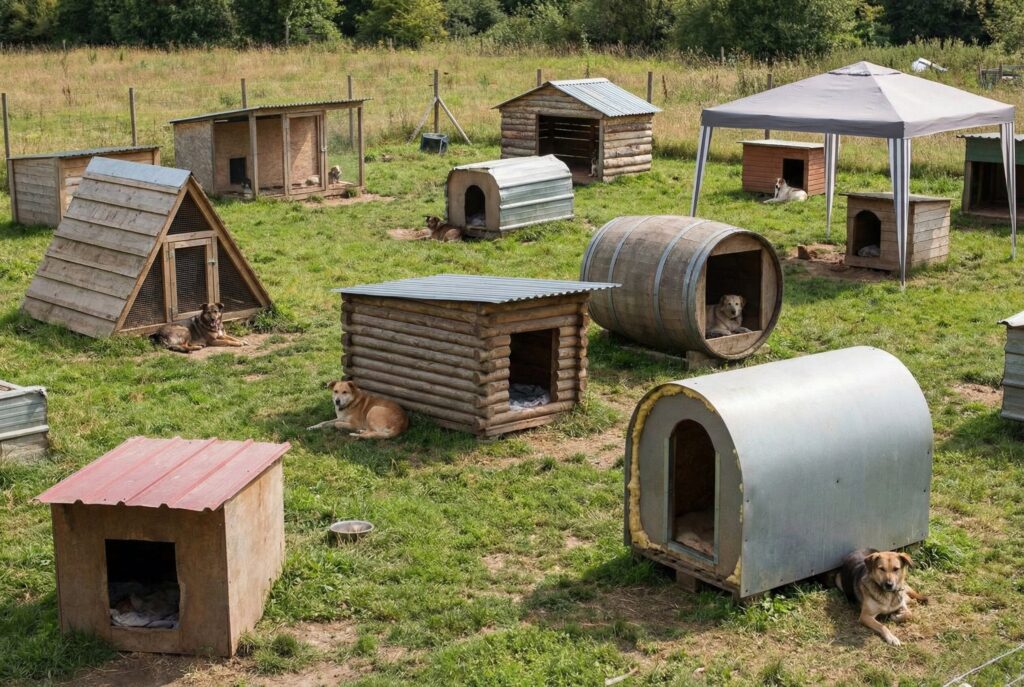
Creating a safe, comfortable, and weather-resistant outdoor dog shelter is one of the most important things you can do for your canine companion. Whether your dog spends all day outside working on a farm or just loves lounging in the backyard while you garden, they need a dedicated space to escape the elements. A good shelter protects dogs from extreme heat, freezing cold, heavy rain, and harsh winds.
This comprehensive guide covers everything you need to know about building or buying an outdoor dog shelter. We will explore the crucial factors to consider, detail over 10 unique dog shelter ideas, and break down the must-have features and maintenance routines that will keep your dog healthy and happy year-round.
Crucial Factors to Consider Before Choosing a Shelter
Before you start hammering nails or clicking “add to cart,” you need to evaluate your specific situation. Not every shelter works for every dog or every climate. Here are the primary factors you must consider to ensure the shelter meets your dog’s needs.
Dog Size and Breed
The size of the shelter is critical. A common mistake is getting a shelter that is too large. In cold weather, a dog relies on their own body heat to warm the interior of the house. If the ceiling is too high or the floor plan too wide, the heat will escape, leaving the dog cold.
- The Golden Rule of Sizing: Your dog should be able to walk in, stand up, turn around easily, and lie down comfortably. If they have extra feet of space in every direction, the shelter is too big.
- Breed Considerations: Breeds with thick double coats, like Huskies or Malamutes,s will need less insulation but excellent ventilation. Short-haired breeds like Beagles, Boxers, or Chihuahuas will need heavy insulation and perhaps a supplemental heat source if they are outside during winter.
Climate and Local Weather
Your local weather dictates the design and materials of the dog house.
- Hot Climates: Focus on shade, airflow, and elevation. You want to block the sun but allow cross-breezes to cool the interior.
- Cold Climates: Focus on insulation, windbreaks, and trapping heat. A door flap is mandatory, and the shelter should be positioned away from prevailing winds.
- Rainy Environments: Focus on elevation and roof pitch. The shelter must sit well off the ground to prevent water from seeping in, and the roof must have a steep angle to shed water quickly.
Shelter Location in Your Yard
Where you place the shelter is just as important as the shelter itself.
- Shade: Place the shelter under a large tree or next to a building that provides afternoon shade.
- Drainage: Never place a dog shelter at the bottom of a hill or in a dip in your yard where water pools after a rainstorm. Choose high ground.
- Wind Protection: Face the door of the shelter away from the direction of prevailing winter winds. Placing the shelter against the wall of your home or garage can provide an excellent windbreak.
12 Outdoor Dog Shelter Ideas
Here are 12 detailed outdoor dog shelter ideas, ranging from simple DIY projects to high-end canine real estate.
1. The Classic Wooden A-Frame Doghouse
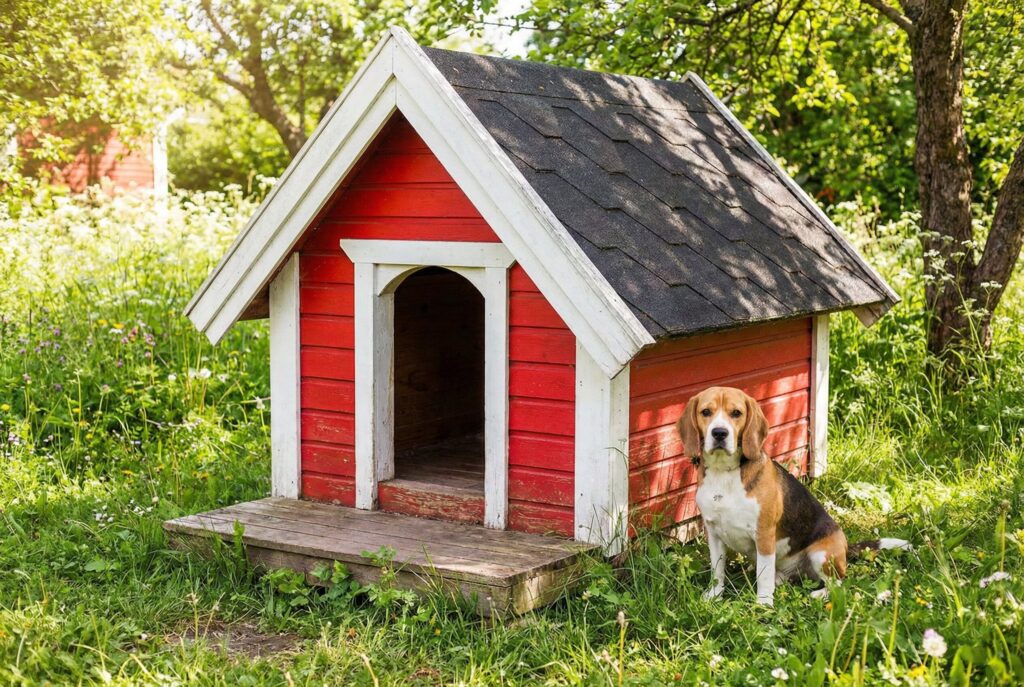
The A-frame doghouse is the traditional, iconic shelter for a reason. Its steeply pitched roof is excellent for shedding rain and snow, making it a great all-weather option. Wood is a natural insulator, and the simple design makes it an easy weekend DIY project for beginners.
- Best For: Moderate to rainy climates and medium-to-large dogs.
- Materials Needed: Plywood, 2×4 lumber for framing, asphalt shingles, roofing nails, exterior-grade paint.
- Pros: Easy to build, excellent water runoff, classic aesthetic that looks good in any yard.
- Cons: The high peaked ceiling can trap heat too far above the dog, making it less ideal for extreme cold unless a false ceiling is installed inside.
2. The Heavy-Duty Insulated Winter Cabin
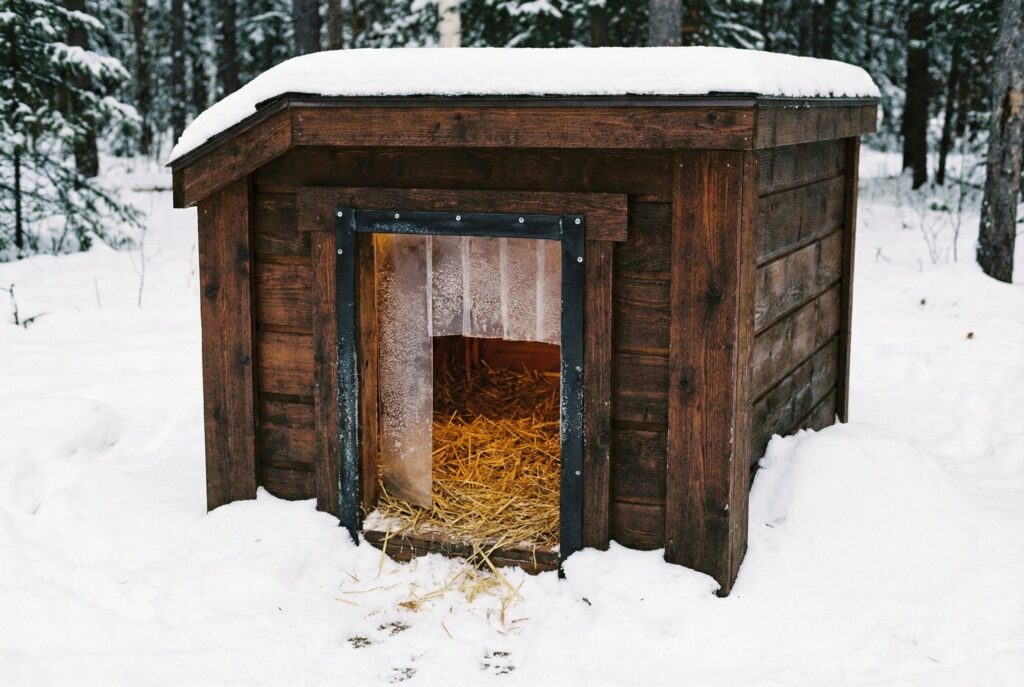
If you live in an area with harsh, freezing winters, an insulated cabin is non-negotiable. This shelter features double-walled construction. You build an inner box, frame it, pack the frame with rigid foam insulation, and then build an outer box to protect the foam.
- Best For: Freezing climates, snowy regions, and short-haired breeds.
- Materials Needed: Plywood (inner and outer walls), rigid foam insulation boards, 2x4s, waterproof roofing material, and heavy vinyl door flaps.
- Pros: Traps body heat exceptionally well, keeps dogs safe from hypothermia, highly durable.
- Cons: Heavy, difficult to move once built, and more expensive to construct due to the double materials.
3. The Breezy Summer Pavilion (Canopy Style)
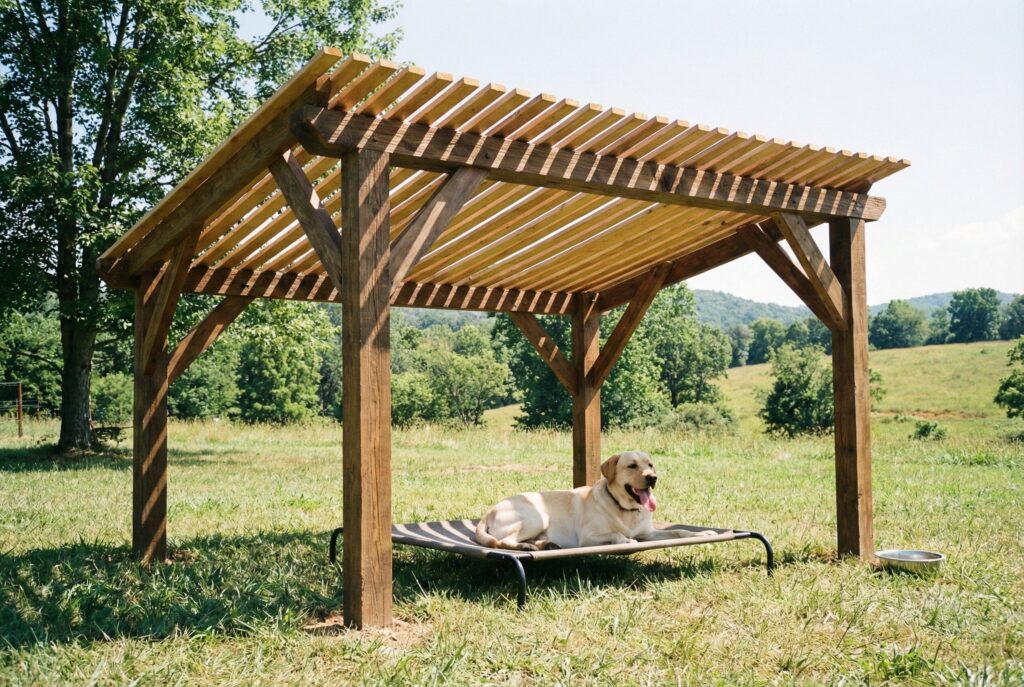
In hot, humid climates like Florida or Texas, a traditional enclosed doghouse can become an oven. The summer pavilion ditches the solid walls. It consists of a solid, waterproof roof supported by four posts, covering a raised platform. This provides permanent shade while allowing air to flow freely from all 360 degrees.
- Best For: Extremely hot climates where sun protection and airflow are the only concerns.
- Materials Needed: Treated 4×4 posts, roofing panels (metal or polycarbonate), and decking boards for the floor.
- Pros: Prevents heatstroke, maximum ventilation, easy to hose down and clean.
- Cons: Offers zero protection from cold weather or blowing rain.
4. The Eco-Friendly Pallet Shelter
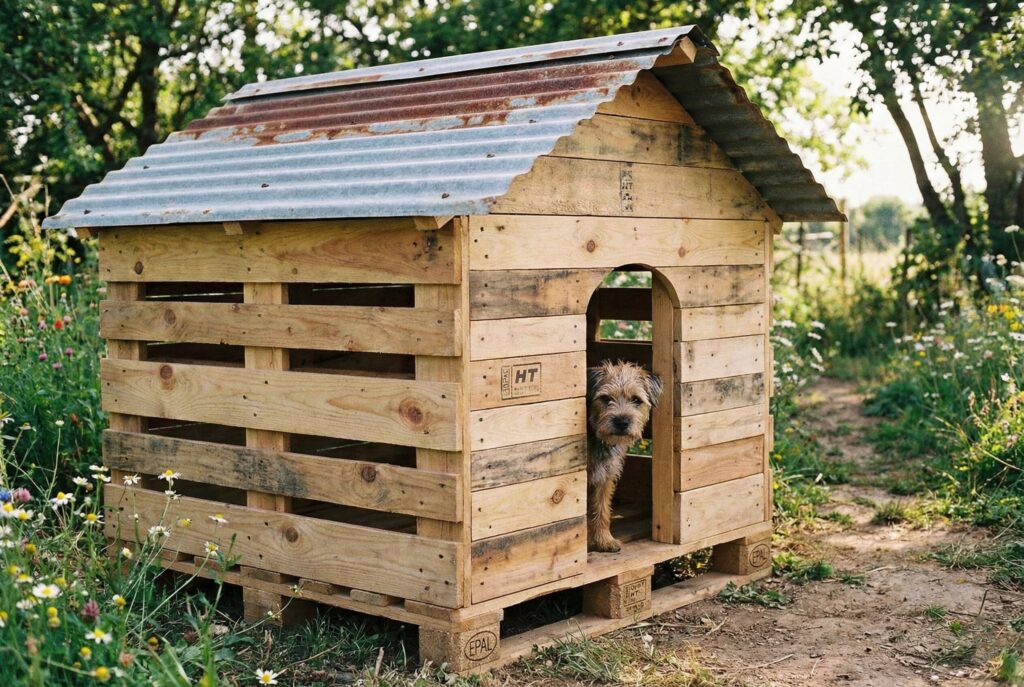
For the budget-conscious DIYer, wooden shipping pallets offer an abundant and often free source of lumber. You can break down the pallets and use the planks to build a sturdy, rustic-looking shelter. It is highly important to source pallets that are heat-treated (marked with an “HT”) rather than chemically treated, to ensure they are safe for your dog.
- Best For: Budget-conscious owners, DIY enthusiasts, and mild climates.
- Materials Needed: 4-5 heat-treated wood pallets, crowbar, sander, screws, roofing material.
- Pros: Extremely cost-effective, eco-friendly, highly customizable.
- Cons: Labor-intensive (breaking down pallets and sanding away splinters takes time), wood may warp over time if not sealed properly.
5. The Aerodynamic Plastic Igloo
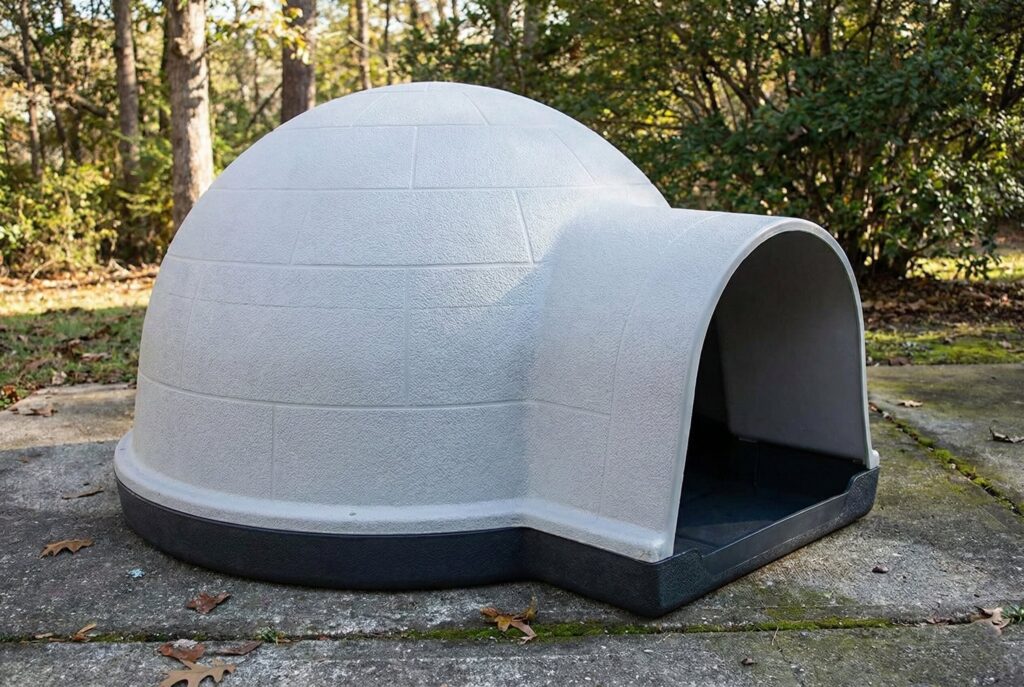
The plastic igloo doghouse is a staple at most pet supply stores. The dome shape is not just for looks; it is highly aerodynamic. Strong winds simply wrap around the curved exterior rather than pushing against a flat wall, which prevents drafts from entering. The extended tunnel entrance further protects the interior sleeping quarters from wind and rain.
- Best For: High-wind areas, wet climates, and owners who want a ready-made solution.
- Materials Needed: None (store-bought).
- Pros: Zero assembly required, rot-proof, easy to wash out with a hose, excellent wind resistance.
- Cons: Plastic can become brittle over the years of UV exposure, and poor air circulation in extreme heat.
6. The Double-Dog Duplex
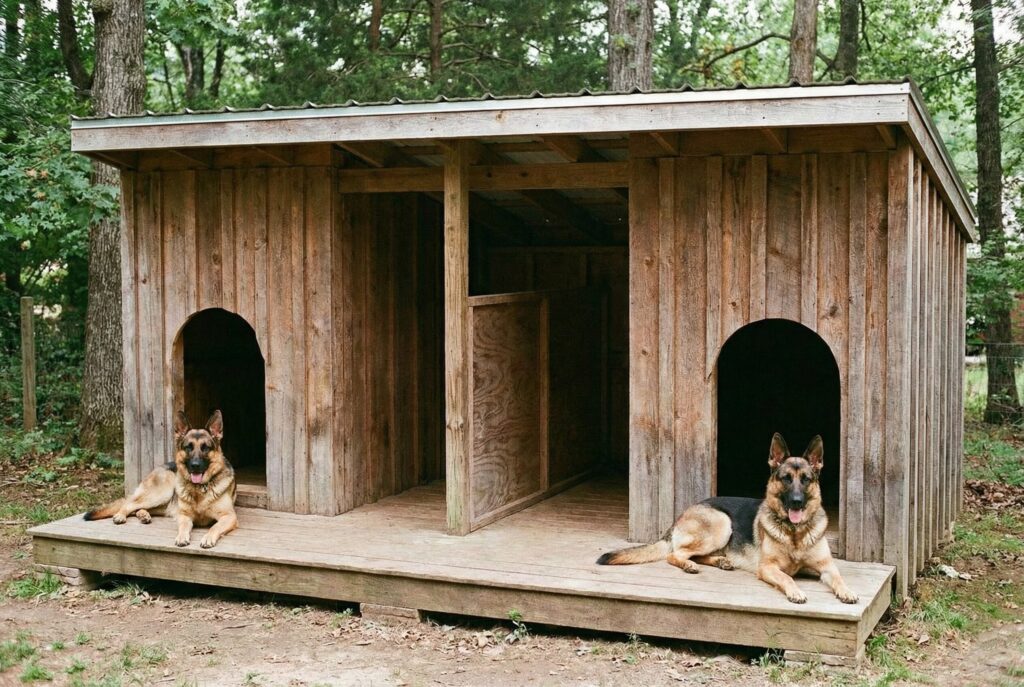
If you have two dogs that love spending time outside, a duplex is a fantastic space-saving solution. It is essentially one large, extra-wide doghouse divided by an internal partition wall. You can build the partition to go all the way to the ceiling for separate rooms, or leave a gap so the dogs can snuggle and share body heat while still having their own designated doors.
- Best For: Multi-dog households and bonded pairs.
- Materials Needed: Extra plywood, framing lumber, double the roofing materials, and hardware for a hinged roof (for easier cleaning).
- Pros: Saves yard space compared to two separate houses, allows dogs to be together, highly efficient.
- Cons: Very heavy, requires a large, flat footprint in the yard.
7. The Under-Deck Hideaway
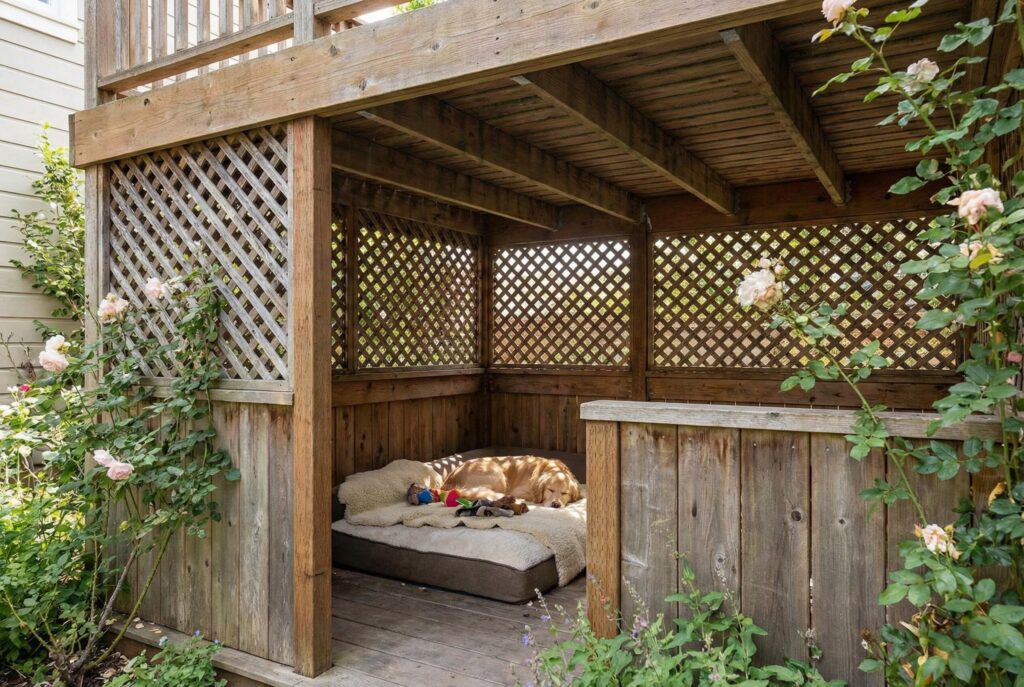
If your house has a raised deck, you have pre-existing real estate for a great dog shelter. By enclosing a section beneath the deck, you utilize space that would otherwise go to waste. You already have a roof (the deck itself), so you only need to build the walls and a raised floor. Ensure you install a waterproof under-deck drainage system above the doghouse so rain doesn’t drip through the deck boards onto the dog.
- Best For: Homes with raised decks, saving yard space.
- Materials Needed: Exterior siding, framing lumber, waterproof deck drainage panels, and insulation.
- Pros: Seamlessly integrates into your home’s architecture, saves space, and provides excellent shade.
- Cons: Requires modifying existing structures, and can be difficult to access for cleaning if the deck is low.
8. The Porch-Integrated Dog Bed & Shelter
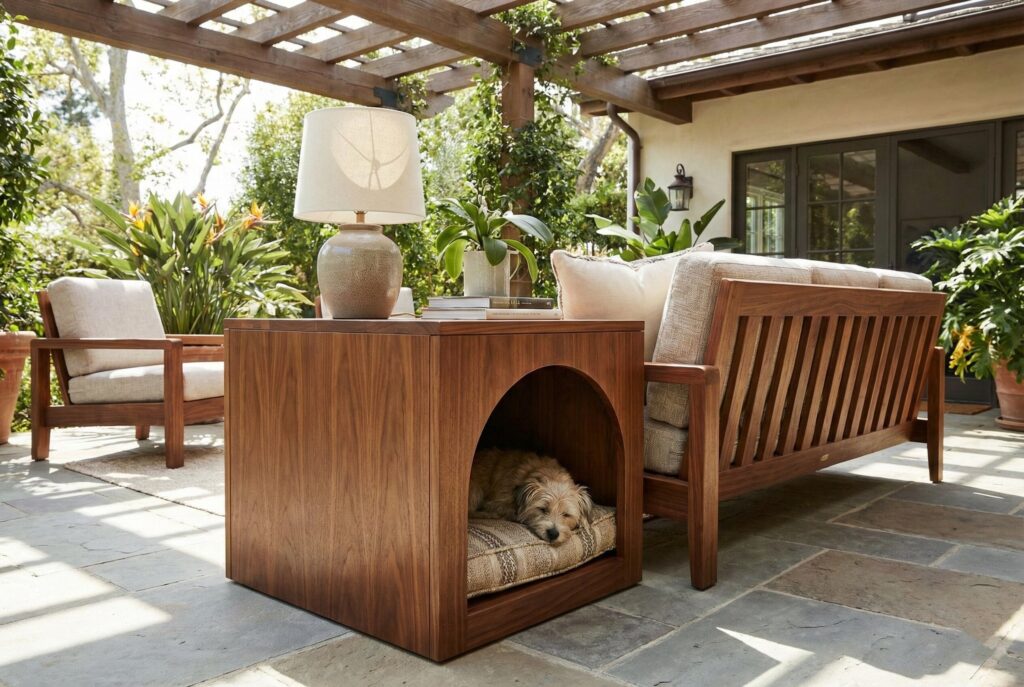
For dogs that prefer to stay close to the family, integrating a shelter into your covered porch or patio is ideal. This acts as a hybrid between indoor and outdoor living. You can build a sturdy wooden box that doubles as a coffee table or bench seating for humans on top, with a hollowed-out, cozy den for the dog underneath.
- Best For: Small to medium dogs, covered patios, and owners who want dual-purpose furniture.
- Materials Needed: Furniture-grade plywood, stain or paint, durable outdoor cushion.
- Pros: Looks beautiful, keeps the dog close to the family, totally protected from direct rain.
- Cons: Not suitable for deep yards or dogs that stray far from the house; requires a pre-existing covered porch.
9. The Repurposed Wine Barrel Shelter
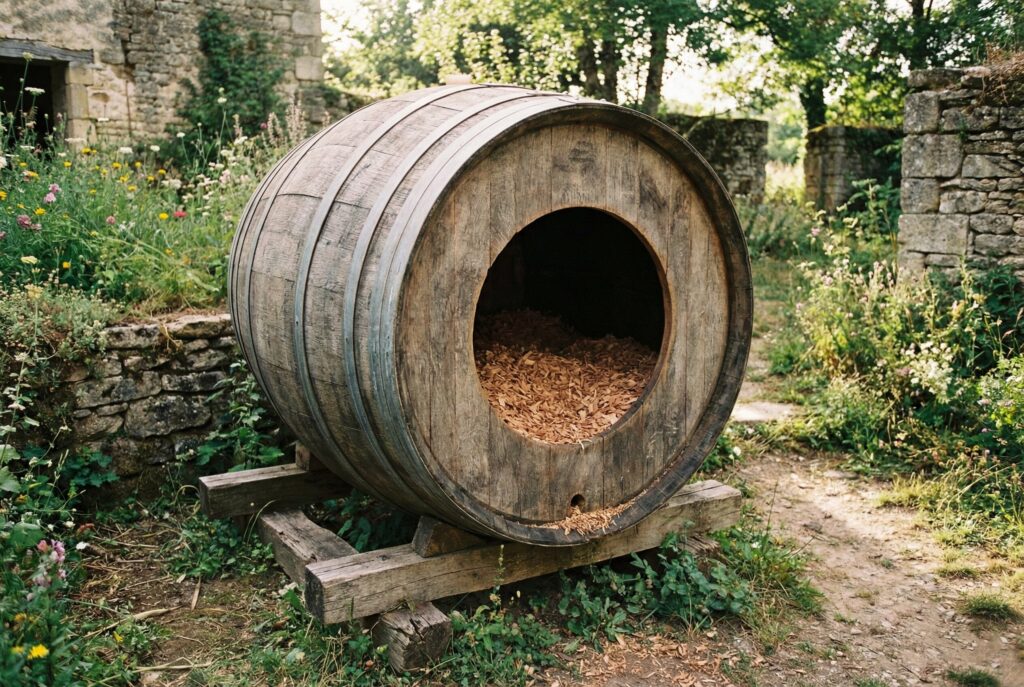
For a unique, rustic look that blends perfectly into a garden, a large repurposed oak wine barrel makes a fantastic shelter for small to medium dogs. The curved wood is incredibly durable and naturally weather-resistant. You simply need to clean the interior thoroughly, cut an entrance, and build wooden chocks to prevent the barrel from rolling.
- Best For: Small to medium breeds, rustic garden aesthetics, mild to moderate climates.
- Materials Needed: Clean, empty 59-gallon wine barrel, jigsaw, scrap wood for chocks, and waterproof sealant.
- Pros: Highly durable, visually striking, unique conversation piece.
- Cons: Interior space is limited by the barrel size, difficult to insulate properly for harsh winters.
10. The Luxury Miniature House
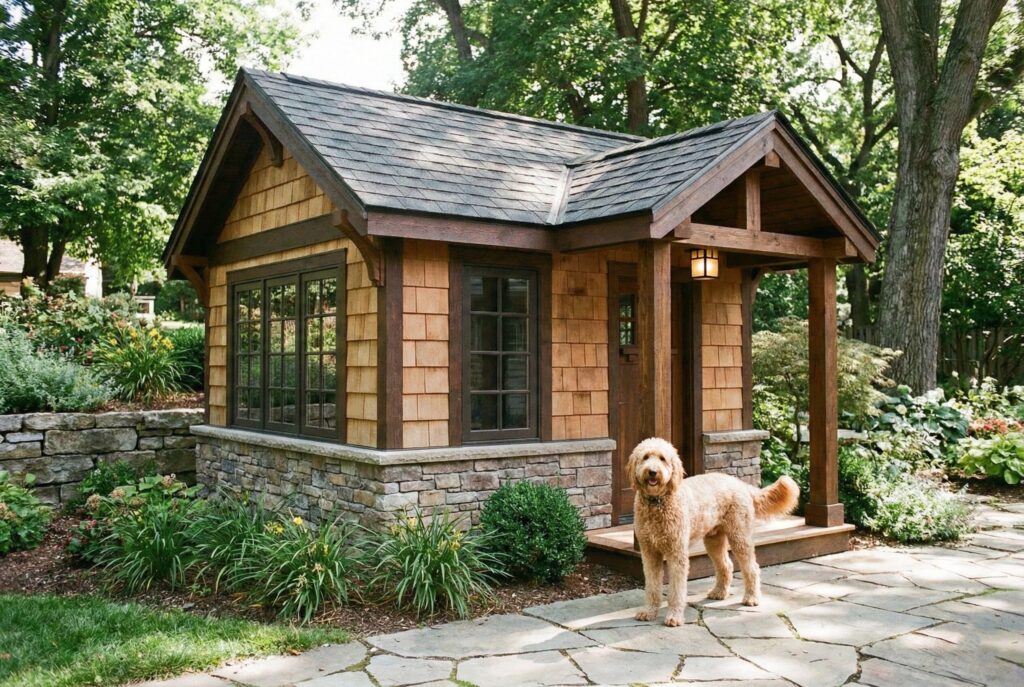
If budget is not a constraint and you want the absolute best for your dog, a custom-built miniature house is the way to go. These shelters can be designed to perfectly match the architectural style, siding color, and roof shingles of your primary residence. They often feature functioning windows for cross-ventilation, miniature porches, and even solar-powered fans.
- Best For: High budgets, matching home aesthetics, and owners wanting maximum features.
- Materials Needed: Premium siding, glass or plexiglass windows, miniature shingles, and house wrap.
- Pros: Unmatched visual appeal, can include premium features like electricity or fans, highly durable.
- Cons: Very expensive, requires advanced carpentry skills or hiring a professional builder.
11. The Portable Pop-Up Tent Shelter
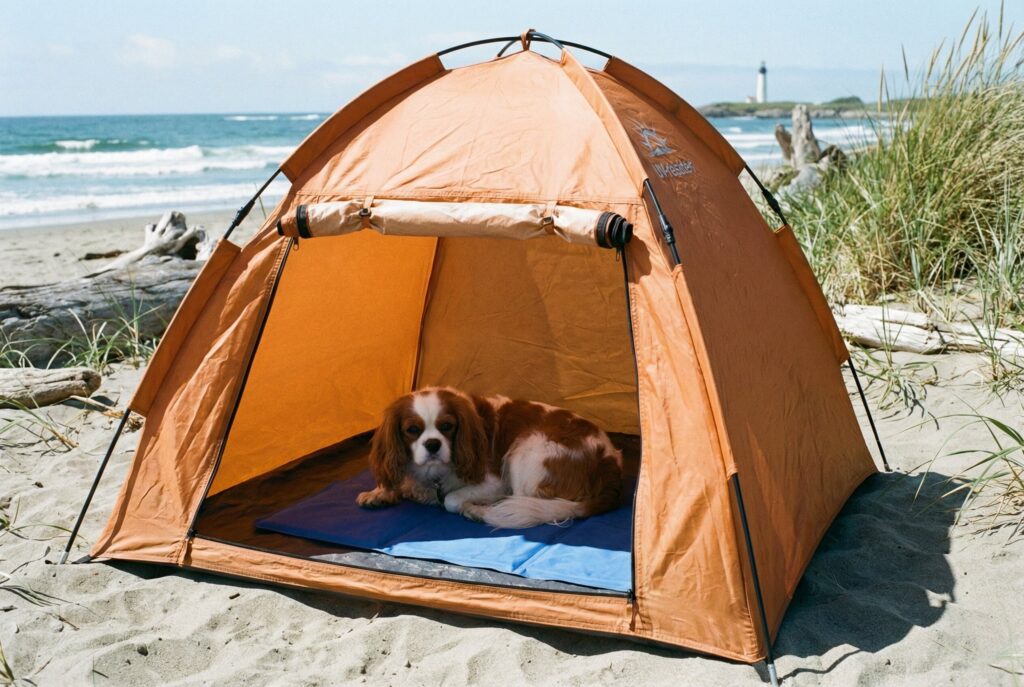
Not all outdoor shelters need to be permanent structures. If you take your dog camping, to the beach, or to weekend sporting events, a portable pop-up tent is essential. These are made from heavy-duty, UV-resistant nylon and use flexible fiberglass poles to pop into shape in seconds. They provide instant shade and a safe space in unfamiliar environments.
- Best For: Travel, camping, beach days, and temporary outdoor stints.
- Materials Needed: None (store-bought).
- Pros: Lightweight, highly portable, sets up in seconds, and affordable.
- Cons: Not suitable for long-term backyard use, provides no insulation, easily damaged by chewing.
12. The Elevated Cot with Canopy
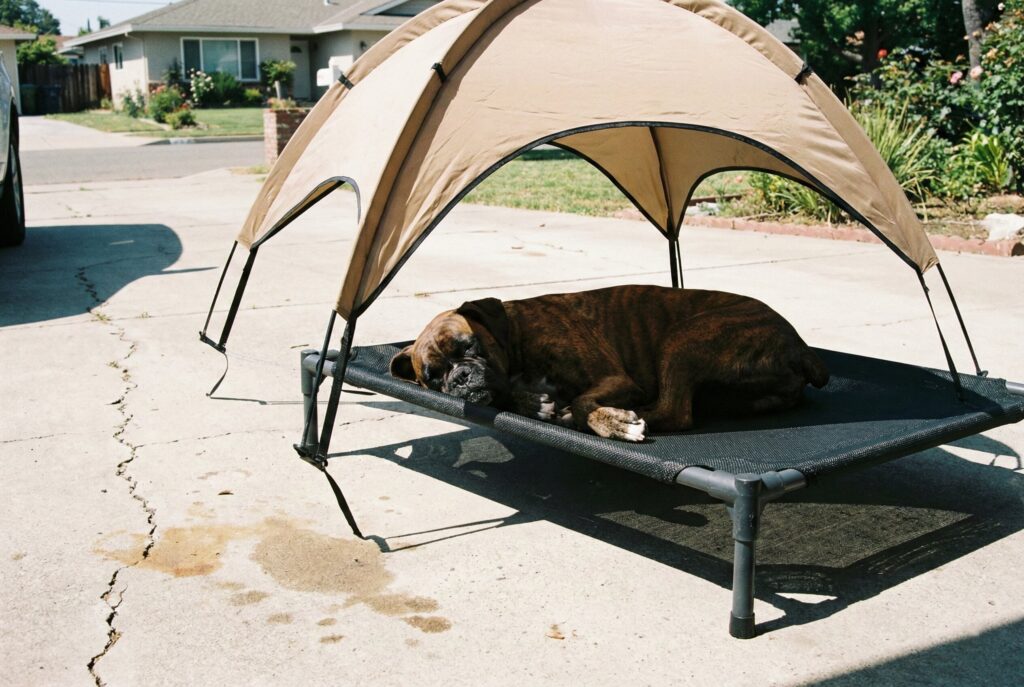
Sometimes a simple, functional approach is best for hot weather. This design combines a raised mesh cot with an attached overhead canopy. The raised bed keeps the dog off hot concrete or insect-filled grass, and the mesh allows air to circulate under the dog’s body, which is highly effective for cooling.
- Best For: Hot climates, patios, taking on RV trips.
- Materials Needed: None (store-bought).
- Pros: Excellent cooling properties, keeps dogs away from ticks and fleas in the grass, and very easy to clean.
- Cons: Offers no protection from cold, wind, or horizontal rain.
Must-Have Features for Every Outdoor Dog Shelter
Regardless of which idea you choose to build or buy, certain structural elements are non-negotiable for the health and safety of your dog. Ensure your final design incorporates the following features.
Elevated Flooring
Never place a doghouse floor directly on the bare earth. Ground soil holds moisture. If the wood touches the soil, it will rot quickly, and the cold, damp earth will suck the heat right out of the doghouse in the winter.
- How to do it: Raise the shelter at least 2 to 4 inches off the ground using treated 4×4 skids, cinder blocks, or a concrete foundation. This creates a buffer zone that prevents moisture wicking and keeps the floor much warmer.
Proper Insulation and Draft Protection
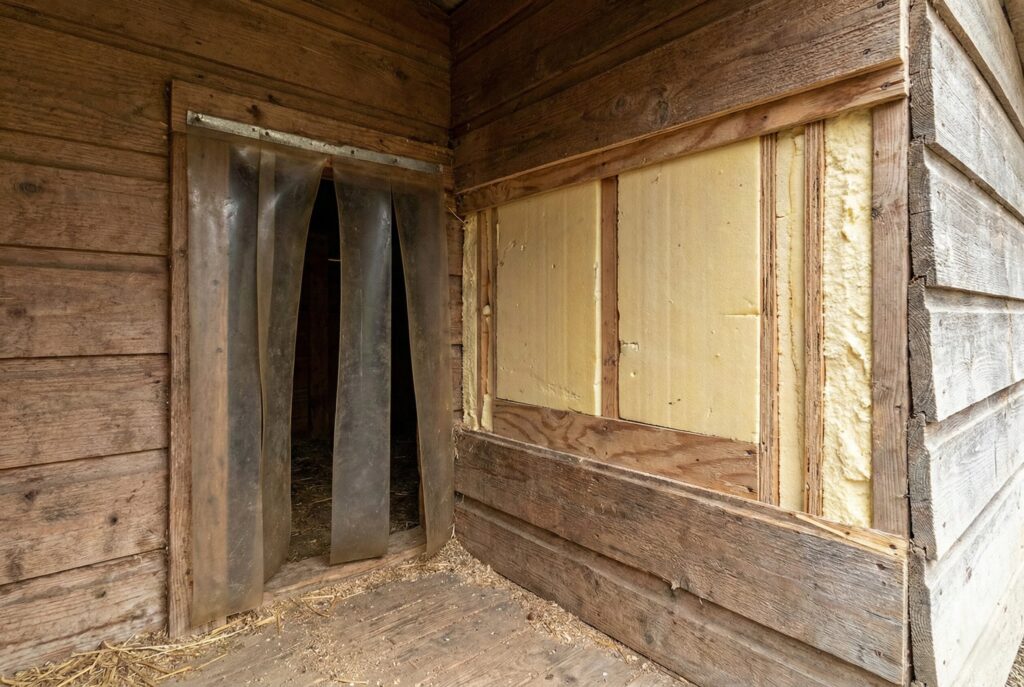
If your dog is outside when temperatures drop below 45°F (7°C), the shelter needs insulation.
- Walls: Use foam board insulation between the inner and outer walls. Fiberglass can be used, but it must be completely sealed so the dog cannot chew or inhale the dangerous fibers.
- The Door Flap: An open doorway defeats the purpose of an insulated house. Install heavy-duty vinyl flaps (like those used in industrial warehouse coolers) over the door. This allows the dog to pass easily but snaps back into place to block the wind.
- Offset Door: Instead of putting the door perfectly in the center of the wall, place it to the far left or right. This creates a distinct “sleeping corner” inside that is completely shielded from direct drafts blowing through the door.
The Right Bedding
What you put inside the shelter is critical. Do not use blankets, towels, or old pillows for outdoor shelters. Fabric absorbs moisture from the air and from the dog’s wet fur. In freezing temperatures, a wet blanket will freeze solid, increasing the risk of hypothermia.
- Straw (Not Hay): Straw is the gold standard for outdoor dog bedding. It is a hollow stalk that traps warm air perfectly and repels moisture. Hay, on the other hand, is animal feed; it retains moisture and will quickly mold.
- Cedar Shavings: High-quality wood shavings provide good insulation and have the added benefit of naturally repelling fleas and ticks.
- Heated Pads: For extreme cold, invest in an outdoor-rated, chew-proof heated pet mat. Ensure all electrical cords are encased in steel conduits to prevent electrocution from chewing.
Roof Accessibility and Ventilation
You will need to clean the inside of the shelter frequently. If you build a solid box, reaching into a small door to scrub the back corners is a nightmare.
- Hinged Roof: Build the roof on heavy-duty hinges so you can lift the entire top open like a treasure chest. This makes changing bedding and scrubbing the floor incredibly easy.
- Ventilation: In the summer, heat rises and traps against the ceiling. Drill a few small, angled holes near the roofline on opposite walls to allow hot air to escape and promote cross-ventilation. Cover the holes with metal mesh to keep insects out.
Maintenance and Cleaning Tips
Building the shelter is only half the job. To ensure it remains a safe haven, you must maintain it regularly. A neglected shelter can become a breeding ground for bacteria, mold, and parasites.
Weekly Maintenance
- Check the Bedding: Feel the straw or cedar shavings. If they feel damp, smell strongly of urine, or look crushed and flat, it is time to replace them. Fluff the straw weekly to maintain its insulating properties.
- Sweep it Out: Remove loose dirt, hair, and leaves that have tracked inside.
Monthly Maintenance
- Scrub the Interior: On a warm, sunny day, prop open the roof and scrub the walls and floor with a pet-safe cleaner. A mixture of equal parts water and white vinegar is excellent for neutralizing odors and killing bacteria safely. Allow the interior to dry completely in the sun before adding fresh bedding.
- Pest Control: Check the corners and ceiling for spider webs or wasp nests. Re-apply a light dusting of food-grade Diatomaceous Earth under the bedding to naturally kill fleas and ticks without harming the dog.
Annual Maintenance
- Structural Inspection: Before winter hits, inspect the roof for loose shingles or leaks. Check the floorboards for any signs of rot or splintering.
- Check the Door Flaps: Vinyl stiffens and cracks over time due to UV exposure and freezing temperatures. Replace torn or stiff flaps so they continue to block drafts effectively.
- Repaint and Seal: If you have a wooden doghouse, apply a fresh coat of non-toxic, exterior-grade waterproof sealant to the outside every year or two to prolong the life of the wood.
Conclusion
Providing a high-quality outdoor dog shelter is an act of love and responsibility. By carefully considering your dog’s size, your local climate, and the specific location in your yard, you can choose the perfect design from the ideas listed above.
Whether you construct a budget-friendly pallet house, invest in a heavy-duty insulated cabin, or opt for a breezy summer pavilion, the key is to prioritize elevation, insulation, and the right bedding. With proper construction and regular maintenance, your dog will have a safe, cozy, and comfortable outdoor retreat for years to come.