
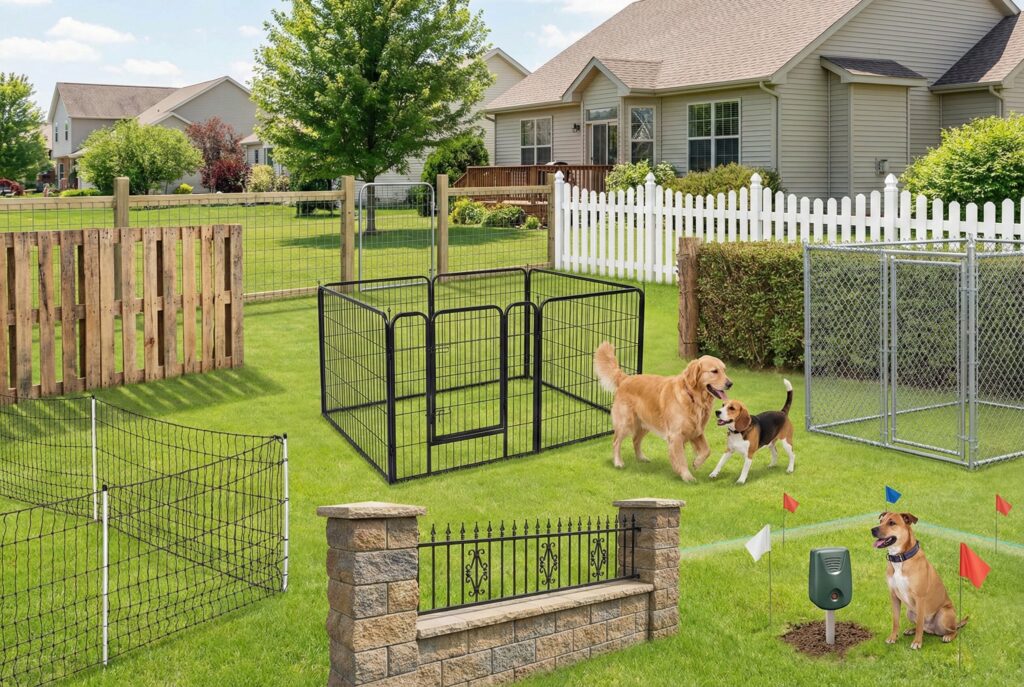
Keeping your dog safe is the most important job you have as a pet owner. A dog that escapes the yard faces many dangers, including busy roads, getting lost, or encounters with other animals. An unsecured yard also means you cannot relax while your dog is outside.
Finding the right containment solution can be challenging. Some dogs are content to stay near the house, while others are determined escape artists with high prey drives. Your budget, your DIY skills, and the look of your home also play a big role in your decision.
This guide provides a comprehensive look at over 13 different dog fence ideas. We cover everything from affordable DIY projects using simple materials to high-tech store-bought systems. We will help you find the perfect boundary to keep your furry friend secure and happy.
Important Factors to Consider Before You Choose
Before picking a fence style, you need to evaluate your specific situation. Not every fence works for every dog or every property. Considering these factors first will save you time and money later.
Your Dog’s Personality and Escape Style
Understanding how your dog tries to escape is crucial.
- The Jumper: Some breeds, like Huskies or German Shepherds, are athletic jumpers. For these dogs, fence height is the most important factor. You need a tall barrier, often six feet or higher.
- The Digger: Terriers and Beagles often try to go under a fence rather than over it. You will need a fence that is buried several inches into the ground or has an added “L-footer” barrier at the base.
- The Chewer: Large, powerful dogs can chew through weak materials like thin plastic netting or cheap wood. You need durable materials like chain link, welded wire, or heavy-duty vinyl.
- The Visual Reactor: If your dog barks at everything they see—squirrels, the mail carrier, other dogs—a privacy fence that blocks their view is often the best choice to reduce fence aggression and barking.
Your Budget
Fencing costs vary wildly. A DIY pallet fence might cost almost nothing if you source materials for free, while a professionally installed wrought iron fence can cost thousands of dollars. Determine how much you can realistically spend on materials and labor.
Homeowners Association (HOA) Rules and Local Zoning
Before building anything, check your local laws and HOA guidelines. Many neighborhoods have strict rules about fence height, materials, and placement. Some HOAs forbid front yard fences entirely or ban certain materials like chain link or chicken wire.
Terrain and Yard Size
A flat, small yard is easy to fence with almost any material. A large property with steep slopes, rocks, or heavy wooded areas requires more flexible fencing solutions, like welded wire on T-posts or an in-ground invisible fence system.
DIY Dog Fence Ideas (Do It Yourself)
These options are great for homeowners looking to save money on labor costs. They range from rustic looks to purely functional barriers.
1. Welded Wire Fencing with Wooden Posts
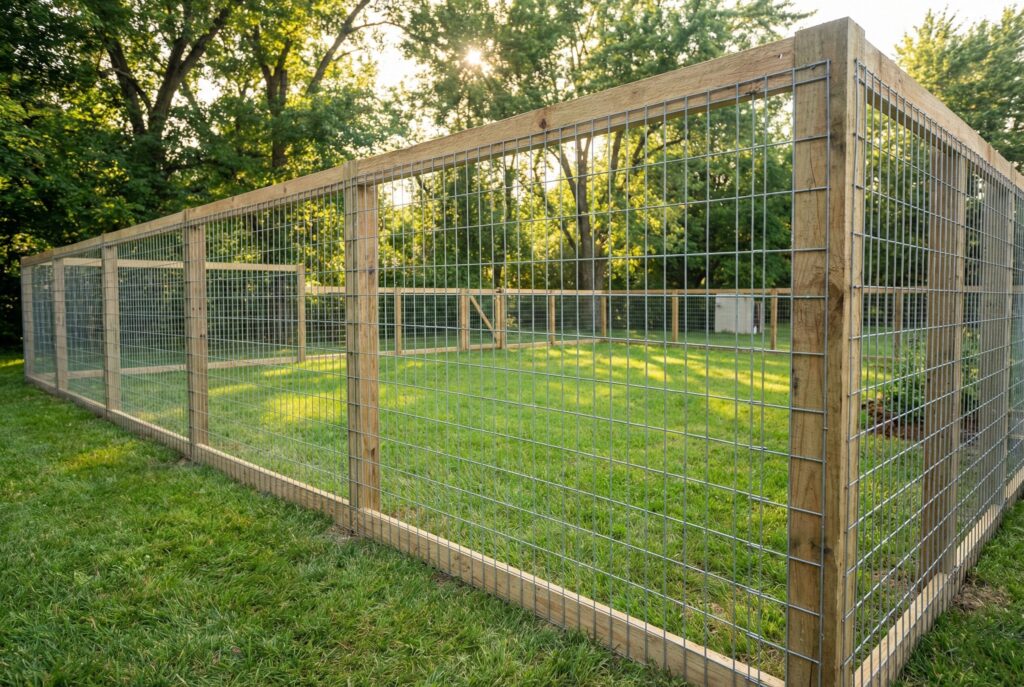
This is one of the most popular DIY options because it balances cost, effectiveness, and appearance. It is stronger than chicken wire and looks neater.
How it Works: You set pressure-treated wooden 4×4 posts into the ground with concrete. Then, you unroll heavy-gauge welded wire fencing and staple it securely to the posts.
- Materials Needed: Pressure-treated wood posts, bags of concrete, rolls of welded wire mesh (usually galvanized steel), heavy-duty staples, and a post-hole digger.
- Pros: Affordable; relatively easy to install; keeps most dogs in; durable against weather.
- Cons: Can look utilitarian; requires digging post holes; determined chewers might damage thinner wire gauges.
- Best For: Medium to large yards and dogs without severe chewing habits.
2. The Rustic Pallet Fence
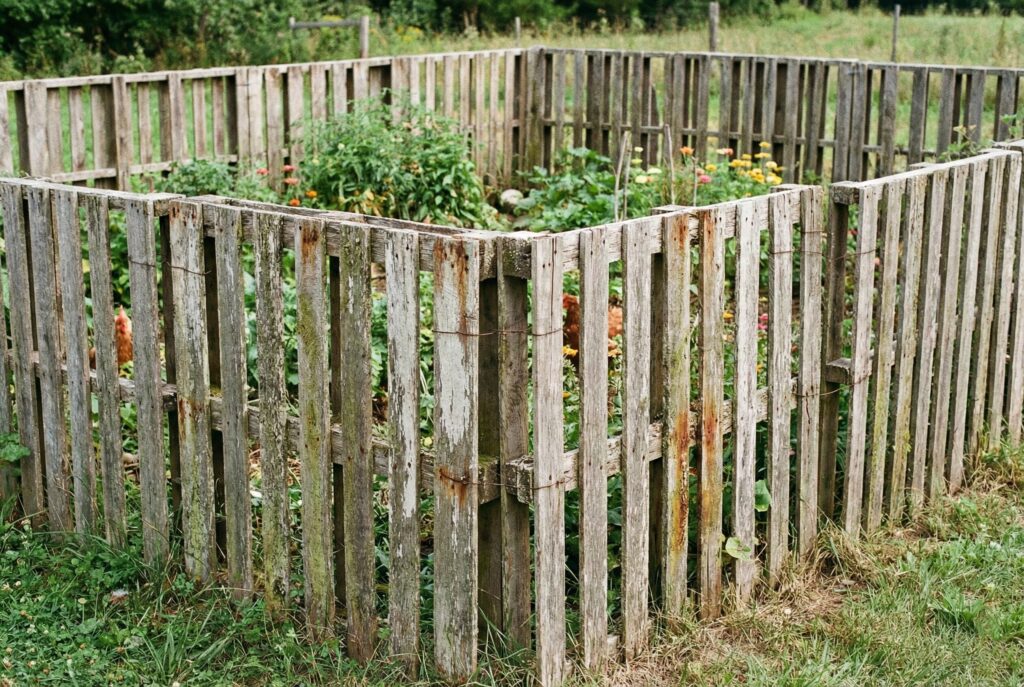
If you are on a very tight budget and like a rustic or farmhouse aesthetic, a pallet fence is a great option. It is highly customizable.
How it Works: You source wooden shipping pallets, often available for free or cheaply from local businesses. You stand them on end and join them together. For stability, you should drive metal T-posts or wooden stakes behind them and screw the pallets to the posts.
- Materials Needed: Wooden shipping pallets, metal T-posts or wooden stakes, long outdoor screws, a drill, and a sledgehammer.
- Pros: Extremely low cost; eco-friendly by recycling wood; unique rustic look; fairly quick to assemble.
- Cons: Labor-intensive to source enough good pallets; wood may rot quickly if not treated; height is limited by the pallet size; not suitable for large jumping dogs.
- Best For: Small yards, tight budgets, and owners who enjoy rustic DIY projects.
3. DIY Chain Link Fence
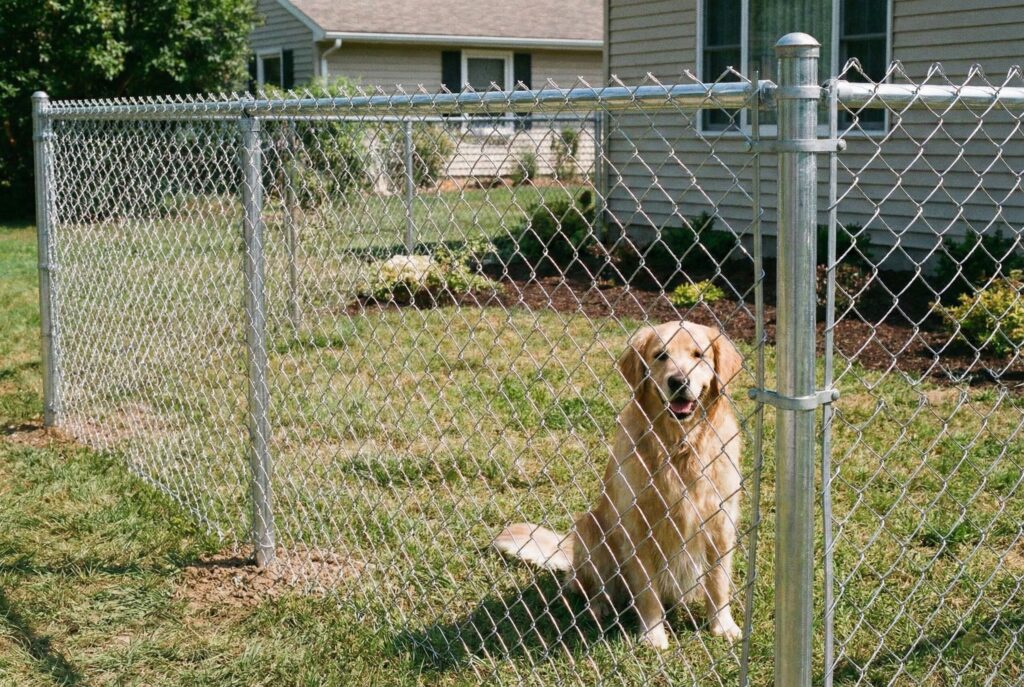
While often seen as a commercial option, you can buy chain link materials at big-box home improvement stores and install them yourself. It is very durable and requires little maintenance.
How it Works: This involves setting metal terminal posts in concrete, installing top rails, and then stretching the heavy steel wire mesh fabric tightly between the posts using tension bars.
- Materials Needed: Metal terminal posts, line posts, top rails, chain link fabric rolls, tension wire, concrete, and hardware ties.
- Pros: Extremely durable; chew-proof; low maintenance; lasts for decades; secure for most dog sizes.
- Cons: Installation is labor-intensive and requires specific tools for stretching wire; many people find the look unappealing; it does not provide privacy.
- Best For: Secure containment for determined chewers or large dogs where aesthetics are secondary to function.
4. Split Rail Fence with Wire Mesh Backing
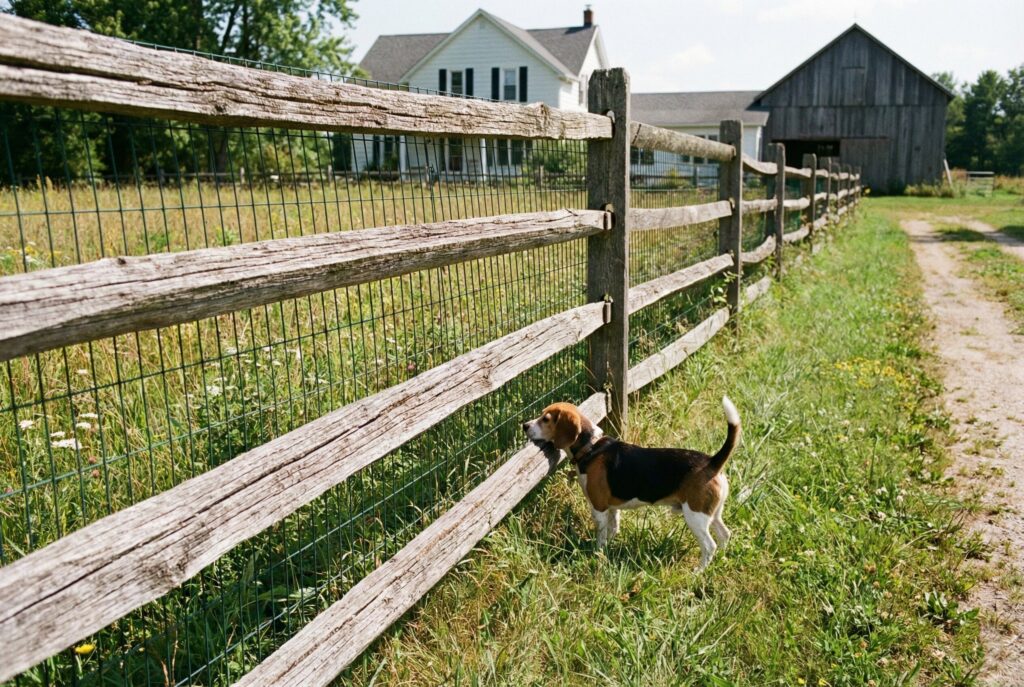
A split rail fence offers a beautiful country or ranch look, but the wide gaps between rails won’t hold a dog. Adding wire mesh makes it functional.
How it Works: Install a standard two or three-rail split rail wood fence. Once the wooden structure is up, unroll galvanized welded wire or hardware cloth and staple it to the inside of the fence (the side the dog is on).
- Materials Needed: Split rail cedar or pine posts and rails, rolls of galvanized wire mesh (usually dark-coated to blend in), staple gun.
- Pros: aesthetically pleasing; maintains an open view; acceptable in many HOAs; fairly easy to install the wire backing.
- Cons: More expensive than standard wire fencing due to the cost of the wood rails; wood will eventually need replacing; not suitable for very high jumpers.
- Best For: Homeowners who want a fence that looks good and provides moderate security.
5. Heavy-Duty Deer Netting (Temporary or Low-Prey Drive)
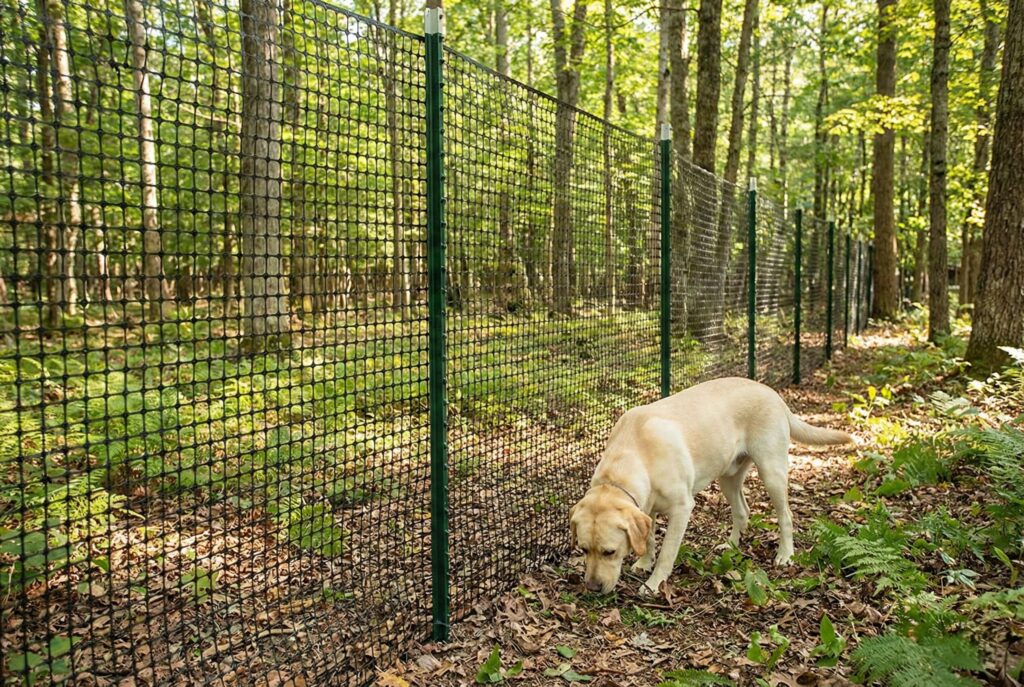
For a quick, inexpensive solution, heavy-duty polypropylene deer netting can work for certain dogs. This is not meant for aggressive dogs trying to break out.
How it Works: You drive metal T-posts or U-posts into the ground every few feet. You then zip-tie heavy-duty plastic mesh netting to the posts. A tension wire at the bottom helps keep it pegged to the ground.
- Materials Needed: Rolls of heavy-duty polypropylene deer fence, metal T-posts, heavy-duty zip ties, ground stakes, or bottom tension wire.
- Pros: Very inexpensive; nearly invisible from a distance; easiest DIY installation; great for large, irregular areas.
- Cons: Not secure for chewers or powerful dogs that crash into fences; wildlife can sometimes chew through it; degrades in sunlight over many years.
- Best For: Calm dogs with low prey drive, temporary containment, or fencing off very large wooded areas on a budget.
6. DIY Coyote Rollers (For Jumpers)
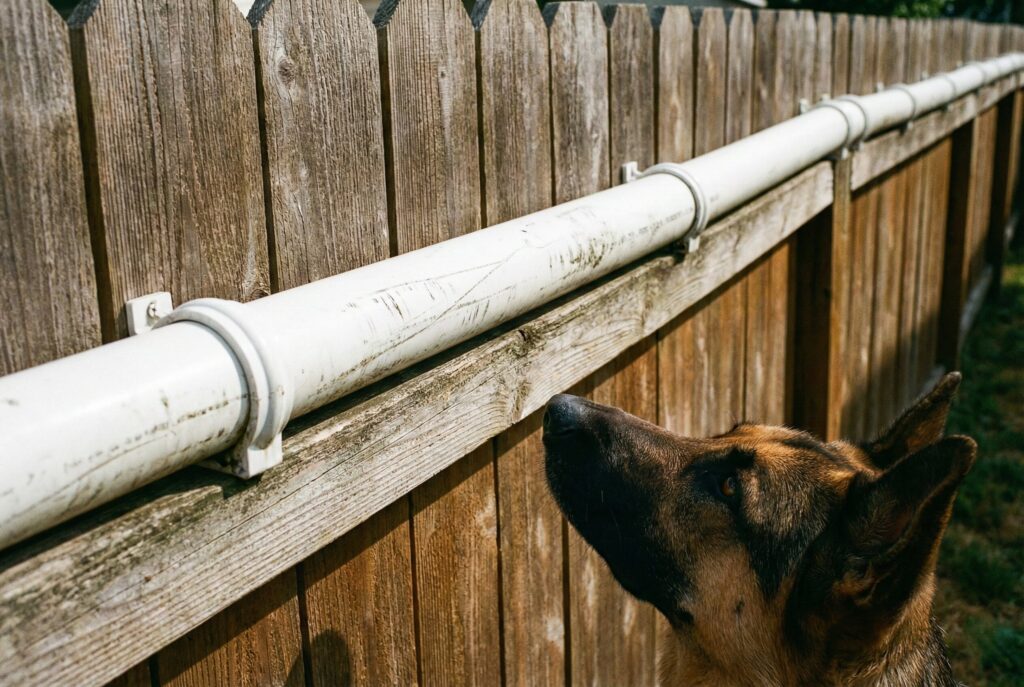
This isn’t a full fence, but an add-on for existing fences that dogs are jumping over. It prevents the dog from getting a grip on the top of the fence.
How it Works: You install brackets at the top of your existing fence. Through these brackets, you run PVC pipes over a metal cable or rod. When a dog jumps and grabs the top of the fence to pull themselves over, the PVC pipe spins, causing it to lose its grip and fall back into the yard.
- Materials Needed: PVC piping (usually 3-inch or 4-inch diameter), internal cable or metal conduit, mounting brackets, steel cable.
- Pros: Highly effective at stopping jumpers without having to build a taller fence; relatively cheap DIY project.
- Cons: Only solves jumping, not digging or chewing; adds an industrial look to the top of the fence.
- Best For: Yards with existing fences where the dog has learned to jump or climb over the top.
7. The “L-Footer” Anti-Dig Barrier
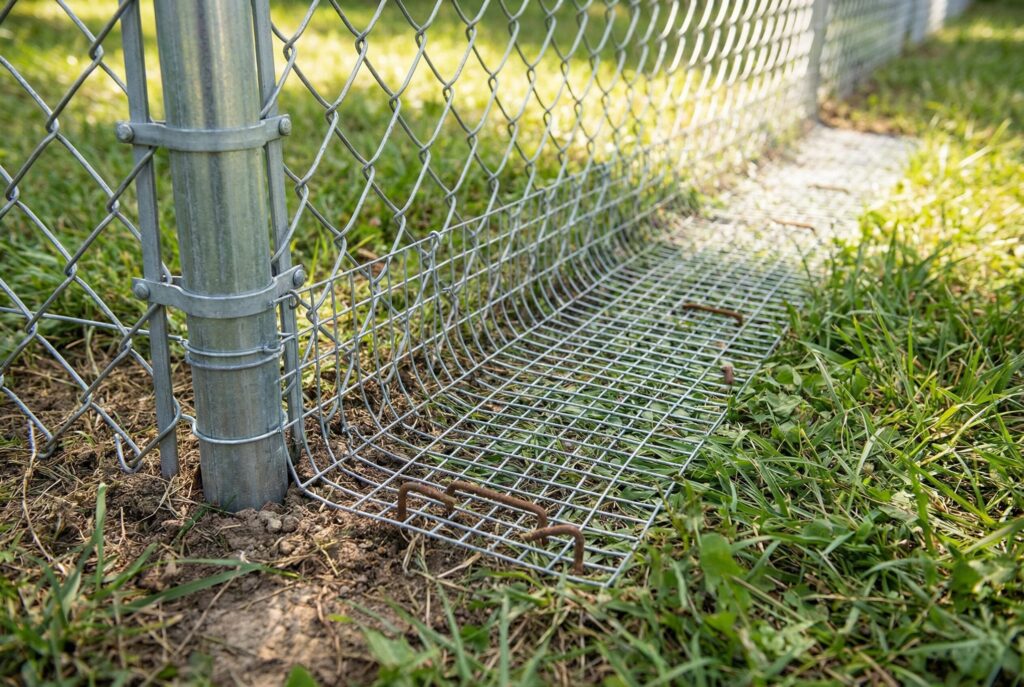
Like coyote rollers, this is an add-on specifically for dogs that dig under fences.
How it Works: You attach wire fencing to the bottom of your existing fence. You bend the wire at a 90-degree angle so it lies flat on the ground inside your yard, extending about two feet inward. You then use landscape staples to pin it to the ground. Grass will eventually grow through it, hiding the wire. When the dog tries to dig near the fence, they hit the wire mesh.
- Materials Needed: Rolls of welded wire or hardware cloth, wire cutters, heavy-duty landscape staples or tent pegs.
- Pros: The most effective way to stop diggers; relatively inexpensive; becomes invisible once grass grows.
- Cons: Requires labor to install along the entire fence line; makes mowing edging slightly more difficult initially.
- Best For: Any fenced yard containing a dog obsessed with digging under the boundary.
Store-Bought and Professionally Installed Solutions
If you have a higher budget and want a polished look, or if you need advanced technology, these store-bought options are excellent choices.
8. Solid Vinyl (PVC) Privacy Fence
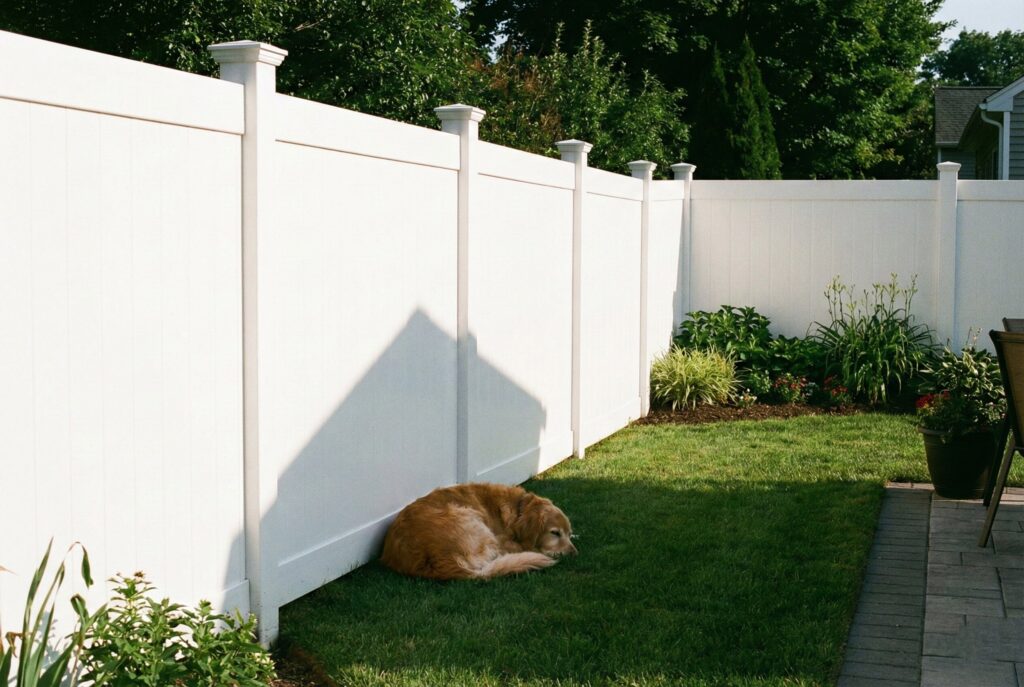
Vinyl fencing is a premium choice that offers complete privacy and security. It comes in panels that are professionally installed.
How it Works: Posts are set in concrete, and pre-fabricated vinyl panels slide between them. The panels are solid, with no gaps.
- Pros: Zero maintenance (no painting or staining required); totally blocks visual stimuli, reducing barking; durable and long-lasting; looks clean and modern; very difficult for dogs to climb.
- Cons: Expensive; can become brittle in extreme cold; vulnerable to high wind damage if not installed correctly.
- Best For: Homeowners who want low maintenance, high security, and privacy for reactive dogs.
9. Traditional Wood Picket or Privacy Fence
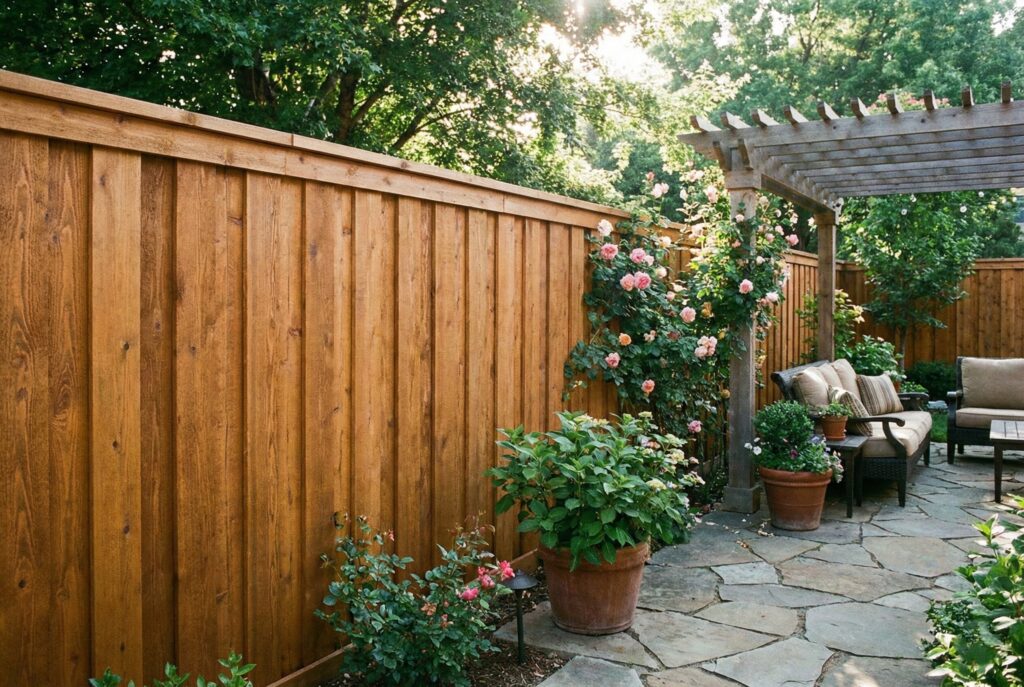
Wood is the classic fencing material. It can be built in many styles, from short picket fences for small dogs to tall, solid privacy fences.
How it Works: Usually installed by professionals using pressure-treated pine or cedar. Posts are set in concrete, followed by horizontal rails, and finally vertical pickets.
- Pros: Classic, beautiful aesthetic; highly customizable height and style; provides privacy (if built solid); strong physical barrier.
- Cons: Requires regular maintenance (staining, sealing, painting) to prevent rot; wood can warp over time; aggressive chewers can damage wood.
- Best For: Homeowners wanting a traditional look and solid physical containment.
10. Ornamental Aluminum or Steel Fence
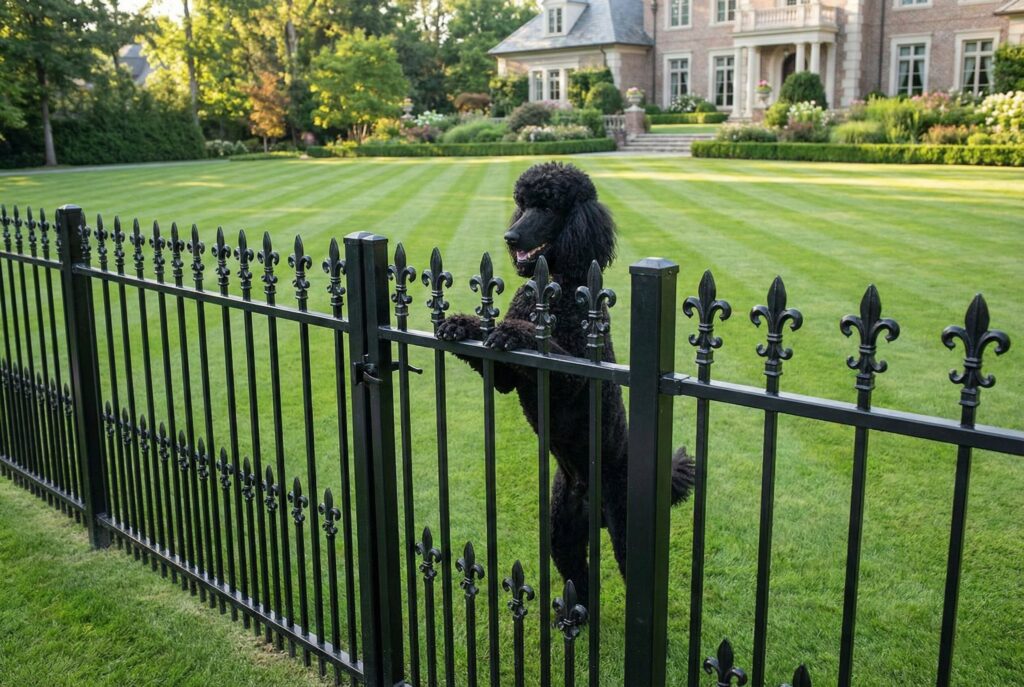
This option gives the high-end look of wrought iron without the rust and maintenance issues.
How it Works: Prefabricated metal panels are installed between metal posts set in concrete. The bars are vertical, usually spaced no more than 4 inches apart, so dogs cannot squeeze through.
- Pros: Elegant, high-end appearance; very durable and chew-proof; low maintenance (usually powder-coated); allows a view while providing security.
- Cons: Expensive; does not provide privacy; very small dogs might squeeze through standard bar spacing (check “puppy picket” options).
- Best For: Homeowners who want security without sacrificing views, and who have a higher budget.
11. Wired In-Ground Electric Fence (“Invisible Fence”)

This popular system uses technology rather than a physical barrier to keep dogs contained.
How it Works: You bury an insulated wire around the perimeter of your yard. This wire connects to a transmitter in your garage or house. Your dog wears a special receiver collar. When the dog approaches the buried wire, the collar emits a warning beep, followed by a static correction (shock) if they continue. You must train the dog to understand the boundaries using flags.
- Pros: Completely invisible, maintaining open views; often cheaper than installing a physical fence around a large property; can work on very difficult terrain.
- Cons: Does not keep other animals out of your yard; requires extensive training for the dog; not effective for highly driven dogs who will run through the shock; relies on batteries in the collar.
- Best For: Large properties, neighborhoods that ban physical fences, and dog owners committed to the training process.
12. Wireless GPS Dog Fence

This is the modern evolution of the invisible fence, using satellite technology instead of buried wires.
How it Works: You set a center point and a radius on a base unit or smartphone app to create a circular boundary. The dog wears a GPS-enabled collar. If the dog crosses the virtual GPS boundary, they receive a tone or static correction.
- Pros: No digging or burying wires required; portable, you can take it camping or to a vacation home; easy to set up.
- Cons: The boundary is usually a circle, which doesn’t fit most rectangular yards perfectly; GPS signals can glitch due to weather or tree cover, causing inconsistent corrections; requires collar charging.
- Best For: Renters who cannot bury wires, owners traveling with dogs, or properties with very large, open acreage.
13. Portable Metal Exercise Pen (X-Pen)
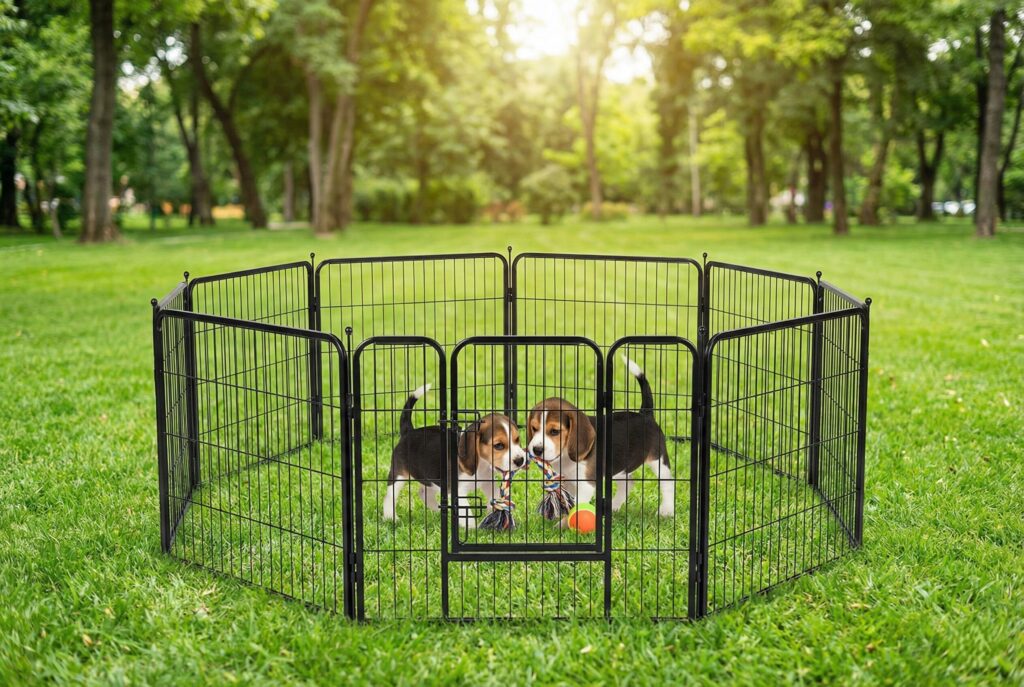
While not a permanent perimeter fence, exercise pens are vital tools for puppy owners or for creating temporary safe zones.
How it Works: These are hinged metal panels that fold out to create a small, enclosed polygon. They are free-standing.
- Pros: No installation required; portable and foldable for storage; great for puppies, small dogs, or separating dogs during events; relatively cheap.
- Cons: Only suitable for very small areas; larger dogs can easily jump over or knock them down; not a permanent solution for a whole yard.
- Best For: Puppies, small dogs, travel, or creating a temporary safe spot within a larger unfenced area.
Conclusion
Choosing the right dog fence is a balance between your dog’s needs, your budget, and your desired aesthetic. A determined Husky needs a tall physical barrier, while a reactive terrier might do best with a solid vinyl privacy fence.
For the budget-conscious DIYer, welded wire with wood posts offers a great blend of strength and value. For those wanting invisible solutions, modern GPS or in-ground wired fences provide technology-based containment, provided you commit to the training.
By assessing your dog’s escape tactics and your property’s layout, you can select one of these 13 ideas to create a secure sanctuary for your best friend.