
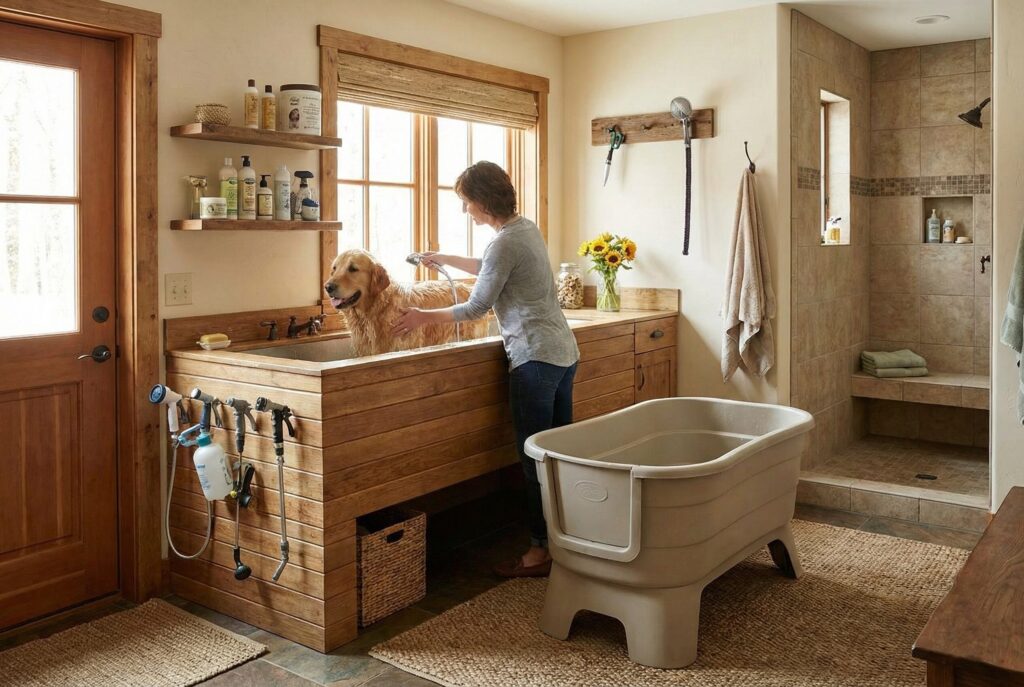
Every dog owner knows the struggle. It starts with a fun hike or a romp in the park, but it ends with a muddy, wet dog shaking dirty water all over your clean living room. If you are tired of wrestling your pup in the family bathtub or paying for expensive groomer visits just for a rinse, a dedicated dog bathing station is the ultimate home upgrade.
Whether you have a sprawling mudroom ready for a renovation or a small apartment needing a portable solution, this guide covers over ten distinct ideas. We will look at heavy-duty built-ins, clever DIY projects, and convenient store-bought tubs.
Why You Need a Dedicated Dog Wash Station
Before we jump into the specific ideas, it helps to understand why this feature is becoming so popular in modern homes.
- Back Health: Bending over a standard bathtub puts immense strain on your lower back. Elevated stations bring the dog to your level.
- Hygiene: You keep dog hair, mud, ticks, and bacteria out of the bathtub you use for yourself.
- Home Value: A well-designed pet washing station in a laundry room or mudroom is a highly desirable feature for homebuyers.
- Stress Reduction: Many dogs are terrified of slippery bathtubs. A station designed with non-slip mats and easy entry reduces anxiety for your pet.
Factors to Consider Before You Build or Buy
To get the best return on your investment, you need to plan your space.
Location
The best location depends on your climate and lifestyle.
- Mudroom: The gold standard. It catches the mess before the dog enters the main house.
- Garage: Great for heavy-duty messes, though you may need to add heating for winter washing.
- Laundry Room: Often easiest because plumbing lines (water supply and drain) are already accessible.
- Outdoors: Perfect for warm climates, but limited usability in winter.
Drainage
This is the most critical technical aspect. Dog fur clogs standard drains quickly.
- Filter: You must install a hair catcher or a mesh filter.
- Pipe Size: If building from scratch, a 2-inch drain pipe is better than the standard 1.5-inch to prevent slow draining.
Surface Material
You need durability. Avoid porous materials that trap odors.
- Ceramic or Porcelain Tile: Waterproof and easy to clean.
- Stainless Steel: Sterile and professional, though it can be loud.
- Fiberglass: Common in store-bought units; lightweight and durable.
The Ultimate List of Dog Bathing Stations
Below are over 10 different ways to set up your station, ranging from full construction projects to quick purchases.
1. The Luxury Tiled Mudroom Shower
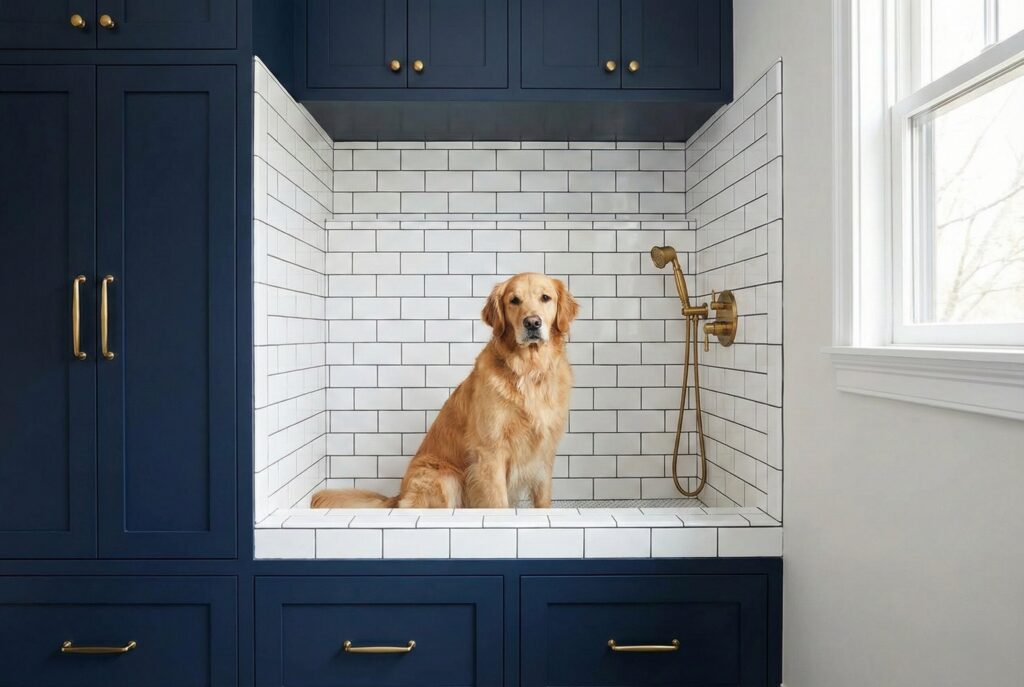
This is the most permanent and valuable option. It involves building a mini-shower specifically for your dog, usually recessed into a wall or corner of a mudroom. It functions exactly like a human shower but is sized for a canine.
Pros:
- Adds significant real estate value.
- Can be custom-sized for giant breeds (Great Danes, Mastiffs).
- Seamlessly blends with home decor.
Cons:
- Most expensive option (requires a contractor, plumber, and tiler).
- Permanent; you cannot move it.
Construction Tips:
Ensure the curb (the step-over barrier) is low enough for an older dog to step over but high enough (at least 4-6 inches) to hold back standing water. Use epoxy grout instead of standard grout. Epoxy is resistant to staining and does not absorb dog smells. Install a thermostatic mixing valve so you can set a maximum temperature to prevent scalding your pet.
2. The Elevated Utility Sink Conversion
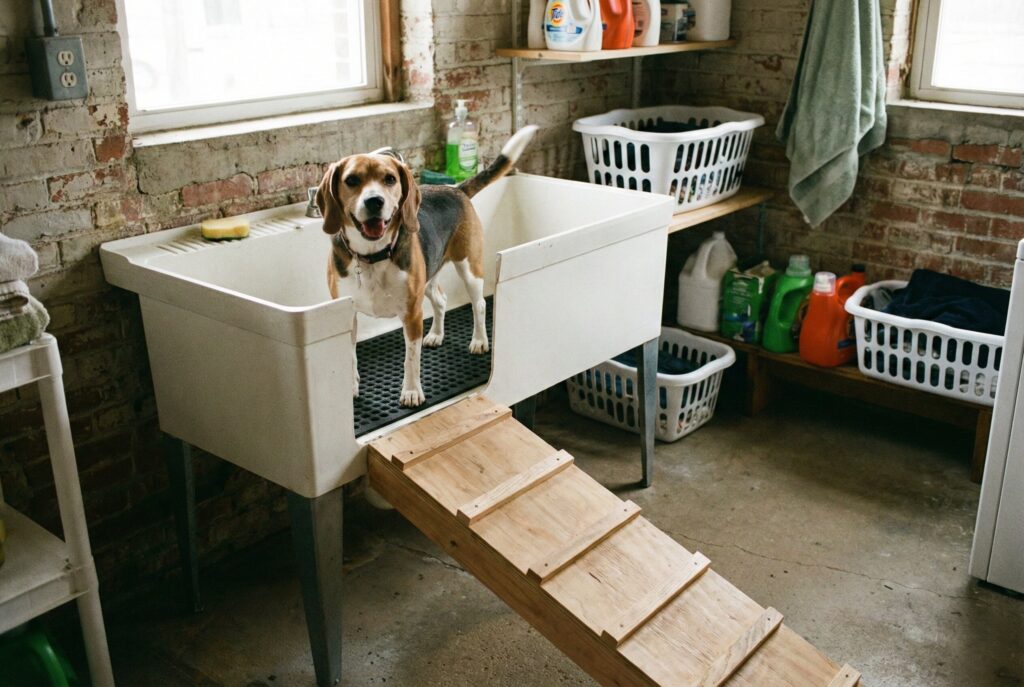
For small to medium dogs, a standard laundry utility sink is a perfect, budget-friendly DIY project. You do not need to build a custom shower; you just need to upgrade a deep sink.
Pros:
- Ergonomic height saves your back.
- Very affordable hardware.
- Easy plumbing hookup if replacing an existing sink.
Cons:
- Not suitable for large breeds.
- Can look “utilitarian” or messy if not dressed up.
How to DIY:
Purchase a deep basin plastic or stainless steel utility sink. Upgrade the faucet to a kitchen-style sprayer with a long hose. The most important addition is a custom-cut rubber mat for the bottom. Utility sinks are slippery plastic, and dogs will panic without traction. If the sink is high, build a simple wooden step stool or ramp so you do not have to lift the dog in every time.
3. The “Walk-In” Human Shower Hybrid
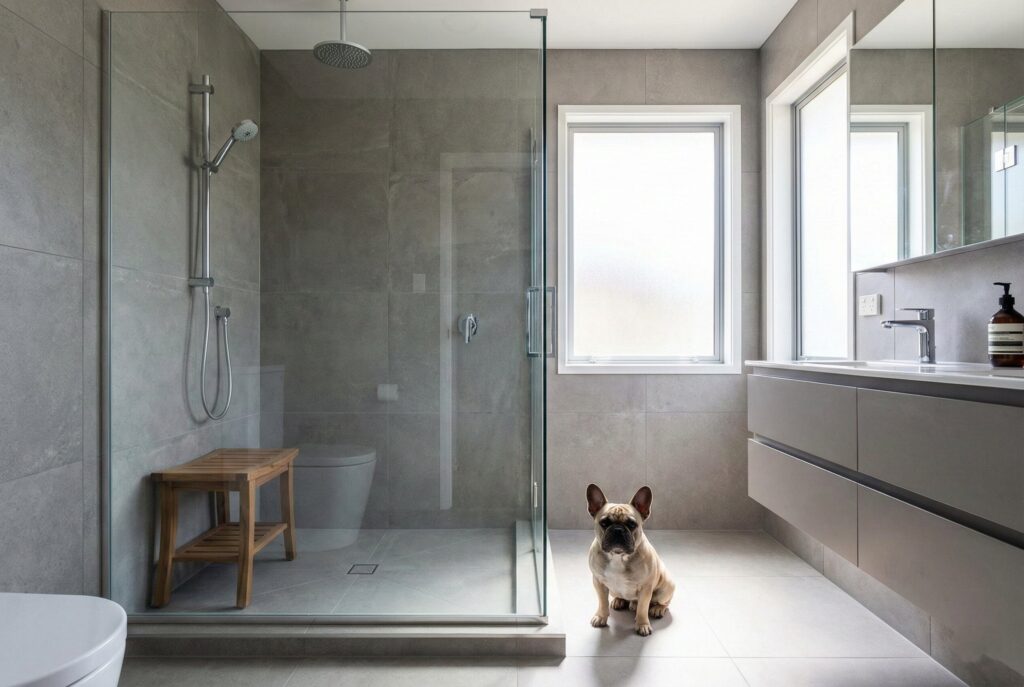
If you have a small bathroom, you might not have space for a separate dog tub. The solution is a “wet room” style shower that serves humans and dogs.
Pros:
- Space-saving efficiency.
- No extra plumbing lines needed.
- Modern, open aesthetic.
Cons:
- You share your bathing space with the dog (more cleaning required).
- Requires a handheld sprayer attachment.
Key Features:
Install a diverter valve on your shower head. This allows you to switch between the overhead rainfall head for you and a long-hose handheld sprayer for the dog. Ensure the glass enclosure has a wide enough door for a wet, shaking dog to exit without banging into the sides.
4. Professional Stainless Steel Grooming Tub
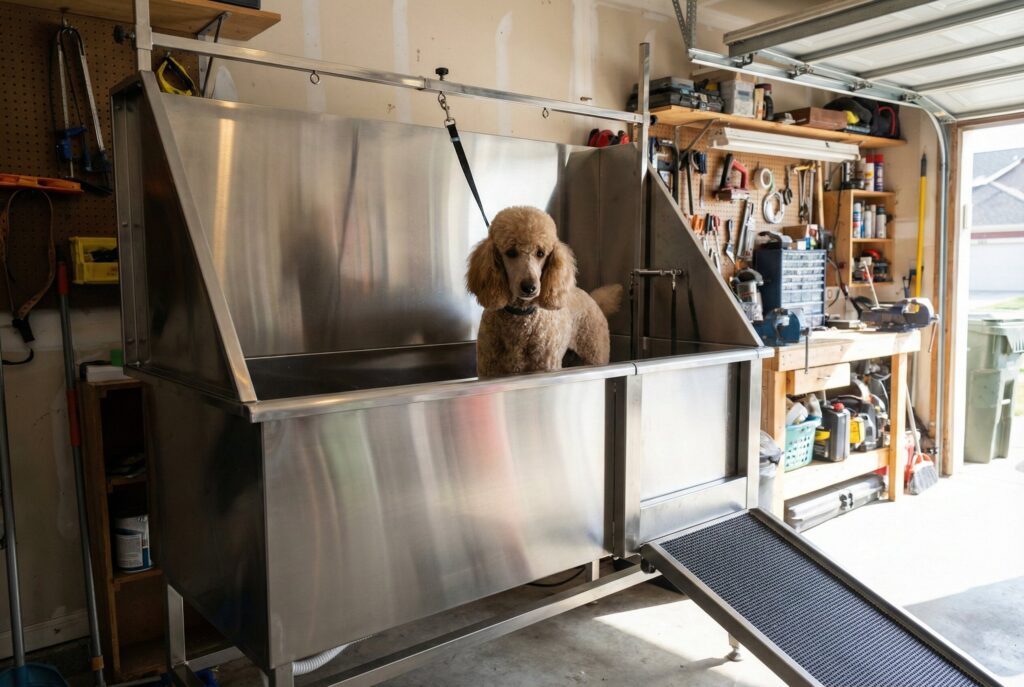
If function is your only priority, buy what the pros use. These are freestanding metal tubs with ramps, tie-downs, and high backsplashes.
Pros:
- Indestructible.
- Includes professional features like shampoo racks and leash loops.
- A watertight door prevents lifting heavy dogs.
Cons:
- An industrial look does not fit “cozy” homes.
- Expensive shipping due to weight.
- Can be noisy when water hits the metal (startling some dogs).
Installation:
These units usually come as a kit. You will need to assemble the legs and the ramp. The plumbing is standard, but the drain location might differ from residential tubs, so check your rough-in measurements. To dampen the sound, spray the underside of the tub with automotive rubberized undercoating.
5. The Garage Corner Wash Bay
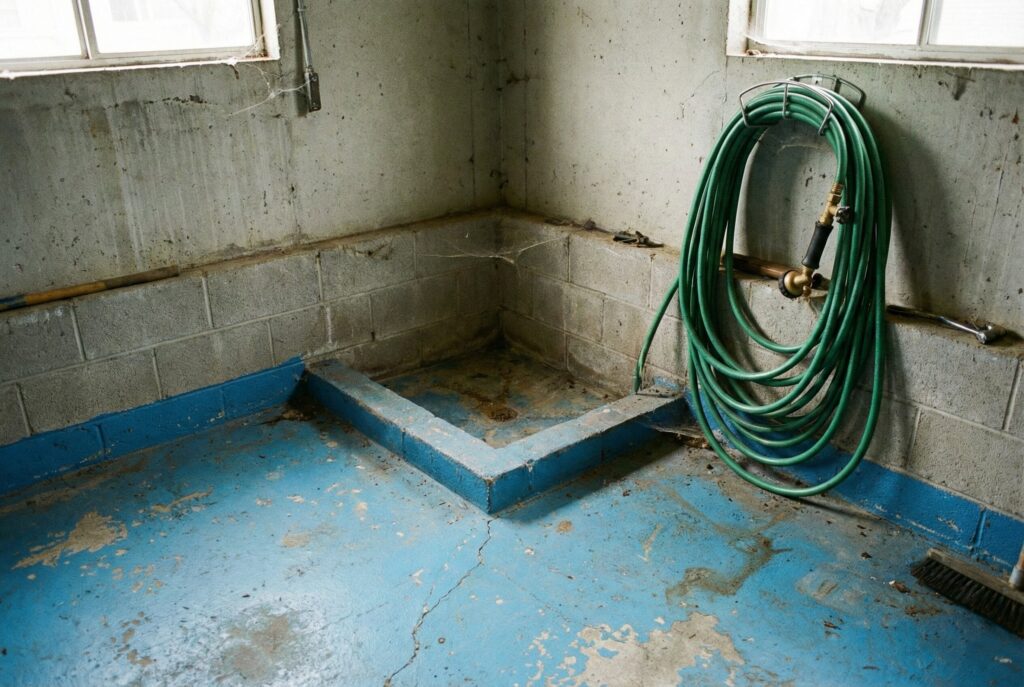
This is a robust DIY solution for muddy dogs. It utilizes the concrete floor of a garage, creating a dedicated wet zone without worrying about fancy tile work.
Pros:
- Keeps the mess completely out of the house.
- Very low cost to build.
- Great for very muddy, active dogs.
Cons:
- Garages are often cold in winter.
- Requires installing a floor drain if one does not exist.
DIY Steps:
Identify a corner of the garage near a water source. Build a low retaining wall (curb) using cinder blocks or poured concrete. Coat the floor and the blocks with a heavy-duty epoxy floor paint or a liquid rubber membrane to make it waterproof. Connect a hot/cold hose bib so you aren’t washing the dog with freezing water.
6. The Repurposed Vintage Bathtub
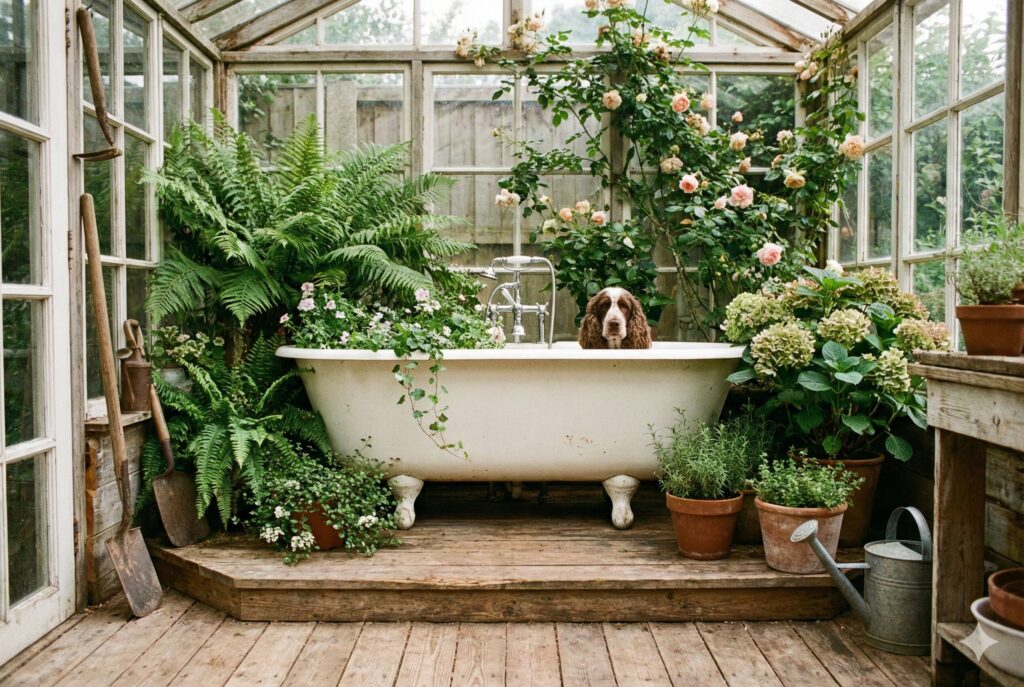
For those who love the farmhouse or vintage aesthetic, an old cast-iron clawfoot tub can be the centerpiece of a dog washing station.
Pros:
- Beautiful, unique aesthetic.
- Deep sides contain water spray.
- Cast iron is extremely durable.
Cons:
- Very heavy; requires reinforced flooring.
- Porcelain can chip over time.
- High sides make it hard for dogs to jump in.
Restoration and Setup:
Find a used tub at a salvage yard. Refinish the interior if the porcelain is rough (rough surfaces hold bacteria). Because the sides are high, you almost certainly need to build a sturdy set of stairs leading up to the rim. Install a “deck mount” faucet with a handheld sprayer attachment.
7. The Portable Folding Dog Tub
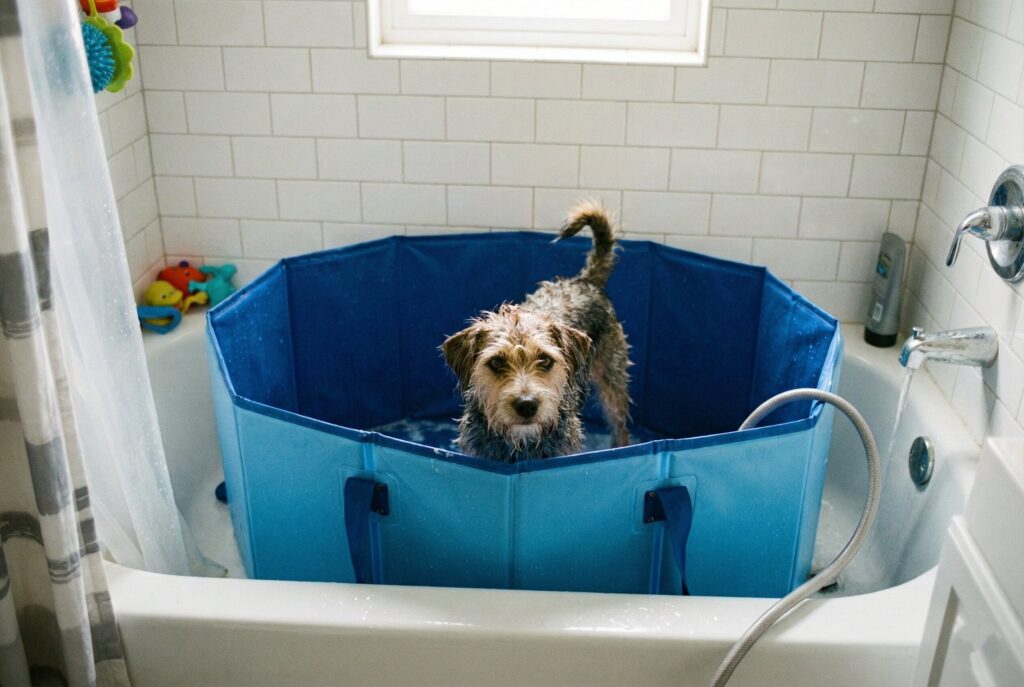
This is the ideal solution for renters, apartment dwellers, or those on a strict budget. These are collapsible PVC or plastic tubs that can be set up inside a human bathtub or outside.
Pros:
- No installation required.
- Folds away flat for storage.
- Cheapest option ($50 – $150).
Cons:
- Not durable for long-term daily use.
- Draining can be slow if the hose isn’t positioned right.
- Usually only fits small to medium dogs.
How it Works:
You place the portable tub inside your bathtub or shower stall. You connect the tub’s drain hose to your floor drain. This raises the dog up slightly and contains the hair within the portable tub, saving your plumbing. When finished, you wipe it dry, fold the legs, and slide it under a bed.
8. The “Booster Bath” (Store-Bought Plastic Station)
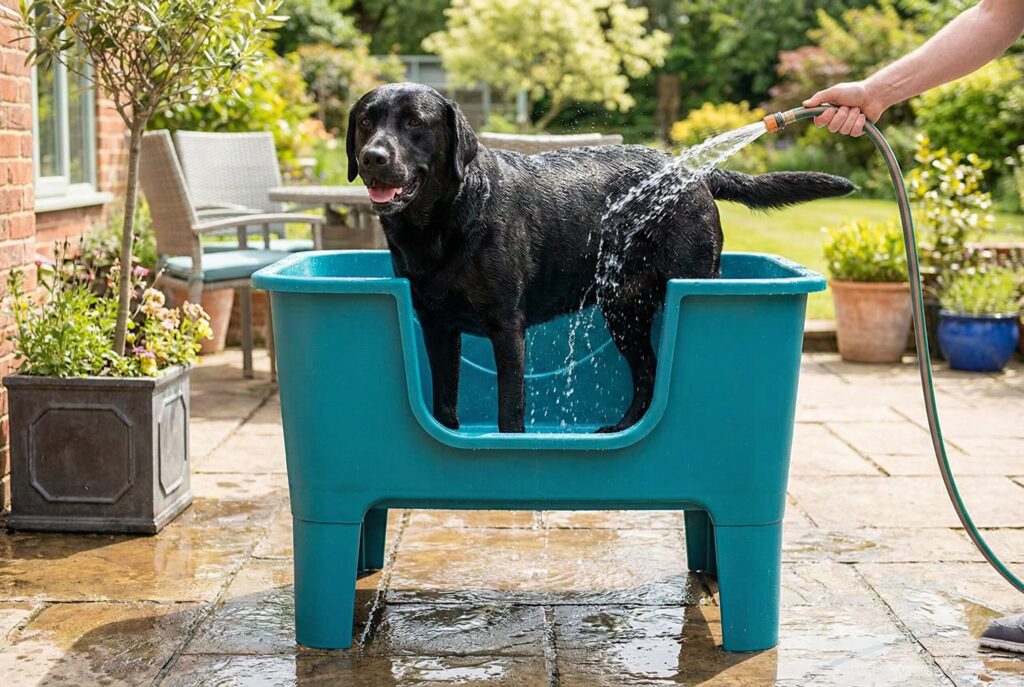
The Booster Bath is a specific brand/style of elevated plastic tub that is very popular. It is lightweight, stands on legs, and is designed for outdoor or garage use.
Pros:
- Lightweight and portable (easy to move from garage to yard).
- Elevated to save your back.
- The plastic provides good traction for paws.
Cons:
- Can feel wobbly with very heavy, active dogs.
- Plastic can fade if left in direct sunlight permanently.
Features to Look For:
Look for a model with a “U” shaped entry. This allows the dog to jump in without having to clear a high wall. Most models come with a harness restraint system that hooks to the tub, keeping the dog in place while you wash.
9. The Custom Wooden Trough (Farmhouse Style)
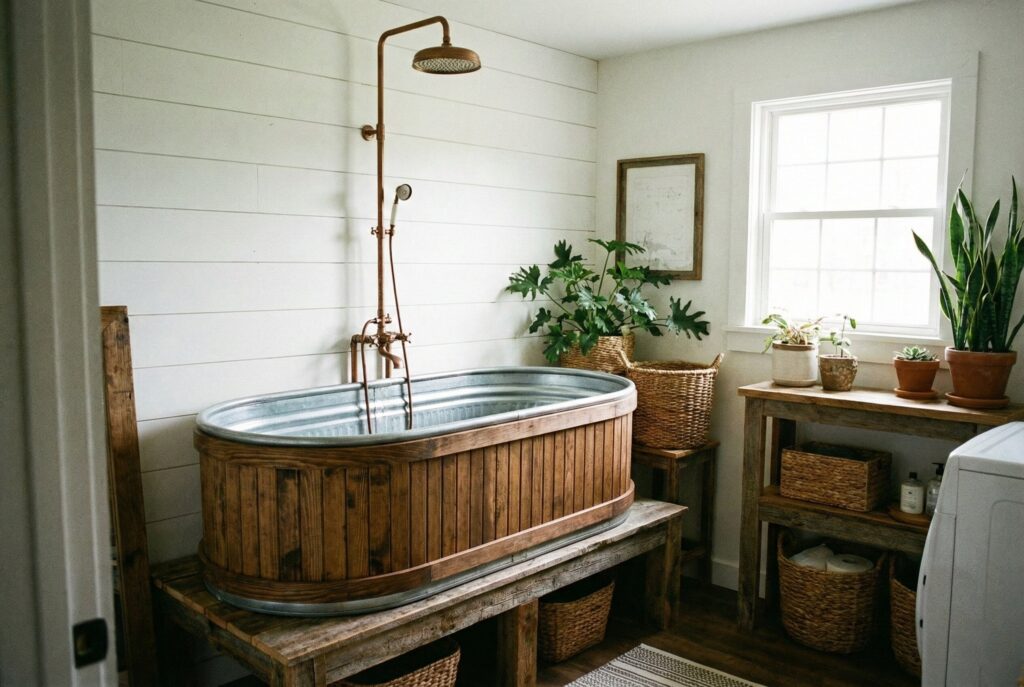
This is a high-impact visual design. It involves using a galvanized stock tank (used for feeding cattle) or building a wood-clad tub.
Pros:
- Trendy “Modern Farmhouse” look.
- Stock tanks are cheap and waterproof.
- Very durable.
Cons:
- Metal tanks conduct cold; the water cools fast.
- Requires custom carpentry for the frame.
DIY Build:
Buy a galvanized stock tank from a farm supply store. Drill a hole in the bottom for a standard sink drain assembly. Build a sturdy frame out of pressure-treated 2x4s to support the tank at waist height. Clad the frame in cedar or reclaimed barn wood. Crucial: Ensure the tank is supported from the bottom, not just the rim, as water and a dog are very heavy.
10. The Outdoor Garden Oasis
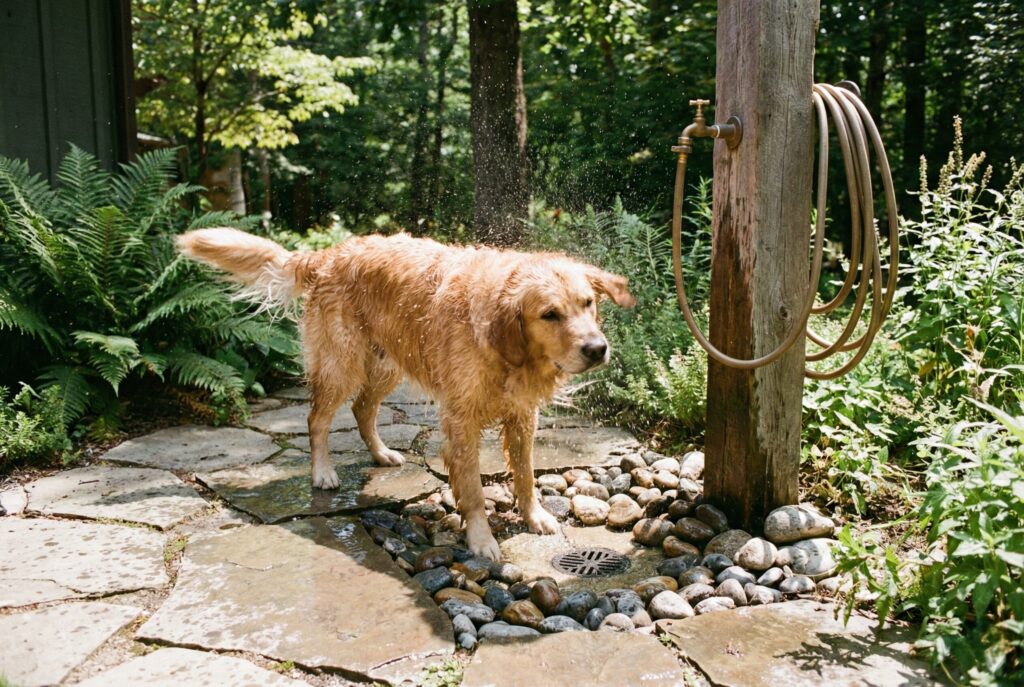
For those in warm climates (Florida, California, Texas), an outdoor station is often all you need. This goes beyond a simple hose; it is a landscaped washing area.
Pros:
- Zero mess inside the house.
- Nature helps with drainage (if designed right).
- Enjoyable summer activity.
Cons:
- Seasonal use only.
- Requires connecting to hot water if you want to use it in cooler months.
Landscaping Tips:
Do not wash the dog in mud or grass; you will just create mud. Build a pad using pavers, flagstone, or poured concrete. Create a “French drain” (a pit filled with gravel) underneath the washing spot so the soapy water percolates down into the soil rather than pooling on the patio. Use biodegradable shampoos to protect your surrounding plants.
11. The DIY Barrel Shower
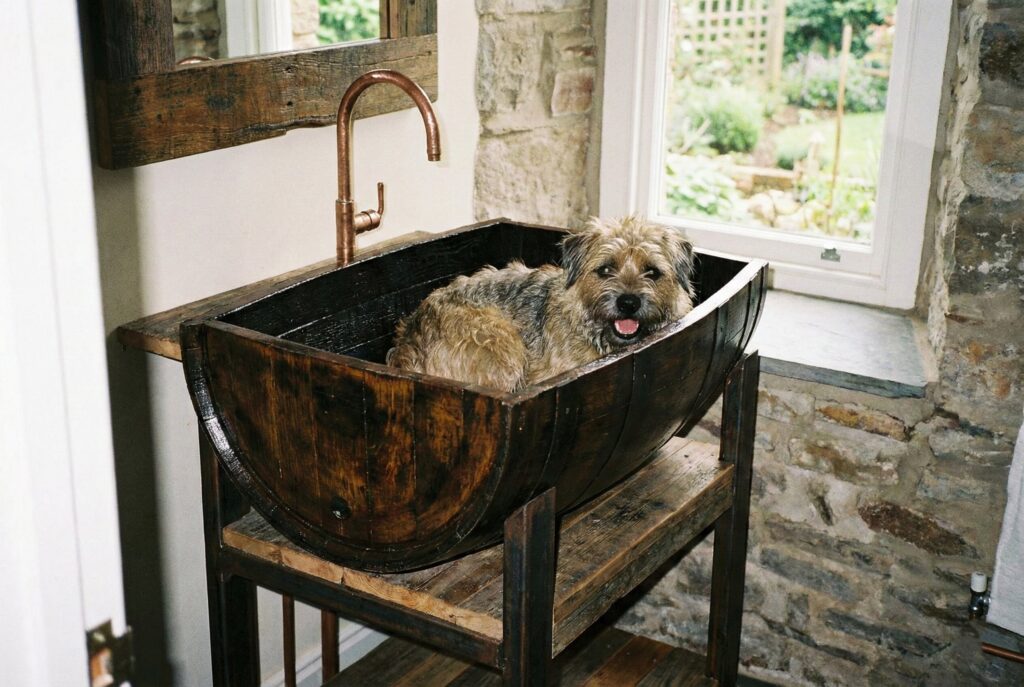
For a quirky, small-footprint solution, creative DIYers have used large wine barrels or whiskey barrels.
Pros:
- Extremely unique conversation piece.
- Great for small spaces.
- Upcycles waste materials.
Cons:
- Only for small dogs.
- Wood requires heavy sealing to prevent rot.
How to Build:
Cut a wine barrel in half vertically or horizontally, depending on the size you want. Coat the interior with multiple layers of marine-grade epoxy or insert a plastic liner. If you do not seal it, the wood will absorb water and rot within months. Drill for a drain and mountit on a stable base.
12. The Cabinet-Hidden Pull-Out Step
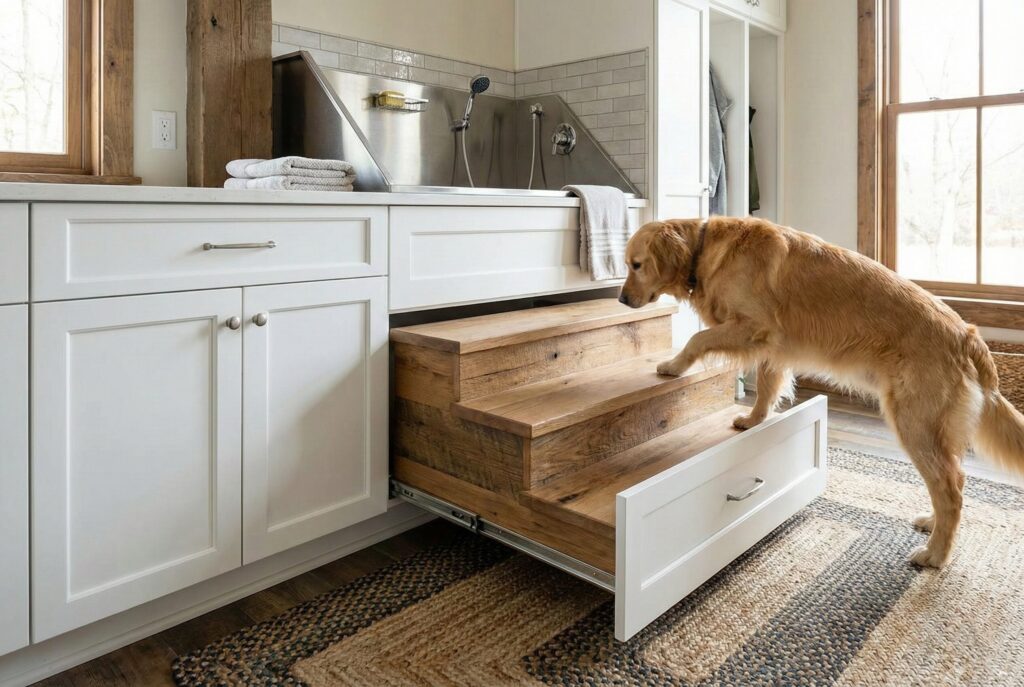
This isn’t a tub itself, but a vital add-on idea for high tubs. If you build a high station, build a staircase that slides into the cabinetry like a drawer.
Pros:
- Saves floor space.
- Prevents you from lifting heavy dogs.
- Keeps the aesthetic clean.
Cons:
- Requires custom cabinetry work.
- Drawer slides must be heavy-duty (rated for 100+ lbs).
Essential Accessories for Your Station
Regardless of which idea you choose, you need the right tools to make it functional. A tub without the right gear is just a water bucket.
High-Velocity Dryer
Drying the dog is harder than washing them.
- Recommendation: Install a wall-mounted forced dryer near the station. This blows the water out of the coat rather than using heat, which is safer for the dog.
- Noise: These are loud. If your station is in a laundry room, soundproofing is a good idea.
The Restraint System (Grooming Loop)
Safety first. A wet dog will try to jump out.
- Eyebolts: Install stainless steel eyebolts securely into the studs of the wall or the frame of the tub.
- Suction Cups: For tiled showers, use heavy-duty industrial suction cup tethers.
- The Loop: Use a nylon grooming loop that attaches to the dog’s collar, keeping them centered in the tub.
The Faucet and Sprayer
Standard shower heads are too wide.
- Recoil Hose: Look for a coil hose that shrinks when not in use.
- Trigger Spray: You want a sprayer that stops water flow when you release the handle. This saves water while you are scrubbing the dog with shampoo.
- Pressure: Ensure you have decent water pressure to penetrate thick double coats (like Huskies or Shepherds).
Non-Slip Traction
This is non-negotiable.
- Rubber Mats: Cheap and easy to clean.
- Teak Wood Grate: Looks spa-like and allows water to flow through, but requires maintenance.
- Adhesive Strips: Like those used in human bathtubs, these can be applied to stainless steel or tile floors.
Plumbing and Technical Details
If you are going the DIY route, here are the technical specifications you should know.
The P-Trap:
Every drain needs a P-trap (the U-shaped pipe). This holds a small amount of water that blocks sewer gases from coming up into your home. If you are building a dog wash in a garage, do not skip this. If you smell sewage, it is because you forgot the P-trap or the water in it evaporated.
Waterproofing:
If you are tiling a station (Idea #1), you must use a waterproofing membrane behind the tile. Cement board alone is not waterproof. Brands like Schluter-Kerdi or RedGard are liquid or fabric membranes that seal the wall. If water gets behind the tile, you will have mold and rot in your studs.
Backsplash Height:
Dogs shake. It is inevitable. Your waterproofing or backsplash needs to go much higher than you think. For a medium dog, the splash zone can easily reach 3 to 4 feet up the wall. If your station is against drywall, cover that drywall with FRP (Fiberglass Reinforced Plastic) panels or tile to protect it.
Maintenance and Cleaning
To keep your station smelling fresh, follow this routine.
- Fur Removal: After every bath, remove the hair from the drain filter immediately. Letting it dry makes it harder to remove.
- Disinfect: Dog skin can carry yeast and bacteria. Spray the tub with a pet-safe disinfectant or a diluted vinegar solution after use.
- Seal Grout: If you have tile, reseal the grout lines annually. Dog claws can scratch the sealant, allowing water to penetrate.
Conclusion
Building a dog bathing station is one of the most practical home improvement projects for pet owners. It transforms a chaotic, messy chore into a streamlined, comfortable experience for both you and your pet.
If you are on a budget, start with the Elevated Utility Sink (Idea #2) or the Portable Folding Tub (Idea #7). If you are renovating your “forever home,” investing in a Tiled Mudroom Shower (Idea #1) will pay dividends in convenience and resale value.