
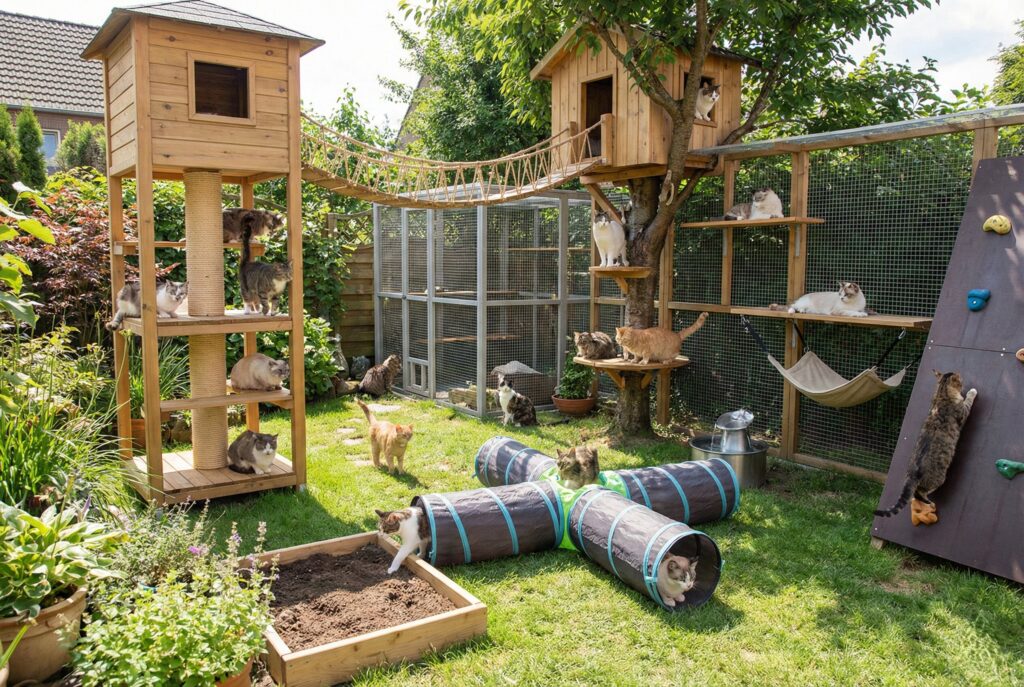
Every cat owner faces the same dilemma. You want to keep your feline friend safe indoors, away from cars, predators, and diseases. Yet, you also know that cats have natural instincts to climb, hunt, and explore. Keeping them cooped up inside all day can lead to boredom, obesity, and behavioral issues.
The solution is a dedicated outdoor cat playground.
Often called a “catio” (cat patio) or a cat enclosure, an outdoor playground offers the best of both worlds. It provides controlled freedom. Your cat gets fresh air, sunshine, and the stimulation of the natural world without the dangers associated with free-roaming.
Creating an engaging outdoor space doesn’t require acres of land or a degree in architecture. It just needs an understanding of what makes your cat tick. This guide will detail the essential elements of a great cat playground and provide over ten actionable ideas to transform your yard, patio, or balcony into a feline paradise.

- Five Items: A cat mesh tent, a cat mesh tunnel, and a cat mesh playhouse, also come with a Cat Harness and Leash for Wal…
- Foldable & Lightweight: The portable mesh design is easy to fold and install for travel and storage. The pet mesh tent r…
- Outdoor Use: It is a safe cat outdoor play area for small pets, allowing pets to gradually receive socialization trainin…

- YOUR FURRY FRIENDS’ HAVEN FOR RELAXATION & PLAY! This innovative Cat Enclosure Kitty Tunnel combines an Outdoor Cat Encl…
- SUPERIOR VENTILATED QUALITY CONSTRUCTION: The cat tent tunnel enclosures are expertly crafted using premium materials su…
- SPACIOUS AND LUXURIOUS PET ENCLOSURES: Offering ample room for your furry companions, these deluxe pet enclosures boast …
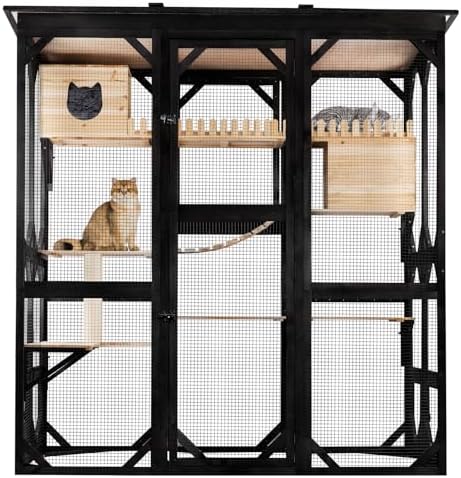
- Weatherproof Outdoor Catio: This outdoor cat house has a flip-friendly asphalt roof—position it front or back! Built tou…
- 6-Door Window Catio: Connect this catio for cats directly to your home through 6 access doors. Simply remove the back pa…
- Walk-In Outdoor Cat Enclosure: Step inside effortlessly with a full-height 67″ front door without bending down. This out…
10+ Outdoor Cat Playground Ideas
Here are practical ideas ranging from simple DIY projects to elaborate constructions.
1. The Classic Window Catio box
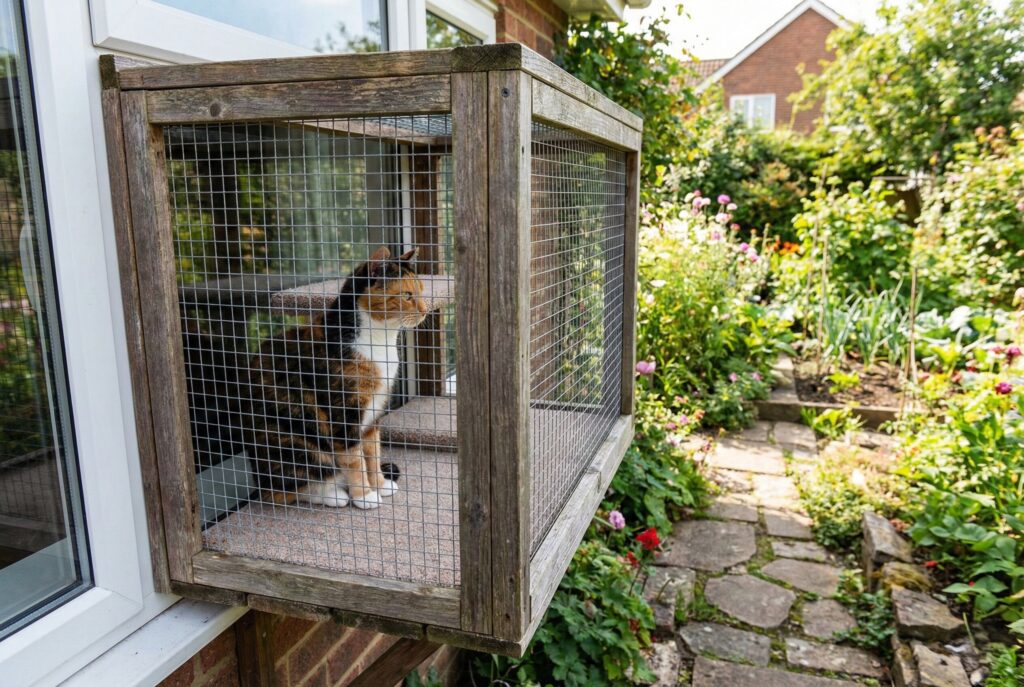
This is the perfect entry-level outdoor space, ideal for apartments or homes with limited yards. It is essentially a secure box constructed of wood framing and wire mesh that attaches directly to the exterior of an existing window.
Your cat enters through the open window, which should be fitted with a cat flap or a secure panel that prevents escape around the sides. Even a small window box provides fresh air and a 180-degree view of the outdoors. To make it a true playground, add multiple levels inside the box using simple wooden shelves. This allows the cat to sit high up or lounge on a lower level.
2. Long Cat Runs and Tunnels
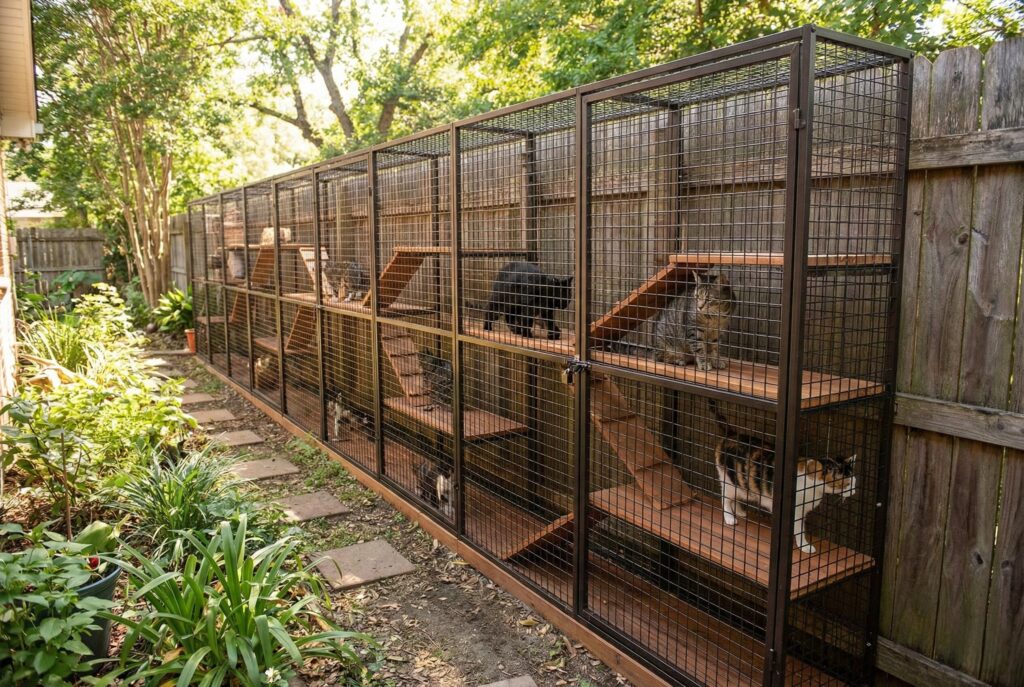
If you have a long, narrow side yard or want to connect the house to a distant enclosure, a cat run is excellent. Cat runs, invite sprinting and patrolling behavior.
You can build these using wood frames and mesh, or purchase modular metal kits. The run can be set up along an existing fence line. To make it more engaging, vary the height. Have sections that run along the ground connected by ramps to sections that are elevated four or five feet in the air. The elevated sections are particularly enjoyable for cats as they feel secure while watching the yard below.
3. Vertical Climbing Towers
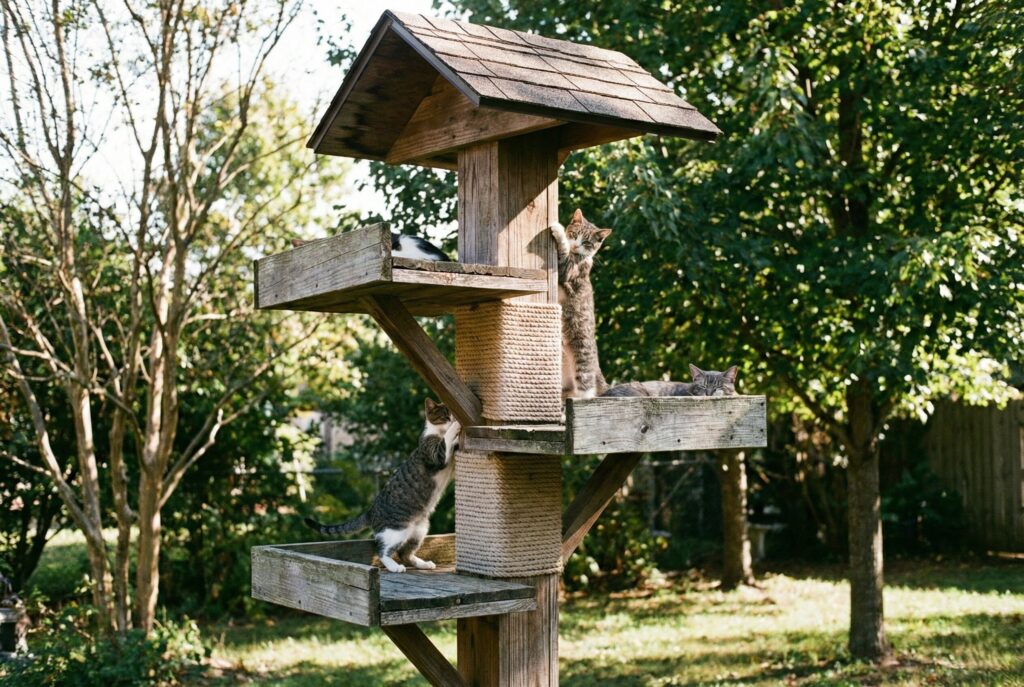
For compact spaces, think upward. A vertical climbing tower provides maximum exercise in a minimum footprint. This is similar to a giant, weather-resistant indoor cat tree.
Use pressure-treated lumber or cedar, which naturally resists rot, to construct a sturdy frame. Create staggered platforms that allow the cat to jump from level to level. Wrap central support posts with thick sisal rope for a durable outdoor scratching post. Ensure the base is very wide or anchored to the ground so it cannot tip over during vigorous climbing. The top level should have a roof for shade and weather protection.
4. The Garden Shed Conversion
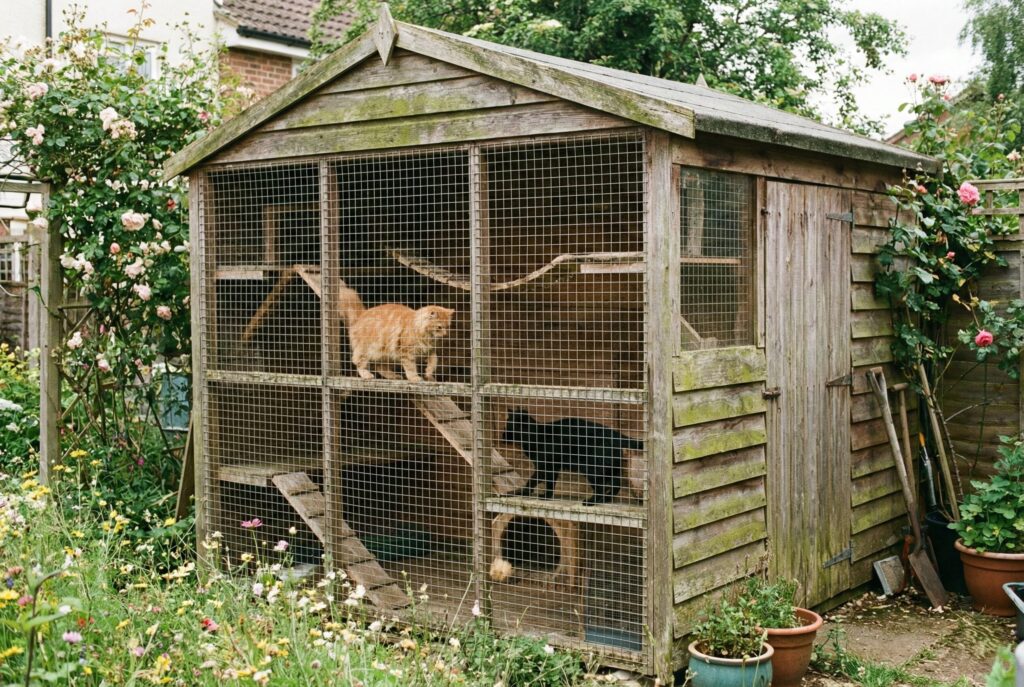
If you have an underutilized garden shed, you have the bones of an amazing cat playground. This offers excellent protection from the elements while still providing an “outdoor” feel.
Cut large windows into the sides of the shed and cover them securely with heavy-gauge wire mesh. Replace the solid door with a screen door reinforced with hardware cloth. Inside, you can go wild adding shelves, ramps, hanging bridges, and sleeping lofts. You can even cut a small cat door in the wall leading to an adjacent, fully screened-in outdoor “porch” area for more exposure to the weather.
5. Wall-Mounted Shelves and Perches (The Cat Highway)
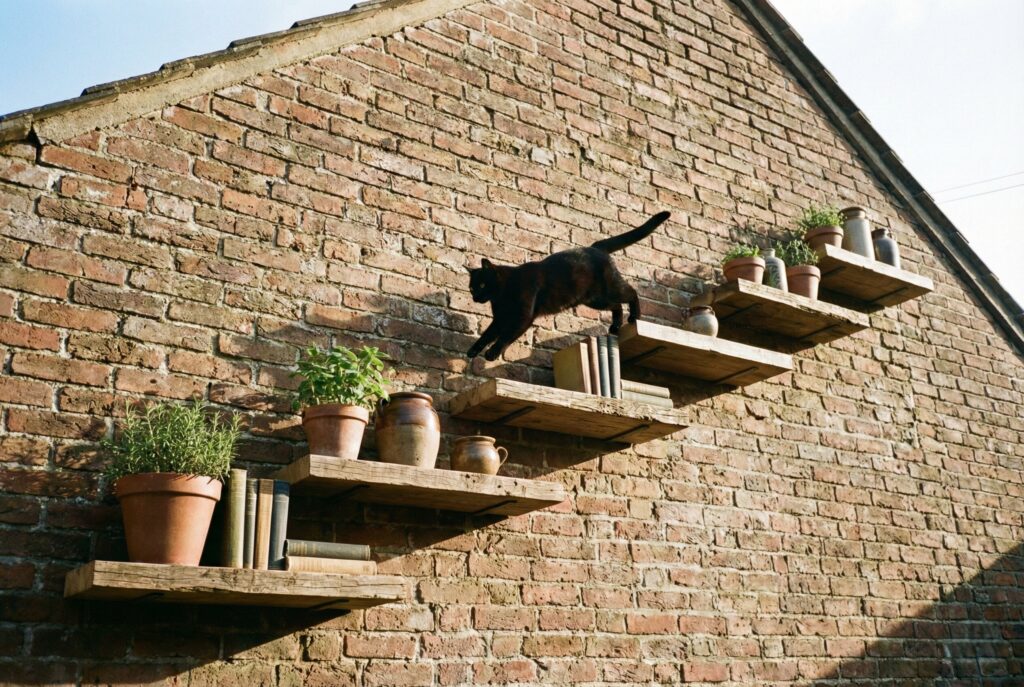
Utilize existing structures to create a “cat highway.” If you have a sturdy brick wall, a wooden fence, or the side of your house that forms part of the enclosure, mount shelves directly onto it.
Stagger the shelves at different heights and distances to create a challenging climbing route. Use rough-sawn wood so your cat has good traction; smooth wood gets slippery when wet. Ensure the brackets used to hold the shelves are heavy-duty and secured into studs or masonry. You can connect some shelves with narrow gangplanks to create a continuous path around the perimeter of the playground.
6. Naturalistic Rock and Log Piles
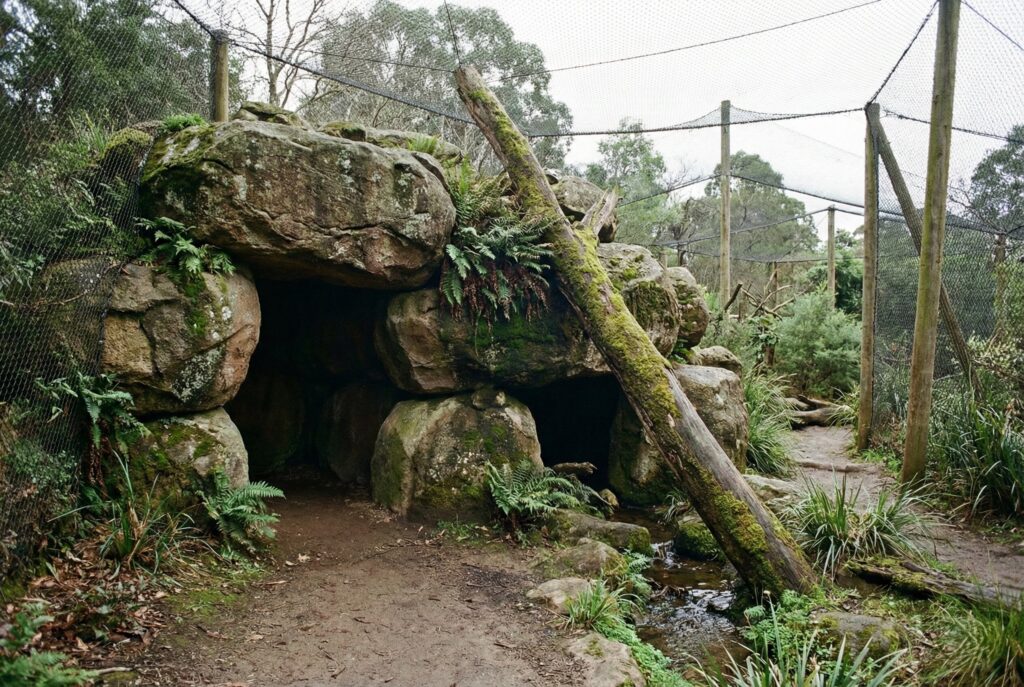
Not all cats want to climb man-made structures. Many prefer the feel of natural elements. Integrate the playground into your landscape by using natural materials.
Create a stable pile of large rocks that creates different levels and small nooks for hiding. Ensure the rocks are heavy enough that they won’t shift under a cat’s weight. Lean large, sturdy tree branches or logs against fences or walls to act as natural ramps. A large, immobile log on the ground serves as an excellent balance beam and scratching surface. This approach looks aesthetically pleasing in a garden setting.
7. Sensory Garden with Cat-Safe Plants
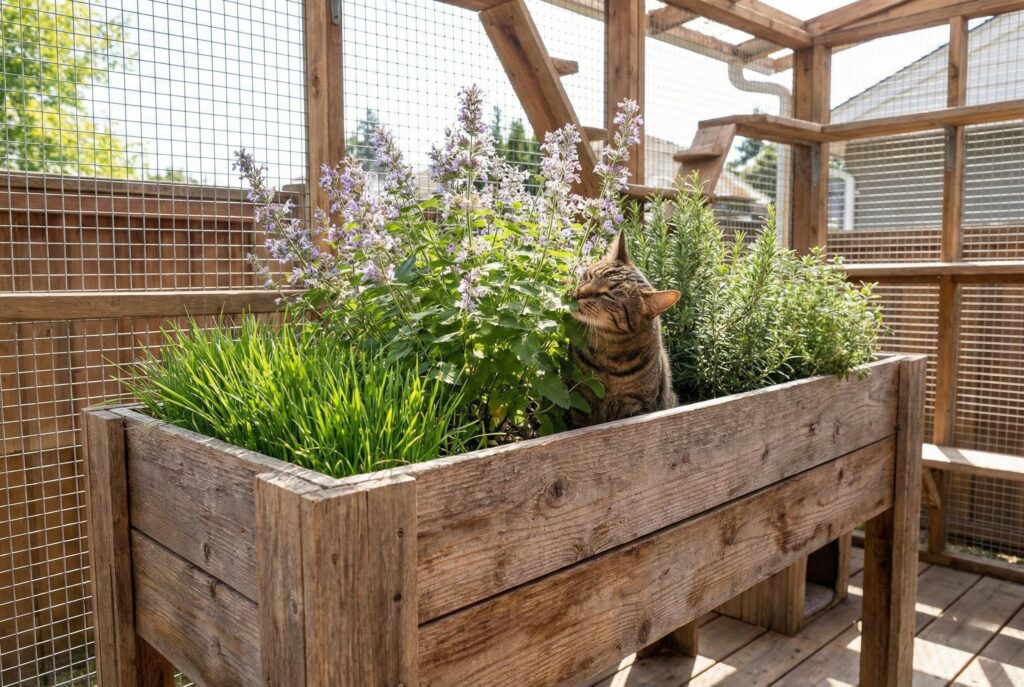
Turn part of the playground into a sniffing paradise. Cats rely heavily on scent to interpret their world. A sensory garden provides immense enrichment.
Dedicate a corner of the enclosure to cat-safe plantings. Cat grass (wheatgrass, oat grass) is essential for grazing. Catnip and silver vine provide euphoric stimulation for many cats. Valerian root is another scent many cats enjoy. Herbs like rosemary and thyme are safe and offer interesting smells. Always double-check any plant against the ASPCA toxic plant list before planting.
8. The Hanging Bridge Challenge
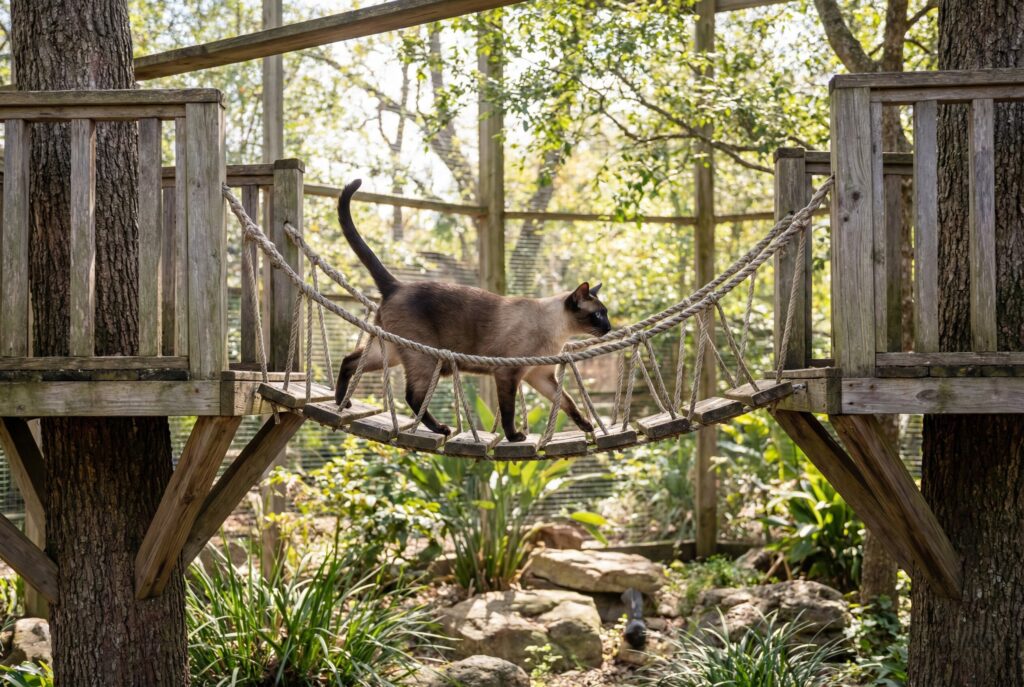
For agile cats that enjoy a physical challenge, incorporate a hanging bridge. This adds an element of instability that tests their balance.
A hanging bridge is constructed of small wooden slats connected by rope or chain. It is suspended between two stable platforms. The bridge will sway slightly as the cat walks across it. It is crucial that the bridge is not too unstable, or the cat will be afraid to use it. It should be close enough to the ground (or a lower platform) that a fall wouldn’t be dangerous.
9. Dedicated Digging Pit
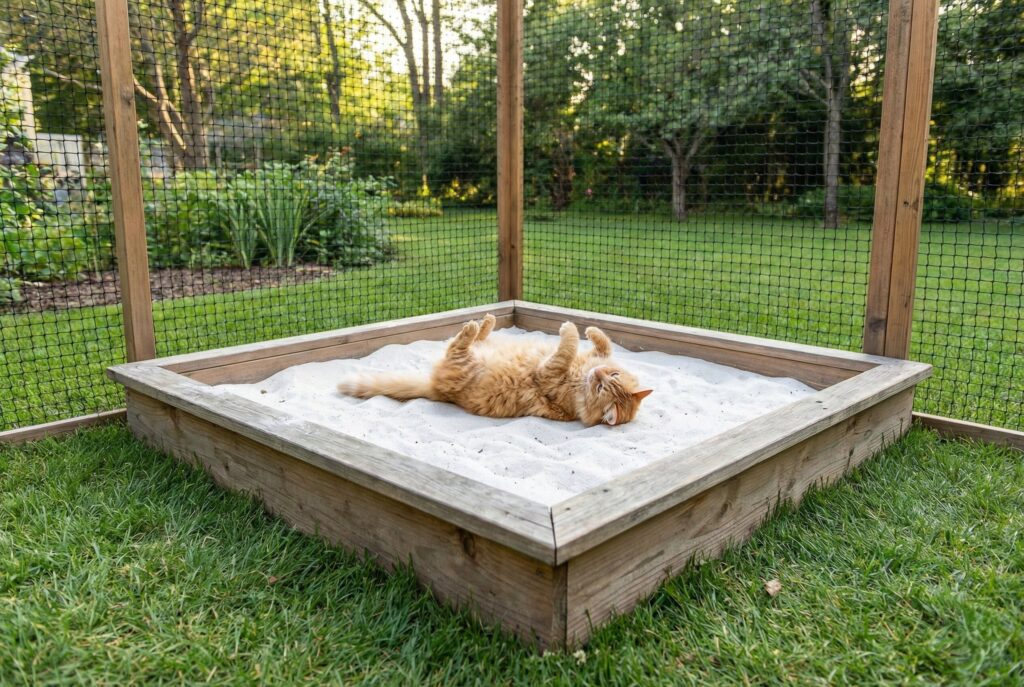
Many cats have a natural urge to dig and roll in dirt or sand. Instead of them digging up your flower beds, provide a dedicated spot.
Build a simple, low-sided wooden box, similar to a child’s sandbox. Fill it with cat-safe play sand or clean topsoil. Your cat will enjoy rolling in it on sunny days and using it for digging behaviors. Be aware that some cats may view this as a giant litter box, so you will need to scoop it regularly to keep it hygienic.
10. Shaded Snoozing Hammocks
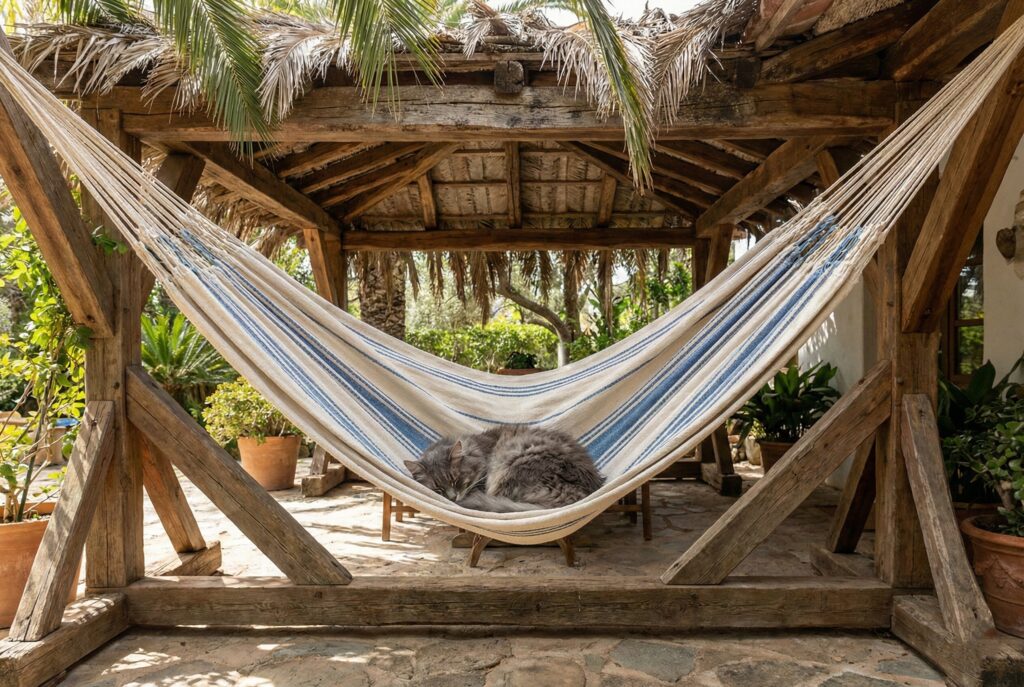
A playground isn’t just about action; it’s also about relaxation. Cats love hammocks because they support their bodies completely and keep them off the ground.
You can buy outdoor-rated cat hammocks made of weatherproof fabric. Alternatively, you can make your own by securely attaching a sturdy piece of canvas or burlap between four corner posts of a structure. Place hammocks in shaded areas so your cat can enjoy the fresh air without overheating on warm days.
11. The Lookout Post (High Vantage Point)
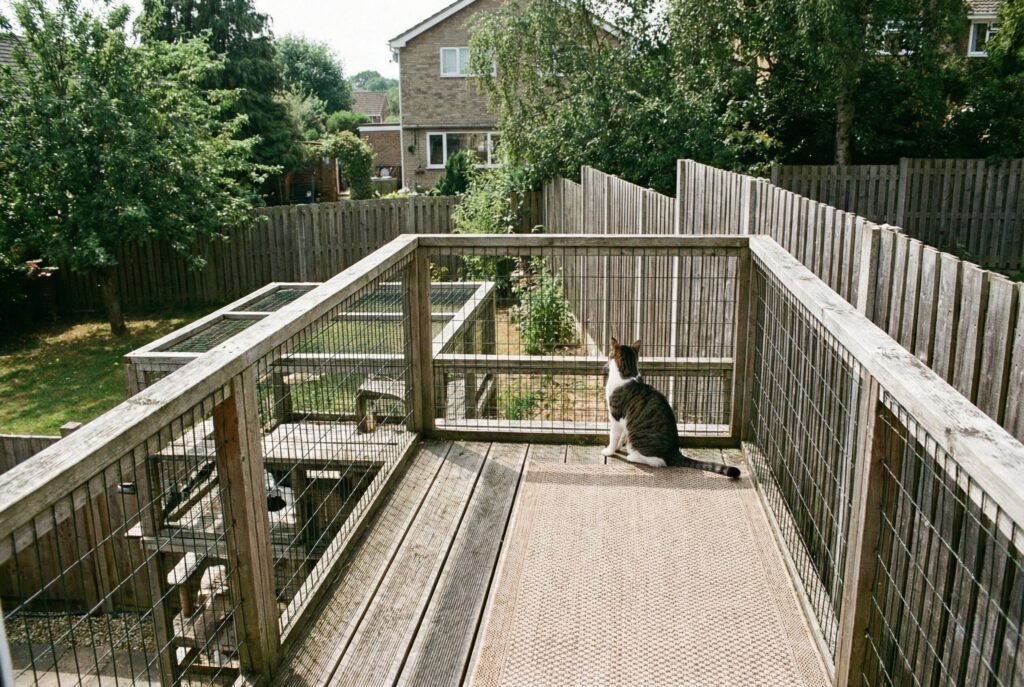
The ultimate goal for most cats is to get as high as possible to survey their surroundings. The highest point in your playground should be a comfortable observation deck.
This platform should be large enough for the cat to lie down flat. It needs tall sides or a railing so the cat cannot accidentally roll off while sleeping. If possible, position this lookout post so it offers views beyond your yard, such as a neighboring field or street, allowing them to watch “cat TV” for hours.
12. Interactive Water Feature
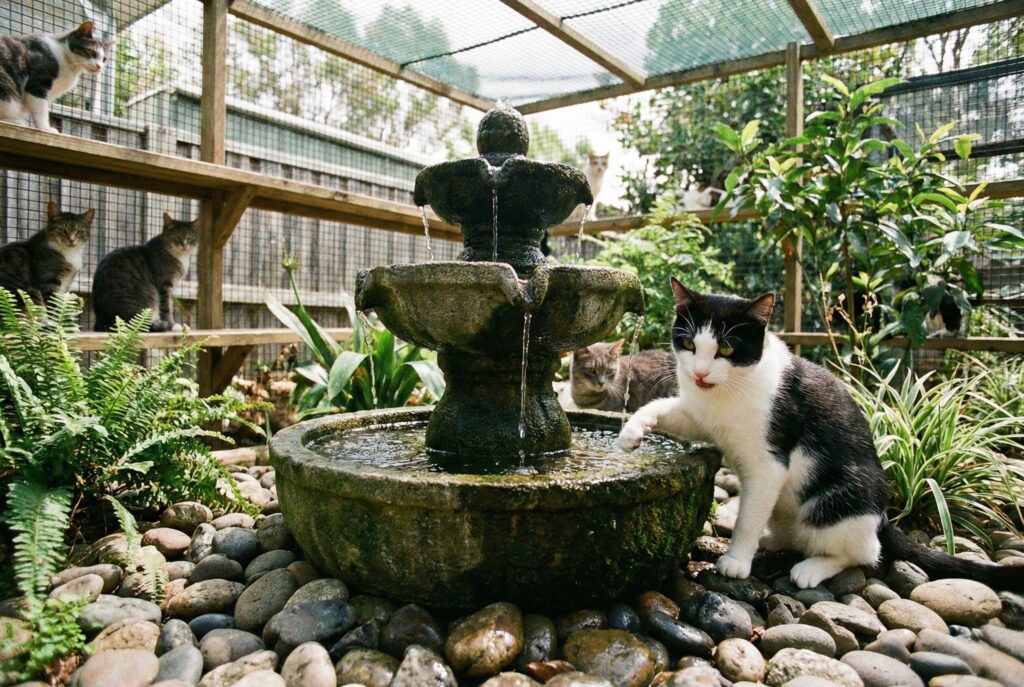
Cats are fascinated by moving water. While they may not want to swim, they love to bathe at trickling water and drink from moving sources.
Incorporate a small, pet-safe water fountain into the landscape. Solar-powered birdbath fountains work well and require no complex wiring. The sound of trickling water is soothing, and it encourages your cat to stay hydrated, especially on hot days. Ensure the basin is shallow so there is no risk of drowning.
Why Build an Outdoor Cat Playground?
Before diving into the designs, it is important to understand why this is such a valuable investment for your pet’s health.
- Mental Enrichment: The sights, smells, and sounds of the outdoors provide constant mental stimulation. Watching birds, feeling the wind, and smelling new scents keep their brains active.
- Physical Exercise: A well-designed playground encourages jumping, climbing, and running. This helps maintain a healthy weight and keeps muscles strong.
- Stress Reduction: Just like humans, cats enjoy a change of scenery. Access to fresh air and a sunbeam can significantly lower stress and anxiety levels.
- Safety and Security: The primary benefit is safety. A secure enclosure ensures your cat cannot wander off, get lost, or encounter dangerous animals or traffic.
Crucial Safety Considerations First
Before you build, you must plan for safety. An unsafe playground is worse than none at all.
Secure Fencing and Netting
The enclosure must be escape-proof. Cats are liquid; they can squeeze through incredibly small gaps. Use sturdy galvanized wire mesh or specialized heavy-duty cat netting. Chicken wire is generally too weak and can hurt their paws. Ensure the netting is secured firmly to the frame so a determined cat cannot push through.
Predator Protection
Depending on where you live, you need to keep predators out as much as you need to keep your cat in. Coyotes, foxes, hawks, and neighborhood dogs pose real threats. You may need a solid roof or heavy-gauge wire overhead to prevent aerial attacks or climbing predators. If you have digging predators in your area, you must bury wire mesh around the perimeter of the enclosure base.
Toxic Plant Removal
Many common garden plants are highly toxic to cats. Before giving your cat access to any patch of ground, verify that existing vegetation is safe. Common dangers include lilies, azaleas, sago palms, and oleander. If you aren’t sure, remove it.
Weather Protection
Your cat needs a place to retreat from the elements. Ensure there is a shaded area to escape the hot sun and a waterproof shelter to stay dry during a sudden rain shower.
Core Components of a Great Playground
A successful playground appeals to feline instincts. Regardless of which specific design you choose, try to incorporate these core elements.
- Vertical Territory: Cats feel safest when they are high up. They love to survey their domain from a vantage point. Every playground needs verticality, such as shelves, ramps, or towers.
- Hiding Spots: Cats are ambush predators. They need places to conceal themselves, even if they are just “stalking” a leaf. Boxes, tunnels, or dense cat-safe plantings work well.
- Scratching Surfaces: Scratching is a natural territorial behavior and keeps claws healthy. Provide logs, sisal rope posts, or rough wooden planks outdoors so they don’t damage the structure itself.
- Resting Areas: After a bout of play, your cat will want to nap. Provide comfortable, elevated surfaces for lounging in the sun.
Maintenance and Upkeep
Once your playground is built, regular maintenance is required to keep it safe and enjoyable.
Weekly Checks
Inspect the netting or wire mesh for any tears, holes, or loose areas where a cat could push through. Check wooden structures for splinters or loose screws that need tightening.
Cleaning
Sweep platforms to remove fur, dirt, and leaves. If you have a digging pit or litter box area within the enclosure, scoop it daily. Wash food and water bowls thoroughly.
Seasonal Care
If you use wood, it will need to be treated or stained every year or two to protect it from rot and weather damage. Ensure you use non-toxic, pet-safe sealants. Before winter, check that shelters are waterproof and free of drafts.
Conclusion
Building an outdoor cat playground is one of the best things you can do for your indoor cat’s welfare. It transforms their daily life from sedentary boredom to active engagement with the world.
Don’t feel pressured to build the Taj Mahal of catios immediately. Start small with a window box or a simple run. Observe what your cat enjoys most. climbing, hiding, or sunbathing, and expanding the playground over time to suit their personality. The effort you put in will be rewarded with a happier, healthier, and more contented feline companion.