
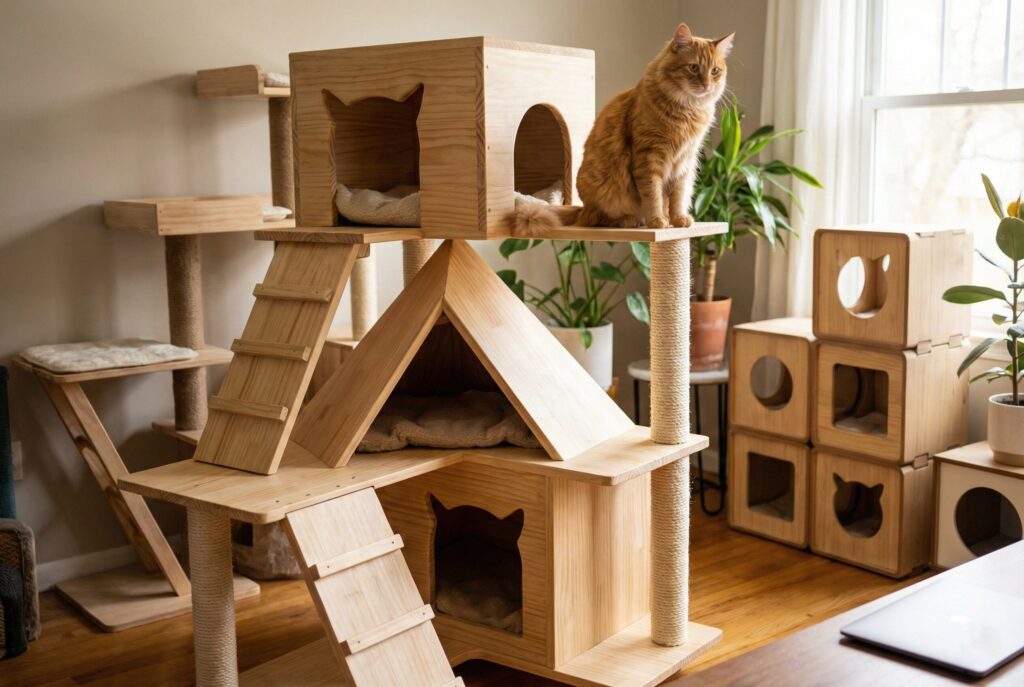
Providing your feline friend with a dedicated space is more than just a luxury; it is a necessity for their well-being. Cats are territorial animals that crave secure, private spots to sleep, groom, and observe their surroundings. An indoor wooden cat house offers the perfect blend of feline comfort and human interior design. Wood is durable, aesthetically pleasing, and provides a sturdy structure that cardboard or fabric alternatives simply cannot match.
Whether you are a hands-on pet parent looking for a weekend DIY project or a busy cat owner searching for the perfect pre-made furniture piece, this guide covers everything.
We will explore more than ten fantastic indoor wooden cat house ideas, split between do-it-yourself projects and store-bought solutions. We will also cover essential considerations like material safety, ventilation, and placement to ensure your cat loves their new home.
Why Choose a Wooden Cat House for Your Indoor Cat?
Before diving into the specific ideas, it helps to understand why wood is the superior material for indoor cat enclosures.
First, wood offers incredible durability. A well-built wooden cat house can last for the entire life of your pet. Unlike cardboard, which shreds easily, or fabric, which traps odors and hair, wood is solid and stable. This stability is crucial for larger cats who might tip over lighter structures.
Second, wooden pet furniture blends seamlessly with your home decor. Instead of having a brightly colored carpeted cat tree taking up space in your living room, you can have a sleek, wooden enclosure that doubles as an end table or a TV stand.
Finally, wood acts as a natural insulator. It helps keep the interior of the cat house slightly warmer in the winter and cooler in the summer, providing a comfortable microclimate for your pet.
Essential Considerations Before Building or Buying
When selecting or designing an indoor wooden cat house, you must prioritize your cat’s health and safety. Keep these vital factors in mind.
Wood Toxicity and Material Safety
Not all wood is safe for cats. If you are building a DIY house, avoid pressure-treated lumber, as it contains harsh chemicals intended for outdoor use. Stick to untreated, solid woods like pine, oak, or cedar. Plywood and MDF (Medium-Density Fiberboard) are also excellent and affordable options, but make sure they are labeled as having low or zero VOC (Volatile Organic Compounds) emissions.
If you choose to paint or stain the wood, you must use pet-safe, non-toxic, water-based finishes. Always allow the structure to off-gas and dry completely in a well-ventilated area before letting your cat use it.
Size and Dimensions
The cat house must be appropriately sized for your specific cat. A Maine Coon will need significantly more space than a Siamese.
As a general rule, the house should be large enough for the cat to walk in, turn around comfortably, and stretch out fully while lying down. However, do not make it too large; cats prefer cozy, enclosed spaces that make them feel secure from predators.
Ventilation and Airflow
A wooden box with a single small hole can quickly become stuffy. Proper ventilation is critical to prevent moisture buildup and ensure fresh air circulation. Look for designs that feature multiple entry points, slatted walls, or decorative cutouts that allow air to flow through the structure.
Accessibility and Exit Routes
In multi-pet households, cats need an escape route. A cat house with only one door can easily become a trap if a playful dog or an aggressive feline housemate blocks the entrance. The best cat houses feature at least two openings: a main entrance and a secondary exit hole.
Part 1: Top DIY Indoor Wooden Cat House Ideas
If you have a few basic tools and a free weekend, building your own cat house is a rewarding way to save money and customize the piece to match your home exactly. Here are five outstanding DIY wooden cat house concepts.
1. Upcycled Vintage TV Console Cat House
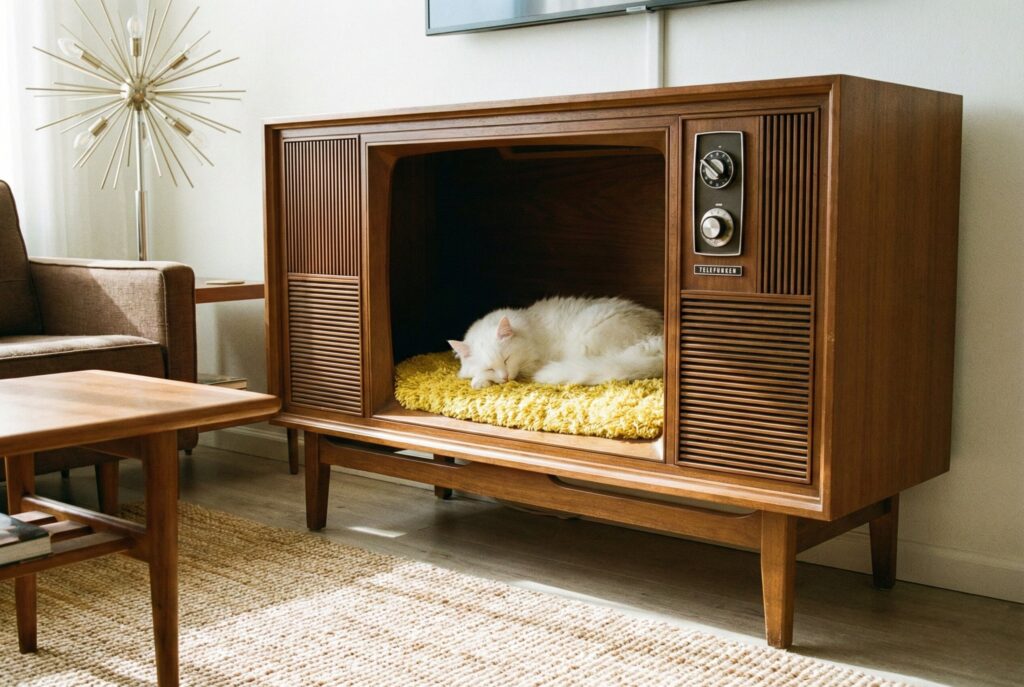
Old, bulky television consoles from the 1970s and 1980s are often thrown away, but their solid wood frames make incredible feline furniture. By gutting the electronics, you are left with a spacious, sturdy wooden box.
- How to Build It: Remove the screen, tubes, and wires safely. Clean the interior thoroughly. Sand down the exterior wood and apply a fresh coat of pet-safe paint or stain. You can leave the front where the screen used to be completely open, or attach a piece of plywood with a custom-cut circular entrance. Line the bottom with a plush, machine-washable cushion.
- Pros: Highly sustainable, creates a unique retro conversation piece, very sturdy.
- Cons: Sourcing an old TV can be difficult, and removing the heavy glass tube requires caution.
2. Simple Plywood Cube with Scratching Post Side
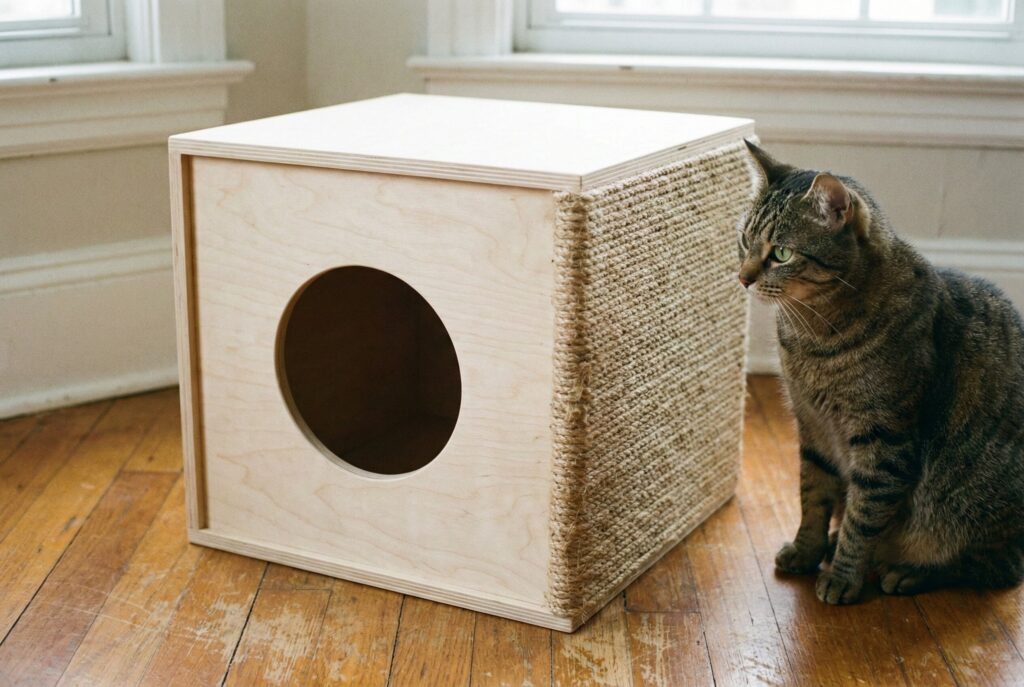
This is the perfect project for beginners. A simple wooden cube is modern, minimalist, and easy to construct with standard cuts of plywood.
- How to Build It: Purchase half-inch or three-quarter-inch birch plywood. Cut six identical square panels (e.g., 18 by 18 inches). On the front panel, use a jigsaw to cut a large circular entrance. On one of the side panels, cut a few smaller ventilation holes. Assemble the cube using wood glue and brad nails. To make it multi-functional, wrap one of the solid exterior side panels tightly with natural sisal rope, securing it with heavy-duty staples or non-toxic glue.
- Pros: Very affordable, requires minimal woodworking skills, incorporates a scratching surface to save your furniture.
- Cons: The boxy design is very plain and might not suit traditional decor styles.
3. Under-Stairs Feline Hideout
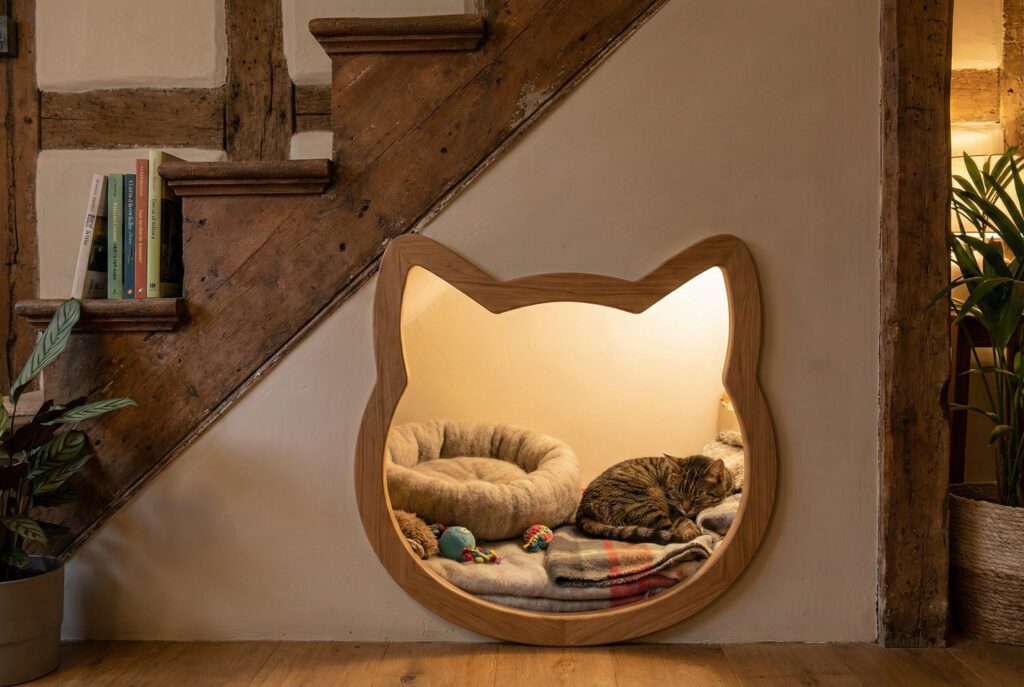
If your home has a staircase with enclosed, unused space underneath it, you have the perfect location for a built-in wooden cat house.
- How to Build It: This requires cutting into the drywall beneath your stairs to expose the wooden framing. Once open, frame out a small cubby area using two-by-fours and line the interior walls with smooth plywood. Create a decorative wooden door or a trim frame with a feline-shaped entrance hole to cover the opening in the drywall. You can even install a small battery-operated motion-sensor light inside.
- Pros: Uses zero floor space, completely out of the way, provides ultimate soundproofing and privacy for the cat.
- Cons: Requires permanent alteration to your home walls, not suitable for renters.
4. Repurposed Wooden Pallet Cat Cabin
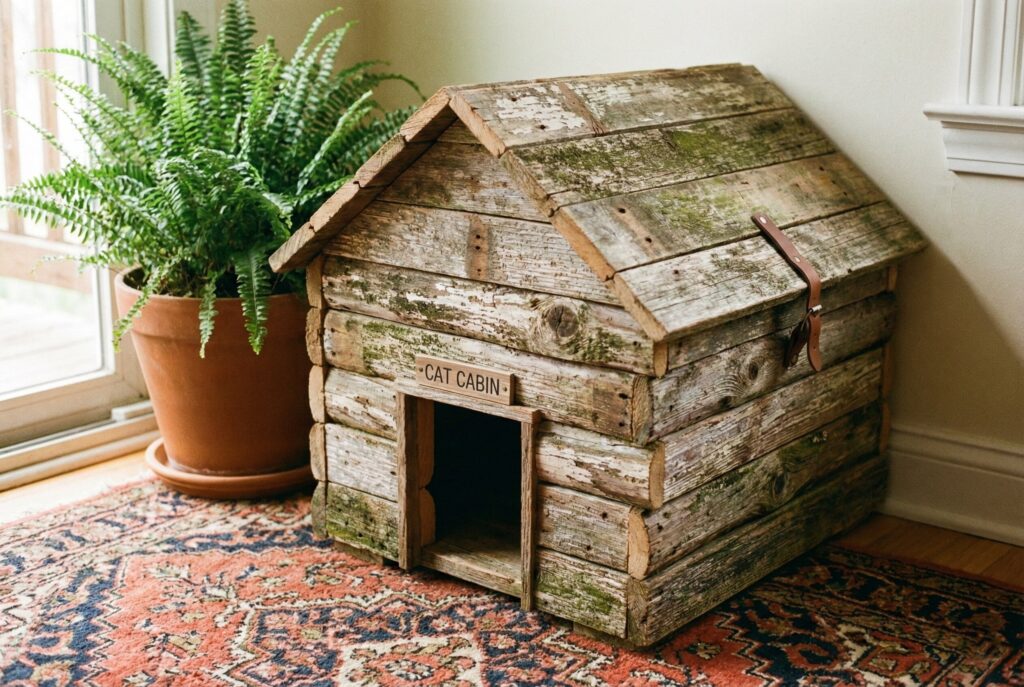
Wooden shipping pallets are a staple of cheap DIY projects. When dismantled and cleaned, pallet wood has a beautiful, rustic charm perfect for a farmhouse-style cat cabin.
- How to Build It: Sourcing safe pallets is the most important step. Only use pallets stamped with “HT” (Heat Treated). Do not use pallets stamped with “MB” (Methyl Bromide), as this is a toxic chemical pesticide. Dismantle the pallet using a crowbar. Sand every board aggressively to remove splinters. Build a basic rectangular frame and clad the exterior with the rustic pallet planks. Create a slanted roof using hinges so you can easily open the top to clean the inside.
- Pros: Extremely low cost, highly durable, perfect for rustic or farmhouse interior design.
- Cons: Dismantling pallets is physically demanding; extensive sanding is required to make the wood safe for paws.
5. Geometric A-Frame Cat Tent (Wood Frame)
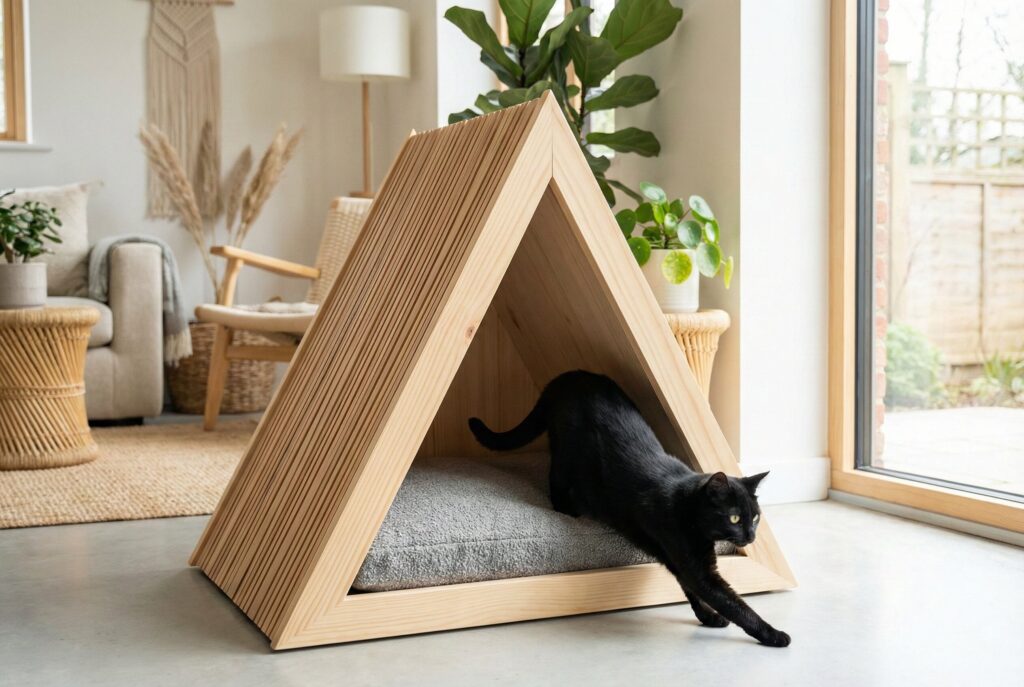
A-frame structures are inherently stable and offer a striking geometric look. This project combines a wooden skeleton with a fabric or solid wood covering.
- How to Build It: Cut three pieces of wood to form an equilateral triangle for the front, and another three for the back. Connect the two triangles with long wooden dowels or flat planks at the top peak and bottom corners. For a full wooden house, cover the sides with thin plywood or cedar shingles. For a softer look, drape heavy canvas or upholstery fabric tightly over the wooden A-frame, securing it to the base.
- Pros: Visually striking modern design, highly stable, relatively lightweight, and easy to move around the house.
- Cons: The slanted walls reduce the internal headroom, so it must be built slightly larger to accommodate big cats.
Part 2: Top Store-Bought Indoor Wooden Cat House Ideas
If you lack the time, tools, or inclination to build your own, the pet furniture market offers incredible wooden enclosures. Modern store-bought options focus heavily on dual functionality, ensuring the piece looks like high-end furniture.
6. Modern Mid-Century Wooden Cat Condo
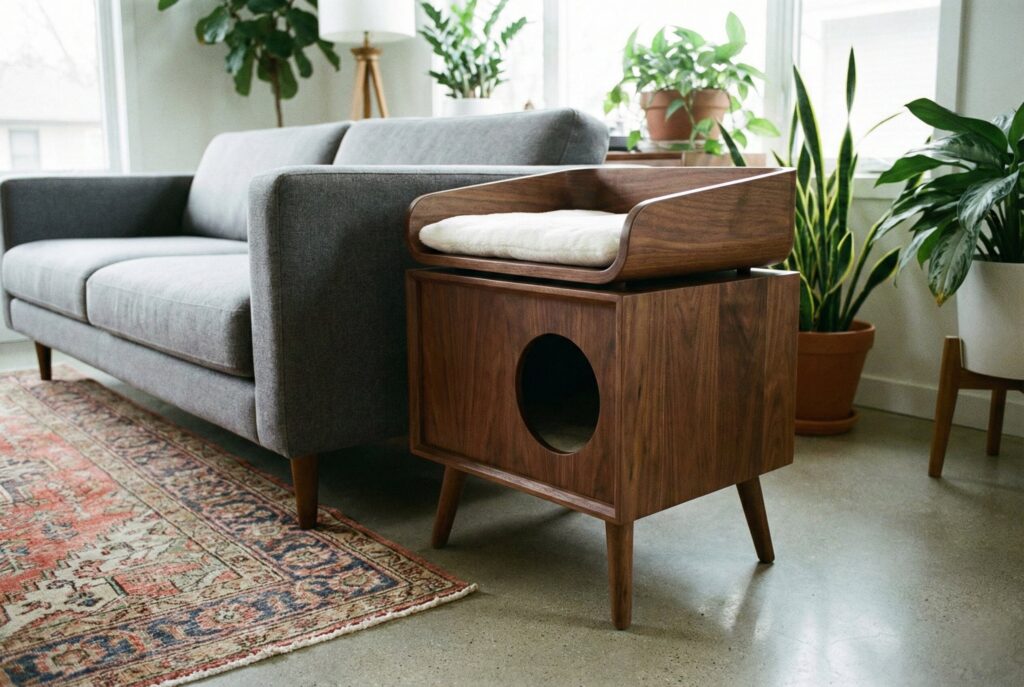
Mid-century modern design is characterized by clean lines, organic curves, and tapered wooden legs. Pet manufacturers have fully embraced this trend, creating beautiful cat condos that look like expensive living room furniture.
- Features to Look For: Walnut or teak wood veneers, angled peg legs, and smooth, rounded corners. Many feature a dual-level design, with an enclosed sleeping cubby on the bottom and a slightly raised, open lounging platform on top.
- Why Cats Love It: Elevated off the ground, which keeps them away from cold drafts and makes them feel more secure.
- Pros: Extremely stylish, elevates the room’s decor, and usually comes with custom-fitted washable cushions.
- Cons: Can be quite expensive; wood veneers can chip if scratched heavily by the cat.
7. End Table/Nightstand Cat House
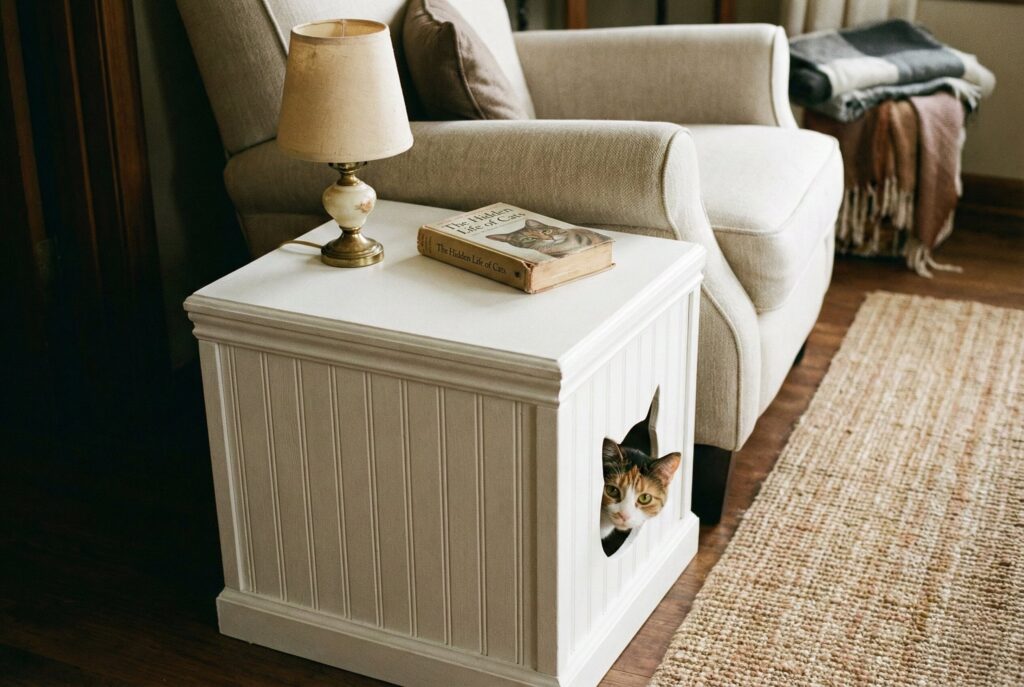
Space is a premium in many apartments and smaller homes. Multi-functional furniture solves this problem by combining human use with pet use. The end table cat house is one of the most popular wooden enclosures on the market.
- Features to Look For: A flat, sturdy top surface capable of holding a lamp, books, or a cup of coffee. The lower section acts as the cat’s hideaway, usually featuring a decorative entrance hole. Look for solid wood construction to ensure it can support the weight on top without wobbling.
- Why Cats Love It: Being close to their owner. If used as a nightstand, the cat gets to sleep right next to you while maintaining their own private, enclosed territory.
- Pros: Saves floor space, highly functional, blends in perfectly as regular furniture.
- Cons: Items placed on top might get knocked off when the cat jumps in or out.
8. Wooden Cat Tree with Enclosed Cubby
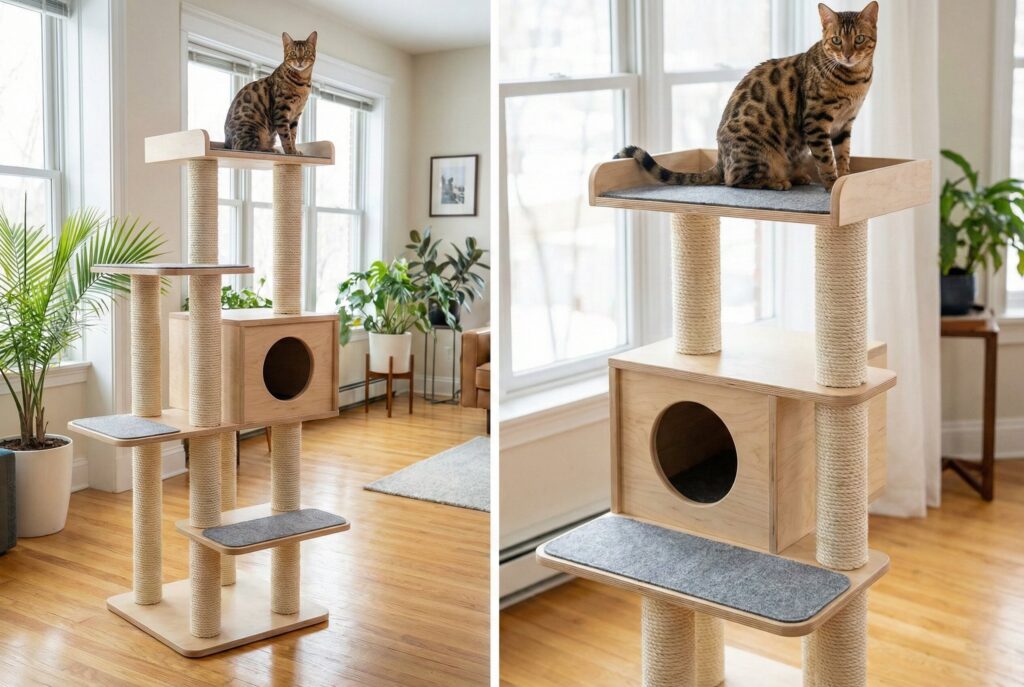
Traditional carpeted cat trees are notorious eye sores. The modern alternative is the wooden cat tree. These structures use solid wood or high-quality plywood for the platforms and hideaways, leaving the wood exposed for a cleaner look.
- Features to Look For: Multiple vertical levels, sisal-wrapped support posts for scratching, and at least one fully enclosed wooden box attached midway up the tree for napping. Many feature removable, velcro-attached felt or carpet pads on the platforms to prevent slipping.
- Why Cats Love It: Satisfies their natural instinct to climb and observe their territory from a high vantage point, while still providing a dark, safe box to retreat to.
- Pros: Easy to keep clean (vacuuming exposed wood is easier than vacuuming carpet), looks much cleaner and more modern than traditional trees.
- Cons: Can be very tall and heavy; requires assembly and sometimes wall anchoring for safety.
9. Stackable Wooden Cat Hexagons (Wall-Mounted or Floor)
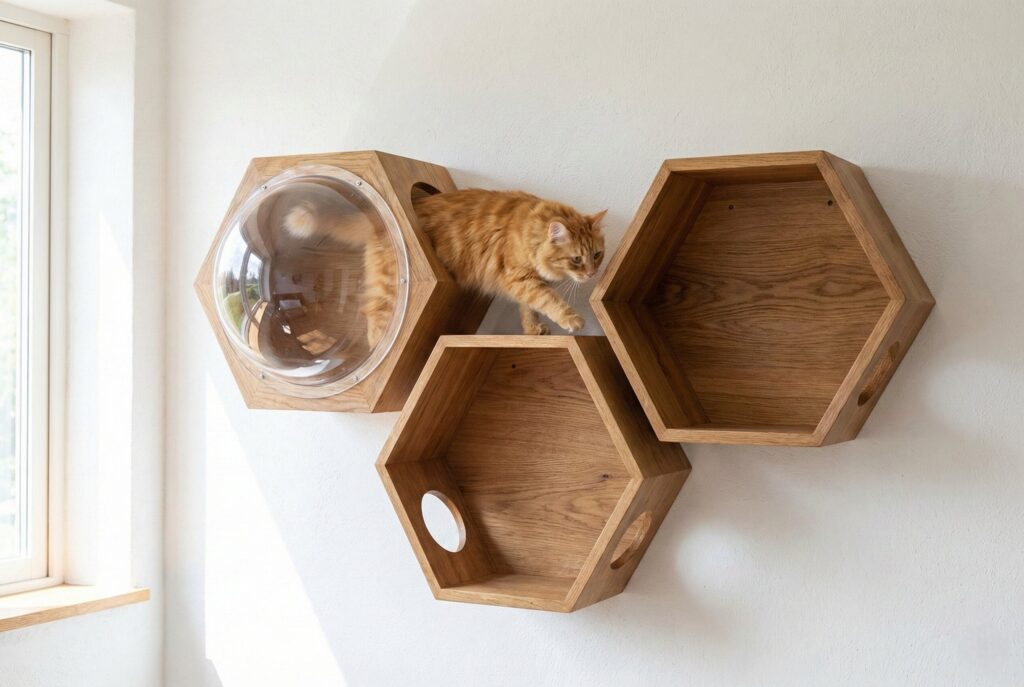
For a highly customizable and architectural look, modular wooden hexagons are fantastic. These six-sided wooden rings can be bolted together on the floor to form a honeycomb structure, or mounted individually on the wall to create a feline climbing wall.
- Features to Look For: Sturdy wood construction, pre-drilled holes for connecting multiple units together, and options with acrylic bubble windows or solid backings.
- Why Cats Love It: Creates a complex, engaging environment. When wall-mounted, it acts as a jungle gym that keeps them active and stimulated.
- Pros: Fully customizable layout, visually interesting, great for multi-cat households, as you can just add more units.
- Cons: Wall-mounting requires finding studs and drilling holes in your walls; buying multiple units can become costly.
10. Rustic Cedar Indoor Cat Cabin
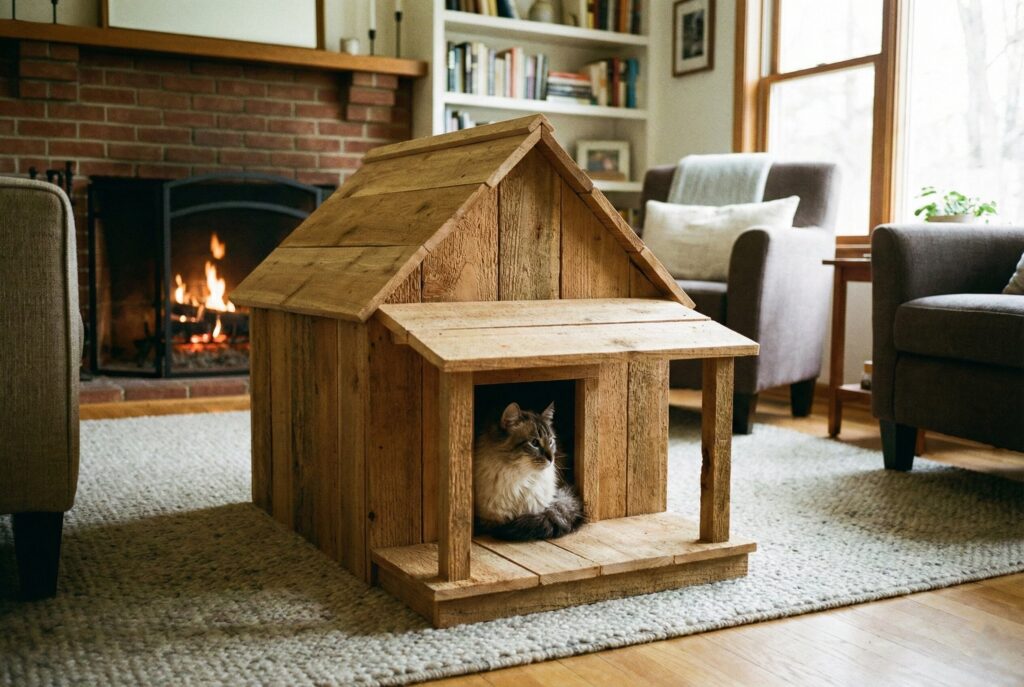
If your home decor leans towards traditional, cabin, or farmhouse styles, a pre-built indoor cedar cabin is an excellent choice. Cedar is a naturally fragrant and durable wood.
- Features to Look For: Real cedar wood construction (not just a veneer), slanted roofs, and small porch-like extensions. Ensure the cedar scent is not too overpowering, as cats have highly sensitive noses.
- Why Cats Love It: The solid construction feels very safe, and the wood provides excellent insulation.
- Pros: Beautiful rustic aesthetic, strong natural wood, highly durable.
- Cons: Heavy to move, the natural wood grain might clash with ultra-modern decor.
11. Luxury Wooden Cat Cabinet with Litter Box Hider
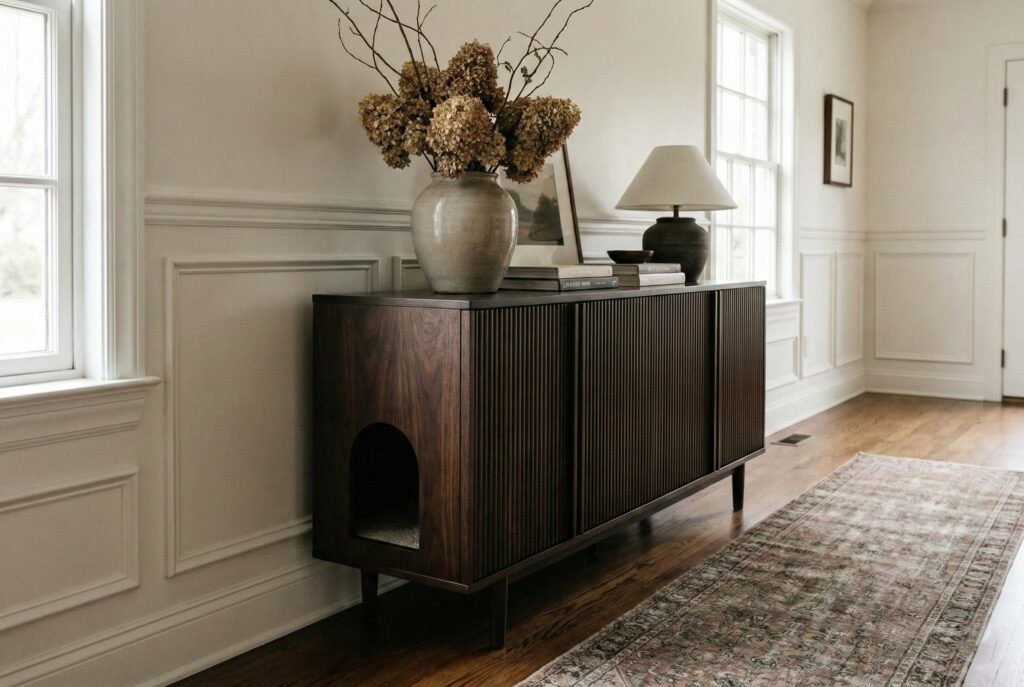
While technically a “house” for their bathroom, enclosed wooden litter box furniture is a massive category of indoor cat houses. These units are designed to look like high-end sideboards, buffets, or benches, completely hiding the unsightly litter pan inside.
- Features to Look For: Double front doors for easy human access to clean the pan, an internal divider wall to prevent litter tracking, and waterproof interior coatings to protect the wood from accidental spills. Excellent ventilation is mandatory here.
- Why Cats Love It: Cats prefer privacy when using the bathroom. The enclosure blocks out loud household noises and makes them feel secure.
- Pros: Hides the litter box completely, reduces odor spread, and significantly cuts down on litter tracking across your floors.
- Cons: You must remember to check and clean the box, as it is out of sight. Some large cats dislike fully enclosed litter spaces.
How to Make Your Wooden Cat House More Comfortable
Buying or building the wooden structure is only the first step. Wood is hard, so you must add elements to make the interior inviting and comfortable for your cat.
Choosing the Right Bedding
Do not leave the wooden floor bare. Add a comfortable layer of bedding. For younger, active cats, a soft fleece blanket or a simple stuffed cushion works perfectly. For senior cats or those with joint issues like arthritis, invest in an orthopedic memory foam pad cut to the exact dimensions of the house. Ensure whatever bedding you choose is easily removable and machine washable, as it will accumulate hair and dander quickly.
Temperature Control
Wood naturally insulates, but you can enhance this. In cold winter months, consider adding a self-warming cat mat. These mats contain a layer of Mylar that reflects the cat’s own body heat back to them without the need for electricity.
If you do use an electric heated pad, ensure it is specifically designed for pets, operates on low voltage, and has a chew-resistant cord. Ensure the house is large enough that the cat can move off the heating pad if they get too warm.
Location and Placement
Where you put the wooden cat house is just as important as the house itself.
- Avoid High Traffic Areas: Do not place the house in busy hallways or right next to loud appliances like the television or washing machine.
- Elevate If Possible: Cats love to observe. If the house design allows, placing it on a sturdy, low table or near a window (safely out of direct, overheating sunlight) will make it much more appealing.
- Keep Away from Food: In the wild, cats do not sleep where they eat or use the bathroom. Keep the cat house in a separate area from their food bowls and litter box (unless the house is a litter enclosure).
Encouraging Use
If your cat ignores their new wooden house, do not force them inside. Instead, use positive reinforcement. Sprinkle a high-quality organic catnip or silvervine on the cushion inside. Toss their favorite treats or toys into the enclosure. Leave an article of your worn clothing inside; your scent will make the new space smell familiar and safe.
Maintenance and Cleaning Tips for Wooden Cat Houses
To ensure your wooden cat house lasts for years and remains a hygienic environment, regular maintenance is required.
Sealing the Wood
If your wooden house is unfinished (especially DIY projects using plywood or pallet wood), you should seal it. Unfinished wood is porous and will absorb moisture, vomit, or urine accidents, leading to permanent stains and foul odors. Use a pet-safe, non-toxic water-based polyurethane sealant. Apply two to three coats, allowing it to dry completely. This creates a hard, wipeable surface.
Regular Cleaning Routine
Establish a simple cleaning schedule.
- Weekly: Remove the internal bedding and wash it in hot water with a pet-safe, unscented detergent. Vacuum the inside of the wooden house to remove loose hair, dander, and tracked litter or food crumbs.
- Monthly: Wipe down the interior and exterior wooden surfaces with a damp cloth. If the wood is sealed, you can use a mild solution of water and white vinegar to naturally disinfect and neutralize any lingering odors. Never use harsh chemical cleaners like bleach or ammonia, as the fumes will linger in the enclosed space and harm your cat’s respiratory system.
Inspecting for Wear and Tear
Wood is durable, but hardware can loosen. Every few months, inspect the cat house. Tighten any loose screws or bolts, especially on elevated houses or wall-mounted hexagons. Check any attached sisal scratching surfaces; if the rope is heavily frayed, cut it away and re-wrap it tightly to prevent your cat from ingesting loose fibers.
Conclusion
An indoor wooden cat house is a brilliant investment for any pet owner. It respects your cat’s innate behavioral need for a secure, enclosed territory while simultaneously upgrading your home’s interior design.
Whether you decide to break out the power tools and upcycle a vintage television into a retro hideaway or you opt for a sleek, store-bought mid-century modern end table, the key is prioritizing safety, comfort, and appropriate sizing.
By selecting non-toxic materials, ensuring proper ventilation, and making the interior cozy with washable bedding, you will create a feline sanctuary that your cat will love to sleep in day after day.