
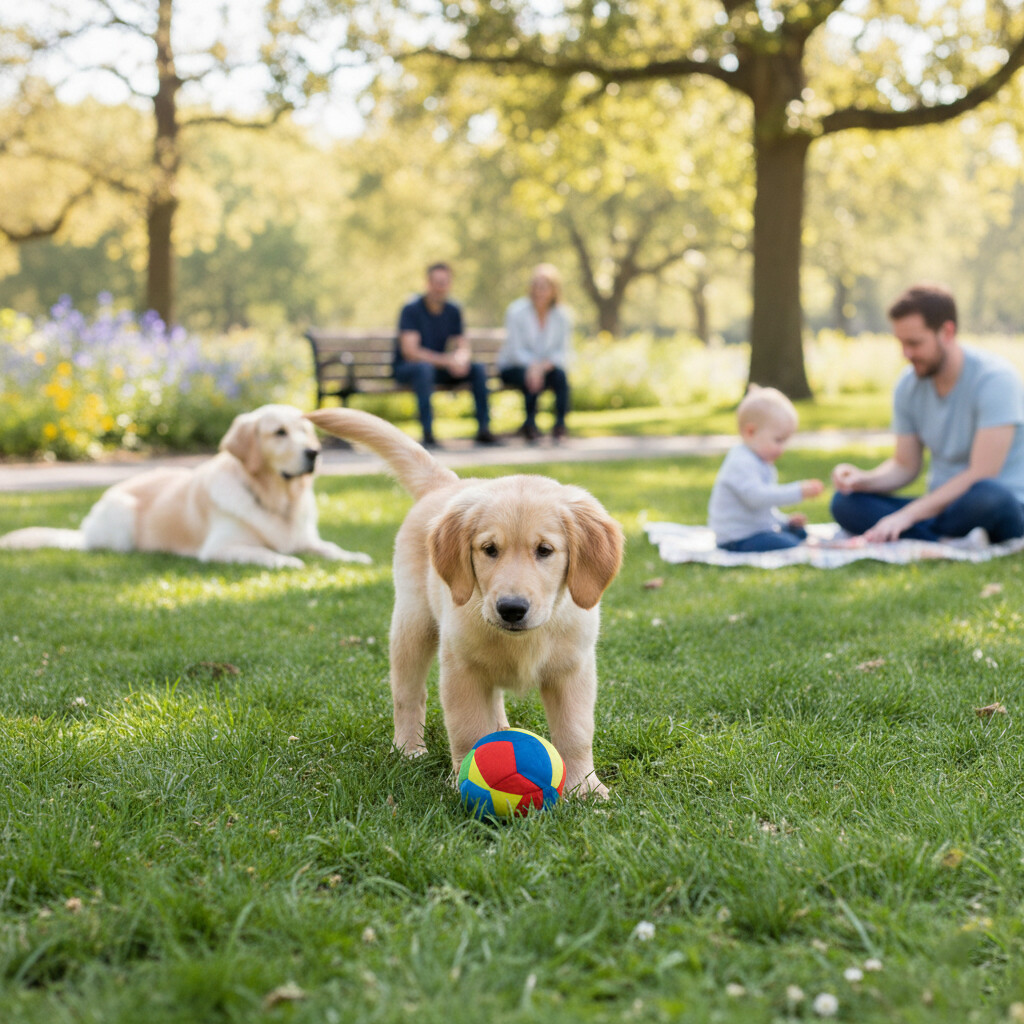
Puppy socialization is the process of safely exposing a young dog to new people, animals, environments, and sounds during their critical developmental window (typically 3 to 14 weeks of age). Proper socialization prevents fear-based aggression, anxiety, and behavioral issues later in life, ensuring the puppy grows into a confident, adaptable, and safe adult dog.
Summary Table: Early Socialization Matters for Puppies
| Factor | Details |
| Critical Window | 3 to 14 weeks of age |
| Primary Goal | To normalize new experiences and prevent fear |
| Key Method | Positive reinforcement (treats, praise, play) |
| Risks of Skipping | Fear, aggression, anxiety and difficulty handling |
| Safety Note | Balance socialization with vaccination status |
The Importance of Early Socialization for Puppies
Bringing a new puppy home is exciting. You have bought the crate, the food, and the toys. However, there is one task more important than teaching your dog to “sit” or “stay.” That task is socialization. Many owners overlook this step or misunderstand it, but it is the single most significant factor in determining your dog’s future personality.
Socialization is not just about letting your puppy play with other dogs. It is a structured way of teaching your puppy that the world is safe. This guide explains why early socialization is vital, how to do it correctly, and the risks of ignoring it.
What Is Puppy Socialization?
Socialization is the developmental stage where a puppy learns how to interact with their environment. In the wild, this is when a wolf pup would learn what is safe to eat and who is a friend. For a domestic dog, this means learning that cars, vacuum cleaners, vet clinics, children, and men with beards are not threats.
During this time, a puppy’s brain is like a sponge. They are biologically programmed to accept new things. Once this window closes, their brain changes. New things are no longer viewed with curiosity; they are viewed with suspicion/caution.
Read Also: How to Prevent Separation Anxiety in Puppies?
The Critical Developmental Window
The most important concept in socialization is the “critical window.” This is a specific timeframe where socialization is most effective.
- Starts: Around 3 weeks of age (usually while still with the breeder).
- Ends: Around 12 to 14 weeks of age.
This timeline is short. By the time most owners bring a puppy home at 8 weeks, the window is already half closed. You effectively have 4 to 6 weeks to introduce your puppy to everything they will face in their adult life. After 14 weeks, you can still train a dog, but you can rarely change their fundamental emotional response to fear.
Why Socialization Is Crucial for a Happy Life
A well-socialized dog is a happy dog. When a dog is confident, they do not feel the need to bite or run away when things change. Here are the specific benefits of doing this work early.
1. Prevention of Fear and Aggression
Fear is the root cause of most aggression in dogs. A dog that growls at a stranger is usually not “mean.” They are terrified. If a puppy never meets a tall person wearing a hat during the critical window, they may view that person as a monster when they are an adult. Socialization teaches the puppy that different-looking people are normal.
2. Easier Vet and Grooming Visits
Your dog will need healthcare for their entire life. They will need their ears checked, nails trimmed, and teeth examined. Socialization involves handling exercises.
You touch their paws, ears, and tail while giving them treats. This ensures that when a veterinarian or groomer does it later, the dog remains calm and cooperative rather than needing sedation.
3. Adaptability to New Environments
Life changes. You might move to a city, have a baby, or travel. A socialized dog adapts to these changes without falling apart. They can walk on busy streets with sirens wailing, or they can settle quietly in a hotel room. An unsocialized dog may develop severe anxiety if their routine is disrupted.
4. Safety for Your Family and Community
A frightened dog is a dangerous dog. If a child runs up to your dog and hugs them, a socialized dog might be annoyed but will likely tolerate it or move away. An unsocialized dog may bite out of a reflex to protect itself. Socialization builds a “bite inhibition” and a high tolerance for stress, keeping everyone safe.
The Risks of Skipping Socialization
If you isolate your puppy until it is six months old, the consequences can be severe and often permanent. The behavioral issues resulting from isolation are the number one reason dogs are surrendered to shelters.
- Generalized Anxiety: The dog is constantly on edge, panting, and pacing in normal situations.
- Leash Reactivity: Barking and lunging at other dogs or people during walks.
- Sound Phobia: Extreme terror during thunderstorms, fireworks, or even loud trucks.
- Separation Anxiety: Inability to be left alone because they lack confidence.
- Human Aggression: Snapping at guests or family members when touched unexpectedly.
How to Socialize Your Puppy Correctly
Socialization is not just exposure; it is positive exposure. If you take your puppy to a noisy construction site and they are terrified, you have done more harm than good. The goal is to create a positive association.
The Rule of 7s
A popular guideline for puppy owners is the “Rule of 7s.” By the time your puppy is 12 weeks old, they should have experienced:
- Been on 7 different types of surfaces (carpet, concrete, grass, gravel, wood, etc.).
- Played with 7 different types of objects (big balls, fuzzy toys, squeaky toys, etc.).
- Been in 7 different locations (kitchen, yard, car, friend’s house, pet store, etc.).
- Met and played with 7 new people (children, elderly, people with glasses, people with canes).
- Been exposed to 7 challenges (climbing on a box, going through a tunnel, walking up steps).
- Eaten from 7 different containers (metal, plastic, cardboard, saucer, mug).
- Eaten in 7 different locations.
Categorizing Your Checklist
To ensure you cover everything, break your socialization efforts into categories.
1. People and Appearances
Your puppy needs to see diversity.
- Infants, toddlers, and teenagers.
- People of different races and skin tones.
- People wearing uniforms, sunglasses, hats, and hoodies.
- People carrying umbrellas, bags, or using wheelchairs.
2. Sounds and Noise
Start these at a low volume and increase gradually.
- Vacuum cleaners and hair dryers.
- Doorbeels and knocking.
- Traffic noises (buses, trucks, sirens).
- Thunder and fireworks (you can play recordings of these sounds while feeding treats).
3. Environments and Surfaces
Dogs experience the world through their paws.
- Wet grass and mud.
- Slippery tile or hardwood floors.
- Metal grates or manhole covers.
- Automatic sliding doors at stores.
- Stairs (open and closed backs).
4. Other Animals
This requires care to ensure safety (see the section on vaccinations below).
- Adult dogs that are calm and known to be vaccinated.
- Cats (if possible).
- Small animals (rabbits, birds) observed from a distance.
Read Also: When Can Puppies Start Going Outside?
The Role of Positive Reinforcement
Simply showing your puppy a vacuum cleaner isn’t enough. You must pair the scary thing with a good thing. This is called counter-conditioning.
How to do it:
- Distance: Keep the scary object (like a vacuum) far away.
- Reward: When the puppy looks at the vacuum, give them a high-value treat (like a piece of chicken or cheese).
- Approach: If the puppy remains calm, move a little closer and reward again.
- Retreat: If the puppy shows signs of fear (tucked tail, ears back, hiding), you have moved too fast. Back up and try again later.
Never force your puppy to confront a fear. Do not drag them toward a scary object. This is called “flooding,” and it can traumatize the dog, making the fear worse.
Socialization vs. Vaccination: The Safety Balance
A common dilemma for new owners is the advice from veterinarians to keep the puppy inside until fully vaccinated (usually around 16 weeks) to prevent Parvovirus and Distemper.
However, keeping a puppy in a bubble until 16 weeks misses the entire critical socialization window.
The American Veterinary Society of Animal Behavior (AVSAB) states that the risk of behavioral issues from lack of socialization is actually higher than the risk of infection, provided you take smart precautions.
Safe Socialization Before Full Vaccination:
- Carry Them: Carry your puppy in a sling or backpack. They can see and smell the world without their paws touching contaminated ground.
- Car Rides: Go for drives and sit in the trunk with the hatch open to watch the world go by.
- Safe Yards: Visit the fenced backyards of friends who have vaccinated dogs.
- Avoid High-Risk Areas: Stay away from dog parks, pet stores with high traffic, and unknown patches of grass where stray dogs may have urinated.
- Puppy Classes: Enroll in a puppy socialization class. Reputable trainers require proof of age-appropriate vaccinations and sanitize their floors, making the risk very low.
Read Also: How Aging Affects Dogs
Handling and Body Awareness
Socialization also applies to the dog’s own body. You must teach your puppy that being touched is okay. This is essential for medical care.
The Body Check Routine:
Perform this routine daily when the puppy is tired and calm.
- Ears: Lift the ear flap, look inside, and give a treat.
- Paws: Touch each toe individually. Tap the nail with a clipper (without cutting) and give a treat.
- Mouth: Lift the lip to look at the teeth and gums. Give a treat.
- Restraint: Gently hold the puppy still for a few seconds, as if you are hugging them. Release and reward.
If your puppy nips or struggles, stop. Wait for them to settle, then try again more gently.
Troubleshooting: What if My Puppy is Scared?
Even with the best efforts, some puppies are naturally more timid. If you notice your puppy barking at strangers or hiding behind your legs, take immediate action.
- Do Not Punish Fear: Never scold a puppy for growling or barking out of fear. This takes away their warning signal. Next time, they might bite without warning.
- Create Distance: Move away from the trigger until the puppy relaxes.
- Hire a Professional: If the fear seems excessive, hire a certified professional dog trainer or veterinary behaviorist immediately. It is much easier to fix fear at 12 weeks than at 2 years.
Conclusion
Socialization is an investment. It requires time, patience, and pockets full of treats. It can be exhausting to carry your puppy everywhere and constantly monitor their reactions. However, the payoff is immense.
By dedicating yourself to this process during those first few critical months, you are building the foundation for the next 15 years of your dog’s life. You are creating a dog that can join you on family vacations, relax at a coffee shop, and greet guests with a wagging tail. You are ensuring that your dog is not a prisoner of their own fear. The window is short, but the results last a lifetime. Start today.