
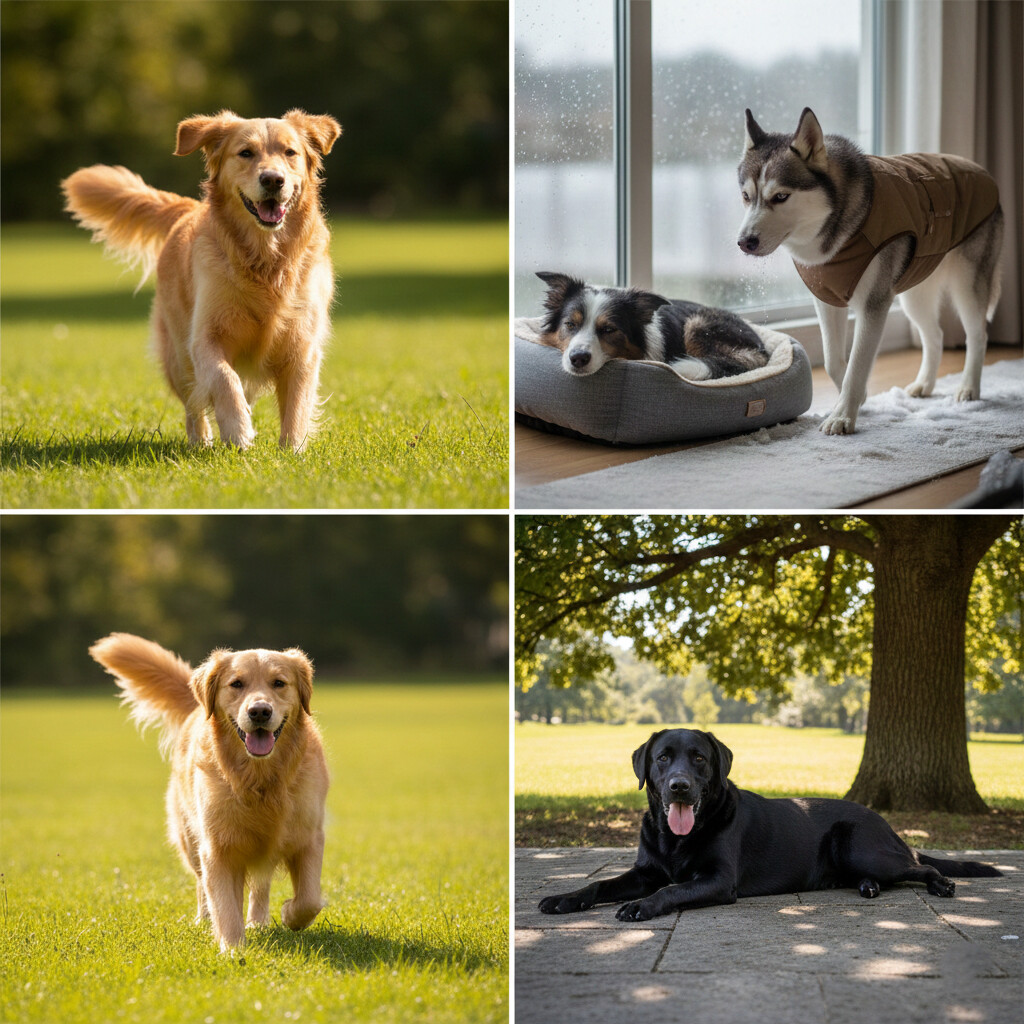
Dogs are sensitive to weather changes often before humans even notice the sky turning gray. Research indicates that shifts in barometric pressure, static electricity, temperature, and wind speed can significantly alter a dog’s mood, energy levels, and physical comfort, leading to behaviors ranging from anxiety and aggression to lethargy and playfulness.
Summary Table: Weather Impact on Dogs
| Weather Condition | Common Behaviors | Underlying Cause |
| Thunderstorms | Hiding, shaking, whining, pacing | Drop in barometric pressure, static electricity buildup in fur, noise sensitivity. |
| Hot Weather | Lethargy, irritability, reduced appetite | Seasonal Affective Disorder (SAD) is caused by lack of sunlight and melatonin changes. |
| Cold Weather | Heat exhaustion risk, dehydration, and physical discomfort leading to shorter tempers. | Arthritis pain in joints, instinct to conserve energy, or invigoration from cool air. |
| Windy Days | Nervousness, distraction, ignoring commands | Seasonal Affective Disorder (SAD) is caused by a lack of sunlight and melatonin changes. |
| Dark Winter Days | Sleeping more, lower energy, sadness | Sensory overload from smells, inability to hear properly, and feeling unsafe. |
How Weather Affects Dog Behavior?
Have you ever noticed your dog pacing nervously before a storm hits, or acting unusually grumpy on a sweltering summer day? You are not imagining it. Dogs are biologically equipped with heightened senses that make them walking weather stations. While humans rely on apps to check the forecast, dogs rely on their bodies.
The connection between weather and canine behavior is rooted in biology. Their keen sense of smell, sensitive hearing, and ability to detect atmospheric pressure changes mean they experience weather physically, not just visually.
Understanding these triggers is the first step in helping your pet cope with the changing seasons.
Read Also: Why Some Dogs Love Water and Others Don’t?
1. Thunderstorms and Barometric Pressure
Thunderstorms are perhaps the most dramatic weather event for dogs. It is estimated that a significant percentage of dogs suffer from “storm phobia.” This goes beyond just being scared of loud noises.
The Pressure Drop
Before a storm arrives, the barometric pressure in the air drops. Humans might feel this as a mild headache, but for dogs, it can be an intense physical sensation. This drop in pressure can cause fluids in the body to expand slightly.
For seeing-eye dogs or pets with sensitive ears, this pressure change can feel like the popping sensation you get on an airplane, but they cannot relieve it. This physical discomfort often causes them to pace, whine, or seek attention long before the rain starts.
Static Electricity
This is a factor many owners overlook. During a storm, the air becomes charged with electricity. Dogs with thick or double coats can actually experience static shocks. The static builds up in their fur, and when they touch a metal object or even another person, they might feel a zap.
If your dog tries to hide in the bathtub, behind the toilet, or in the basement during a storm, they are likely trying to “ground” themselves. Porcelain and tile are poor conductors of electricity, so these spots effectively stop the static shocks.
Sound Sensitivity
A dog’s hearing is far more sensitive than a human’s. The low-frequency rumble of thunder can travel for miles and may sound physically painful to a dog. This can trigger a “fight or flight” response, causing adrenaline to spike.
2. Heat and Aggression
We often think of hot weather as a time for fun, but for dogs, extreme heat can actually trigger bad behavior.
The “Summer Aggression” Link
Studies have shown a correlation between high temperatures and dog bites. Just like humans get “cranky” when they are hot and sticky, dogs get irritable when they are overheating. Their primary way of cooling down is panting, which takes energy.
If a dog is physically uncomfortable, their tolerance for annoyance drops. A child pulling their tail or a stranger petting them might result in a snap or growl that would never happen on a cool day.
Lethargy and Appetite
It is normal for dogs to eat less in the summer. Digestion creates body heat, so skipping a meal is a natural way for them to stay cool. You will also notice a major drop in activity. This is not laziness; it is a survival instinct.
Forcing a dog to run or play in high heat can quickly lead to heatstroke, which is life-threatening.
3. Cold Weather and Joint Pain
Winter brings its own set of behavioral challenges. While some thick-coated breeds like Huskies love the snow, others struggle significantly.
Arthritis and Barometric Pressure
Cold, damp weather affects dogs with arthritis just like it affects elderly humans. Low pressure and cold temperatures can cause tissues to swell, putting pressure on sensitive joints.
If your older dog suddenly refuses to climb stairs, jump into the car, or go for a walk on a cold morning, they are likely in pain, not being stubborn.
Refusal to Go Outside
Small breeds and dogs with short hair often refuse to go potty outside in the winter. The sensation of cold air or wet snow on their belly is unpleasant. This can lead to “accidents” in the house, which owners often mistake for a regression in potty training.
The “Zoomies”
Conversely, some dogs get a sudden burst of energy in the cold. The crisp air can feel invigorating, especially for dogs who overheat easily in the summer.
You might see them sprinting in circles (the “zoomies”) to generate body heat and burn off the energy they have been bottling up indoors.
Read Also: How to Choose the Right Dog for Your Lifestyle?
4. Windy Days and Sensory Overload
Wind is a surprisingly common trigger for anxiety in dogs.
Scent Confusion
Dogs “see” the world through their noses. On a calm day, smells stay relatively put, allowing a dog to identify who is nearby. On a windy day, millions of new scents are whipped around at high speeds. This causes sensory overload.
Your dog can’t tell where a smell is coming from or if a predator (or the neighbor’s cat) is approaching. This loss of control makes them nervous.
Hearing Interference
The sound of wind rushing past their ears masks other sounds. Your dog relies on hearing to feel safe. If the wind is howling, they cannot hear someone approaching from behind, which makes them feel vulnerable and “on edge.”
They may also struggle to hear your commands, appearing disobedient when they actually just cannot hear you.
5. Seasonal Affective Disorder (SAD) in Dogs
Can dogs get the winter blues? Evidence suggests the answer is yes.
The Role of Light
Just like humans, dogs are influenced by sunlight. Sunlight affects the production of melatonin (the sleep hormone) and serotonin (the mood-regulating hormone). In the winter, when days are short and dark, a dog’s body produces more melatonin.
Symptoms of Canine SAD
- Oversleeping: Difficulty waking up or napping far more than usual.
- Clinginess: Seeking constant physical contact with owners.
- Loss of Interest: Ignoring toys or games they usually love.
- Appetite Changes: Either eating far less or begging for food constantly.
If you notice these signs during the dark winter months, your dog might be reacting to the lack of light rather than a physical illness.
Read Also: When Do Puppies Stop Teething?
How to Help Your Dog Cope
Understanding why your dog is acting strangely is the first step. Here are actionable ways to manage weather-related behavior issues.
Managing Storm Anxiety
- Create a Safe Space: An interior closet or a bathroom (where the porcelain blocks static) is ideal. Add calm music or a white noise machine to mask the thunder.
- Anti-Static Measures: Wipe your dog’s fur with a pet-safe anti-static wipe or use a humidifier in the house to reduce static electricity in the air.
- Pressure Wraps: Products like “Thundershirts” apply gentle, constant pressure to the dog’s torso, which releases calming hormones similar to swaddling a baby.
Managing Heat Aggression
- Time Your Walks: Only walk early in the morning or late at night.
- Mental Stimulation: If it is too hot to go out, use puzzle toys or hide-and-seek games indoors to burn energy without raising body temperature.
- Cooling Mats: Provide a gel cooling mat for them to lie on to regulate their temperature quickly.
Managing Winter Blues and Stiffness
- Light Therapy: Move your dog’s bed closer to a window to maximize natural light exposure.
- Warmth for Joints: For arthritic dogs, consider a heated dog bed or a dog sweater to keep their muscles loose.
- Indoor Potty Solutions: For small dogs who hate the cold, setting up an indoor grass patch or potty pad near the door can save you from house-training regression.
When to See a Vet
While weather is a common cause for behavioral changes, it should not be a catch-all excuse. If your dog is suddenly lethargic, aggressive, or hiding, it is always safer to rule out medical issues first.
A dog that is in pain from a toothache might act exactly like a dog scared of a storm. However, if you track the behavior and notice it aligns perfectly with the weather forecast, you can be confident that Mother Nature is the culprit.
Conclusion
Your dog is not just being difficult when they refuse to walk in the rain or bark at the wind; they are responding to powerful biological instincts.
By paying attention to the forecast, you can predict your dog’s mood before it changes. Whether it is preparing a “bunker” for a thunderstorm or keeping the house cool during a heatwave, a little preparation goes a long way in keeping your canine companion happy, regardless of what the sky is doing.