
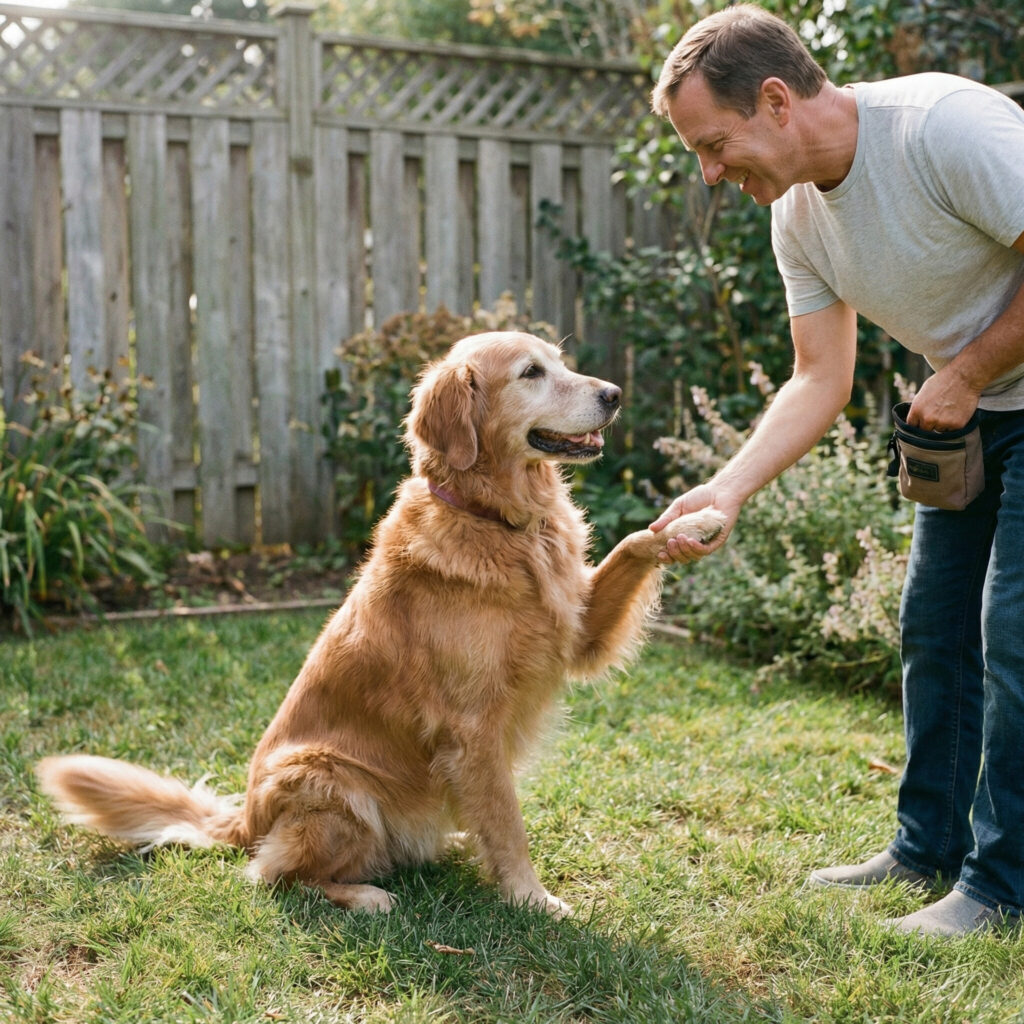
Yes, you absolutely can train an older dog. While senior dogs may have established habits or physical limitations, they often have longer attention spans and are calmer than puppies. The key to success is patience, consistency, and using positive reinforcement. You must adjust your training methods to accommodate any physical issues, such as arthritis or hearing loss, and keep training sessions short but frequent to avoid fatigue. Old dogs can indeed learn new tricks.
Summary Table
| Factor | Key Details |
| Best Method | Positive Reinforcement (Rewards-based) |
| Session Length | 5 to 10 minutes, 2-3 times a day |
| Top Challenges | High-value soft treats, a comfortable harness, orthopedic bed |
| Essential Gear | High-value soft treats, comfortable harness, orthopedic bed |
| Health Check | Mandatory veterinary exam before starting |
| Adjustments | Use hand signals for hearing loss; soft surfaces for joint pain |
How to Train an Older Dog
The saying “you can’t teach an old dog new tricks” is one of the most damaging myths in dog ownership. It discourages people from adopting senior pets and convinces owners that bad behaviors in their aging companions are permanent. The reality is quite the opposite.
Older dogs are often eager to please, less distracted than hyperactive puppies, and capable of learning complex behaviors well into their golden years.
Training an older dog is not just about obedience; it is a vital way to keep their brain active and strengthen the bond between you. Mental stimulation can actually slow the progression of cognitive decline.
However, the approach requires more empathy and adjustment than training a puppy. You are dealing with an animal that has a history, potential physical aches, and a set routine.
This guide will walk you through exactly how to reshape behavior and teach new skills to your senior companion comfortably and effectively.
Read Also: Why Do Dogs Regress in Training?
Step 1: The Veterinary Health Check
Before you ask your dog to sit, stay, or heel, you need to know what their body can handle. Pain is the number one reason older dogs refuse to obey commands. If sitting hurts their hips, they won’t do it, and you might mistake this for stubbornness.
Schedule a full checkup with your veterinarian. Specifically, ask about:
- Arthritis and Joint Pain: Does your dog have hip dysplasia or stiff knees? This changes how you teach “sit” or “down.”
- Vision and Hearing: Cataracts or hearing loss are common. If your dog can’t hear a clicker or voice command, you will need to switch to hand signals or tactile cues.
- Dental Health: If their teeth are bad, crunchy treats might be painful. You will need soft chews.
- Cognitive Function: Discuss if your dog shows signs of Canine Cognitive Dysfunction (doggie dementia), which affects learning speed.
Step 2: Setting Up the Environment
Older dogs value comfort and routine. To get the best results, you need to control the environment to reduce stress.
- Flooring: Slippery tile or hardwood floors are difficult for arthritic dogs. They may be scared to sit because their paws slide out. Use yoga mats or area rugs to provide traction.
- Distractions: Start inside a quiet room. Older dogs can still get overwhelmed.
- The Rewards: Senior dogs may have a lower metabolism. Use tiny, low-calorie treats. Boiled chicken, small pieces of low-fat cheese, or specialized soft senior training treats work best. Avoid hard biscuits that take too long to chew.
Step 3: The Golden Rule (Positive Reinforcement)
Dominance theory or punishment-based training should never be used, but it is especially harmful to older dogs. They are more sensitive to stress. Positive reinforcement, rewarding the behavior you want, is the only path forward.
When your dog does what you ask, they get a reward immediately. This builds a “payment history” in their brain. If they get a treat every time they sit, they will want to sit more often. If they make a mistake, simply ignore it and try again. Do not scold an older dog; it rarely helps and only damages trust.
Read Also: How to Build Focus in Easily Distracted Dogs
Core Commands for Seniors
The “Sit” (Modified)
For a puppy, you might lure their head back until their butt hits the floor. For a senior with stiff hips, a full tuck sit might be impossible or painful.
- Stand in front of your dog with a treat at their nose level.
- Slowly lift the treat up and slightly back.
- As their head goes up, their rear naturally lowers.
- Important: Accept a “hover sit” or a partial crouch if that is all their joints allow. Do not force their bottom to the ground.
- Mark the behavior with a “Yes!” or a clicker, then give the treat.
The “Watch Me” (Focus)
This is crucial for older dogs who may have slower reaction times. It gets their attention before you give a real command.
- Hold a treat near your dog’s nose.
- Bring the treat up to your eye level.
- When the dog looks at your eyes to follow the treat, say “Yes!” and reward them.
- Repeat this until the dog looks at your face whenever you say their name.
“Stay”
This is excellent for impulse control.
- Ask for a seat or a stand (standing is often more comfortable for seniors).
- Hold your hand up like a stop sign.
- Take one small step back.
- If they don’t move, immediately step back in and reward.
- Slowly increase the duration before you increase the distance.
Untraining Bad Habits
The biggest difference between a puppy and a senior is that the senior has “baggage.” They may have been barking at the mail carrier for ten years. This is a deeply ingrained neural pathway. To stop this, you must use counter-conditioning.
Scenario: The Doorbell Barker
If your dog goes crazy when the doorbell rings:
- Desensitize: Record the sound of a doorbell on your phone.
- Play it softly: Play the sound at a very low volume where the dog hears it but doesn’t react.
- Reward: Immediately give a high-value treat while the sound is playing.
- Increase Volume: Over days (not minutes), slowly increase the volume.
- The Goal: You are changing the emotional response from “Intruder alert!” to “Doorbell means chicken!”
Adjusting for Sensory Loss
As dogs age, their senses dull. You cannot rely solely on your voice.
Training a Deaf Dog
If your dog is losing their hearing, stop shouting. It won’t work and looks aggressive.
- Hand Signals: Create clear, distinct hand gestures for every command. A closed fist might mean “sit,” and a flat palm might mean “stay.”
- Vibration Collars: These are NOT shock collars. They simply vibrate gently to get the dog’s attention, so they look at you for a hand signal.
- Flashlights: You can use a quick flash of a light (not in their eyes) to mark a correct behavior, similar to a clicker.
Training a Blind Dog
- Luring: Use smelly treats. Let them sniff the treat in your hand and guide their nose to move their body.
- Verbal Cues: Your voice is their lifeline. Keep a constant stream of praise so they know where you are.
- Tactile Cues: Teach them that a touch on the shoulder means “look at me,” or a touch on the rump means “sit.”
- Safety Commands: Prioritize teaching “Wait” or “Stop” to prevent them from walking into walls or falling down stairs.
Read Also: Why Dogs React Differently on Leash
Dealing with Potty Training Regression
It is common for older dogs to have accidents in the house. Before you treat this as a training issue, assume it is medical. Incontinence is common in seniors due to weakening muscles or kidney issues.
If the vet clears them medically:
- Back to Basics: Treat them like an 8-week-old puppy. Take them out every 2-3 hours.
- Supervision: Do not give them free roam of the house if they are having accidents. Keep them in the same room with you.
- Reward Heavily: Go outside with them. When they go potty, throw a party. Treats, praise, affection. Remind them that outside is the place to go.
- Clean Thoroughly: Use an enzymatic cleaner on indoor accidents. If they can smell the old urine, they will go there again.
Mental Stimulation: The Fountain of Youth
Training is not just about compliance; it is about cognitive health. A bored senior dog ages faster. Mental exercise tires them out more than a long walk, which is perfect for dogs with physical limitations.
Puzzle Toys
Ditch the food bowl. Feed your senior dog their meals in a puzzle toy or a snuffle mat. This forces them to use their nose and brain to solve the problem of “how do I get the food?”
Scent Work
This is a low-impact sport perfect for old dogs.
- Hide a treat in one of your hands and ask, “Which one?”
- Hide treats around the living room while the dog waits, then tell them to “Find it.”
- This utilizes their strongest sense (smell) and builds confidence.
Addressing Canine Cognitive Dysfunction (CCD)
If your dog seems to forget commands they have known for years, gets stuck in corners, or paces at night, they may have CCD. This is similar to Alzheimer’s in humans.
Training a dog with CCD requires extreme patience.
- Simplify: Go back to very basic commands.
- Routine: Do not change the furniture or the feeding schedule.
- Short Sessions: Keep training to 2 minutes.
- Patience: Never get angry. They aren’t ignoring you; they are confused. Gentle guidance is the only way.
Tools of the Trade for Senior Dogs
Having the right gear makes the process smoother.
- Harness vs. Collar: Collars can strain the neck, which might already be stiff. A front-clip harness gives you control without hurting their neck or spine.
- Ramps: If you are training them to get into the car or onto the bed, do not teach them to jump. Teach them to use a ramp. This preserves their joints.
- Clicker: A clicker is a distinct sound that cuts through background noise better than a voice, which helps dogs with mild hearing loss.
Conclusion
Training an older dog is one of the most rewarding experiences a pet owner can have. It requires you to slow down, observe, and communicate on a deeper level. You aren’t just teaching a dog to sit; you are telling them that they are still a vital, capable member of the family.
Remember, the goal isn’t perfection. The goal is engagement. If your 12-year-old dog learns to “shake” but does it slowly and clumsily, that is a massive victory. Celebrate the effort.
By keeping their mind sharp and their manners polished, you ensure their twilight years are happy, confident, and enriched. Start small, keep it positive, and watch your old friend come to life again.