
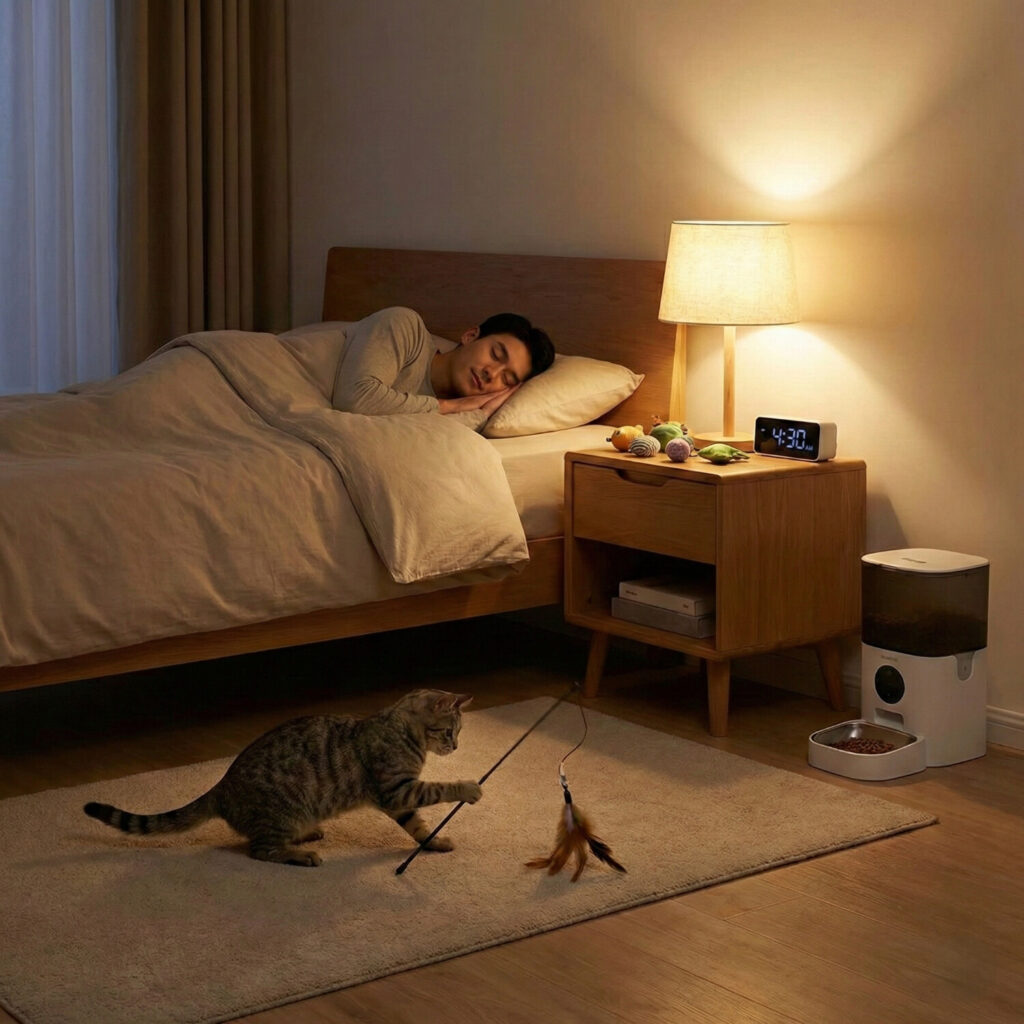
To stop a cat from waking you at night you must reset their internal body clock by simulating a hunt before bed. Engage them with intense interactive play using a wand toy until they are tired then feed them a heavy meal immediately after. This triggers their natural instinct to sleep after eating. Additionally never reward nighttime meowing with food or attention and establish a strict routine.
Summary Table: Why Cats Wake You Up at Night
| Strategy | Action Step | Goal |
| Play Therapy | 15 minutes of vigorous play before bed | Deplete excess energy |
| Meal Timing | Feed the largest meal right after play | Induce “food coma” sleep |
| Ignore Tactics | Do not react to meowing or scratching | Break the attention loop |
| Auto Feeders | Set a machine to dispense early breakfast | Dissociate you from food |
| Environment | Provide quiet toys and warm bedding | Keep them occupied alone |
| Vet Check | Screen for thyroid or urinary issues | Rule out medical causes |
How to Stop Cats From Waking You at Night
Sleep deprivation is a serious issue for many cat owners. You might love your feline friend but waking up at 3 AM to the sound of meowing or paws on your face is exhausting.
This behavior is one of the most common complaints among pet parents. The good news is that you can fix it. You do not have to lock your cat out of the bedroom or suffer through sleepless nights forever.
This guide covers scientifically backed methods to adjust your cat’s sleeping habits. We will look at biological reasons for this behavior and practical steps to stop it.
Read Also: The Importance of Early Socialization for Puppies
Why Cats Wake Up at Night
You must understand the enemy to defeat it. In this case the “enemy” is your cat’s natural biology. Cats are not strictly nocturnal. They are crepuscular.
This means they are most active during twilight hours which are dawn and dusk. In the wild this is when their prey is active.
Your domestic cat still has these wild instincts. Their internal clock tells them to hunt when the sun goes down and when the sun comes up. Unfortunately this often clashes with human sleep schedules.
If your cat sleeps all day while you are at work they have a full battery of energy ready to burn right when you want to go to bed.
The Boredom Factor
Indoor cats often suffer from a lack of stimulation. A cat that spends 10 hours alone sleeping will be desperate for engagement when you return.
If you do not channel that energy effectively in the evening they will try to engage you at night. To them your moving feet under the covers or your waking breath are signs of life that are exciting to investigate.
Step 1: Rule Out Medical Issues
Before you start any behavioral training you must visit your veterinarian. A sudden change in sleeping habits can indicate a health problem. This is especially true for senior cats.
Common medical causes for night activity include:
- Hyperthyroidism: An overactive thyroid gland can cause high energy, hunger, and restlessness.
- Hypertension: High blood pressure often accompanies other illnesses and affects sleep.
- Urinary Tract Infections (UTIs): Painful urination may cause a cat to cry out or pace frequently.
- Cognitive Dysfunction Syndrome: Similar to dementia in humans this can cause confusion and altered sleep cycles in older cats.
If your vet gives your cat a clean bill of health you can proceed with behavioral modification.
Step 2: The Hunt, Catch, Kill, Eat, Groom, Sleep Cycle
This is the most effective biological hack for cat owners. In nature a cat hunts its prey, catches it, kills it, eats it, grooms itself, and then sleeps. This is a hormonal cycle. You can replicate this sequence every night to force their body into sleep mode.
The Play Session (Hunt, Catch, Kill)
You cannot just wave a laser pointer around while watching TV. You need interactive play that mimics real hunting. Use a wand toy with a feather or lure on the end. Make the lure move like a mouse or a bird.
How to do it correctly:
- Move away from the cat: Prey never runs toward a predator. Move the toy away from them to trigger the chase instinct.
- Allow catches: Let your cat catch the “prey” occasionally so they feel successful.
- Intensity: Play until your cat is panting or lying on their side. If they stop, wait a moment and try again to see if they have a second wind.
- Duration: Aim for at least 15 to 20 minutes about an hour before your bedtime.
The Final Meal (Eat)
Once the play session ends and the cat is exhausted you must feed them. This corresponds to the “Eat” part of the cycle. Do not leave food out all day (free-feeding). Instead schedule their largest meal of the day for this time.
Protein digestion takes energy. When a cat eats a substantial meal after exercise their body naturally slows down. This is the “food coma” effect.
The Wind Down (Groom, Sleep)
After eating most cats will find a comfortable spot to groom themselves. Grooming releases calming endorphins. Once they are clean and full they will naturally fall asleep. This usually aligns perfectly with your own bedtime.
Step 3: Optimizing the Feeding Schedule
Food is the primary motivator for most animals. If your cat wakes you up for breakfast you are training them to use you as a vending machine. If you get up at 4 AM to feed them because they are meowing you have taught them that Meowing = Food.
Stop Free-Feeding
Leaving a bowl of dry food out 24/7 destroys your ability to use food as a tool. It also leads to obesity. Switch to scheduled meal times. This gives you control over their energy spikes.
The Late Night Snack
If your cat wakes you up because of genuine hunger simply shifting their dinner time might help. Divide their daily food allowance so they get a small portion right before you sleep. This keeps their stomach full longer into the night.
Use an Automatic Pet Feeder
An automatic feeder is a game changer for early morning wakers. If your cat wakes you at 5 AM for breakfast set the feeder for 4:30 AM.
Why this works:
- Dissociation: The cat learns that the machine provides the food not you.
- Routine: The machine is never late and never forgets.
- Peace: Your cat will stare at the feeder waiting for it to open instead of pawing at your face.
Step 4: Environmental Enrichment
Your cat needs things to do that do not involve you. If they wake up and are bored they should have options for solo play.
Create a night-friendly environment:
- Solo Toys: Leave out soft quiet toys like catnip mice or foam balls. Avoid toys with bells that will wake you up.
- Puzzle Feeders: Hide a few treats in a puzzle toy. This engages their brain and keeps them busy for a long time.
- Window Perches: If you have a street light outside a window perch can provide “Cat TV” as they watch moths or bugs.
Temperature and Comfort
Cats prefer warmer temperatures than humans. If your room is cold they might snuggle aggressively to steal body heat. Provide a heated cat bed or a thermal blanket in a separate spot. This gives them a cozy alternative to your head.
Read Also: How to Discourage Counter Jumping in Cats
Step 5: The Art of Ignoring (Extinction Burst)
This is the hardest step but it is essential. If your cat wakes you up you must do absolutely nothing.
Do NOT:
- Get up to feed them.
- Yell at them.
- Push them off the bed gently.
- Lock them out of the room (unless you plan to keep them out permanently).
Any reaction is a reward. Even negative attention like yelling counts as attention to a bored cat. You must play dead. Do not open your eyes. Do not make a sound.
Understanding the Extinction Burst
When you first start ignoring them the behavior will get worse. This is called an “extinction burst.” The cat is confused. They are thinking This usually works why isn’t it working now? I need to try harder.
They will meow louder and paw harder. You must outlast this phase. If you give in during the burst you establish a new higher threshold for what they need to do to wake you. If you stay strong the behavior will eventually stop because it no longer yields a result.
Step 6: Consistency is Key
Cats are creatures of habit. You cannot do this routine on weekdays and skip it on weekends. Their biology does not understand Saturday.
Your Daily Routine Checklist:
- Morning: Open blinds, feed breakfast, short play session.
- Daytime: Leave puzzle toys out while you are away.
- Evening: Feed dinner, interact with them.
- Before Bed: Intensive play session (15 mins), final snack, lights out.
If you stick to this routine you should see results within two weeks.
Troubleshooting Common Problems
The “Door Scratcher”
If you lock your cat out of the bedroom and they scratch at the carpet or door you have two options. You can use double-sided sticky tape on the door which cats hate to touch.
Alternatively you can place a motion-activated air spray canister near the door. It releases a harmless burst of air that startles the cat away when they approach.
The Senior Cat
Older cats with dementia (cognitive dysfunction) may howl at night due to confusion. They often forget where they are. A nightlight can help them navigate. Pheromone diffusers like Feliway can also reduce anxiety in senior cats.
The Kitten
Kittens have limitless energy. The “Hunt Catch Kill” method is mandatory for them. You might need two play sessions in the evening rather than just one.
A single kitten is also more likely to be bored than a pair. Many experts recommend adopting kittens in pairs so they can wrestle with each other at night instead of you.
Conclusion
Reclaiming your sleep is possible without being cruel to your pet. It requires understanding their needs and adjusting your environment. You are essentially resetting their circadian rhythm to match yours.
Remember the formula is simple. Deplete their energy with play. Fill their stomach with food. Ignore their protests. Provide them with solo entertainment.
It takes patience to retrain a living animal. You might have a few rough nights while they adjust to the new rules. However the reward is a lifetime of peaceful sleep and a happier healthier cat. Start tonight with a wand toy and a plan.