
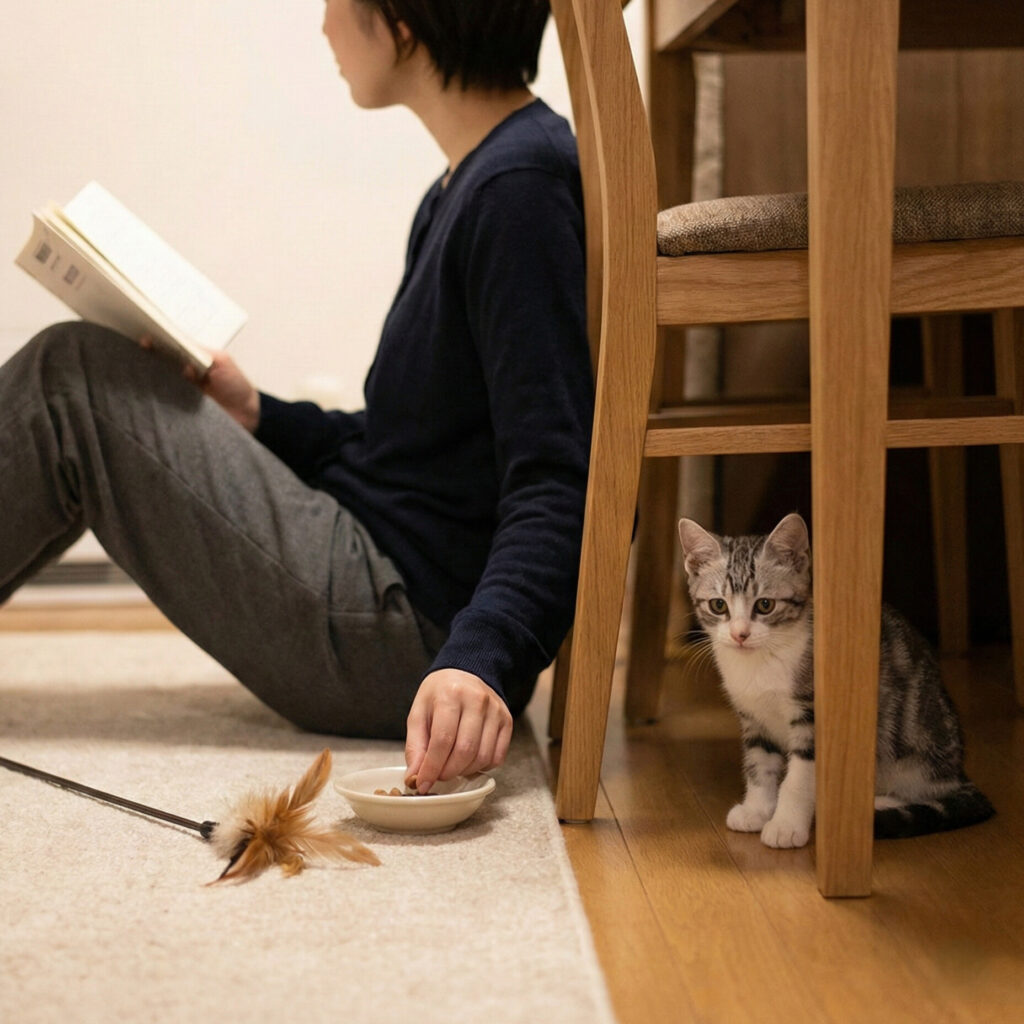
To safely socialize a shy kitten, start by confining them to a small, quiet sanctuary room with all essentials. Use food as a primary motivator by offering high-value treats only during interaction. Sit quietly near them without making direct eye contact, allowing the kitten to approach you at their own pace. Gradually introduce play with wand toys to build confidence and positive associations. Never force physical contact or drag the kitten out of hiding.
Summary Table: Kitten Socialization Steps
| Step | Action | Purpose |
| 1. Preparation | teaches the kitten that your presence is safe | creates a secure, manageable environment |
| 2. Approach | Passive interaction (reading, sitting) | teaches the kitten your presence is safe |
| 3. Motivation | Food and high-value treats | creates positive associations with humans |
| 4. Interaction | Wand toys and interactive play | builds confidence and reduces fear |
| 5. Contact | The “finger sniff” test | allows the kitten to initiate touch |
| 6. Expansion | Gradual house access | prevents overwhelming the kitten |
How to Safely Socialize a Shy Kitten
Bringing home a shy or fearful kitten requires patience, understanding, and a strategic approach. Unlike a confident kitten that immediately explores, a shy kitten sees the world as a potential threat. Your goal is to change that perception through positive reinforcement and gradual exposure.
This guide covers the essential steps to turn a terrified kitten into a confident companion using proven behavioral techniques.
Read Also: Why Do Kittens Bite So Much?
Understanding Feline Fear
Before you begin training, it is helpful to understand why a kitten is shy. Fear in kittens usually stems from two main sources. The first is a lack of early socialization.
Kittens have a critical socialization window between two and seven weeks of age. If they do not interact with humans during this time, they become wary of people.
The second source is negative experiences. A kitten that was born outside or had a traumatic event will naturally be defensive.
Recognizing body language is critical. A fearful kitten will dilate their pupils, flatten their ears against their head, and wrap their tail around their body. They may hiss or spit. This is not aggression. It is a defensive reaction to terror. You must never punish a kitten for hissing. It will only confirm their fear that you are dangerous.
Step 1: Create a Sanctuary Room
Do not give a shy kitten run of the entire house immediately. A large space is overwhelming and offers too many hiding spots where you cannot reach them. You need a dedicated sanctuary room. This can be a bathroom, a spare bedroom, or a large walk-in closet.
Sanctuary Room Essentials
- Litter Box: Place this in a corner away from food.
- Food and Water: Keep these easily accessible.
- Hiding Spots: Provide a covered cat bed or a cardboard box on its side.
- Scent Soakers: Include soft blankets that absorb the kitten’s scent to make the room smell familiar.
- Pheromone Diffusers: Products like Feliway mimic calming cat pheromones and reduce anxiety.
Block off access to inaccessible areas. You do not want the kitten wedging themselves under a heavy vanity or behind a washing machine. You need to be able to see and access the kitten safely.
Step 2: The Power of Food Motivation
Food is your most powerful tool for socialization. Free-feeding, which means leaving a bowl of dry food out all day, works against you. If the kitten can eat when you are not there, they have no reason to interact with you. Instead, adopt a meal-feeding schedule.
The Feeding Strategy
Bring food into the room and place the bowl down. Sit on the floor a few feet away. If the kitten is too scared to eat while you are there, move further back or leave the room but leave the door cracked so they can hear you.
Gradually move the bowl closer to you over several days. The goal is to have the kitten eating comfortably while you are sitting right next to them.
Use high-value treats for breakthroughs. Boiled chicken, meat-based baby food (ensure no onion or garlic), or squeeze-up treats are excellent. These items smell stronger than dry kibble and are harder for a kitten to resist.
Step 3: The Art of Ignoring
Humans often try to comfort scared animals by staring at them, reaching out, and talking loudly. For a cat, staring is a threat. Reaching out simulates a predator attack. The best way to make a kitten feel safe is to ignore them.
Go into the sanctuary room and sit on the floor. Bring a book, a laptop, or your phone. Read out loud in a soft, monotone voice.
Do not look at the kitten. Do not try to touch the kitten. Just exist in their space. This teaches the kitten that your presence does not mean something bad is going to happen. You become a neutral part of the environment.
Repeat this for 15 to 30 minutes at a time, several times a day. Eventually, the kitten’s curiosity will win. They will peek out to see what you are doing. When they do, keep ignoring them. Let them observe you without the pressure of interaction.
Read Also: How to Help a Cat Adjust After Moving Homes
Step 4: Interactive Play Therapy
Play is the bridge between fear and confidence. It engages a kitten’s hunting instinct. When a kitten is in “hunt mode,” they often forget to be scared.
Choosing the Right Toys
Do not use your hands or feet to play. This teaches biting habits. Use a wand toy with a long string and a feather or lure at the end. The long wand keeps your hands far away from the kitten, which makes them feel safer.
How to Play
Move the toy along the ground like a mouse. Make it stop and start. Do not wave it aggressively in the kitten’s face. That is scary. Move it away from the kitten to trigger the chase instinct.
As the kitten starts to play, you can gradually shorten the distance between the lure and your hand. This brings the kitten closer to you voluntarily. Play creates positive endorphins in the brain that help counteract cortisol, the stress hormone.
Step 5: The First Touch
Once the kitten is eating near you and playing with you, you can attempt physical contact. Wait for a moment when the kitten is relaxed or eating.
The Finger Test
Extend one finger slowly at the kitten’s nose level. Hold it still. This mimics how cats greet each other nose-to-nose. Allow the kitten to sniff your finger. If they sniff and do not recoil, you can try to gently touch the side of their cheek or under their chin.
Avoid the top of the head initially. A hand coming down from above looks like a hawk or a predator. Always come from the side or below. If the kitten flinches or hisses, stop immediately. Retreat to the previous step. You pushed too fast.
Desensitization to Handling
When the kitten accepts touch, keep the sessions short. Pet them three times, then stop and offer a treat. This creates a pattern: Touch equals treat.
Gradually increase the duration of petting. Handle their paws and ears gently so they get used to being examined. This is crucial for future veterinary visits.
Step 6: Expanding Their World
A confident kitten in the sanctuary room might become a terrified kitten in the living room. The transition to the rest of the house must be gradual.
Door Propping
Start by opening the sanctuary room door but putting up a baby gate or a high barrier. This allows the kitten to see and smell the rest of the house without being able to run out.
Supervised Exploration
Let the kitten out for short periods when the house is quiet. Close doors to other bedrooms to limit their choices. You do not want them getting lost in a huge house. Sit quietly in the living room and let them explore. If they bolt back to the sanctuary room, let them. That is their safe base.
Dealing with Setbacks
Socialization is rarely a straight line. You will have days where the kitten seems to regress. A loud noise, a dropped pan, or a stranger visiting can cause the kitten to hide again.
Handling Regression
If the kitten regresses, go back to basics. Confine them to the sanctuary room again for a day or two. Restart the sitting and reading routine. Do not force them to “face their fears.” This creates flooding, a psychological state of panic that stops learning.
Introducing Other Pets
If you have other cats or dogs, their introduction plays a huge role in the shy kitten’s confidence. A friendly, confident adult cat can actually help socialize a kitten. This is called “social learning.” The kitten watches the adult cat interact with you and realizes you are safe.
The Introduction Process
- Scent Swapping: Swap bedding between the new kitten and existing pets before they meet.
- Visual Introduction: Let them see each other through a crack in the door or a gate.
- Mealtime Meetings: Feed them on opposite sides of a closed door so they associate the other animal’s scent with food.
- Supervised Visits: Keep dogs on a leash. Ensure resident cats have escape routes.
Socializing Feral vs. Stray Kittens
It is important to distinguish between a stray and a feral kitten. A stray is a cat that was once socialized but became lost or homeless. They usually remember humans are safe and socialize quickly. A feral kitten has never had human contact.
Feral kittens over 12 weeks old are very difficult to socialize. They may never become lap cats. They might remain “working cats” or barn cats.
Kittens under 8 weeks old are the easiest to tame. Between 8 and 12 weeks is a gray area that requires significant time and skill. If you are dealing with an older feral kitten, lower your expectations. Success might mean they exist comfortably in the same room as you, rather than cuddling on your lap.
Building Confidence Through Routine
Cats are creatures of habit. A predictable routine reduces anxiety. Feed at the same time. Play at the same time. Clean the litter box at the same time. When a shy kitten knows what to expect, they can relax. Unexpected events trigger the fight-or-flight response.
The “Blink” Communication
Cats communicate trust with a slow blink. If you catch the kitten staring at you, slowly close your eyes and open them again. Turn your head slightly away. This signals that you are not a threat. If the kitten blinks back, it is a major breakthrough.
Important Don’ts
To ensure success, avoid these common mistakes that can undo weeks of progress.
- No Staring Matches: Direct eye contact is aggressive in feline language.
- No Loud Noises: Keep the TV volume low and avoid shouting.
- No Punishment: Never spray water or yell at a shy kitten.
- No Forced Holding: Do not pick the kitten up and hold them against their will to “comfort” them. They will feel trapped and will scratch to escape.
- No Chasing: If the kitten runs, do not chase them. You become the predator. Wait for them to come out.
Frequently Asked Questions
How long does it take to socialize a shy kitten?
It varies widely. A slightly timid kitten might come around in a few days. A feral kitten might take weeks or months. Generally, expect to spend at least two to four weeks on the process.
Can I socialize a shy adult cat?
Yes, the techniques are identical. However, adult cats have more ingrained habits and fears, so the process usually takes significantly longer than it does with a kitten.
What if the kitten bites me?
Shy kittens usually bite out of fear, not aggression. If they bite, do not yell. Disengage immediately. Stop moving your hand. Let the kitten retreat. Assess what you did to trigger the reaction and avoid that movement next time.
Should I use gloves?
Thick gloves remove your tactile sensitivity and can smell strange to a cat. They can also be scary. It is better to use long tools like wand toys and wooden spoons with baby food on them to extend your reach safely without risking your hands.
Conclusion
Socializing a shy kitten is an investment of time and emotion. It requires you to operate on the kitten’s timeline, not yours. Progress may be measured in inches. One day they are under the bed, the next they are halfway out. One day they hiss, the next they sniff your hand.
The reward for this patience is often a bond deeper than one with an outgoing cat. A shy cat that learns to trust you gives you their complete loyalty.
By creating a safe environment, using food motivation, and respecting their boundaries, you transform a fearful animal into a happy, secure member of the family. Stay consistent, stay calm, and celebrate every small victory. The purr you eventually earn will be worth every quiet hour spent sitting on the floor.