
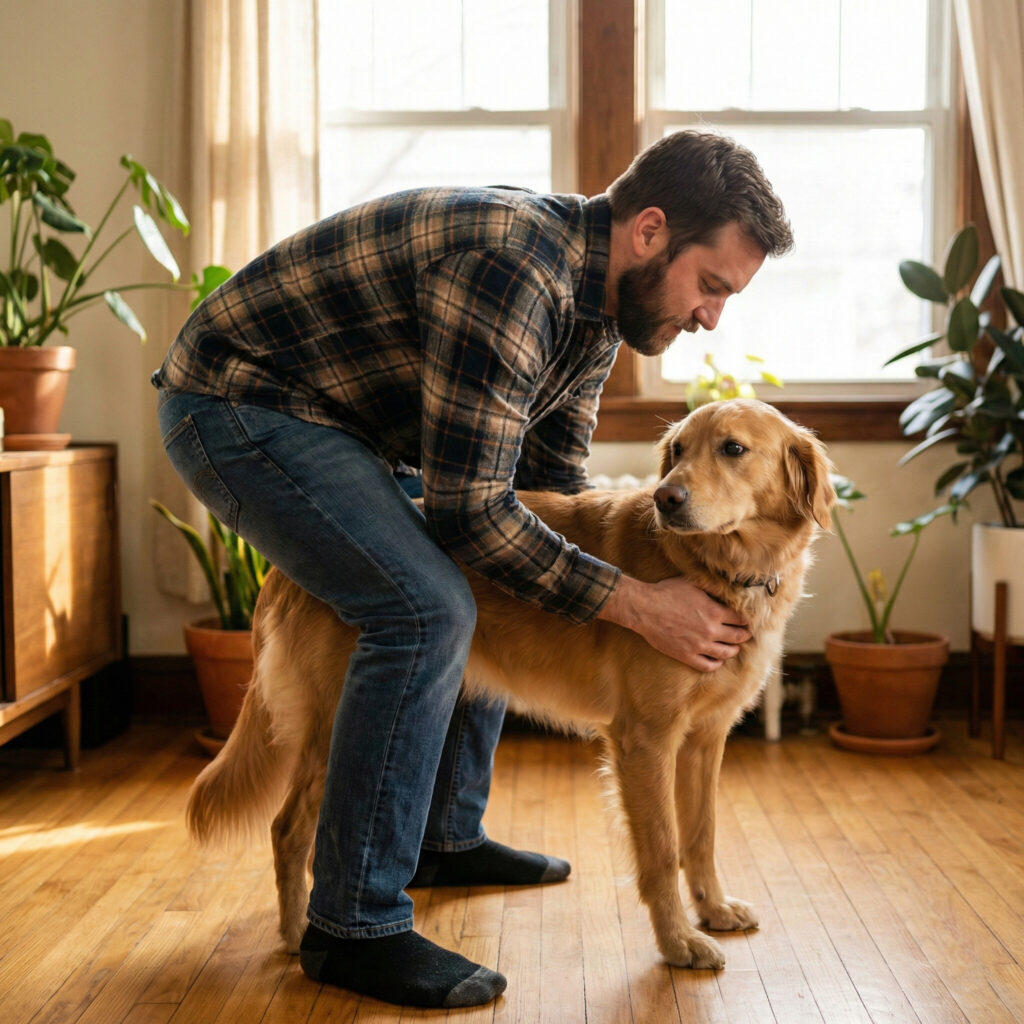
To safely lift a dog, place one arm under the dog’s chest (between the front legs) and the other arm under their rump or behind the back legs. Pull the dog firmly against your chest to support the spine and prevent wiggling. Lift with your legs, not your back. For large dogs over 40 pounds, seek assistance from a second person. Never lift a dog by the collar, tail, underarms, or scruff.
Summary Table
| Dog Size | Primary Support Area 1 | Primary Support Area 2 | Key Safety Tip |
| Small / Toy | Chest / Ribcage | Rear / Bottom | Do not lift by the front legs alone. |
| Medium | Chest (behind front legs) | Abdomen / Hips | Keep the spine horizontal/level. |
| Large / Giant | Chest (bear hug) | Rump (second person) | Use two people or a specialized harness. |
| Pregnant | Chest | Hind Legs (avoid belly) | Avoid putting any pressure on the abdomen. |
| Injured | Neck / Shoulder | Hips | Use a board or towel as a stretcher if possible. |
How to Safely Lift and Carry a Dog
Lifting a dog seems like a simple task, but doing it incorrectly can cause serious injury to both you and your pet. Dogs do not have collarbones like humans, which means lifting them by the front legs can strain muscles and damage ligaments. Furthermore, improper handling can aggravate spinal issues like Intervertebral Disc Disease (IVDD), especially in breeds with long backs like Dachshunds or Corgis.
Whether you need to put your dog in a car, help them onto a grooming table, or carry them due to injury, using the correct technique is vital.
This guide covers the safest methods for lifting canines of all sizes and conditions.
Read Also: What Causes Bad Breath in Dogs?
Why Proper Lifting Matters
Before learning the techniques, it is important to understand the anatomy involved. A dog’s skeletal structure is designed for forward motion, not for being hoisted vertically. Their spine needs support from end to end. When a dog is lifted without rear support, gravity pulls the lower half down, putting immense tension on the vertebrae.
Risks of Improper Lifting
- Herniated Discs: Common in long-backed breeds.
- Muscle Strain: Tearing in the chest or leg muscles.
- Fear and Anxiety: A dog dropped or hurt while being lifted may become aggressive or fearful of being handled in the future.
- Human Injury: Back strain or bites from a startled dog.
Pre-Lift Assessment
Before you attempt to pick up any dog, you must assess the situation.
- Check the Temperament: Is the dog calm? A fearful dog may snap or bite when your face is close to theirs.
- Check for Pain: If the dog is limping or whining, they may have an injury. Lifting an injured dog requires specific care (covered later in this guide).
- Establish Trust: Crouch down to the dog’s level. Let them sniff your hand. Do not swoop down from above like a predator.
How to Lift Small Dogs (Under 25 lbs)
Many owners make the mistake of picking up small dogs like babies, grabbing them under the armpits. This puts pressure on the shoulder joints and leaves the spine dangling.
The Chest Cradle Method
- Positioning: Place your dominant hand under the dog’s chest. Your hand should sit comfortably between their front legs.
- Support: Use your other hand to scoop up their hind legs or bottom.
- The Lift: Bring the dog close to your body immediately. Tuck them against your chest. This prevents them from wiggling free.
- Carrying: Hold them securely. You should have one hand controlling the front and one supporting the rear.
The “Football” Hold
This is excellent for anxious dogs as it provides a feeling of security.
- Scoop: Place one hand under the dog’s belly.
- Tuck: Lift the dog and tuck their body between your arm and your torso, similar to holding a football.
- Secure: Use your hand to support the chest while your forearm supports the body weight against your side.
Read Also: How Obesity Impacts a Dog’s Lifespan
How to Lift Medium Dogs (25 to 50 lbs)
Medium dogs are too heavy to lift with one hand, but small enough for one person to handle if they have good strength. The goal here is to keep the spine level, like a tabletop.
The Horizontal Embrace
- Placement: Bend your knees and get close to the side of the dog.
- Front Arm: Wrap your arm around the front of the dog’s chest, just below the neck.
- Rear Arm: Wrap your other arm around the dog’s hindquarters, scooping behind the back legs or under the rump.
- Lift: Hug the dog close to your chest. Stand up using your leg muscles, keeping your back straight.
- Stabilize: If the dog struggles, hold them tighter against your body. The pressure is calming and prevents them from scratching you.
How to Lift Large and Giant Dogs (Over 50 lbs)
Attempting to lift a large dog alone is the leading cause of back injury for pet owners. If a dog is over 40-50 lbs, or if you are not physically conditioned for heavy lifting, you should ask for help.
The Two-Person Lift
This is the safest method for breeds like German Shepherds, Labradors, or Mastiffs.
- Person One (The Head): Stands at the front of the dog. Place one arm under the dog’s neck/chest area and the other under the ribcage.
- Person Two (The Tail): Stands at the rear of the dog. Place one arm under the abdomen and the other under the hips/rump.
- Coordinate: Count to three aloud.
- Action: Both people lift simultaneously using their legs. Keep the dog level.
The Solo Lift (If absolutely necessary)
If you are alone and must lift a large dog (e.g., into a car):
- Elevate First: Try to get the dog to put their front paws on the elevated surface (like the car trunk) first.
- Lift the Rear: Once the front paws are up, place your arm under the dog’s abdomen and lift the rear legs, guiding them into the vehicle. This effectively halves the weight you need to lift.
Special Scenarios: Pregnant, Senior, and Injured Dogs
Certain conditions require specialized handling to avoid causing pain or medical complications.
Pregnant Dogs
Avoid putting any pressure on the belly. The abdomen is sensitive, and squeezing can harm the puppies.
- Support Points: Slide one arm under the chest (behind front legs) and the other under the pelvis (behind the rear legs).
- Avoid the Middle: Ensure your hands are strictly on the bony parts of the dog (ribs and pelvis), leaving the stomach area untouched.
Senior and Arthritic Dogs
Older dogs often have stiff joints. Manipulation of legs can be painful.
- Avoid Flexing: Do not fold their legs or force them into a curled position.
- Even Support: Use the “Horizontal Embrace” method described for medium dogs.
- Ramps: Whenever possible, use a ramp or stairs instead of lifting senior dogs to maintain their independence and dignity.
Injured Dogs
If a dog has been hit by a car or has a broken limb, moving them can worsen the injury.
- Muzzle First: A dog in pain may bite instinctively. Use a muzzle or a strip of cloth to gently secure the mouth (unless they are vomiting).
- The Board Stretcher: If you suspect a spinal injury, do not curve the back. Slide a flat board, rigid cardboard, or a sled under the dog.
- The Towel Stretcher: If no board is available, use a blanket or towel.
- Lay the blanket next to the dog.
- Gently roll the dog onto the blanket.
- Gather the corners of the blanket with the help of a second person and lift the dog like a hammock.
Read Also: Signs of Hormonal Imbalance in Dogs
How to Put a Dog Down Safely
The lift is not over until the dog is back on the ground. Dropping a dog, even from a few inches, can cause impact injuries to the wrists and elbows.
- Lower slowly: squat down with the dog; do not just bend your back.
- Four Paws Contact: Ensure all four feet touch the ground before you release your hold.
- Release: Gently withdraw your arms. If the dog is anxious, keep a hand on their collar until they are steady.
Common Mistakes to Avoid
Even experienced dog owners can fall into bad habits. Avoid these dangerous practices:
- The Scruff Lift: Never grab the loose skin on the back of the neck. While mother dogs do this to puppies, an adult dog is too heavy. This can cause severe bruising and pain.
- The Leg Dangle: Never lift a dog by holding only the front legs. This strains the rotator cuff and elbows.
- The Tail Grab: Never pull or lift a dog by the tail. This can damage the nerves at the base of the spine, leading to incontinence.
- The Squeeze: Do not squeeze the abdomen, especially after the dog has eaten, as this can cause vomiting or discomfort.
Tools to Help with Lifting
If you frequently need to carry a dog, consider investing in assistive devices.
- Support Harness: These harnesses have handles on the back, allowing you to lift the dog like a suitcase. They are ideal for senior dogs who need help standing up.
- Pet Stairs/Ramps: Essential for allowing small or old dogs to access beds and cars without being lifted.
- Slings: A fabric loop that goes under the dog’s belly to help support their weight while walking.
Conclusion
Safely lifting a dog is about spinal support and security. Always remember the golden rule: One hand under the chest, one hand under the rump. By supporting both ends of the dog, you protect their back and ensure it feels safe in your arms. When in doubt, or if the dog is too heavy, always ask for help. Proper handling builds trust and ensures your canine companion stays healthy and active for years to come.