
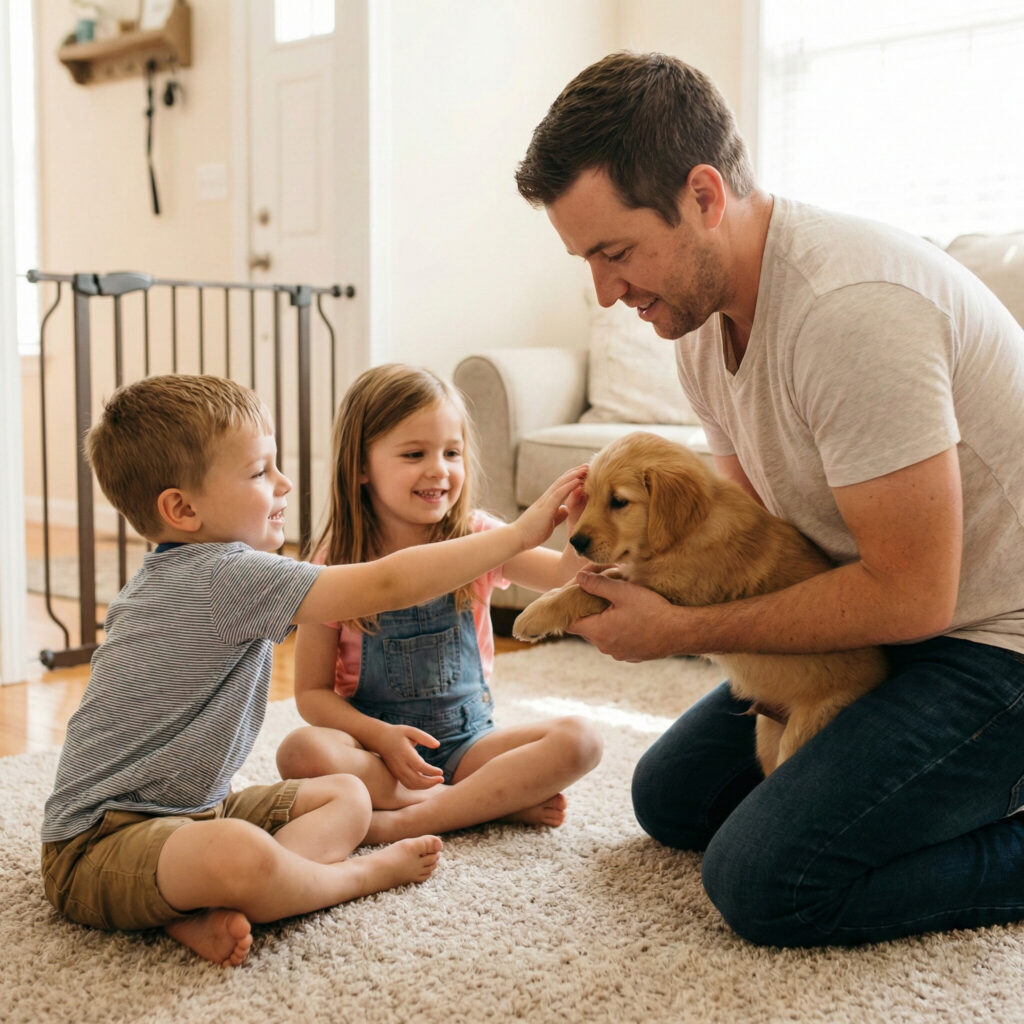
To safely introduce a puppy to a child, always start in a quiet environment with the puppy on a leash to maintain control. Have the child sit on the floor to appear less threatening and instruct them to remain calm and quiet. Allow the puppy to approach the child at their own pace for a sniff. If the puppy is calm, guide the child to gently pet the puppy’s chest or back, avoiding the head and tail. Constant adult supervision is mandatory to intervene if the puppy becomes too excited or the child gets overwhelmed.
Summary Table
| Factor | Guideline | Why It Matters |
| Location | Quiet room, low distractions | Reduces puppy overstimulation and anxiety. |
| Position | Child sitting, Puppy on leash | Prevents the puppy from jumping and the child from chasing. |
| Contact | Let puppy approach first | Gives the dog a choice, building trust immediately. |
| Petting | Chest, shoulders, or back | Heads and tails are sensitive areas for many dogs. |
| Duration | Short sessions (5-10 mins) | Prevents overtiredness and “nippy” behavior in puppies. |
| Golden Rule | Always Supervise | Prevents accidents before they happen. |
How to Safely Introduce Puppies to Kids
Bringing a new puppy home is one of the most exciting moments for a family. The vision of a child and a dog growing up together is a classic dream. However, the reality of sharp puppy teeth, high energy, and unpredictable children can turn that dream into a stressful situation if not managed correctly.
A safe introduction sets the foundation for a lifelong friendship. It prevents fear in the dog and injury to the child. This guide covers the essential steps, preparation, and rules needed to ensure the first meeting, and every interaction after, is safe, positive, and happy.
Read Also: Why Routine Is Important for Puppies
Why Preparation is Key
You cannot simply put a puppy and a child in a room and hope for the best. Puppies are babies. They explore the world with their mouths, they have sharp needle teeth, and they do not understand human social cues yet.
Children, conversely, are often loud, move erratically, and may not understand that a dog is a living creature with feelings, not a toy.
Preparation bridges this gap. Before the puppy even walks through the door, the work begins.
Educating the Children
The most critical entity in this equation is the child. Depending on their age, you need to set clear expectations.
- The “Statue” Game: Teach your children that if the puppy gets too excited or jumps, they should stand still like a statue and cross their arms. Running away triggers a puppy’s instinct to chase and nip.
- Volume Control: Puppies have sensitive hearing. Screaming or high-pitched squealing can scare a puppy or get them overly excited. Practice “indoor voices.”
- Gentle Hands: Use a stuffed animal to demonstrate how to pet. Show them long, slow strokes along the back. Explicitly forbid hitting, pulling ears, or grabbing tails.
Setting Up the Environment
Control the environment to control the interaction. You need a “Safe Zone” for the puppy. This could be a crate, a playpen, or a gated-off room.
- Escape Route: The puppy must always have a clear path to get away from the child if they feel overwhelmed. Never back a puppy into a corner.
- Remove Toys: For the first meeting, remove high-value items like favorite dog toys or the child’s favorite stuffed animals. This prevents resource guarding (aggression over possessions).
Understanding Canine Body Language
Safety relies on your ability to read the puppy. Dogs communicate primarily through body language, not vocalizations. You must act as the translator for your children.
Signs of a Happy Puppy
- Loose Body: The puppy looks wiggly and soft, not stiff.
- Relaxed Ears: Ears are in a natural position, not pinned back flat against the head.
- Play Bow: The front elbows are down, and the bottom is up. This is a universal sign of friendship.
Signs of Stress (Stop the Interaction)
- Whale Eye: You can see the whites of the puppy’s eyes in a half-moon shape.
- Lip Licking: The puppy licks their lips or nose repeatedly when no food is present.
- Yawning: A yawn when not tired is a major sign of anxiety.
- Turning Away: If the puppy turns their head or body away, they are asking for space. Respect this immediately.
Read Also: How to Prevent Resource Guarding in Puppies
Step-by-Step Guide
When the big moment arrives, keep the energy low. If you are anxious, the puppy will sense it. Take a deep breath and follow this protocol.
Step 1: The Calm Approach
Have the puppy on a loose leash. This is non-negotiable. The leash allows you to gently prevent the puppy from jumping on the child without grabbing the dog’s collar, which can cause defensiveness.
Have the child sit on the floor or a low chair. This makes the child look smaller and less intimidating to the puppy. If the child is standing, they tower over the dog, which can be scary.
Step 2: Let the Puppy Choose
Do not force the puppy on the child. Do not pick the puppy up and drop them in the child’s lap. Stand back and let the puppy decide when to approach.
- The Sniff Test: The puppy will likely sniff the child’s shoes or pants first. Let them.
- No Staring: Tell the child to look at the puppy’s paws or chest, not directly in the eyes. Direct eye contact can be interpreted as a challenge or threat by dogs.
Step 3: The First Touch
If the puppy looks loose and happy after sniffing, you can allow physical contact.
- Ask for a Chin Scratch: Guide the child’s hand to scratch under the chin or on the chest.
- The 3-Second Rule: Have the child pet for three seconds, then stop. If the puppy leans in for more, continue. If the puppy moves away, let them go. This ensures the interaction is consensual.
Age-Specific Safety Advice
Different ages pose different risks. Tailor your supervision style to the developmental stage of the child.
Toddlers (Ages 1-3)
Toddlers are the most dangerous demographic for puppies, and puppies are dangerous for toddlers. Toddlers wobble, fall suddenly, and have a grip reflex that can hurt a dog.
- Zero Unsupervised Time: You must be within arm’s reach at all times.
- Management: Use baby gates to keep them separate when you cannot actively supervise.
- Modeling: Hold the toddler’s hand and use your hand over theirs to pet the dog gently.
Preschoolers (Ages 3-5)
Preschoolers can follow simple instructions but lack impulse control. They might scream if the puppy nips.
- Involve Them: Let them help fill the water bowl. This gives them a sense of responsibility without direct physical contact.
- Be a Tree: extensively practice standing still if the puppy gets hyper.
School-Age Kids (Ages 5+)
Older children can be active participants in training.
- Training Games: Teach the child how to ask the puppy to “Sit” and give a treat. This teaches the puppy that the child is a leader who provides good things, not a littermate to bite.
- Respecting Privacy: Teach them that the crate is the puppy’s bedroom. When the puppy is in there, they are off-limits.
Common Mistakes to Avoid
Even well-meaning parents make mistakes that jeopardize safety. Avoid these common pitfalls to keep the peace.
The Hugging Trap
Primates (humans) show affection by hugging. Canines (dogs) view wrapping arms around the neck as a dominance display or a threat.
- The Rule: No hugging. Teach kids to “hug with their eyes” or blow kisses instead.
- The Risk: A dog that feels trapped in a hug is highly likely to bite the child’s face.
Read Also: Common Puppy Health Concerns
Disturbing the Sleeping Dog
There is an old saying: “Let sleeping dogs lie.” It exists for a reason. Startling a sleeping dog can trigger a reflex bite before the dog even wakes up fully to realize who is there.
- The Rule: If the puppy is asleep, they are invisible. Do not touch, do not wake.
Taking Items Away
Children often try to take back a toy the puppy has stolen. This is a recipe for a bite.
- The Rule: “Trade, don’t take.” Teach children to find an adult if the puppy has something they shouldn’t. If an adult isn’t there, teach them to offer a high-value treat in exchange for the item rather than ripping it from the dog’s mouth.
Managing Puppy Nipping
Puppies explore with their mouths. They will nip the kids. It is not aggression; it is play. However, it hurts and can scare children.
- Redirect: Always have a chew toy handy. If the puppy tries to bite hands or pants, shove the toy into their mouth instead.
- Remove the Reward: If the puppy bites, the fun stops. The child should turn their back and ignore the puppy. If the puppy continues, the puppy goes into their playpen for a 2-minute “timeout” to calm down.
- High-Pitched “Ouch”: Some experts suggest a high-pitched yelp to mimic a littermate signaling pain. However, for some high-drive puppies, this sounds like a squeaky toy and makes them bite harder. If a noise excites the dog, use silence and withdrawal instead.
Building a Lasting Bond
The goal is a relationship based on mutual respect. This happens through positive reinforcement and shared activities, not just cuddling.
Passive Socialization
Let the child read a book while the puppy chews a bone nearby. They are sharing space without pressure. This helps the puppy feel comfortable and safe in the child’s presence without the anxiety of direct interaction.
Training Together
Sign up for a puppy training class that allows children to observe or participate. When a child sees a puppy learn, they understand the dog has a brain and can listen. It empowers the child and provides structure for the dog.
When to Seek Professional Help
Sometimes, despite your best efforts, the mix isn’t right. If you notice the following, hire a certified professional dog trainer or animal behaviorist immediately:
- The puppy growls or snaps when the child approaches a food bowl or toy.
- The puppy actively hunts or stalks the child with stiff body language.
- The child is terrified and cannot overcome their fear.
- The puppy is fearful, hiding, or urinating when the child enters the room.
Conclusion
Introducing a puppy to kids is a process, not a single event. It requires patience, constant supervision, and a commitment to teaching both the dog and the child how to interact. By setting up a safe environment, respecting the dog’s body language, and empowering your children with the right rules, you create a safe haven for your new family member.
The effort you put in during these first few weeks will pay off for years to come. You are building trust. You are teaching empathy. And most importantly, you are keeping everyone safe. Take it slow, keep it positive, and enjoy the journey of watching your family grow together.