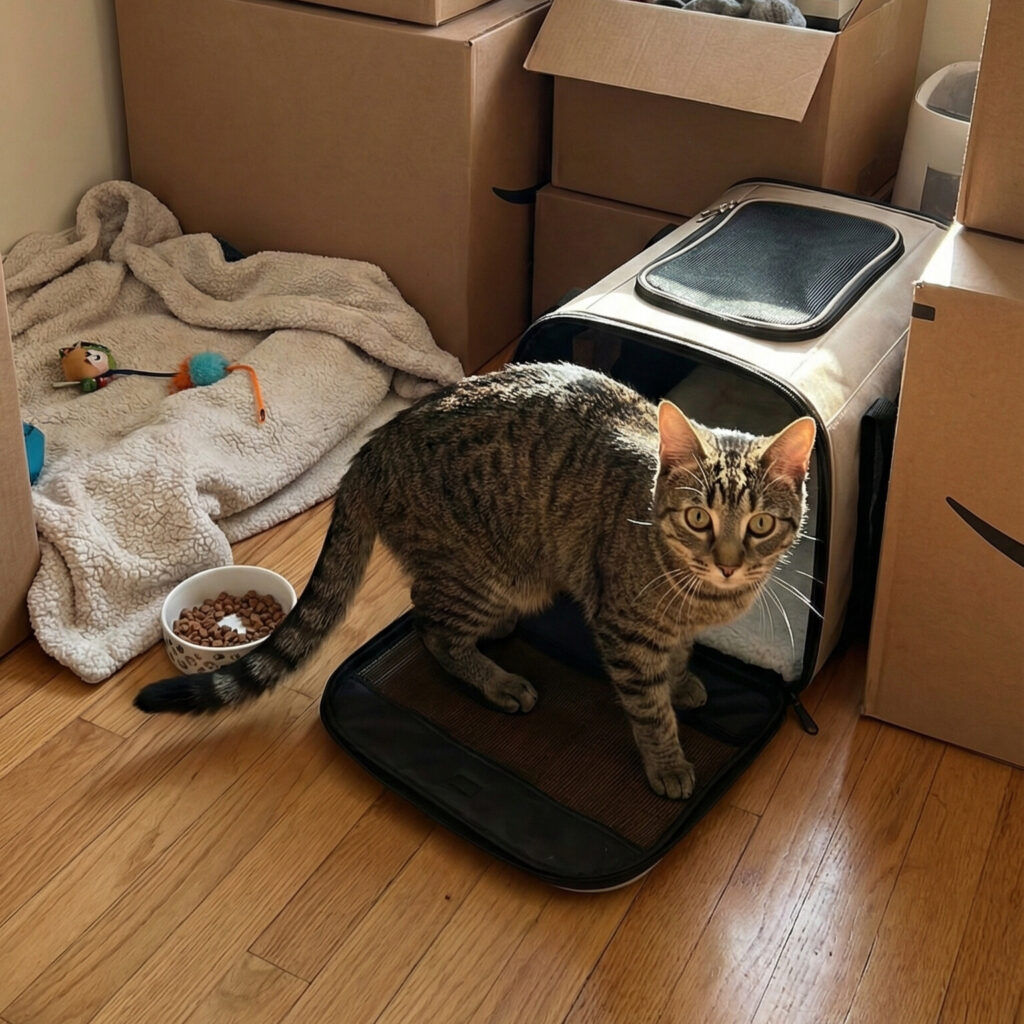
To help a cat adjust after moving homes, start by setting up a dedicated “safe room” in the new house with their litter box, food, water, and bedding before letting them roam freely. Keep the cat inside this room for the first few days to establish a secure base. Maintain their old routine for feeding and playtimes to reduce anxiety. Slowly introduce them to the rest of the house one room at a time. Use pheromone diffusers like Feliway to calm them and ensure plenty of vertical space like cat trees is available. Patience is key, as full adjustment can take several weeks.
Summary Table
| Phase | Key Actions |
| Preparation | Acclimate the cat to the carrier, update microchip info, pack a “cat essentials” bag. |
| Moving Day | Open the door to safe room but do not force exit, supervise initial exploration. |
| First 24-48 Hours | Confine to a single “safe room,” provide familiar bedding, avoid visitors. |
| Exploration | Feed at the same times as old home, engage in daily play, clean litter box daily. |
| Routine | Feed at the same times as the old home, engage in daily play, clean the litter box daily. |
| Stress Relief | Use pheromone sprays, offer hiding spots, play calming music. |
How to Help a Cat Adjust After Moving Homes
Moving is listed as one of the most stressful life events for humans. For cats, it is even harder. Cats are territorial animals that bond closely with their environment. Their sense of safety is tied to the scents and layout of their home. When you move them to a new place, that sense of security disappears.
However, you can make this transition smooth. With the right preparation and patience, your cat can feel at home quickly.
This guide details every step you need to take to help your feline friend adjust to a new environment.
Read Also: How to Reduce Aggression Between Household Cats
Why Cats Hate Moving
Before you can help your cat, you must understand their perspective. Humans rely on sight to understand the world. Cats rely heavily on scent. They mark their territory by rubbing their cheeks on furniture, walls, and you. This leaves behind pheromones that signal safety.
A new home smells wrong. It might smell like paint, cleaning chemicals, or previous pets. It does not smell like them. This lack of familiar scent signals danger to a cat.
Additionally, the layout is unknown. A cat does not know where the escape routes are or where the food is. This causes anxiety.
Your goal during a move is to rebuild that scent profile and sense of predictability as fast as possible.
Phase 1: Preparing Before the Move
The adjustment period starts weeks before the moving truck arrives. If you wait until the last minute, your cat will pick up on your stress.
Carrier Training
Many cats only see their carrier when they go to the vet. This makes the carrier a scary object. You need to change this association.
- Bring the carrier out two weeks before the move.
- Leave the door open and place a soft blanket inside.
- Put treats or catnip inside the carrier daily.
- Feed your cat their meals near the carrier, then eventually inside it.
If your cat walks into the carrier willingly, the actual move will be much less traumatic.
Maintain Normal Routines
As you pack boxes, your house will become chaotic. Try to keep your cat’s schedule the same. Feed them at the exact same time. Play with them in the evenings as you usually do. If their environment is changing, their schedule should remain a constant anchor.
The Essentials Box
Pack a specific box or bag for your cat. This should travel with you, not in the moving truck. It ensures you have everything you need immediately upon arrival.
What to include:
- Food and water bowls.
- A supply of their current food (do not switch brands now).
- Litter and a litter box.
- Toys.
- Bedding that smells like them (do not wash it).
- First aid kit.
- Medication if applicable.
Veterinary Visit and Identification
Visit your vet before you move. Ensure vaccinations are up to date. If you are moving far away, get a copy of your pet’s medical records.
Most importantly, update your cat’s microchip information. If your cat escapes during the move, a microchip with an old address is useless. Put a collar with an ID tag on your cat that lists your new address or cell phone number.
Phase 2: The Moving Day Strategy
Moving day is dangerous. Doors are left open, people are walking in and out with heavy furniture, and noise levels are high. This is the prime time for a cat to bolt out the door.
The Bathroom Strategy
On moving day, choose a room in your old house to be the “lockdown” room. A bathroom works best because it is small and rarely needs to be accessed by movers.
- Empty the room of all furniture first.
- Place the cat inside with their litter box, food, water, and carrier.
- Close the door and tape a sign to it that says “DO NOT OPEN. CAT INSIDE.”
- Lock the door if possible.
This keeps the cat safe while the house is emptied. They will hear the noise, but they will be physically secure.
The Transport
Your cat should be the last thing you move out of the old house and the first thing you move into the new house.
When driving, secure the carrier with a seatbelt. Cover the carrier with a light towel or blanket. This blocks the visual stimuli of rushing cars, which can reduce motion sickness and fear. Play soft classical music or talk to them in a calm voice.
Phase 3: Setting Up the Safe Room
Do not release your cat into the entire new house immediately. This is sensory overload. Instead, use the “Safe Room” method.
Choosing the Room
Select a quiet room in the new house. A spare bedroom or a laundry room works well. This room will be their entire world for the first few days.
Setting Up the Environment
Before you bring the cat in, set up the room.
- Litter Box: Place it in a corner.
- Food and Water: Place these away from the litter box. Cats do not like eating near their toilet.
- Hiding Spots: Put a cardboard box on its side with a blanket in it. If there is a bed, ensure they can get under it.
- Scent Soakers: Place their unwashed bedding, your unwashed sweater, and their scratching post in the room.
The Release
Bring the carrier into the safe room. Close the door to the hallway. Open the carrier door.
Do not pull the cat out. Sit on the floor and wait. They may come out immediately, or they may stay in the carrier for hours. Both reactions are normal. Leave the room and let them decompress. Check on them every few hours.
Read Also: Signs of Dehydration in Cats
Phase 4: The Introduction Period
The time your cat spends in the safe room depends on their personality. A confident cat might be ready to explore in two days. A shy cat might need a week.
Scent Swapping
Before letting the cat out, introduce the scent of the new house to them.
- Take a clean sock and rub it on the corners of the furniture in the new house.
- Put that sock in the safe room.
- Take a different sock and rub it on the cat’s cheeks (if they allow it).
- Rub that sock on the corners of the walls in the rest of the house. This spreads their scent around the new home before they even set foot in it. It tricks their brain into thinking they have already marked the territory.
Expanding Territory
When the cat is eating, drinking, and using the litter box normally in the safe room, they are ready for more space.
Open the door to the safe room but do not force them out. Let them explore at their own pace. Initially, you might only give them access to one additional room or the hallway.
If they get scared and run back to the safe room, let them. That is their sanctuary. Never close the door to the safe room during this phase. They need to know they can retreat if they feel overwhelmed.
Supervised Exploration
For the first few days of exploration, supervise them. Watch for signs of stress. If they seem terrified, put them back in the safe room and try again the next day. Close off doors to basements, garages, or attics where they could get stuck or lost.
Phase 5: Establishing the New Normal
Once the cat is exploring the house freely, you need to solidify their routine.
Litter Box Placement
You may not want the litter box in the safe room forever. However, moving it abruptly will cause accidents.
To move a litter box:
- Move it only a few feet each day toward the final destination.
- If the new spot is far away (like a different floor), keep the box in the safe room and add a second box in the new location.
- Once they use the new box regularly, you can remove the old one.
Scratching Posts and Vertical Space
Cats feel confident when they are high up. Set up a cat tree in the main living area. This allows them to survey their new kingdom from a safe vantage point.
Place scratching posts near high traffic areas and near where they sleep. Scratching is a territorial behavior. By scratching, they are claiming the new house as their own.
Play Therapy
Play is a powerful stress reducer. It triggers the “hunt, catch, kill, eat, groom, sleep” cycle.
Engage your cat with wand toys for 15 minutes twice a day. Playing in the new living room helps them associate that space with fun and positive energy rather than fear. Follow every play session with a meal or a high value treat.
Phase 6: Managing Stress and Anxiety
Even with the best plan, some cats will struggle. You need to recognize the signs of stress and know how to handle them.
Signs of Stress
- Hiding constantly: Refusing to come out for food or social interaction.
- Over-grooming: Licking fur until bald spots appear.
- Aggression: Hissing or swatting at you or other pets.
- House soiling: Urinating or defecating outside the litter box.
- Loss of appetite: Refusing to eat for more than 24 hours.
If your cat stops eating for more than 24 hours, contact a vet immediately. Cats can develop a liver condition called hepatic lipidosis if they starve themselves, which can be fatal.
Supplements and Aids
- Synthetic Pheromones: Products like Feliway mimic the facial pheromones cats use to mark safety. Plug a diffuser into the wall of the safe room and the main living area.
- Calming Chews: There are over-the-counter treats containing L-theanine or colostrum that promote relaxation.
- Thundershirts: Some cats respond well to pressure wraps that work like swaddling a baby.
Read Also: Common Dental Problems in Cats
Dealing with Outdoor Cats
If your cat were an outdoor cat, or if you plan to let them out, you must wait.
Do not let a cat outside for at least three to four weeks after a move. They need to be 100% bonded to the new house first. If you let them out too early, their homing instinct may kick in, and they will try to walk back to the old house.
When you do let them out, go with them. Use a harness and leash for the first few adventures. Let them sniff the perimeter of the yard. Shake a treat jar to teach them to come back to the door.
Conclusion
Helping a cat adjust to a new home is a process that cannot be rushed. It requires planning, patience, and a lot of empathy. You are their anchor during this chaotic time. By providing a safe room, maintaining routines, and respecting their pace, you turn a terrifying experience into a manageable one.
Remember that every cat is different. A kitten might adjust in an hour, while a senior cat might take a month. Watch your cat’s body language. Listen to what they are telling you.
If you provide safety and love, they will eventually claim the new house as their territory, and you will find them sleeping in their favorite sunbeam again soon.