
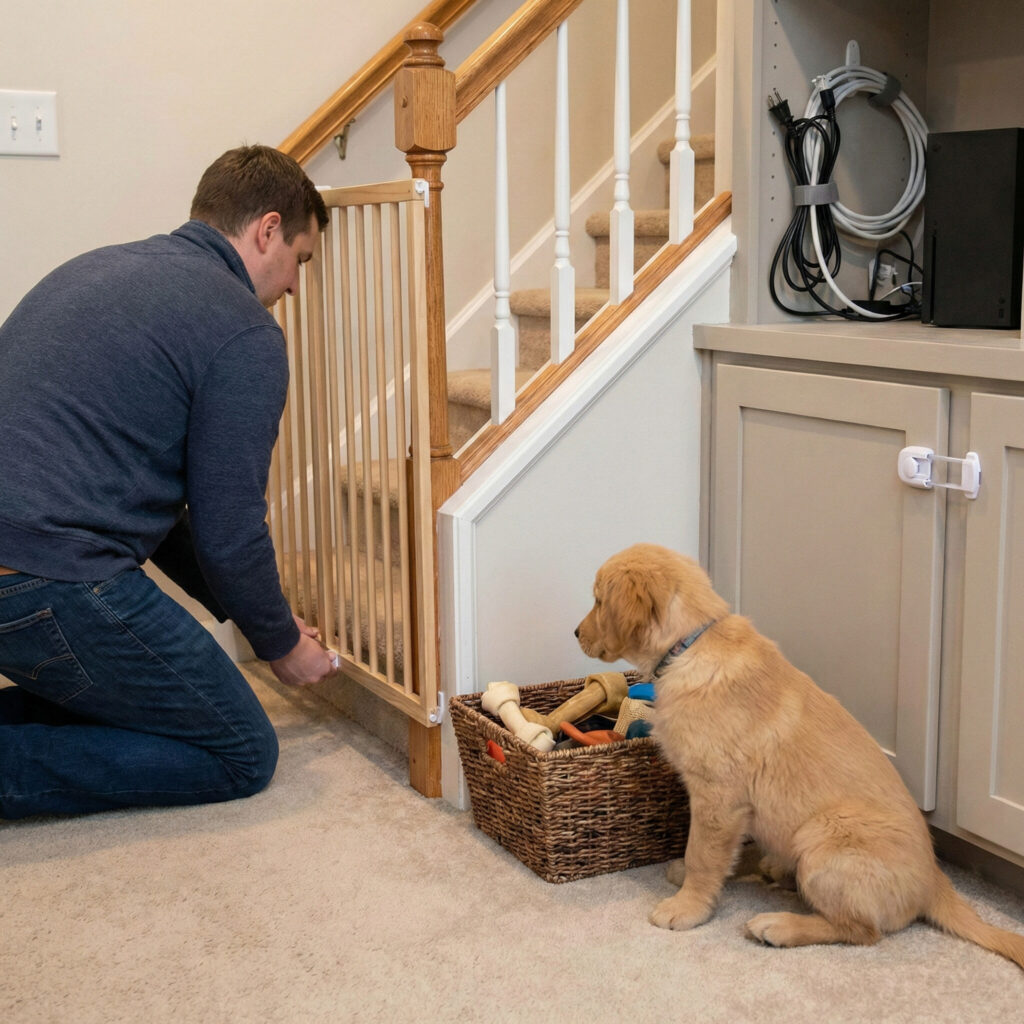
To dog-proof your home, get down to your dog’s eye level to identify potential hazards. Secure specific dangers in every room: lock away toxic foods and cleaning supplies in the kitchen, cover electrical cords and remove toxic plants in the living area, keep toilet lids down and medications in high cabinets in the bathroom, and secure trash cans throughout the house. Use baby gates to restrict access to unsafe areas and ensure all small objects like jewelry, coins, and children’s toys are stored out of reach to prevent choking.
Summary Table: Dog-Proofing Essentials
| Area of Home | Key Hazards to Remove/Secure | Recommended Solution |
| Kitchen | Chocolate, grapes, xylitol, cleaning chemicals, trash | Install child-proof latches on lower cabinets; use heavy metal trash cans with locking lids. |
| Living Room | Antifreeze, pesticides, sharp tools, and paints | Use cord concealers; swap toxic plants for pet-safe alternatives; store remotes in a drawer. |
| Bathroom | Medications, razors, toilet bowl water, shampoos | Keep medications in a high cabinet; keep toilet lids closed; store toiletries in shower caddies. |
| Bedroom | Shoes, laundry (socks/underwear), jewelry, coins | Keep closet doors closed; use a hamper with a secure lid; keep nightstands clear of small items. |
| Garage | Gaps in fences, toxic mulch, and lawn fertilizers | Store chemicals on high shelving units; clean spills immediately; hang tools on pegboards. |
| Yard | Gaps in fences, toxic mulch, lawn fertilizers | Repair fence gaps; use pet-safe fertilizers; create a designated digging zone. |
Why Dog-Proofing Is Essential for Safety
Bringing a new dog home is exciting, but it requires preparation. Dogs, especially puppies, explore the world with their mouths. This natural curiosity can lead to dangerous situations if your home is not properly secured. Dog-proofing is not just about protecting your furniture from chewing; it is about protecting your dog from serious injury or poisoning.
Preventative measures save you from emergency vet visits and expensive surgeries. A safe environment also reduces anxiety for both you and your pet. You can relax knowing your dog cannot access harmful items while you are not looking.
This guide covers every room in your house to ensure a safe environment for your canine companion.
The Kitchen: The Danger Zone
The kitchen smells like food, making it the most interesting room for a dog. It is also the room with the most toxic hazards.
Secure the Trash Can
The trash can is a treasure chest for dogs. It often contains chicken bones, which can splinter and puncture the stomach, and food wrappers that cause blockages.
- Use Locking Lids: Buy a stainless steel trash can with a heavy, step-on lid that locks.
- Hide It: If possible, keep the trash can inside a cabinet with a child-proof latch.
- Empty frequently: Take food waste to the outside bin immediately to reduce tempting smells.
Lock Away Toxic Foods
Many human foods are deadly to dogs. Never leave food on low counters or tables where a dog can counter-surf.
- Chocolate and Caffeine: These affect the heart and nervous system.
- Grapes and Raisins: These can cause sudden kidney failure.
- Xylitol: This artificial sweetener is found in gum, peanut butter, and candy. It causes liver failure.
- Onions and Garlic: These damage red blood cells.
Chemical Storage
Cleaning supplies like bleach, drain cleaner, and dishwasher pods are highly toxic.
- Move all heavy chemical cleaners to high shelves.
- If you must use lower cabinets, install high-quality child-proof locks. Magnetic locks are often the most secure against clever dogs.
Living Room and Family Areas
This is where you spend the most time, so it needs to be comfortable but safe.
Manage Electrical Cords
Puppies love the texture of rubber cords. Chewing on a live wire can cause severe burns to the mouth or electrocution.
- Cord Covers: Run cords through plastic PVC covers or spiral cable wraps.
- Bitter Spray: Coat cords in a bitter apple spray to discourage chewing.
- Hide Behind Furniture: Arrange furniture so outlets and plugs are blocked from access.
Check Your Houseplants
Many common houseplants are poisonous if ingested.
- Toxic Plants: Lilies, Sago Palm, Aloe Vera, Ivy, and Dieffenbachia.
- Safe Alternatives: Spider plants, Boston Ferns, and Bamboo.
- Action Step: Move toxic plants to hanging planters high near the ceiling or donate them.
Small Object Hazards
Dogs can choke on small items found on coffee tables or floors.
- Batteries: If swallowed, batteries can cause internal chemical burns.
- Remotes: Dogs often chew remote controls to get to the batteries. Keep them in a drawer.
- Kids’ Toys: LEGO bricks, doll shoes, and game pieces can cause intestinal blockages.
Read Also: Puppy Body Language Every Owner Should Know
Bathroom Safety
The bathroom contains many small, dangerous items and potential drowning hazards.
Toilet Safety
Toilet bowl water often contains cleaning chemicals or bacteria.
- Keep the Lid Down: Get into the habit of closing the lid every single time.
- Toilet Locks: If your dog is large and learns to lift the lid, use a toilet seat lock.
Medications and Toiletries
Never leave pill bottles on the counter. A dog can chew through a plastic bottle in minutes.
- Medicine Cabinet: Store all prescription and over-the-counter meds in a high, latching cabinet.
- Razors: Disposable razors still have soap scents that attract dogs. Store them in a drawer, not on the tub edge.
- Soaps and Shampoos: Even natural soaps can cause severe diarrhea if eaten.
Bedroom Hazards
Your bedroom should be a sanctuary, not a source of emergency vet visits.
Laundry Management
Dogs are attracted to your scent. Socks and underwear are the top offenders for foreign body surgeries because they get stuck in the intestines.
- Hamper Discipline: Use a tall hamper with a secure lid.
- Closed Closets: Keep closet doors shut to prevent dogs from chewing on expensive shoes or swallowing shoelaces.
Jewelry and Nightstands
- Earrings and Rings: These are shiny and easy to swallow. Place them in a jewelry box, not loose on the table.
- Earplugs: Foam earplugs expand in the stomach and cause blockages. Keep them in a case.
Garage and Basement
These areas are often overlooked but contain the most lethal chemicals.
Antifreeze is Deadly
Ethylene glycol (antifreeze) tastes sweet to dogs. Even a teaspoon can kill a small dog.
- Check for Leaks: Inspect your garage floor for green puddles.
- Pet-Safe Formula: Switch to propylene glycol-based antifreeze, which is less toxic.
- Storage: Keep all automotive fluids on high metal shelving.
Tools and Hardware
- Sharp Objects: Saws, axes, and nails should be hung on pegboards or stored in toolboxes.
- Pest Control: Rat poison and snail bait are designed to be tasty. They will kill your dog just as easily as they kill pests. Never use them in areas your dog can access.
Read Also: How to Safely Introduce Puppies to Kids
Outdoor and Yard Safety
If you have a yard, it serves as your dog’s playground. Make sure it is secure.
Fence Inspection
- Check for Gaps: Walk the perimeter of your fence. Look for loose planks or holes dug by wildlife.
- Height Check: Ensure the fence is high enough that your specific breed cannot jump over it.
- Latch Security: Ensure the gate latch locks automatically so the wind doesn’t blow it open.
Garden Dangers
- Cocoa Mulch: This type of mulch contains theobromine, the same toxic ingredient in chocolate. Use cedar or pine mulch instead.
- Fertilizers: Keep bags of fertilizer locked in a shed. Do not let your dog on the lawn immediately after treating it.
- Tools: Rakes and shovels can cause injury if stepped on. Store them in a shed.
General Dog-Proofing Checklist
Beyond specific rooms, there are general habits you should adopt to keep your home safe.
- Secure Window Blind Cords: Long cords on blinds can strangle a dog if they get tangled. Tie them up high or install cordless blinds.
- Close Doors: If a room is not dog-proofed (like a craft room or office), keep the door closed at all times.
- Check Lower Shelves: Get on your hands and knees and crawl through your house. Look for loose change, rubber bands, hair ties, or paper clips under furniture.
- Heating and Cooling: Ensure floor vents are screwed down so a puppy cannot lift them and get stuck in the ductwork. Cover fireplaces with a sturdy metal screen.
Crate Training as a Safety Tool
One of the best ways to dog-proof your home is to limit your dog’s freedom when you cannot supervise them. Crate training provides a safe, den-like space for your dog.
- Prevention: A crated dog cannot chew cords or eat trash.
- Peace of Mind: You can leave the house knowing your dog is safe.
- Proper Use: Never use the crate as punishment. It should be a happy place with comfortable bedding and safe toys.
Conclusion
Dog-proofing is an ongoing process. As your dog grows, their reach and abilities will change. A puppy might chew on rug corners, while an adult dog might learn how to open lever-style door handles. Regularly re-evaluate your home for new hazards.
By taking the time to secure trash cans, hide electrical cords, and lock away toxins, you are investing in a long, healthy life for your pet. It allows you to enjoy the fun parts of dog ownership, like playing fetch and cuddling on the couch, without the constant worry of potential accidents.
Start with the kitchen today, and work your way through the rest of the house to create a true safe haven for your best friend.