
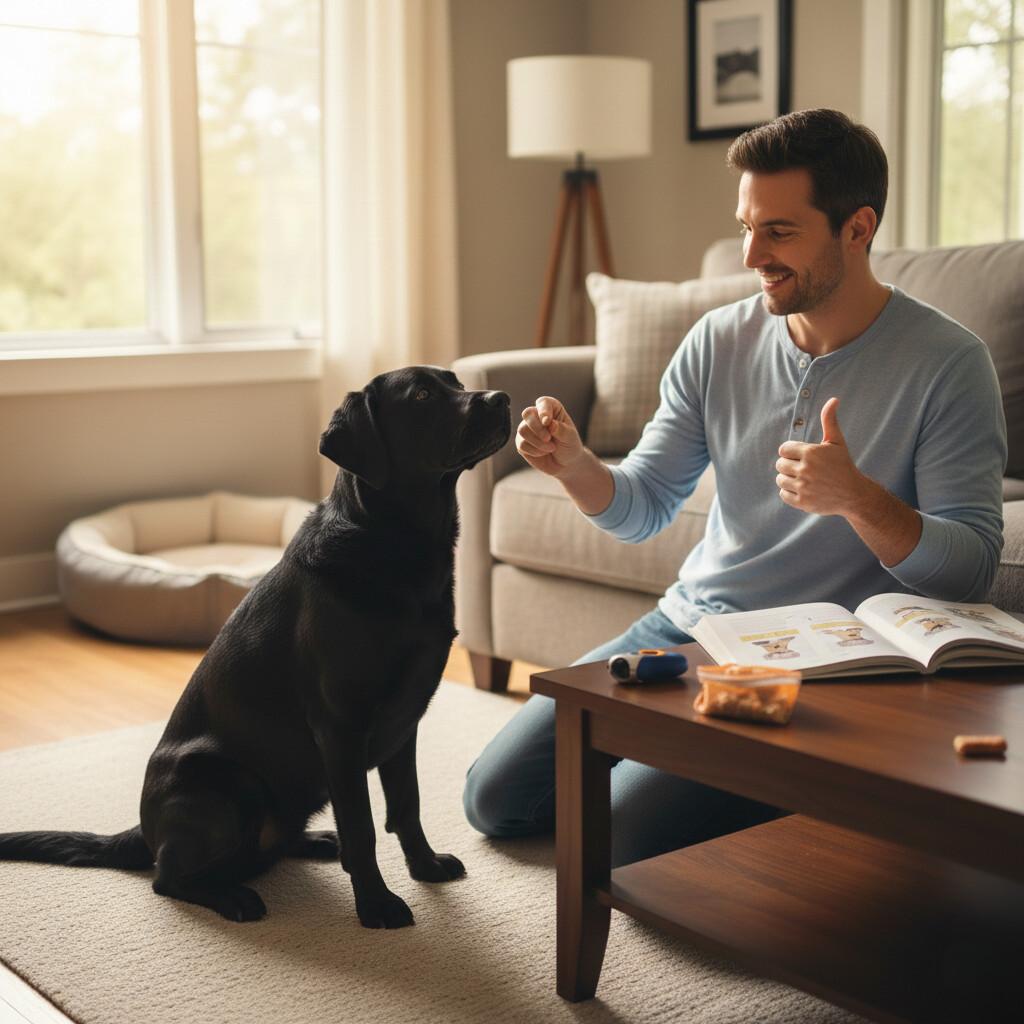
To correct unwanted dog behaviors without punishment, use positive reinforcement training. This involves ignoring or managing the unwanted action while immediately rewarding the dog for doing the correct behavior. Focus on redirection, consistency, and controlling the environment to prevent mistakes, ensuring your dog learns that good choices earn treats, praise, or play.
Summary Table
| Key Concept | Description |
| Core Method | Positive Reinforcement (R+) |
| Primary Tool | High-value treats, clicker (optional), praise |
| Focus | Rewarding what you want, not punishing what you don’t |
| Response to Bad Behavior | Ignore, redirect, or remove the reward (negative punishment) |
| Success Rate | High long-term retention; builds trust |
| Timeframe | Varies by dog; consistency is key |
How to Correct Dog Unwanted Behaviors Without Punishment
Many dog owners grew up seeing training methods that relied on fear, dominance, or physical correction. Science has since proven that these methods often create more problems than they solve. When you punish a dog, you might stop the behavior in that specific moment, but you are not teaching them what they should do instead.
Punishment can cause anxiety, aggression, and a breakdown of trust between you and your pet. A dog that fears you will not be eager to learn.
Positive reinforcement flips the script. It relies on the simple principle that behaviors that are rewarded get repeated. By marking and rewarding the moments your dog makes a good choice, you actually rewire their brain to prefer those behaviors. It creates a dog that wants to listen, rather than one that listens because it is afraid of being yelled at.
Read Also: Does dog training increase confidence?
The Three Pillars of Force-Free Training
Before tackling specific bad habits, you must understand the three tools you will use every day.
1. Management
This is your first line of defense. Management means changing the environment so the dog cannot practice the bad behavior. If your dog chews shoes, management is putting the shoes in a closet. If your dog barks at the window, management is closing the blinds. You cannot train a dog if it is constantly practicing the mistake.
2. Positive Reinforcement
This is the payment. When your dog does what you want, you pay them. The “payment” can be:
- High-value food treats (cheese, boiled chicken, hot dogs).
- Access to a toy.
- Praise and affection.
- Life rewards (opening the door for a walk).
3. Negative Punishment
Do not let the name scare you. In behavioral science, “negative” just means taking something away. “Punishment” means decreasing a behavior. So, negative punishment means taking away a reward to reduce a behavior.
- Example: The dog jumps on you (behavior). You turn your back and take away your attention (removing the reward). The jumping stops. No hitting or yelling was needed.
Fixing Common Unwanted Behaviors
Here is how to apply these concepts to the most common issues dog owners face.
Jumping on Guests
Dogs usually jump because they want to say hello close to your face, and they want attention. Pushing them down or yelling “No!” is actually giving them attention (even if it is negative), so it often reinforces the jumping.
The Fix:
- Ignore it completely: When you walk in, and the dog jumps, cross your arms, look at the ceiling, and turn your back. Do not say a word.
- Wait for four on the floor: The moment the dog’s front paws hit the ground, immediately praise and give a treat.
- Teach an incompatible behavior: A dog cannot jump if it is sitting. Ask for a “sit” before you greet them. If they break the sit to jump, turn your back again.
Excessive Barking
Barking is self-rewarding. It releases energy and often gets the owner to look at the dog. To stop it, you have to identify why they are barking.
The Fix (Alert Barking)
If they bark at the mail carrier:
- Acknowledge and redirect: Say “Thank you” to let them know you heard the alert.
- Recall: Call them away from the window or door.
- Reward: When they come to you and are quiet, give them a high-value treat.
The Fix (Demand Barking)
If they bark at you for food or play:
- The Silent Treatment: Do not look at them, do not talk to them, do not sigh. Freeze.
- Wait for silence: Even if it is just for one second, wait for them to stop.
- Mark and Pay: As soon as they are quiet, reward them. Eventually, they learn that silence opens the treat jar, not noise.
Read Also: What Makes a Dog Food-Motivated vs Toy-Motivated
Chewing Household Items
Chewing is natural for dogs, especially puppies and high-energy breeds. They explore the world with their mouths. They do not know the difference between a $200 sneaker and a $5 squeaky toy unless you teach them.
The Fix:
- Dog-proof the house: Remove the temptation. If you leave socks on the floor, you are setting the dog up to fail.
- The Exchange Game: If you catch them chewing a shoe, do not chase them (this becomes a fun game of tag). calmly approach, offer a high-value toy or treat, and swap it.
- Praise appropriate chewing: When you see your dog chewing their own bone or toy, praise them calmly. “Good dog.” This validates that they made the right choice.
Leash Pulling
Pulling is rewarding because it gets the dog where they want to go faster.
The Fix:
- Be a tree: If the leash goes tight, stop moving immediately. Stand still like a tree.
- Wait for Slack: Do not yank the dog back. Wait for them to turn around or step back to loosen the leash.
- Reward the check-in: When the dog looks back at you or the leash loosens, say “Yes!” and walk forward. Forward motion is the reward.
Advanced Techniques: Desensitization and Counter-Conditioning
For behaviors rooted in fear or aggression (like growling at strangers or lunging at other dogs), simple rewards might not work immediately. You need to change how the dog feels, not just what they do.
Desensitization
This means exposing the dog to the scary thing at a very low intensity so they do not react.
- Example: If your dog hates the vacuum, put the vacuum in the middle of the room, turned off. Let the dog sniff it.
Counter-Conditioning
This means changing the association from “scary” to “awesome.”
- Example: Every time the dog looks at the vacuum (while it is off), give them a piece of chicken.
- Progression: Over days or weeks, turn the vacuum on in another room while feeding the dog chicken. Gradually bring the noise closer. If the dog shows fear, you have gone too fast. Back up a step.
The Role of Physical and Mental Exercise
A massive amount of “bad behavior” is actually just boredom. A bored dog will create their own fun, and their version of fun usually involves destruction or noise.
Physical Exercise
A walk around the block is rarely enough for a young, healthy dog. They need to run, fetch, and pant.
- Tip: If you cannot run with your dog, use a flirt pole (a giant cat wand for dogs) to burn energy quickly in a small yard.
Mental Enrichment
Tiring out a dog’s brain is often more effective than tiring out their body.
- Puzzle Toys: Never feed a dog out of a bowl. Use a puzzle feeder or a slow feeder.
- Sniffari Walks: Let the dog sniff as much as they want on walks. Sniffing lowers their heart rate and engages their brain.
- Trick Training: Spending 15 minutes teaching a new trick (like “spin” or “shake”) requires intense focus from the dog.
Read Also: How Mental Stimulation Reduces Bad Behavior
Consistency is the Golden Rule
The number one reason positive reinforcement “fails” is human error, specifically inconsistency.
If you ignore jumping 90% of the time, but let the dog jump on you when you are wearing your “play clothes,” the dog is confused. In the dog’s mind, jumping sometimes. This actually makes the behavior stronger (this is called the variable reinforcement effect, similar to why slot machines are addictive).
- Everyone must be on board: Your spouse, kids, and visitors must follow the same rules.
- Set clear boundaries: If the dog is not allowed on the couch, they are never allowed on the couch.
When to Hire a Professional
While most unwanted behaviors can be fixed by a dedicated owner, some require an expert. You should seek a certified professional dog trainer or a veterinary behaviorist if:
- The dog shows aggression (biting, snapping, baring teeth) toward people or other animals.
- The dog is injuring themselves (e.g., trying to chew through a crate due to separation anxiety).
- The behavior is sudden and uncharacteristic (always see a vet first to rule out pain or illness).
- You feel overwhelmed or unsafe.
Look for trainers who specify they are “Fear-Free,” “Force-Free,” or “Positive Reinforcement Based.” Avoid trainers who use shock collars, prong collars, or “alpha/dominance” theory, as these can worsen aggression and fear.
Conclusion
Correcting unwanted behaviors without punishment is not just about being “nice” to your dog; it is about being effective. By focusing on management, consistent redirection, and rewarding the choices you want to see, you build a dog that is confident, happy, and well-behaved.
It requires patience. You are learning a new language, and so is your dog. There will be bad days, but if you stick to the plan, the bad behaviors will fade, replaced by a bond built on trust and mutual respect.