
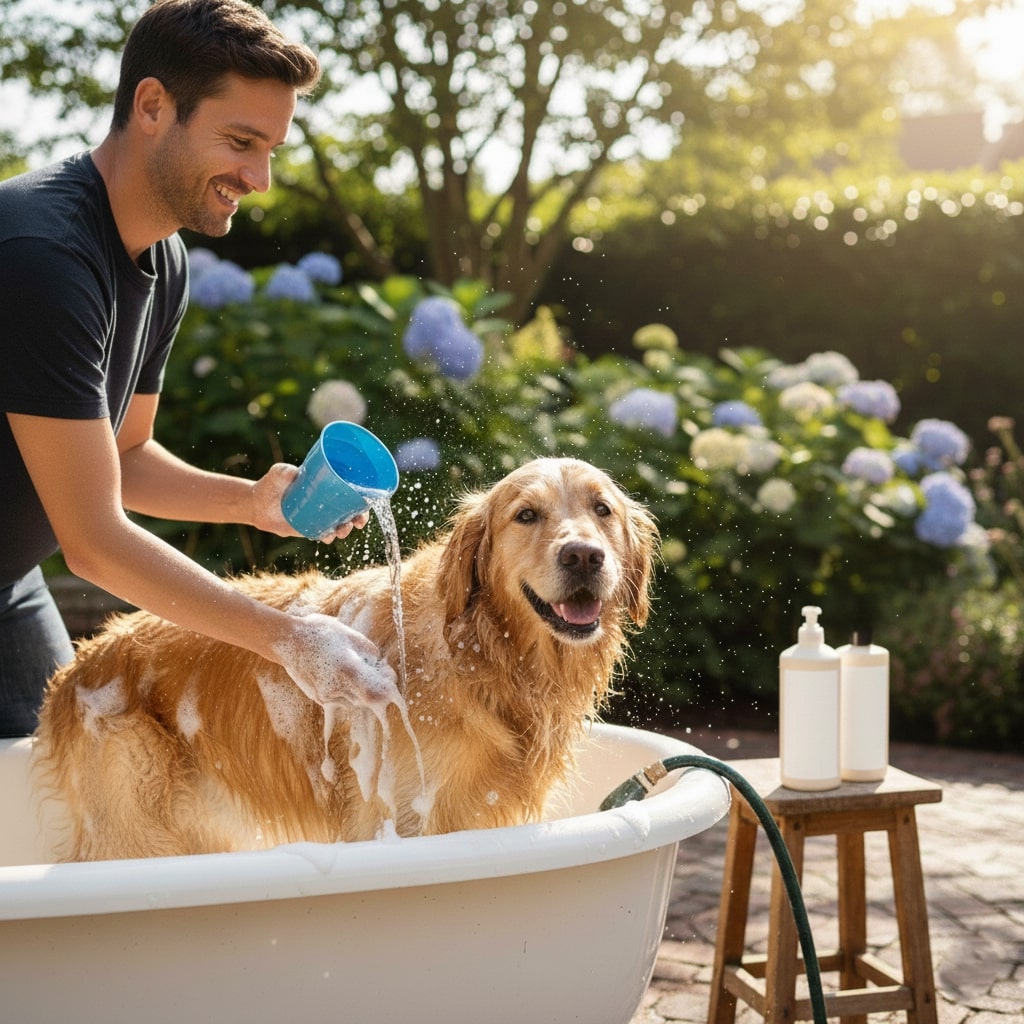
Most dogs should be bathed once every 4 to 8 weeks. However, this depends heavily on their coat type and lifestyle. Dogs with double coats (like Huskies) or water-repellent fur (like Golden Retrievers) should be washed less often to preserve natural oils, while dogs with hair instead of fur (like Poodles) or those with skin conditions may need baths as frequently as every two weeks.
Summary Table: Dogs Bathing Frequency
| Dog Coat Type | Recommended Frequency | Examples |
| Short / Smooth Coat | Every 8–12 weeks | Beagles, Boxers, Dobermans |
| Double Coat | Every 2–3 months (plus seasonal deshedding) | German Shepherds, Huskies, Labs |
| Curly / Wavy Coat | Every 3–6 weeks | Poodles, Bichon Frises, Doodles |
| Wire Coat | Every 4–8 weeks | Terriers, Schnauzers |
| Silky / Long Coat | Every 4–6 weeks | Yorkies, Shih Tzus, Malteses |
| Hairless | Weekly to bi-weekly | Chinese Crested, Xoloitzcuintli |
| Active / Outdoor Dogs | As needed (rinse with water between baths) | All Breeds |
How Often Should You Bathe Your Dog? Detailed Breakdown
Figuring out the perfect bathing schedule for your dog can be tricky. Wash them too often, and you risk stripping their skin of essential oils, leading to itching and flakes. Wash them too rarely, and you end up with a smelly house and a dirty pet.
The truth is that there is no single rule that applies to every dog. The “once a month” advice is a good starting point, but your specific dog’s breed, coat texture, and daily activities are the real deciding factors.
Read Also: Common Signs Your Dog Needs to See a Vet
This guide breaks down exactly how to determine the right schedule for your furry friend so they stay clean, healthy, and happy.
Why Bathing Frequency Matters
Bathing is not just about smell. It is a critical part of your dog’s overall health maintenance. Your dog’s skin has a specific pH balance and produces natural oils that keep their fur water-resistant and their skin elastic.
When you bathe a dog, you temporarily remove some of these oils. If the body doesn’t have time to replenish them before the next bath, the skin becomes dry and vulnerable to bacteria.
On the flip side, allowing dirt, debris, and allergens to build up on the skin can cause infections and hotspots. Finding the balance is key.
Read Also: Can Dogs Be Racist?
Major Factors That Influence Bathing Schedules
Before setting a calendar reminder, look at these three main variables.
1. Coat Type and Texture
This is the most important factor. Hairless dogs need frequent washing to remove oil buildup that blocks pores. Double-coated dogs need those oils to protect them from cold and heat, so they should be washed less.
2. Skin Health and Allergies
Dogs with healthy skin can go longer between washes. However, dogs with environmental allergies (like grass or pollen allergies) may need weekly baths with medicated shampoo to rinse the allergens off their skin and stop the itching.
3. Lifestyle and Activity Level
Does your dog sleep on the couch all day, or do they hike through muddy trails? An active dog that rolls in dirt needs more baths than an indoor lap dog.
Detailed Breakdown by Coat Type
Here is a deep dive into specific coat types and their unique needs.
Short and Smooth Coats
- Breeds: Beagles, Greyhounds, Boxers, Boston Terriers, Pitbulls.
- Frequency: Once every 2 to 3 months.
These dogs are generally low maintenance. Their fur is short and lies close to the body, meaning dirt doesn’t get trapped deep inside easily. Unless they get into something smelly, they can go a long time without a full shampoo bath.
Over-bathing these breeds often leads to dry, flaky skin (dandruff) because they have less protection than long-haired breeds. Between baths, you can simply wipe them down with a damp cloth or a grooming wipe to keep them fresh.
Double Coats (Thick Undercoats)
- Breeds: German Shepherds, Siberian Huskies, Golden Retrievers, Pomeranians, Corgis.
- Frequency: Every 2 to 3 months (and during shedding season).
Double-coated dogs have a soft, insulating undercoat and a tougher outer guard layer. You must be careful not to over-wash them.
Their coat relies on natural oils to repel water and regulate temperature. If you wash them too often, the coat loses its weather-proofing ability.
Instead of frequent bathing, these dogs require frequent brushing. Brushing distributes the oils and removes loose fur.
During “blow coat” seasons (spring and fall), you may want to give them a bath to help loosen the dead hair, but always use a deshedding conditioner.
Read Also: Why Do Dogs Lick Their Owners?
Curly and Wavy Coats
- Breeds: Poodles, Goldendoodles, Bichon Frises, Portuguese Water Dogs.
- Frequency: Every 3 to 6 weeks.
Unlike fur, the hair on these dogs keeps growing and doesn’t shed onto the floor. Instead, loose hair gets caught in the curls, which causes mats. These breeds accumulate dirt and grease closer to the skin than other dogs.
They require more frequent bathing and conditioning to keep the hair soft and manageable. Regular professional grooming is usually required for these breeds, which includes a bath.
Wire Coats
- Breeds: Schnauzers, Jack Russell Terriers, West Highland White Terriers, Airedales.
- Frequency: Every 4 to 8 weeks.
Wire hair is coarse and bristly. It is designed to protect the dog from thorns and brush in the wild. While they don’t get dirty easily, the texture of the hair can trap debris.
If you hand-strip your wire-haired dog (a specific grooming technique to maintain texture), you should not bathe them immediately afterward, as the pores are open and sensitive. Wait a few days after grooming to bathe.
Silky and Long Coats
- Breeds: Yorkshire Terriers, Maltese, Shih Tzus, Afghan Hounds.
- Frequency: Every 4 to 6 weeks.
Long, silky hair requires a lot of upkeep. It is very similar to human hair and can get greasy at the roots. If you keep your dog in a “puppy cut” (short trim), you can bathe them less often.
If you keep their hair long, you must bathe them more frequently to prevent the hair from becoming stringy and matted. You must always use a conditioner on these breeds to prevent tangles.
Hairless Breeds
- Breeds: Chinese Crested, Xoloitzcuintli, American Hairless Terrier.
- Frequency: Weekly or Bi-weekly.
It might seem strange, but hairless dogs need the most baths. Without hair to absorb the natural oils produced by the skin, the oil sits on the surface.
This can clog pores and cause acne and blackheads. They need regular, gentle washing to keep their skin clear. They also need sunscreen and moisturizer, which needs to be washed off regularly.
Read Also: Can Dogs Eat Chicken?
The Risks of Over-Bathing
Many owners make the mistake of bathing their dog every week because they want the dog to smell like “flowers.” This is usually harmful to the dog.
Signs you are bathing too often:
- Dull Coat: The fur loses its shine and looks brittle.
- Itching: The dog scratches constantly, even without fleas.
- Flakes: You see white dandruff on their back, especially near the tail.
- Redness: The skin looks irritated or pink.
If your dog smells bad quickly after a bath, don’t just wash them again. Check their ears for infection, check their teeth for dental disease, or express their anal glands. A bad smell often indicates a health issue, not a dirty coat.
When to Bathe Your Dog Immediately
Regardless of your schedule, there are times when an immediate bath is necessary.
- Mud and Dirt: If the mud has soaked through to the skin.
- Salt Water: After a day at the beach, salt must be rinsed off to prevent drying.
- Chemical Exposure: If they walk through road salt, pesticides, or oil.
- Skunk Spray: This requires a specialized cleaning solution immediately.
How to Bathe Your Dog: A Step-by-Step Guide
Bathing doesn’t have to be a wrestling match. Follow these steps for a stress-free wash.
Step 1: Preparation
Brush your dog before the bath. This is crucial. If your dog has mats or tangles, water will tighten them like a knot, making them impossible to remove later. Place a non-slip mat in the tub so your dog feels secure.
Step 2: Water Temperature
Use lukewarm water. It should feel slightly cooler than what you would use for a human shower. Hot water can overheat a dog quickly and dry out their skin.
Step 3: The Wash
Wet the dog thoroughly, avoiding the eyes and ears. Apply shampoo and massage it in. If your dog has a double coat, you may need to dilute the shampoo with water so it penetrates the undercoat.
- Pro Tip: Use a rubber grooming brush during the bath to massage the skin and remove loose hair.
Step 4: The Rinse
Rinse, rinse, and rinse again. Soap residue is a major cause of skin irritation. When you think you are done rinsing, rinse one more time.
Step 5: Drying
Towel dry your dog first. Do not rub vigorously if they have long hair, as this causes tangles; instead, squeeze the water out. If you use a hair dryer, use the “cool” or “low heat” setting. High heat can burn dog skin easily.
Read Also: Can Dogs Eat Rice?
Choosing the Right Products
Never use human shampoo on a dog. Human skin is more acidic (pH around 5.5), while dog skin is more neutral (pH around 7.0). Human shampoo destroys the dog’s acid mantle, opening the door for bacteria and parasites.
- Oatmeal Shampoo: Best for dry, itchy, or sensitive skin.
- Deshedding Shampoo: Best for Huskies, Shepherds, and double coats.
- Whitening Shampoo: Best for white dogs (like Malteses) to remove stains.
- Medicated Shampoo: Only use if prescribed by a vet for yeast or bacterial infections.
- Conditioner: Essential for dogs with hair (Poodles, Yorkies) to smooth the cuticle.
Puppy Bathing Guidelines
Puppies regulate their body temperature poorly. You should generally avoid full baths until they are at least 8 weeks old. If a young puppy gets dirty, use a warm, damp cloth to spot-clean them.
Once they are old enough, start bathing them slowly to get them used to the process, using a specifically formulated “tear-free” puppy shampoo.
Conclusion
Finding the right bathing schedule for your dog is a balance between hygiene and health. For most dog owners, a good rule of thumb is to bathe your dog when they are no longer huggable. If they smell fine and feel soft, they probably don’t need a bath yet.
By respecting your dog’s coat type and using the right products, you turn bath time from a chore into a health benefit. Listen to your dog’s skin; if it’s dry, wash less. If it’s greasy, wash more.