
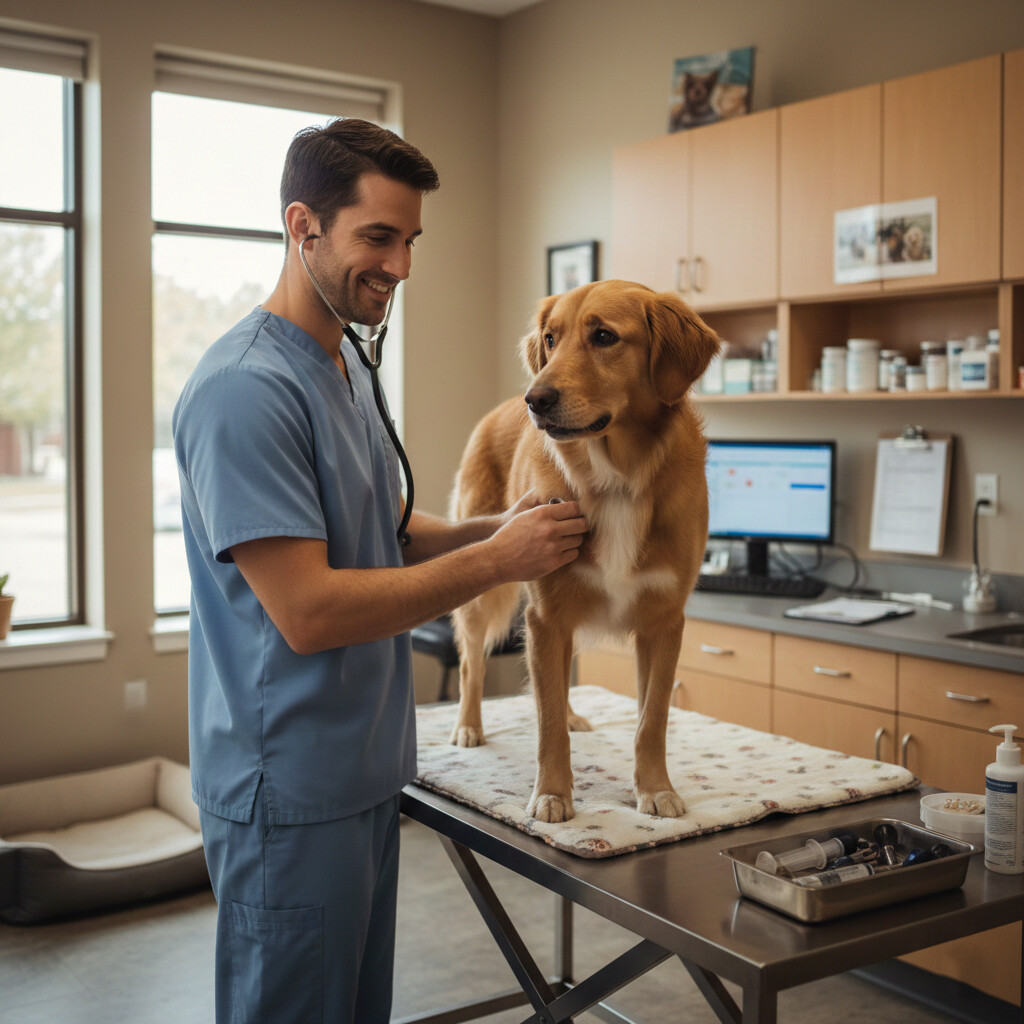
Adult dogs (ages 1- 7) should visit the vet once a year for a comprehensive wellness exam and vaccine boosters. Puppies require monthly visits (every 3 – 4 weeks) until they are 16 weeks old for core vaccinations. Senior dogs (age 7+) need checkups twice a year (every 6 months) to monitor for age-related conditions like arthritis and kidney function.
Summary Table
| Life Stage | Age Range | Frequency | Key Focus Areas |
| Puppy | 0 – 12 months | Bloodwork panels, mobility checks (arthritis), and monitoring of organ function. | Wellness exam, boosters (Rabies, DHPP), heartworm test, and dental check. |
| Adult | 1 – 7 years | Once a year | Bloodwork panels, mobility checks (arthritis), and organ function monitoring. |
| Senior | 7+ years | Every 6 months | Bloodwork panels, mobility checks (arthritis), organ function monitoring. |
| Emergency | Any age | Immediate | Difficulty breathing, uncontrolled vomiting, trauma, seizures, pale gums. |
How Often Should Dogs Visit the Vet
Owning a dog is a long-term commitment that requires proactive healthcare. Many owners only think of the veterinarian when their dog is sick, but preventive care is the most effective way to extend your pet’s life and save money on emergency treatments. The frequency of these visits depends entirely on your dog’s life stage, lifestyle, and current health status.
This guide breaks down exactly when to schedule appointments to ensure your canine companion stays healthy from puppyhood to their golden years.
Read Also: How Stress Affects a Dog’s Health
The Puppy Phase (0 to 1 Year)
Frequency: Every 3 to 4 Weeks
The first year is the most intensive period for veterinary care. Puppies are born with some immunity from their mothers, but this fades quickly, leaving them vulnerable to deadly diseases.
Vaccination Series
Between 6 and 16 weeks of age, your puppy needs a series of shots to build immunity. These are not “one-and-done.” They must be given in intervals to be effective.
- 6 – 8 Weeks: First round of DHPP (Distemper, Hepatitis, Parainfluenza, Parvovirus) and a fecal exam for intestinal parasites.
- 10 – 12 Weeks: Second booster for DHPP and potentially non-core vaccines like Leptospirosis or Bordetella (Kennel Cough) if your lifestyle requires it.
- 14 – 16 Weeks: Final DHPP booster and the Rabies vaccine. Rabies is required by law in most US states.
Parasite Prevention
Puppies are notorious for having worms. Your vet will perform fecal flotation tests to check for roundworms, hookworms, and tapeworms. You will also start a monthly regimen for heartworm prevention and flea/tick control during these visits.
Spay and Neuter Consultation
Around the 6-month mark, your vet will discuss spaying (females) or neutering (males). This procedure prevents unwanted litters and reduces the risk of certain cancers, such as mammary or testicular cancer.
The Adult Years (1 to 7 Years)
Frequency: Once a Year
Once your dog reaches physical maturity, the schedule shifts to maintenance. For most healthy adult dogs, an annual wellness exam is the standard. Think of this as their yearly physical.
What Happens During an Annual Exam?
- Physical Assessment: The vet checks the eyes, ears, skin, and coat. They palpate the abdomen to feel for abnormalities in the liver, kidneys, or spleen.
- Vaccine Boosters: Adult dogs need boosters to maintain immunity. The DHPP vaccine is often given every 3 years, while Rabies can be a 1-year or 3-year vaccine, depending on state laws. Bordetella and Lyme disease vaccines are usually boosted annually.
- Heartworm Testing: Even if your dog takes monthly prevention, the American Heartworm Society recommends an annual blood test to ensure the medication is working.
- Dental Grade: The vet will examine the teeth for tartar and gingivitis. Dental disease is the most common condition in adult dogs and can damage the heart and kidneys if left untreated.
Weight Management
Obesity is a massive health crisis for US pets. Your annual visit is the best time to check your dog’s Body Condition Score (BCS). If your dog has gained weight, the vet can calculate a specific calorie restriction plan to prevent diabetes and joint stress.
Read Also: Signs Your Dog Is Overstimulated
The Senior Years (7+ Years)
Frequency: Twice a Year (Every 6 Months)
Dogs age much faster than humans. A dog is generally considered “senior” around age 7, though large breeds (like Great Danes) may reach this stage by age 5. Because health changes can happen rapidly in older dogs, annual visits are no longer sufficient.
Why Six-Month Intervals?
A lot can change in six months for a senior dog—roughly equivalent to 3–4 years for a human. Bi-annual visits allow vets to catch age-related diseases before they become catastrophic.
Senior Blood Panels
Your vet will likely recommend a Complete Blood Count (CBC) and a chemistry profile at every visit. These tests look for:
- Kidney Failure: Early stages often show no outward symptoms but appear in bloodwork.
- Liver Enzymes: Elevated levels can indicate disease or a reaction to medications.
- Thyroid Function: Hypothyroidism is common in older dogs and causes weight gain and lethargy.
Mobility and Arthritis
Osteoarthritis affects a huge percentage of senior dogs. Vets check the range of motion in the hips and knees. If your dog is in pain, they can prescribe NSAIDs (non-steroidal anti-inflammatory drugs) or supplements like Glucosamine and Chondroitin to improve the quality of life.
5 Signs Your Dog Needs an Immediate Vet Visit
Outside of the scheduled maintenance, you must recognize when to break the routine. If you see any of these “Red Flag” entities, do not wait.
- Respiratory Distress: Panting without exercise, blue gums, or choking sounds.
- Gastrointestinal Trauma: Vomiting or diarrhea that lasts more than 24 hours, or contains blood.
- Neurological Issues: Seizures, sudden stumbling, head tilting, or disorientation.
- Toxin Ingestion: Eating chocolate, grapes, xylitol (found in gum), or rat poison.
- Urinary Blockage: Straining to pee with no production (this is a medical emergency).
Read Also: Dog Health & Wellness
Non-Routine Reasons for Visits
Sometimes a visit isn’t an emergency, but still shouldn’t wait for the annual checkup.
Dental Cleaning
Professional dental cleanings involve anesthesia. This allows the vet to clean below the gum line where bacteria destroy the tooth root. If your dog has bad breath (halitosis) or visible brown tartar, schedule a dental cleaning immediately.
Skin Allergies (Dermatitis)
If your dog is constantly licking their paws, scratching their ears, or has red spots on their belly, they likely have allergies. Vets can prescribe Cytopoint injections or Apoquel to stop the itch cycle and prevent secondary bacterial infections.
Sudden Behavior Changes
If a normally aggressive dog becomes clingy, or a friendly dog starts snapping, this is often a sign of pain. Dogs are masters at hiding discomfort. A vet visit can rule out underlying injuries or internal pain.
Conclusion
Veterinary care is the cornerstone of responsible dog ownership. While the cost of visits can add up, catching a condition like kidney disease or heartworm early is significantly cheaper and less heartbreaking, than treating it in its final stages.