
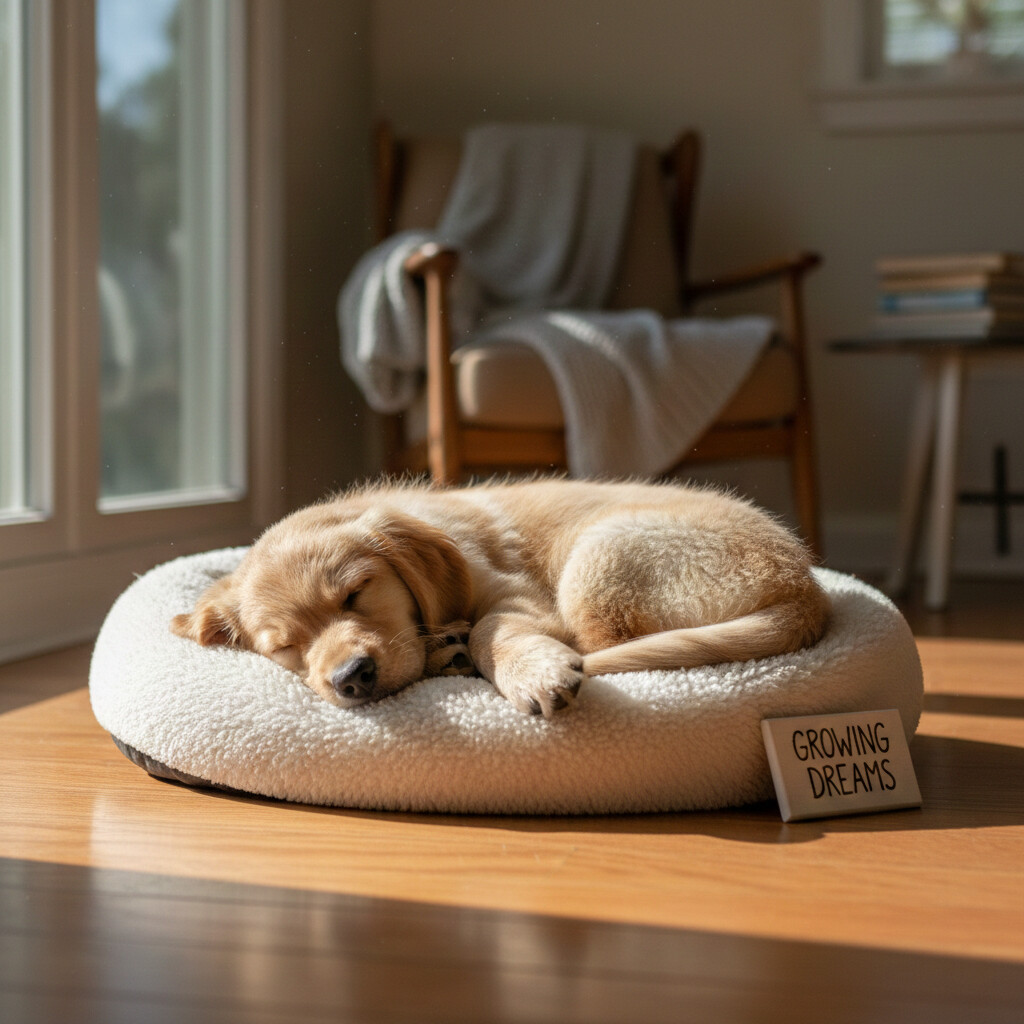
Puppies generally need 18 to 20 hours of sleep per day. This high amount of sleep is essential for their rapid growth, brain development, and immune system health. While it may seem like a lot, they burn massive amounts of energy during short bursts of wakefulness. As they mature into adult dogs, this requirement typically drops to around 12 to 14 hours a day.
Summary Table: Puppy Sleep Needs by Age
| Age of Puppy | Hours of Sleep Per Day | Activity Level | Key Focus |
| Newborn (0-2 weeks) | 20-22 hours | Very Low | Eating, sleeping, staying warm |
| 8-12 Weeks | 18-20 hours | High Bursts | Potty training, socialization, nap enforcement |
| 3-6 Months | 16-18 hours | Moderate/High | Teething, crate training, routine building |
| 6-12 Months | 14-16 hours | Moderate | Adolescence, exercise, settling down |
| 1 Year+ (Adult) | 12-14 hours | Breed Dependent | Maintenance, routine, bonding |
How Much Sleep Do Puppies Need?
Bringing a new puppy home is exciting, but it is also exhausting. Many new owners are surprised by two things: how much energy a puppy has when they are awake, and how much time they spend sleeping.
You might wonder if your puppy is sleeping too much or, conversely, if they are not sleeping enough because they are biting and running around constantly.
Understanding puppy sleep patterns is crucial for your dog’s health and your own sanity. This guide covers everything you need to know about puppy sleep, from daily schedules to handling nighttime crying.
Read Also: When Do Puppies Stop Teething?
Why Do Puppies Sleep So Much?
It might look like laziness, but your puppy is doing hard work while they snooze. Sleep is not just downtime; it is a biological necessity. Just like human babies, puppies do the vast majority of their growing while they are asleep.
Here is what is happening inside their bodies during a nap:
- Brain Development: A puppy’s brain is processing everything it learned while awake. Did you teach them to “sit” today? Their brain cements that lesson during sleep.
- Energy Conservation: Puppies burn a huge number of calories just by existing and growing. Sleep allows them to conserve energy for those wild bursts of play.
- Immune System Building: Sleep strengthens the immune system, which is vital since puppies are prone to sickness until fully vaccinated.
- Muscle and Bone Growth: The hormones responsible for physical growth are released primarily during sleep.
If you cut their sleep short, you aren’t just making them cranky; you could be hindering their development.
Sleep Requirements by Age
Not all puppies sleep the same amount. The requirement changes rapidly as they move from being a newborn to an adolescent dog.
Newborn to 2 Weeks
At this stage, puppies are helpless. Their eyes and ears are closed. They do only two things: nurse from their mother and sleep. They spend about 90% of their life sleeping.
They will twitch a lot while sleeping, which is normal and helps build muscle tone.
8 to 12 Weeks (The “Coming Home” Phase)
This is typically when you bring your puppy home. At this age, they still need massive amounts of sleep, 18 to 20 hours a day. However, they now have the energy to play hard.
They will run around frantically for 20 minutes and then collapse. It is your job to make sure they actually get those 18 hours, as they often don’t want to miss out on the fun.
3 to 6 Months
The puppy is growing bigger and stronger. They still need plenty of rest, usually around 16 to 18 hours. This is often when teething starts, which can disrupt sleep due to pain or discomfort.
You might notice they nap for longer stretches rather than the frequent “micro-naps” of younger puppies.
6 Months to 1 Year
Your puppy is technically an adolescent now. Their sleep needs start to look more like an adult dog’s needs. They will likely sleep 14 to 16 hours a day. The intensity of their play will increase, meaning they might need longer naps to recover after a big session of fetch or a long walk.
Read Also: How Do Puppies Learn Bite Inhibition?
The Danger of the “Overtired” Puppy
This is the most important concept for new owners to learn. A human baby cries when it is tired. A puppy does not simply fall asleep when they are tired—they often become a monster.
When a puppy stays awake too long, their body produces cortisol and adrenaline (stress hormones). This puts them in a state of hyper-arousal. They physically cannot calm down.
Signs your puppy is overtired, not energetic:
- The Zoomies: Running in frantic circles with their tail tucked.
- Biting and Nipping: They forget their bite inhibition and bite your hands or pants aggressively.
- Lack of Focus: They stop listening to commands they know well.
- Barking and Whining: Excessive vocalization at nothing in particular.
- Panting: Heavy breathing even if they haven’t been running recently.
If you see these signs, do not play with them to “tire them out.” It will backfire. Put them in their crate or a quiet room for a nap immediately.
Creating the Perfect Puppy Sleep Schedule
Puppies thrive on routine. If they know what comes next, they are more confident and settle down faster. You should structure their day so they sleep after every major activity.
A good rule of thumb is the “One Up, Two Down” method.
- 1 Hour Awake: Play, training, potty, eating.
- 2 Hours Asleep: Enforced nap in a crate or quiet pen.
Sample Schedule for an 8-12 Week Old Puppy:
- 7:00 AM: Wake up and immediately go outside for potty.
- 7:30 AM: Breakfast.
- 8:00 AM: Playtime and light training.
- 8:30 AM – 10:30 AM: NAP 1 (In crate).
- 10:30 AM: Wake up, potty trip immediately.
- 11:00 AM: Socialization or solo play.
- 11:30 AM – 1:30 PM: NAP 2.
- 1:30 PM: Wake up, potty, Lunch.
- 2:30 PM – 4:30 PM: NAP 3.
- 4:30 PM: Wake up, potty, evening walk (short).
- 5:30 PM: Dinner.
- 6:00 PM – 8:00 PM: NAP 4.
- 8:00 PM: Wake up, potty, quiet cuddling.
- 9:00 PM – 10:00 PM: Bedtime routine and final potty.
- 10:00 PM: Sleep for the night.
Where Should Your Puppy Sleep?
The environment matters as much as the schedule. If the room is chaotic, the puppy won’t hit the deep REM sleep they need.
1. The Crate
Crate training is highly recommended by veterinarians and trainers. It mimics a den, providing a safe, enclosed space where the puppy can relax. It also aids in potty training because dogs rarely soil where they sleep.
- Tip: Cover the crate with a light blanket to block visual distractions.
2. A Quiet Corner
If you don’t use a crate, use a playpen or a puppy-proofed laundry room. It must be away from the main flow of household traffic.
3. Your Bed (With Caution)
While cuddling is nice, letting a young puppy sleep in your bed can be risky. They might fall off, pee on the mattress, or develop separation anxiety because they never learn to sleep alone. It is usually best to start with a crate and transition to the bed when they are older and potty trained.
Helping Your Puppy Sleep Through the Night
Nighttime can be the hardest part of puppy ownership. It is normal for puppies to wake up to pee once or twice a night until they are about 16 weeks old. However, you want them to go right back to sleep.
Tips for a silent night:
- Tire Them Out Early: Make sure they have a good play session about 2 hours before bed, but keep the hour right before bed calm.
- Limit Water: Pick up the water bowl 1-2 hours before bedtime to reduce the need to pee.
- The Final Potty: Take them out right before you get into bed. Make it “strictly business”—no playing, just pee and back inside.
- White Noise: A fan or a white noise machine can drown out sudden house noises that might startle a puppy.
- Heartbeat Toys: Special stuffed animals that simulate a mother dog’s heartbeat can be very soothing for young puppies who miss their littermates.
Read Also: How Training Improves a Dog’s Mental Health
Common Puppy Sleep Problems
Even with a perfect schedule, things go wrong. Here is how to handle common issues.
1. The Puppy Cries in the Crate
This is heartbreaking but normal. If they have just gone to the bathroom and you know they are safe, they are likely crying for attention or because they are frustrated.
- Solution: Wait them out. If you open the door when they cry, you teach them that crying opens the door. If the crying sounds panicked (breathless, scratching), sit by the crate silently until they calm down, then treat them.
2. Waking Up Too Early (5:00 AM Club)
Puppies follow the sun. If the sun is up, they think it is time to party.
- Solution: Use blackout curtains. Also, if they wake up at 5 AM, take them out to pee on a leash with zero talking, then put them straight back in the crate. Do not start the day yet.
3. Sleeping All Day, Awake All Night
Your puppy has their days and nights mixed up.
- Solution: Cap their daytime naps. Don’t let a nap go longer than 2 or 2.5 hours. Wake them up for a potty break and some play to reset their internal clock.
When Should You Worry?
While puppies sleep a lot, there is a difference between a sleepy puppy and a lethargic puppy. You know your dog best. If their behavior changes suddenly, pay attention.
Normal Sleepiness
- Wakes up easily when you open a food bag or grab a toy.
- Plays energetically between naps.
- Eats and drinks normally.
Lethargy (Call the Vet)
- Difficult to wake up.
- Shows no interest in toys or food even when awake.
- Sleeps excessive amounts (more than 20 hours) and seems weak when walking.
- Has pale gums, vomiting, or diarrhea.
Lethargy can be a sign of hypoglycemia (low blood sugar), infection, or viruses like Parvo. If your puppy seems “flat” or overly tired combined with other symptoms, contact your vet immediately.
Summary
Puppies are growing machines that require fuel and rest. By understanding that your 8-week-old puppy needs roughly 18 to 20 hours of sleep, you can structure a day that keeps them happy and healthy.
Remember the “One Up, Two Down” rule. If your puppy is acting out, biting, or running wild, they likely don’t need more exercise; they need a nap. Be consistent with your crate training, stick to a routine, and enjoy the quiet moments while they sleep. They grow up fast, and soon they will be adult dogs sleeping lazily by your feet.