
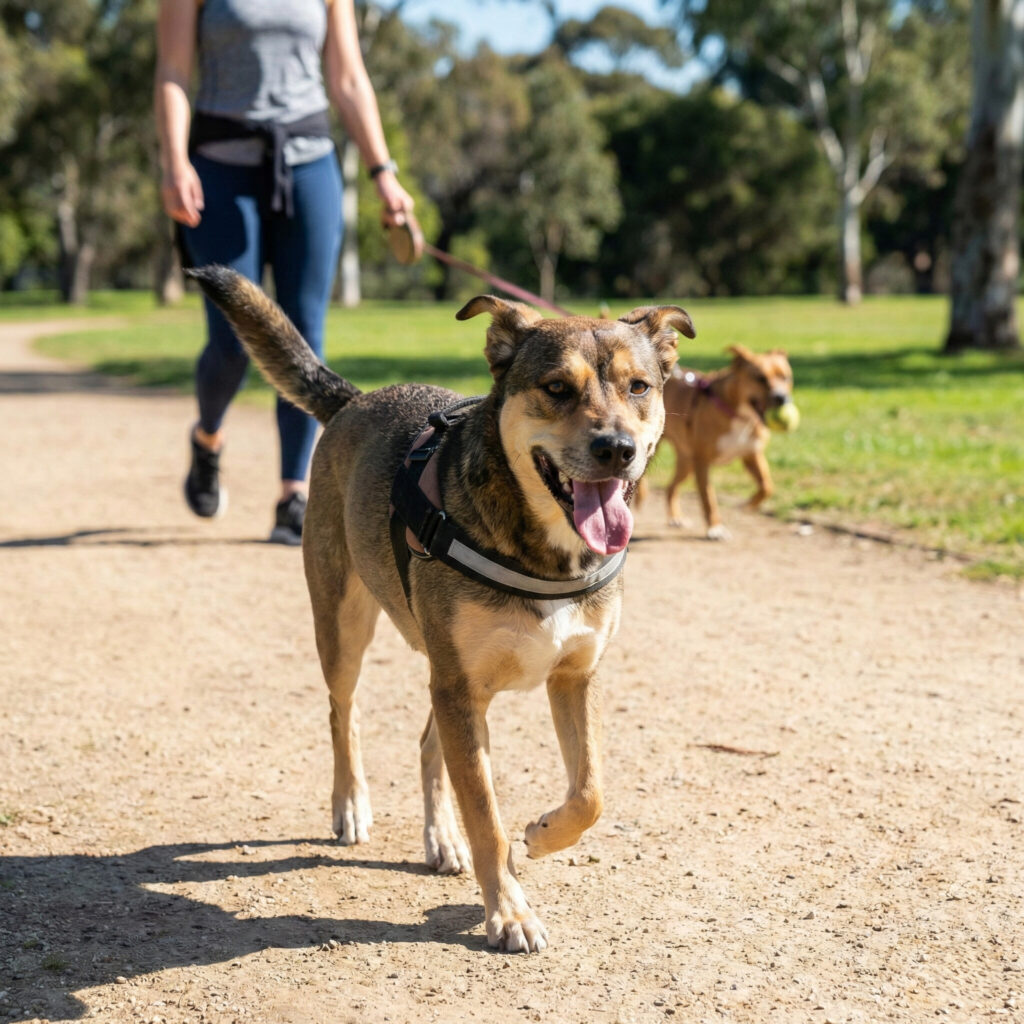
Most dogs need between 30 minutes to 2 hours of physical activity every day. However, this varies significantly based on age, breed, and health. High-energy breeds like Border Collies may require over 2 hours of vigorous exercise, while low-energy breeds like Bulldogs may be satisfied with 30 minutes of casual walking. Always combine physical exercise with mental stimulation for a balanced routine.
Summary Table
| Dog Category | Daily Activity Time | Recommended Intensity | Examples |
| Puppies | 5 mins per month of age (twice daily) | Low impact, short bursts | Free play, short walks, training |
| Adult (Low Energy) | 30 – 60 minutes | Low to Moderate | Basset Hound, Pug, Bulldog |
| Adult (Moderate) | 60 – 90 minutes | Moderate | Golden Retriever, Cocker Spaniel |
| Adult (High Energy) | 2+ Hours | Vigorous | Husky, Border Collie, Vizsla |
| Senior Dogs | 30 – 60 minutes (broken up) | Low impact | Gentle walks, swimming, mobility games |
| Working Breeds | 2+ Hours | Very High | Shepherd, Cattle Dog, Pointer |
How Much Daily Activity Does a Dog Need?
Exercise is not just about burning calories for your dog. It is the foundation of their physical health and behavioral wellness. A tired dog is generally a good dog, but an exhausted or injured dog is not. Finding the “sweet spot” depends on understanding who your dog is biologically.
This guide breaks down exactly how to calculate the right amount of activity for your specific dog to prevent behavioral issues like chewing, barking, and digging while avoiding injury.
Read Also: Best Sleeping Arrangements for Dogs
Factors That Determine Activity Levels
No two dogs are the same. Even two dogs of the same breed can have different energy requirements. You must consider three main factors:
- Breed and Genetics: Working breeds were designed to run all day. Companion breeds were designed to sit on laps.
- Age: Puppies have energy bursts but fragile joints. Seniors have stamina limits.
- Health Status: Overweight dogs or those with arthritis need specialized low-impact plans.
Activity Guidelines by Age Group
1. Puppies (8 Weeks to 12 Months)
Puppies are bundles of energy, but their growth plates (soft areas of cartilage at the ends of bones) are not yet closed. Too much forced exercise, like long runs on concrete, can cause permanent joint damage.
The 5-Minute Rule:
A common guideline is five minutes of exercise for every month of age, twice a day.
- 3 Months old: 15 minutes, twice a day.
- 6 Months old: 30 minutes, twice a day.
Focus for Puppies:
- Free Play: Let them run at their own pace in the yard.
- Socialization: Meeting new dogs and people is mentally tiring.
- Short Training Sessions: 5-10 minutes of learning “sit” or “stay” tires them out quickly.
2. Adult Dogs (1 Year to 7 Years)
This is the prime time for activity. However, the breed is the biggest variable here.
High-Energy Working Breeds
- Examples: Border Collies, Siberian Huskies, Australian Shepherds, Belgian Malinois, Jack Russell Terriers.
- Needs: These dogs need at least 2 hours of activity daily. A walk around the block is not enough. They need to run, fetch, or perform a job. Without it, they often become destructive.
Moderate-Energy Breeds
- Examples: Labrador Retrievers, Golden Retrievers, Poodles, Boxers.
- Needs: These dogs typically need 1 to 1.5 hours of activity. A long morning walk and an evening game of fetch are usually sufficient.
Low-Energy Breeds
- Examples: French Bulldogs, Basset Hounds, Great Danes, Shih Tzus.
- Needs: These dogs are often happy with 30 to 60 minutes of activity. Two shorter walks and some indoor play are perfect.
3. Senior Dogs (7+ Years)
As dogs age, they lose muscle mass and may develop arthritis. Activity is still crucial to keep joints lubricated and manage weight, but the intensity must drop.
- Duration: Aim for 30 to 60 minutes, but break it into multiple short sessions.
- Type: Stick to low-impact activities. Swimming is the gold standard for seniors as it supports their weight while working muscles.
- Pace: Let the dog set the pace. If they lag behind on a walk, it is time to head home.
Read Also: How to Dog-Proof Your Home
Physical vs. Mental Activity
Physical exercise works the body, but mental stimulation works the brain. 15 minutes of mental work can be as tiring as a 1-hour walk. This is especially important for intelligent breeds.
Types of Mental Stimulation:
- Scent Walks: Let your dog sniff as much as they want. Sniffing lowers their pulse and engages their brain.
- Puzzle Toys: Use food puzzles like Kongs or snuffle mats instead of a food bowl.
- Trick Training: Teaching a new trick forces them to think and solve problems.
- Hide and Seek: Hide treats around the house and let your dog find them.
Signs Your Dog Needs More Activity
If you aren’t sure if you are doing enough, your dog will tell you. Look for these behavioral red flags:
- Destructive Chewing: Chewing furniture, shoes, or walls is often a release for pent-up energy.
- Excessive Barking: Bored dogs bark at everything to create excitement.
- Zoomies at Night: If your dog goes wild right before bed, they may have excess energy to burn.
- Rough Play: Nipping or playing too hard with owners or other dogs.
- Obesity: If you can’t feel your dog’s ribs, they likely need more movement and fewer calories.
Signs Your Dog Is Getting Too Much Activity
Yes, over-exercise is possible, especially in hot weather or with puppies.
- Lagging Behind: If your dog stops walking or refuses to move.
- Excessive Panting: Heavy panting that doesn’t stop after a few minutes of rest.
- Soreness: Stiffness when getting up after a nap.
- Pad Injuries: Torn or worn-down paw pads.
Read Also: Dog Lifestyle & Home Care
Creating a Daily Routine
Consistency is key for dogs. Here is a sample routine for a moderate-energy dog (like a Lab mix).
- Morning (30 Minutes):
- Potty break immediately.
- 20-minute brisk walk to burn overnight energy.
- 10 minutes of training or breakfast in a puzzle toy.
- Mid-Day (15 Minutes):
- Potty break.
- Short game of fetch or tug-of-war in the yard.
- Evening (45 Minutes):
- 30-minute decompression walk (slow pace, lots of sniffing).
- 15 minutes of cuddling or gentle play before bed.
Special Considerations for Flat-Faced Breeds
Brachycephalic breeds (dogs with flat faces like Pugs, Bulldogs, and Boston Terriers) have trouble regulating their body temperature.
- Heat Sensitivity: Never exercise them vigorously in heat or high humidity.
- Breathing: Listen for loud wheezing or gasping.
- Equipment: Use a harness instead of a collar to prevent pressure on their windpipe.
Frequently Asked Questions
Does a big backyard replace walking?
No. Dogs often just lie down in the backyard if no one is with them. Walks provide mental stimulation from new smells and sights that a backyard cannot offer.
Can I exercise my dog just on weekends?
“Weekend Warrior” syndrome causes injuries. It is better to have 20 minutes of activity every day than a 5-hour hike once a week.
Is walking enough for high-energy dogs?
Usually not. High-energy dogs need cardio. They need to run, swim, or play fetch to get their heart rate up. Walking is just a warm-up for them.
Conclusion
There is no single number that applies to every dog. The best approach is to start with the baseline for your dog’s breed and age, then adjust based on their behavior. If they are destroying your couch, add 20 minutes of exercise. If they are dragging their feet on walks, cut back by 10 minutes.
A happy dog is a tired dog, but a healthy dog is one whose activity matches their physical capability.